700 Square Kilometers Under Israeli Occupation in Lebanon: What Does the ‘Security Belt’ Mean?

700 Square Kilometers Under Israeli Occupation in Lebanon: What Does the ‘Security Belt’ Mean?
TT

700 Square Kilometers Under Israeli Occupation in Lebanon: What Does the ‘Security Belt’ Mean?

700 Square Kilometers Under Israeli Occupation in Lebanon: What Does the ‘Security Belt’ Mean?

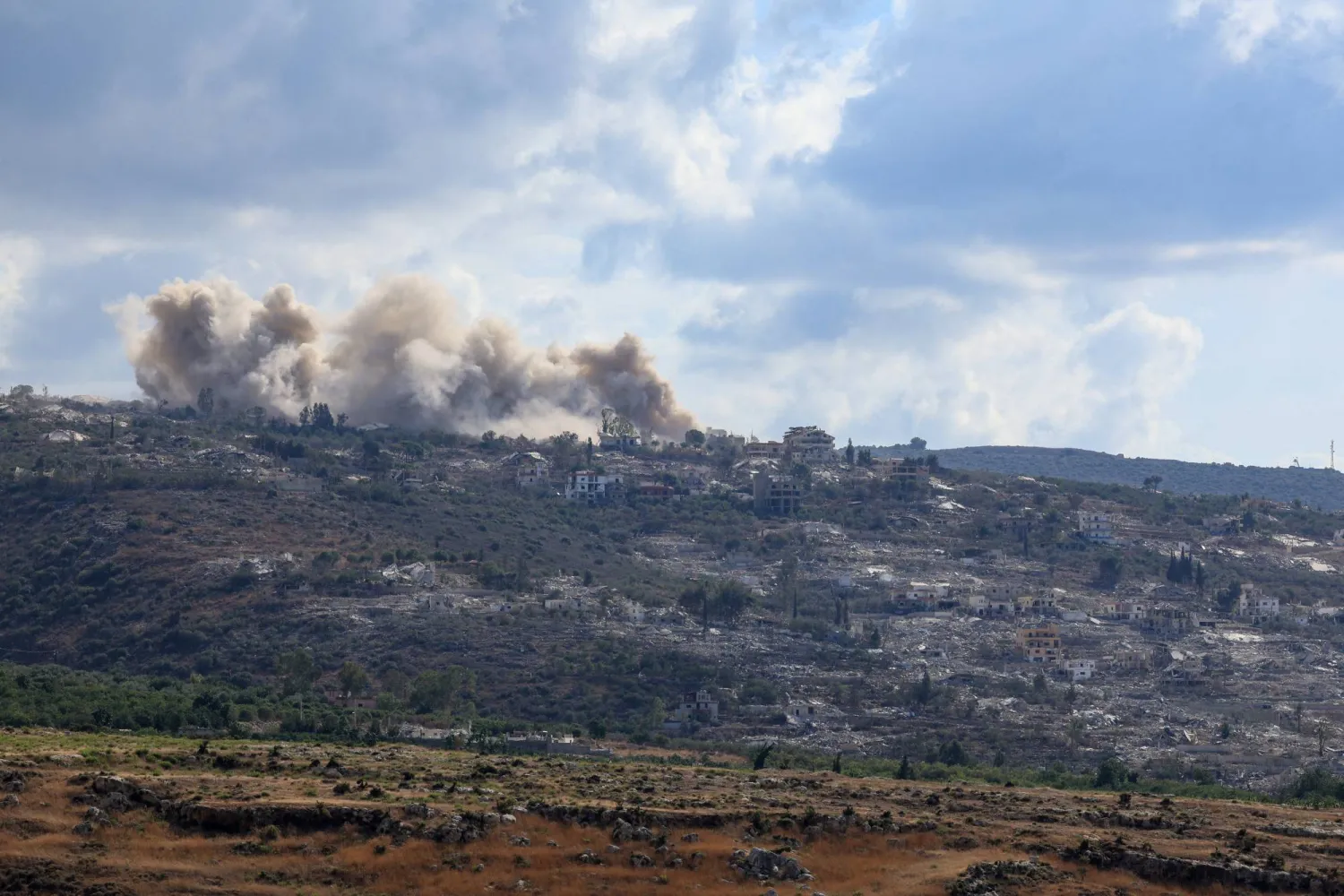
Israel’s expanding operations in southern Lebanon are raising questions about how much territory its forces actually occupy, and how much they control through surveillance, firepower and the ability to launch attacks from forward positions.

Israeli Defense Minister Israel Katz has repeatedly cited an area of roughly 700 square kilometers. But developments on the ground paint a more complex picture: Israeli control varies from troops stationed at fixed positions to mobile incursions and firepower dominance over much wider areas.

Military assessments suggest the area is far from a uniform security belt stretching from the Mediterranean coast to Mount Hermon. Its depth varies sharply across sectors, shaped by terrain, commanding heights and routes of movement.

Israeli troops and military vehicles are stationed in some areas. Others have no permanent Israeli military presence but remain under aerial surveillance or within striking range, allowing forces to operate there without maintaining troops on the ground.

Single Front

Defense and security expert Riad Kahwaji told Asharq Al-Awsat that Israel views Lebanon and the Golan Heights as "a single front" stretching from Mount Hermon to the Mediterranean coast at Naqoura and Bayada, despite crossing two countries.

"From its perspective, Israel is establishing a security belt along its northern border," Kahwaji said, adding that the belt is "no longer confined to areas south of the Litani River but has extended north of it in some locations."

Geography helps explain why.

"The geographical scope has effectively expanded beyond the area south of the Litani, particularly from the direction of Metula, where the river is only about seven kilometers away, compared with roughly 30 kilometers between Naqoura and the Litani," he said.

That difference, Kahwaji explained, means the security belt can extend north of the Litani in some areas without maintaining the same depth across the entire border.

The river, therefore, is not a uniform dividing line between northern and southern operational zones. Distances vary, and geography dictates how far Israeli troops or firepower can reach.
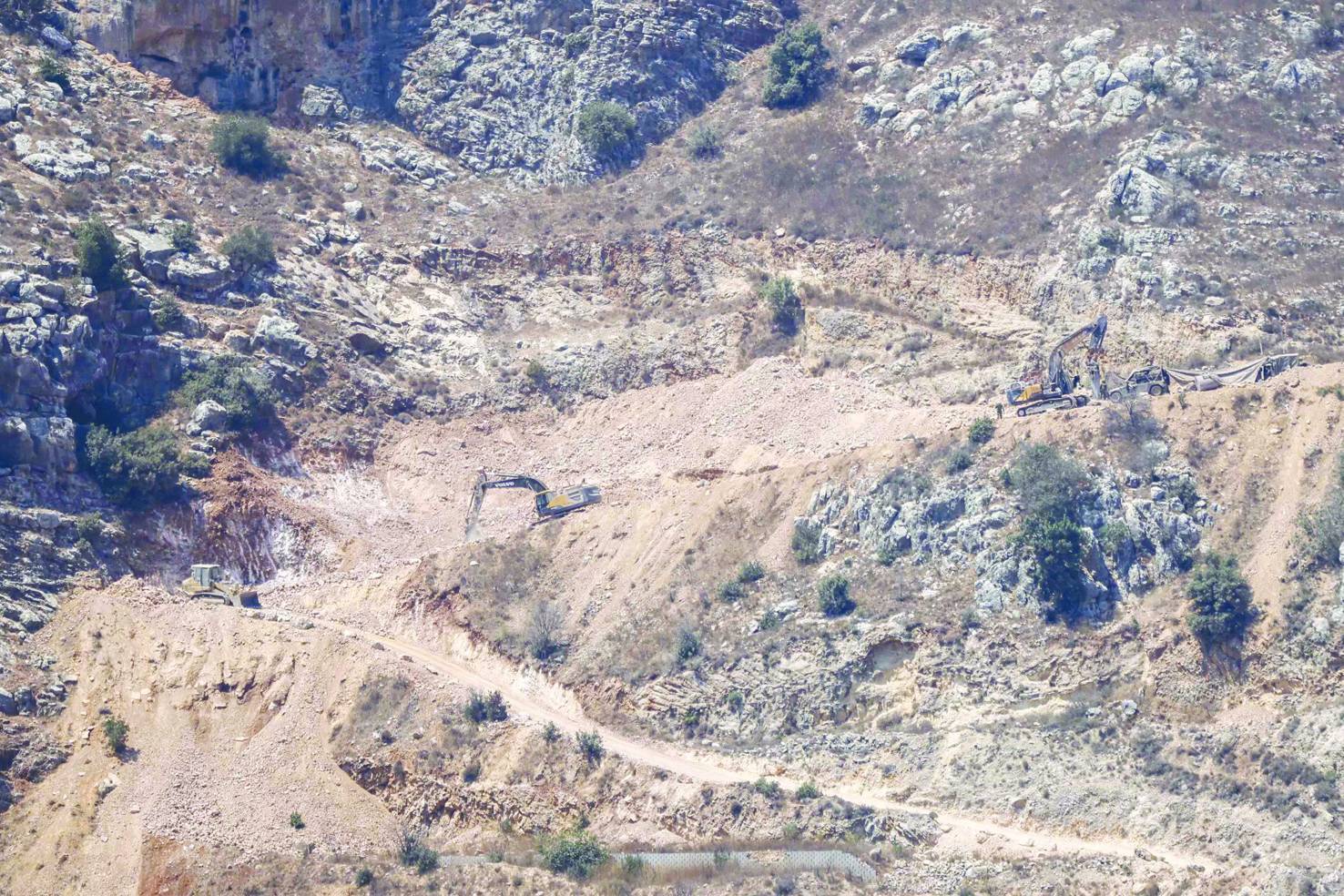
Israeli bulldozers carve roads through the mountainous al-Shaqif region in southern Lebanon (AFP)

Firepower

Kahwaji drew a distinction between occupying territory and controlling it through surveillance and firepower.

He said Israel relies on about 20 military positions, each capable of accommodating a small force, while drones continuously monitor movements deeper inside the area.

"Each position could accommodate a company-sized force, while drones operate continuously farther behind these positions to monitor movements," he said.

"When drones detect movement, it is targeted by artillery or an airstrike. Alternatively, a patrol can be dispatched from one of these positions toward the location where the movement was detected within what is known as the yellow belt."

That, he said, is what control through firepower means.

"It does not require an extensive military presence throughout the entire belt. Instead, it relies on specific military positions, continuous surveillance through drones and firepower, and the ability to target any movement or dispatch a patrol."

The result is a military footprint that extends well beyond the positions troops physically occupy.

From elevated or fortified positions, forces can monitor surrounding roads and towns, strike targets or send patrols without establishing permanent bases in every location.

From the Coast to Beaufort Castle

The pattern is visible across southern Lebanon.

In the west, Israeli operations extend from Naqoura and the coastal sector into areas that have recently faced incursions, demolitions and repeated shelling, including Mansouri and its surroundings.

Farther east, central-sector towns such as Beit Yahoun, Hadatha, Haris and Aita al-Jabal have experienced varying degrees of Israeli military activity or attacks, though the level of troop presence differs.

The reach of operations extends farther inland toward Beaufort Castle and the Ali al-Taher heights.

There, elevated terrain offers commanding views over wider areas toward Nabatieh, Iqlim al-Tuffah and surrounding movement routes.

The result is a zone of control shaped less by a continuous border strip than by strategic elevations and the areas they overlook.

Could Israeli Operations Reach the Awali River?

Retired Brigadier General Fadi Daoud offered a broader assessment of where Israeli operations could extend, arguing that control of high ground may determine the limits of any advance.

"What is clear in southern Lebanon is that the expansion could reach the Awali River. Even if it does not, forces will remain positioned on the heights overlooking the river," Daoud told Asharq Al-Awsat.

He said such a deployment could also encompass Rihan and areas around Jezzine, particularly Kfarhouna.

"The western boundary will be the Awali River," he said, identifying geographical control, especially over commanding heights, as the key factor shaping military movements.

Holding elevated positions, he argued, would allow Israeli forces to dominate lower-lying areas with firepower without maintaining troops throughout them.

"Geographical control will enable Israel to control the western Bekaa from the right flank because it is already present on Mount Hermon. The western Bekaa has effectively become a pocket between Mount Hermon and Rihan," Daoud said.

"Israel will establish positions there to control the Bekaa."
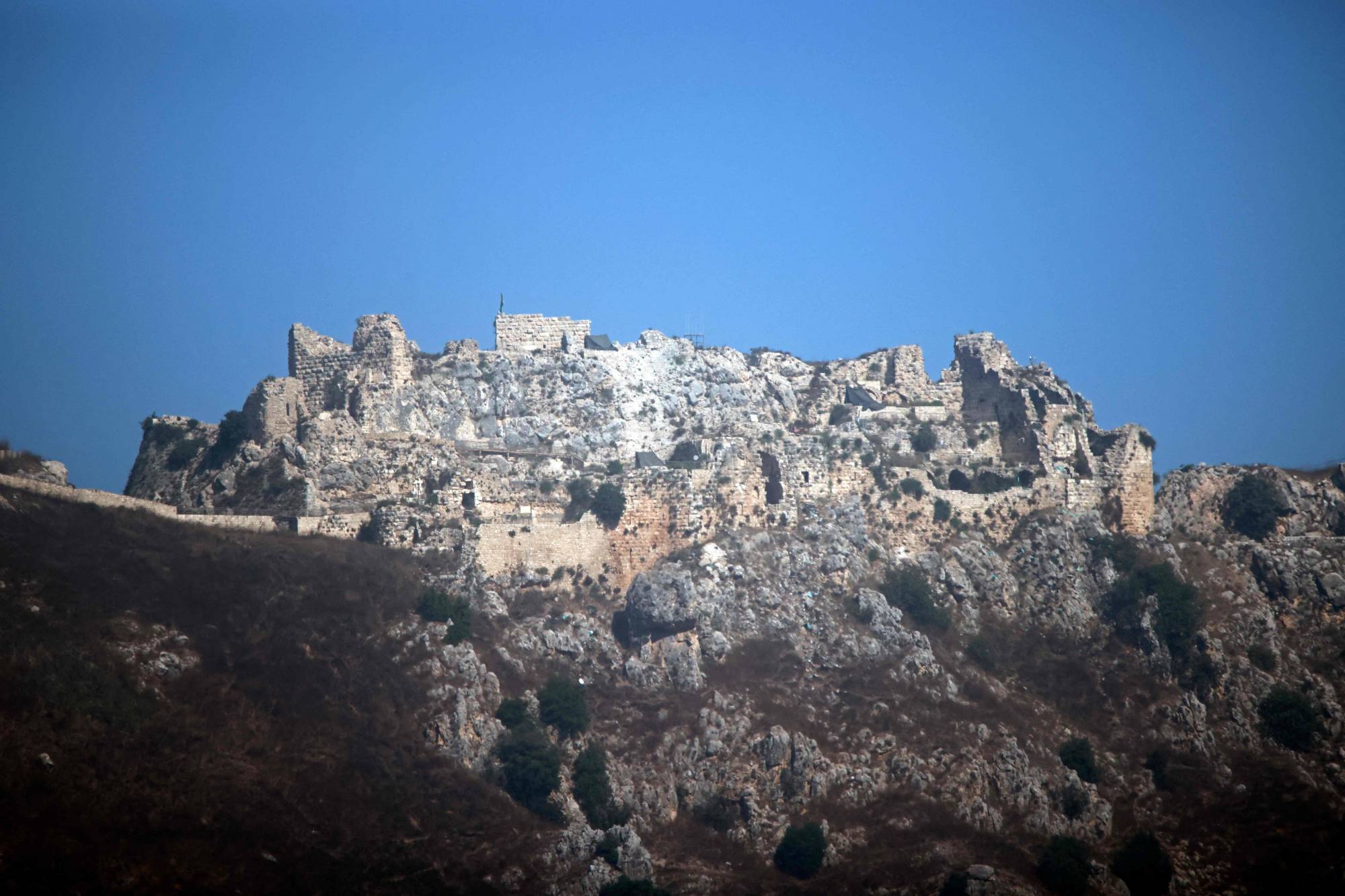
Dense clouds of dust cover the hills of Arnoun and al-Shaqif surrounding Beaufort Castle, as seen from Marjayoun in southern Lebanon (AFP)

The Strategic Heights of Rihan and Iqlim al-Tuffah

Daoud said the potential advance could stretch from Mount Rihan toward the heights of Iqlim al-Tuffah, including Mount Safi.

"It will move from Mount Rihan to the heights of Iqlim al-Tuffah, including Mount Safi, where it will establish control over Hezbollah's stronghold in Iqlim al-Tuffah, as well as Sidon, eastern Sidon and the Awali River," he said.

For Daoud, terrain is the determining factor.

"Geography is fixed, and Israel will follow it," he said, stressing that forces positioned on high ground can control areas below through firepower without deploying throughout them.

He argued that Israeli control of Mount Hermon would leave the western Bekaa militarily exposed as far as Qaraoun.

"Its control of Mount Hermon makes the western Bekaa militarily vulnerable as far as Qaraoun," he said.

Mount Hermon, he explained, overlooks two major areas: the western Bekaa to the west and Daraa in Syria to the east.

Both, he said, "will form pockets" on either side of the mountain.

The two military assessments point to a central distinction in the debate over the 700-square-kilometer area: the territory Israel can monitor, strike or enter is not necessarily territory it physically occupies.

Commanding heights, observation posts, fields of fire and the ability to deploy patrols can extend military control far beyond fixed positions, even as the scale of Israel's actual troop presence varies from one sector to another.

Israeli Drone Strike, Demolitions Hit Southern Lebanon

Meanwhile, Israeli military operations continued across southern Lebanon on Friday.

An Israeli drone struck a roundabout in Kfar Tebnit, in the Nabatieh district, with preliminary reports indicating casualties.

At the same time, Israeli troops carried out two demolitions, one on the outskirts of Kfar Tebnit and another in Mansouri in the Tyre district.

Israeli forces also set fire to wooded areas in Qantara and swept Wadi al-Hujeir with machine-gun fire.

An Israeli drone dropped a stun grenade near Kfarshouba, while low-flying drones were reported over Beirut's southern suburbs, Tyre and surrounding areas.


Bilal Erdogan: Developments in Syria Will Restore Shared Ties Between Beirut, Tripoli and Turkish Cities

Bilal Erdogan, the son of Turkish President Recep Tayyip Erdogan, center, waves to his Lebanese supporters outside a mosque after Friday prayers in Tripoli, northern Lebanon, Friday, Nov. 13, 2026. (AP)
TT

Bilal Erdogan: Developments in Syria Will Restore Shared Ties Between Beirut, Tripoli and Turkish Cities

Bilal Erdogan, the son of Turkish President Recep Tayyip Erdogan, center, waves to his Lebanese supporters outside a mosque after Friday prayers in Tripoli, northern Lebanon, Friday, Nov. 13, 2026. (AP)

Bilal Erdogan, son of Turkish President Recep Tayyip Erdogan, called on Friday for greater regional unity to confront attacks on Gaza, the West Bank, southern Lebanon and Syria, voicing hope that recent developments in Syria would revive historic trade and economic ties between Lebanese, Syrian and Turkish cities.

Erdogan, President of the Board of Trustees of the Knowledge Dissemination Foundation, made the remarks in the northern city of Tripoli on the second day of his visit to Lebanon, where he was welcomed by political and religious figures and locals.

Speaking after prayers at the Grand Mansouri Mosque, his first stop in the city, Bilal Erdogan said he had brought a message from his father to the Lebanese people, aimed at strengthening relations and bonds of brotherhood between the two countries.

He also voiced hope for an end to war and conflict in Lebanon, paving the way for stability, recovery and prosperity similar to the development Türkiye had experienced over the past 24 years.

"God willing, this visit will help end the war in Lebanon and bring prosperity and recovery, as happened in Türkiye over the past 24 years," Bilal Erdogan said.

Turning to Syria, said recent developments could help restore the historic ties and shared economic interests linking cities across Lebanon, Syria and Türkiye.

"God willing, with the recent developments in Syria, the bonds of shared destiny between Beirut, Tripoli, Antakya, Damascus, Gaziantep and Istanbul will be restored, as they were in the past," he said.

"The people of these cities will once again engage in trade, cooperation, partnership and brotherhood."

He stressed the need to revive cooperation between Tripoli and cities in Syria and Türkiye, strengthening economic and social ties and reconnecting communities across the region.

Addressing Israeli attacks, Bilal Erdogan said regional unity and solidarity could deter further assaults and prevent wars from continuing.

He cited what he described as genocide in Gaza, violations against villages and homes in the West Bank, destruction in southern Lebanon and attacks in Syria.

“Those demolishing homes and seizing land in Gaza, the West Bank, Syria and southern Lebanon would not dare continue if the region's peoples stood united,” he said.

Bilal Erdogan toured Tripoli's old markets, the Mevlevi lodge, citadel and several Ottoman-era mosques.

He is due to visit Kouachra in the northern Akkar region on Saturday to meet residents of Turkmen descent before traveling to Beirut for talks with Prime Minister Nawaf Salam, who will host a luncheon in his honor to conclude the visit.

He kicked off his Lebanon visit on Thursday with meetings with President Joseph Aoun, Parliament Speaker Nabih Berri, former Progressive Socialist Party leader Walid Jumblatt, Lebanon's Grand Mufti Sheikh Abdel Latif Derian and Greek Orthodox Metropolitan of Beirut Elias Audeh.


UN Rights Chief Demands Houthis Return Body of Yemeni Staff Member

UN High Commissioner for Human Rights Volker Turk delivers a statement at the United Nations Offices in Geneva, on September 16, 2025. (AFP)
TT

UN Rights Chief Demands Houthis Return Body of Yemeni Staff Member

UN High Commissioner for Human Rights Volker Turk delivers a statement at the United Nations Offices in Geneva, on September 16, 2025. (AFP)

The UN's ‌human rights chief on Friday demanded the return of the body of a Yemeni staff member of his office who died of unknown causes weeks ago after being held in Houthi custody for more than two years.

Mohammad el-Shami's family learned of his death on October 30, more than a month after it occurred, but ‌they have received no ‌explanation of the cause ‌or ⁠circumstances. El-Shami ⁠had been held by the Houthi militia since June 6, 2024.

"Our colleague must be laid to rest in a dignified manner, in accordance with the wishes of his family – which was denied contact with him ⁠for two years while he ‌was in detention," ‌said United Nations High Commissioner for Human Rights Volker ‌Turk.

His family said the Houthis had ‌agreed in principle to an investigation in a statement earlier this week. "Do not allow Mohamed to die twice: once when he was taken from ‌his family and disappeared, and again when the truth about his ⁠fate ⁠is allowed to disappear from the world."

There was no immediate comment from the Houthis, who have previously alleged those detained were part of a spy network working for the United States and Israel.

More than 70 UN employees and dozens of humanitarian workers remain in detention in Yemen. A video circulating this week appeared to show one of them "confessing", Turk's office said, voicing fears that the group may be subject to torture or ill-treatment.


Palestinian Teen Reunites with Family After Month in Israeli Jail

The mother of Ezzedine al-Lahalia, a 15-year-old Palestinian teenager, kisses him as they reunite in the village of Al-Jib in the Israeli-occupied West Bank, late on November 12, 2026, after his release from an Israeli prison where he had spent a month in detention. (AFP)
TT

Palestinian Teen Reunites with Family After Month in Israeli Jail

The mother of Ezzedine al-Lahalia, a 15-year-old Palestinian teenager, kisses him as they reunite in the village of Al-Jib in the Israeli-occupied West Bank, late on November 12, 2026, after his release from an Israeli prison where he had spent a month in detention. (AFP)

Looking tiny in his adult-size grey prison jumpsuit, 15-year-old Palestinian Ezzedine al-Lahalia appeared stunned as his mother embraced him after a month in an Israeli jail.

His first request was a child's wish for his favorite food: stuffed cabbage and shawarma.

The teenager, who had been charged with throwing stones, was reunited with his family Thursday night in an emotional scene witnessed by an AFP photographer.

Ezzedine's mother held back tears as she kissed his cheeks, while the older men released alongside him greeted their wives and children.

Then Israeli troops fired tear gas, interrupting the families' reunions.

Lahalia, from the West Bank city of Sair, reunited with his family in the village of Al-Jib near Jerusalem, where Israeli authorities typically release Palestinian prisoners on Thursdays.

"After the Israelis brought the prisoners out, after we had received them, they fired tear gas," Ezzedine's mother, Rania Jaradat told AFP, adding that the scene was reminiscent of when soldiers took the boy from the family home on October 14, 2026.

"They were afraid that the families would assemble near the gate and celebrate," she said.

After Lahalia's release, she said, "the first thing he asked for was stuffed cabbage and shawarma". She happily complied.

He was released after the family paid 5,000-shekels (around $1,500) in bail.

As the eldest of five, his absence was particularly felt by his younger siblings.

"They're happy that I've returned, but they were very distressed while I wasn't with them," Ezzedine told AFP.

According to the Addameer Prisoner Support and Human Rights Association, 9,300 Palestinians are currently held in Israeli jails, including 350 minors.

Earlier this week, the military said it had shot a 14-year-old in a group of boys it suspected of throwing stones at a passing car in the north of the West Bank.

The Israeli human rights group B'Tselem noted an increase in deaths of Palestinians after the easing of open-fire rules in 2022 for stone throwers.