Baghdad Suspects Israel Targeted Chinese Air Defense Systems Held by Iraqi Factions

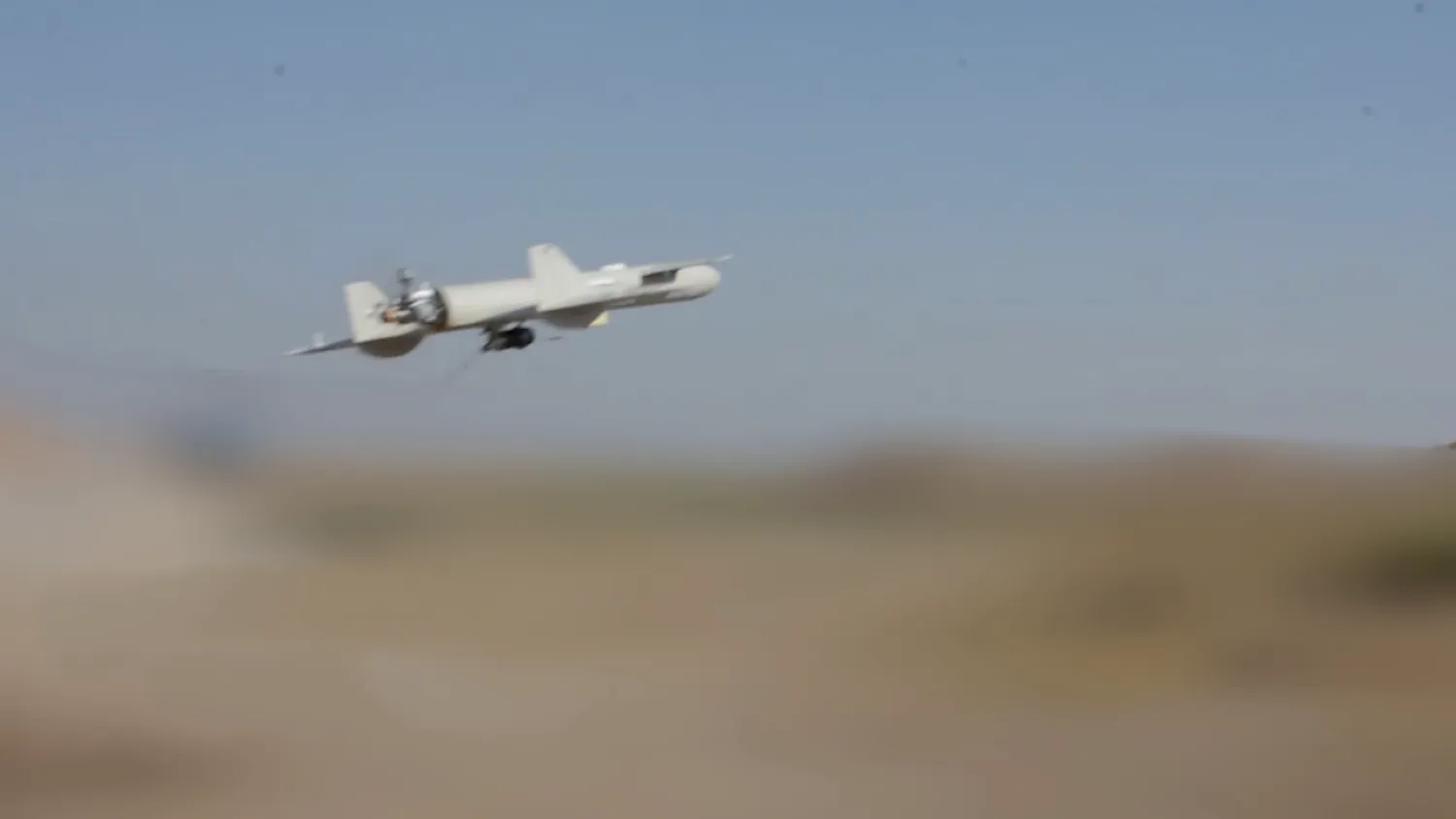
An image taken from a video released by Iraqi factions showing a drone they used in an attack on a US base.
TT

Baghdad Suspects Israel Targeted Chinese Air Defense Systems Held by Iraqi Factions

An image taken from a video released by Iraqi factions showing a drone they used in an attack on a US base.

Sources said Baghdad suspects that two sites storing Chinese-made man-portable air defense systems were targeted in airstrikes last week, as officials examine an intelligence assessment suggesting that the US-Israeli war against Iran may have already resumed, even before the official start of hostilities, but on Iraqi soil.

On October 17, the Popular Mobilization Forces (PMF) announced that it had contained a fire caused by an explosion at a stockpile of damaged ammunition inside one of its facilities in the East Canal area of Baghdad. It said five people sustained minor injuries and that an investigation was underway to determine the circumstances of the incident.

More than a week has passed without the findings of the investigation being announced. However, an Iraqi government official who was not authorized to speak publicly said the relevant authorities were still examining the circumstances of the explosion.

Chinese Air Defense Systems

Sources told Asharq Al-Awsat that the two sites were suspected of having come under attack, destroying a large shipment of Chinese-made air defense systems that had recently arrived from Iran and been transferred to Iraqi factions loyal to Tehran.

One source explained that "the armed faction that selected the site to store the air defense systems believed it would be extremely difficult to access or detect."

The source added that "the suspected attack occurred shortly after the shipments arrived at the two storage sites."

Another source revealed that the explosion followed a series of blasts that began on October 1 and targeted warehouses belonging to armed factions in various areas around Baghdad, including facilities storing drones designed for suicide attacks and reconnaissance.

According to the sources, several armed factions have been actively transferring advanced air defense systems and drones from Iran to Iraq over the past few weeks and storing them at facilities under their control.

Unconfirmed reports had suggested that secret shipments from China to Iran included heat-seeking man-portable air defense systems designed to counter low-flying aircraft, including helicopters and drones.

On July 28, China's Foreign Ministry categorically denied reports of deals involving the sale or shipment of Chinese-made missiles and air defense systems to Iran.

Repositioning

The factions' activities coincided with the participation of several of them in the government led by Ali al-Zaidi, following reports that US approval had enabled their inclusion after they were granted an extension until June 30, 2027, to comply with a deadline for bringing weapons under state control.

Two people close to the leader of an armed faction told Asharq Al-Awsat that "Iran-aligned groups were exploiting the declared truce with the Americans to reposition themselves and transfer strategic weapons."

Israel May Be Behind the Attack

It remains unclear how the strikes were carried out, whether by fighter jets or drones.

Conflicting reports have described sorties by Israeli fighter jets, supported by aerial refueling aircraft, through Iraqi airspace near the Iranian border. However, this information has not been independently confirmed.

A security official told Asharq Al-Awsat that authorities in Baghdad had sufficient grounds to believe Israel was behind the strikes on the warehouses, although they had yet to determine how the attacks were conducted.

An Iraqi official said the government was focused on investigating the incident because of the extensive damage inflicted on the two sites and surrounding areas.

The official confirmed that the government did not yet possess conclusive information identifying those responsible for the attack.

He added that Prime Minister Ali al-Zaidi and senior military commanders were working to gather further information about the strikes and determine whether they were linked to reports of Israeli violations of Iraqi airspace that began after the withdrawal of coalition forces on September 30, 2026.

The information, including reports that the air defense systems had reached Iraq, could not be independently verified.

Asharq Al-Awsat sought comment from the Iraqi government spokesperson and security media officials regarding the strikes, the extent of the damage and whether investigators had uncovered evidence identifying those responsible. No response had been received by the time this report was prepared.

The War May Have Already Begun

A senior political adviser said the attack reflected an assessment within Iraqi intelligence circles that the resumption of the US-Israeli war against Iran may already have begun, albeit quietly and without an official announcement, on Iraqi territory.

According to this assessment, the operation involves targeting the supply lines of armed factions and disrupting weapons shipments to prevent them from participating in any renewed regional confrontation.

A senior figure in the Coordination Framework said leaders of ruling political parties had believed for weeks that a renewed war between Washington and Tehran would begin with the complete destruction of the military capabilities of Iraqi armed factions.

Iraqi factions placed particular emphasis on violations of Iraqi airspace when a truce was announced in conjunction with the withdrawal of US forces.

On September 30, the secretary-general of Kataib Hezbollah announced the group's commitment to suspending military operations but excluded what he described as "attacks involving aircraft and hostile violations of airspace" until government air defenses were fully established.

On Saturday, the group calling itself the Islamic Resistance in Iraq said it had "documented 171 violations of Iraqi airspace by combat and reconnaissance aircraft since the beginning of October 2026."

The Coordination Framework official told Asharq Al-Awsat that Iranian Revolutionary Guard Corps officials had instructed leaders of Iraqi armed factions to step up preparations to establish a defensive line "against hostile combat aircraft."

Lebanon Hands Over Al-Alwani’s Body to Iraq without Autopsy

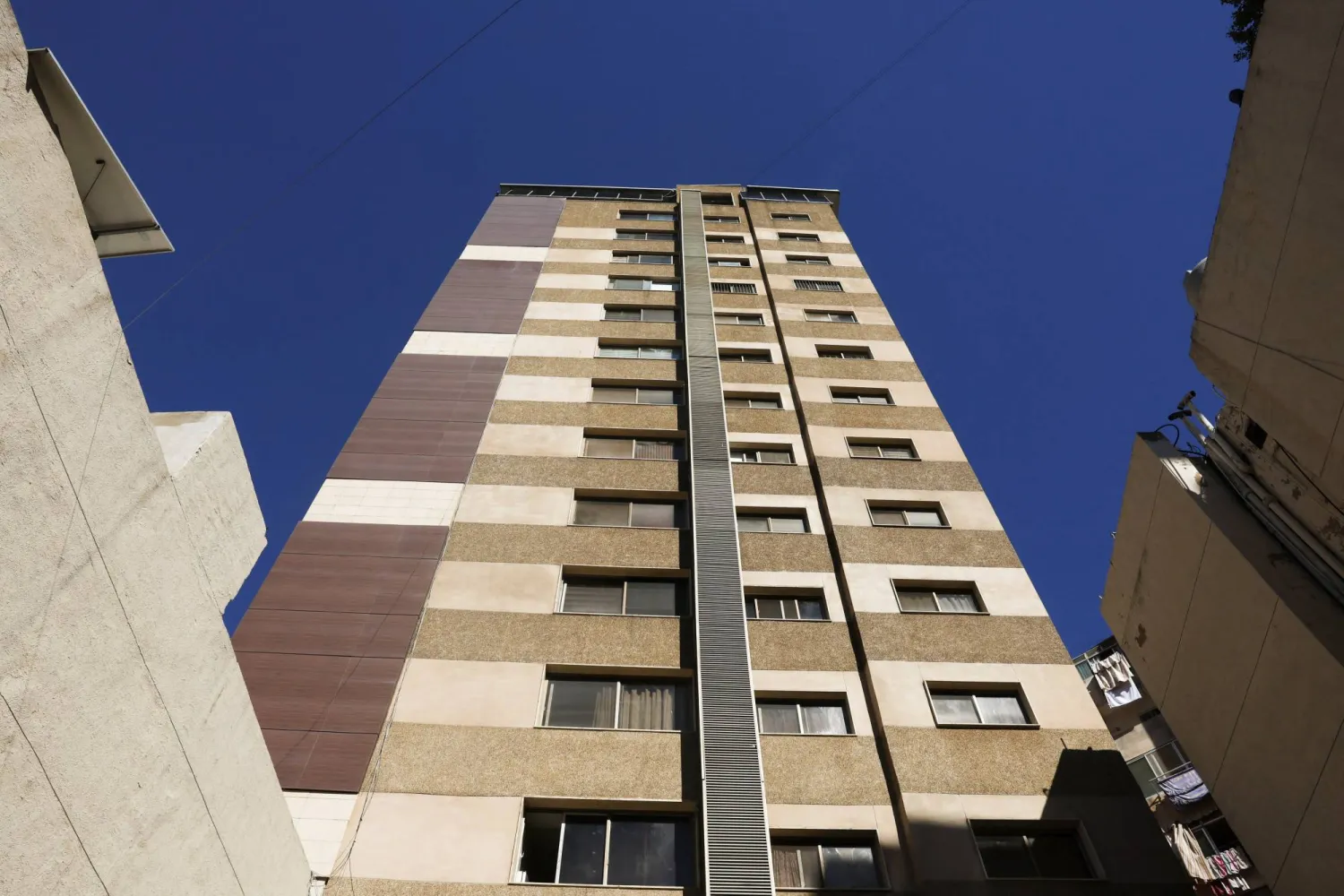
The building where former Iraqi MP Ahmed al-Alwani was found strangled to death in Beirut, Lebanon, November 11, 2026. (Reuters)
TT

Lebanon Hands Over Al-Alwani’s Body to Iraq without Autopsy

The building where former Iraqi MP Ahmed al-Alwani was found strangled to death in Beirut, Lebanon, November 11, 2026. (Reuters)

Lebanon's Public Prosecutor at the Court of Cassation Judge Ahmad Rami al-Hajj ordered the handover of the body of former Iraqi MP Ahmed al-Alwani to the Iraqi Embassy in Beirut for transfer to Baghdad, at the request of his family.

A judicial source explained that X-rays conducted Thursday on al-Alwani’s body revealed a quantity of fluid in the victim's lower abdomen and pelvis.

It said the judiciary had ordered an autopsy to determine the nature of the fluid and whether it was blood, which could indicate that he had been beaten and suffered internal bleeding.

However, the Iraqi Embassy asked the judiciary to forego the autopsy and transfer the body to Baghdad so that those procedures could be carried out there. The request was granted.

The judicial source said that determining the causes of death can be accomplished once the suspects or those accused in the crime are arrested and through their confessions.

The source also revealed that two individuals who sold phone lines to the perpetrators in the Tariq al-Jdideh area in Beirut have been placed under investigation, with no decision made yet on whether to detain or release them.

The judicial source further noted that Lebanon has so far received no response from Damascus about the arrest and extradition of the two Syrian suspects who fled into Syrian territory.


An Israeli Strike on a Hospital Highlights the Devastation to Gaza’s Healthcare System

 A medical staff member salvages medical equipment at Nasser Hospital after it was hit by an Israeli airstrike overnight in Khan Younis, Gaza Strip, Thursday, Nov. 12, 2026. (AP)
A medical staff member salvages medical equipment at Nasser Hospital after it was hit by an Israeli airstrike overnight in Khan Younis, Gaza Strip, Thursday, Nov. 12, 2026. (AP)
TT

An Israeli Strike on a Hospital Highlights the Devastation to Gaza’s Healthcare System

 A medical staff member salvages medical equipment at Nasser Hospital after it was hit by an Israeli airstrike overnight in Khan Younis, Gaza Strip, Thursday, Nov. 12, 2026. (AP)
A medical staff member salvages medical equipment at Nasser Hospital after it was hit by an Israeli airstrike overnight in Khan Younis, Gaza Strip, Thursday, Nov. 12, 2026. (AP)

A deadly airstrike on the biggest hospital in the southern Gaza Strip highlighted the devastation that Israel's campaign has wreaked on the Palestinian territory's healthcare system over the past three years.

The strike that hit Nasser Hospital's surgical wing killed six people, including a surgeon and a 13-year-old boy, and heavily damaged operating rooms and patient wards. The Israeli military said it targeted a Hamas commander using the hospital as a base, though it did not provide evidence for the claim.

Israel has carried out near daily strikes in Gaza despite a ceasefire agreement with Hamas that took effect in October 2025. Israel says it is targeting fighters. Israel launched its campaign in Gaza in retaliation for Hamas' deadly October 2023 attack on southern Israel.

Direct attacks on hospitals have become rarer during the truce. But Thursday's strike underscored how Gaza's health system is still struggling to recover.

Here is a look at Israel's attacks on hospitals, its accusations against Hamas and the impact on Gaza's healthcare system.

Israel has attacked Gaza hospitals frequently in the war

The Israeli military besieged multiple hospitals around Gaza throughout the war, often surrounding them for weeks and battering them with strikes and gunfire while patients and staff were trapped inside and supplies ran out. Some sieges ended with troops storming hospitals, often leaving medical equipment destroyed, or with staff and patients forced to evacuate. Troops detained hundreds of healthcare workers.

Two major raids left Gaza City’s Shifa Hospital, the territory’s largest, in ruins.

Aside from the sieges, hospitals and other medical facilities have frequently come under Israeli fire or been hit by airstrikes that the military says target Hamas fighters. During some of the worst months, as few as 14 of Gaza's 36 prewar hospitals were functioning, and shortages of medicine meant patients writhed in pain without painkillers and deadly infections ran rampant.

The World Health Organization says it has documented more than 1,050 attacks on health facilities in Gaza, causing more than 1,000 deaths. The UN says more than 1,700 medical personnel were killed in the war, including in strikes away from medical facilities. At least six medical staffers from Gaza, including three prominent doctors, have died in Israeli prisons, according to rights groups that have documented abuses in custody.

Israeli forces have struck Nasser Hospital repeatedly. In 2025, the military killed 22 people when it shelled a vantage point used by reporters on the hospital roof, then hit rescue workers and journalists rushing to help the wounded. Among those killed were five journalists, including Mariam Dagga, who was working with The Associated Press.

While attacks during the ceasefire have waned, some strikes in recent months have damaged medical facilities, according to the UN.

Israel accuses Hamas of using the facilities for military purposes

Israel has sought to justify the assaults by accusing Hamas of using the hospitals as command-and-control centers, though it has provided limited evidence. Palestinian and hospital officials have denied these claims.

Hamas security men have sometimes been seen in hospitals, controlling access to certain areas.

The international medical aid group Doctors Without Borders suspended most operations at Nasser Hospital in January because of the presence of masked armed men and situations in which patients were arrested or intimidated. It resumed operations a few months later, citing “concrete improvements” after talks with Gaza authorities, including restrictions on entry of armed individuals.

In the case of Nasser Hospital, the Israeli military said Thursday that it was targeting Muhammad Abu Ismail, who it said headed Hamas’ Khan Younis Brigade and had been using the facility as a headquarters for planning attacks.

It did not explain why the hospital’s surgical unit was targeted. The strike smashed through a patient recovery area and wrecked operating rooms and a rest area for doctors.

The military did not say whether it had killed Abu Ismail. He was not on the hospital’s list of people killed.

International law gives protections to hospitals Hospitals are protected under international humanitarian law and attacking them is a war crime.

Medical facilities can lose that protected status if they are used for military purposes “to commit acts harmful to the enemy.” But the Geneva Conventions, passed in 1949, say there must be a warning with a reasonable period of time before any attack, and that the attack must be proportional to the military threat and take care to avoid civilian casualties.

The Israeli military said it had held “warning conversations” with Gaza health officials before Thursday's strike regarding militant use of hospitals. It said it made clear that “if the activity was not halted, it would act to remove the threats posed by it.”

Medical organizations and rights groups also have criticized Israel’s restrictions on medical aid and equipment entering Gaza as a violation of international law. The Israeli military says it allows aid to enter Gaza but bars some “dual use” items it asserts could be used for military purposes.

Gaza's healthcare system is struggling to recover

Israel’s attacks, along with restrictions on aid, have left Gaza’s healthcare system in ruins. Twenty of Gaza’s 36 pre-war hospitals are functioning, though none is fully operational.

During much of the war, some of those hospitals offered little beyond first aid even as they dealt with scores of wounded people. They struggled to keep lights and equipment functioning because of fuel shortages.

The ceasefire deal has given aid groups and the Health Ministry breathing room to get some services functioning again. But the sector continues to suffer from Israel’s restrictions on entry or slow approvals for medicines, supplies and equipment. The World Health Organization said in a Sept. 30 report that 47% of essential medicines were out of stock and that shortages in lab supplies, medical equipment, spare parts and fuel hampered health work.

At the same time, hospitals and clinics struggle to treat a population where almost everyone has lost their homes and more than 1.6 million live in tents or other ramshackle shelters. Communicable diseases and infections are widespread, and thousands have life-changing wounds from the war.


Sudan: Haroun’s Lawyers Doubt He Will Be Turned over to ICC

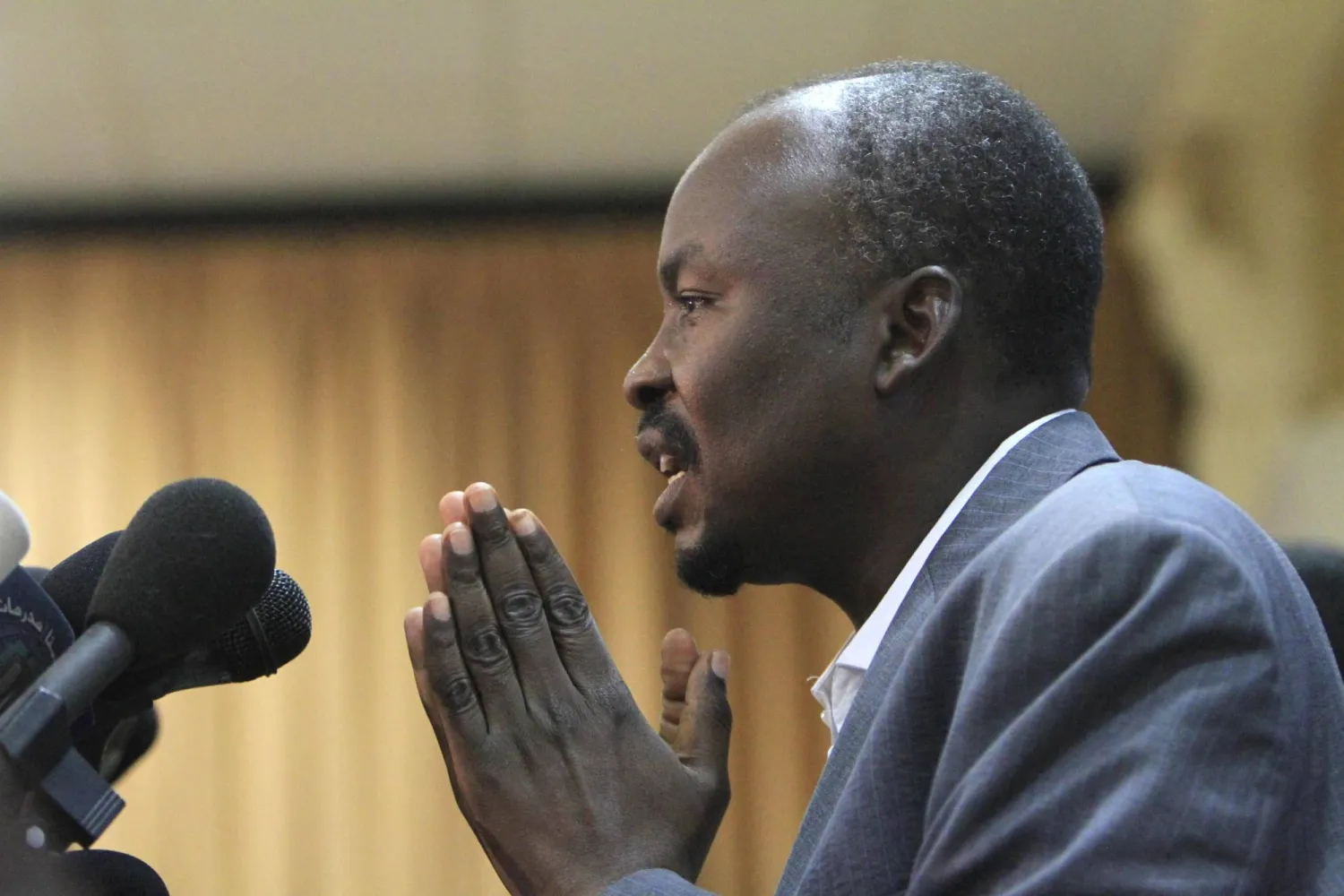
Ahmed Haroun, governor of Sudan's embattled state of South Kordofan, speaks to reporters in Khartoum on July 26, 2011. (AFP)
TT

Sudan: Haroun’s Lawyers Doubt He Will Be Turned over to ICC

Ahmed Haroun, governor of Sudan's embattled state of South Kordofan, speaks to reporters in Khartoum on July 26, 2011. (AFP)

The arrest of Ahmed Haroun, former head of the ruling National Congress Party under former Sudanese President Omar al-Bashir, has reignited debate over the fate of former regime leaders wanted by the International Criminal Court (ICC), as well as the military establishment's relationship with the Islamist movement.

Awatif al-Jaali, a member of Haroun’s defense team, said members of the team doubt his detention is linked to arrangements to hand him over to the ICC, which seeks him on charges of "committing war crimes in the Darfur region during al-Bashir's rule."

Al-Jaali told Asharq Al-Awsat that her client was arrested while traveling from the eastern Sudanese city of Kassala to the capital, Khartoum, by an unidentified security agency. She confirmed that the defense team has no information regarding his place of detention or the circumstances surrounding his arrest.

The defense team intends to submit a request to judicial authorities to allow its lawyers to meet with their client, ascertain the reasons for his arrest, and identify the authority that issued the order before determining the next legal steps, she said.

The defense team comprises lawyers from both inside and outside Sudan, she revealed.

Moreover, Al-Jaali described the arrest as "illegal," saying that it "contradicts rights guaranteed by the constitution and the law, foremost among them freedom of expression of political and ideological views."

Haroun's arrest came days after he appeared in a televised interview in which he revisited the topic of his party's relationship with the military establishment and declared his support for army commander Abdel Fattah al-Burhan, adding that the latter had been influenced by what he described as media hype and international pressure against Islamists.

In an interview with Reuters last year, Haroun said he expected that the army would remain in power after the war ends, stressing the need to reach a formula defining its role in political life.

He also said that his party seeks to return to governing the country following a post-war transitional phase.

His recent statements drew criticism from anti-war political and civil forces, which argued that allowing former regime leaders to move freely inside the country, despite facing charges of war crimes and crimes against humanity, reflects their continued political and security influence.

Political forces said that Haroun's arrest may be an attempt to contain the fallout from his media appearance and absorb the domestic and international pressure and criticism that followed, particularly amid growing debate over the nature of the relationship between the army and Islamists, and the extent to which military decision-making is independent of its influence.