
Iraq’s Ruling Coordination Framework Faces Growing Risk of Split

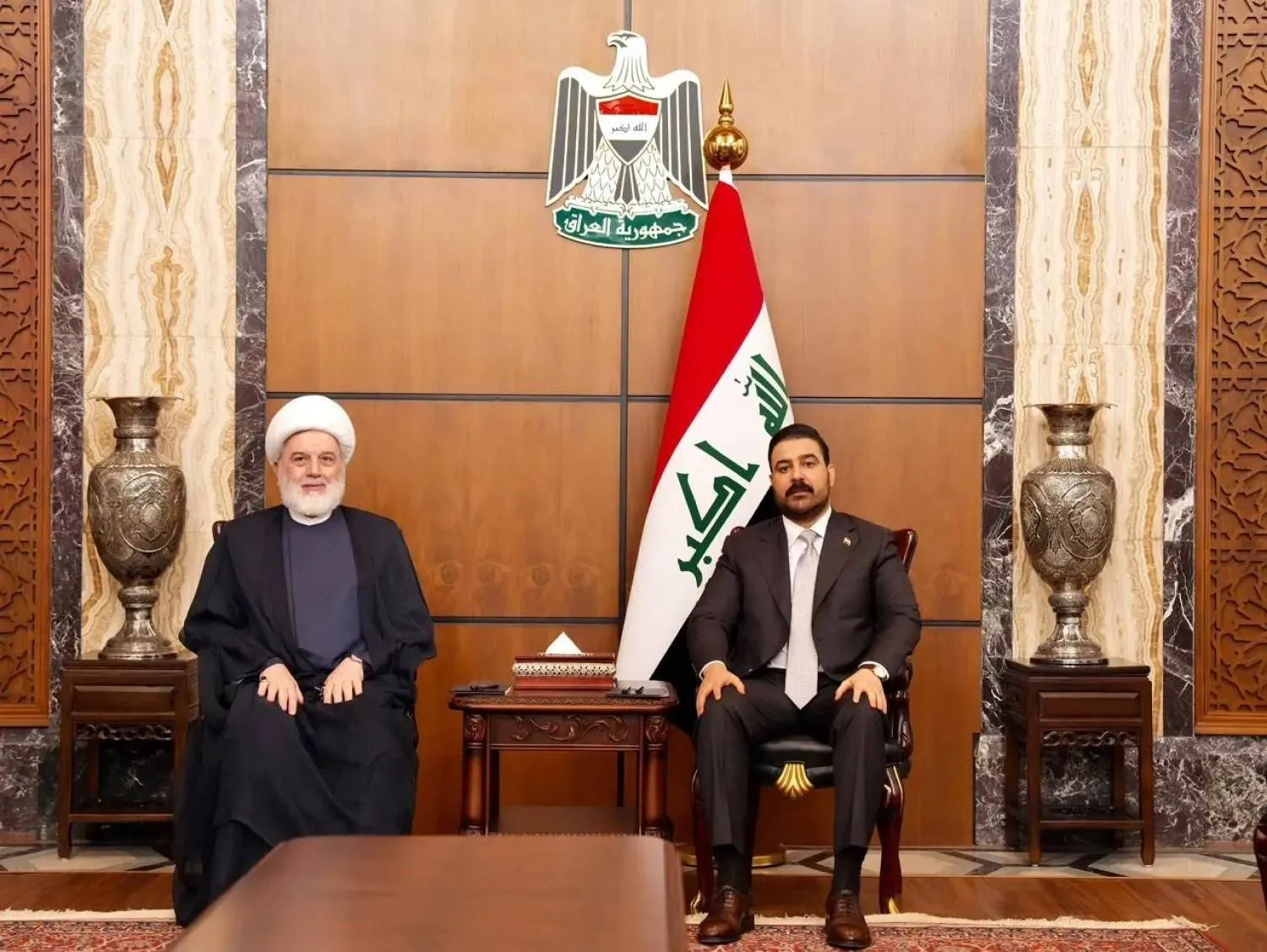
Prime Minister Ali al-Zaidi with Islamic Supreme Council of Iraq leader Humam Hamoudi (Prime Minister’s Media Office). 
TT

Iraq’s Ruling Coordination Framework Faces Growing Risk of Split

Prime Minister Ali al-Zaidi with Islamic Supreme Council of Iraq leader Humam Hamoudi (Prime Minister’s Media Office). 

Deepening divisions over Prime Minister Ali al-Zaidi, the disarmament of armed factions and the distribution of government posts threaten to fracture Iraq’s ruling Shiite Coordination Framework, according to sources close to the alliance.

The sources describe intense polarization fueled by competing political interests, disagreements over the country’s financial crisis and disputes over vacant and previously allocated government positions. Recent public clashes among senior figures have further exposed the widening rifts.

Dispute Erupts in Public

Tensions erupted publicly last Saturday when Khalid al-Marsoumi, a member of the Reconstruction and Development Alliance led by former Prime Minister Mohammed Shia al-Sudani, called for the prosecution of former Prime Minister Nouri al-Maliki.

Al-Marsoumi accused Maliki of “destroying society and spreading discord,” citing the fall of nearly a third of Iraq’s territory to Daesh in 2014, when Maliki was prime minister.

Hisham al-Rikabi, director of Maliki’s media office, responded: “Enough hypocrisy and political grandstanding. Those who speak today about the fall of the provinces and discord must stop exploiting the tragedies of Iraqis in their political disputes.”

Last week, the Reconstruction and Development parliamentary bloc announced it would suspend its attendance at parliamentary sessions in protest against what it described as “systematic violations and irresponsible behavior that some lawmakers insist on pursuing.”

The bloc said such conduct amounted to “malicious smear campaigns and systematic targeting of the Reconstruction and Development Alliance and its leadership.”

Criticism and accusations directed at the alliance and its leader, Sudani, frequently come from lawmakers and political figures affiliated with other Coordination Framework parties.

Al-Zaidi’s Frustration

Sources close to the government and the Coordination Framework told Asharq Al-Awsat that sharp polarization had taken hold within the alliance.

They attributed the divisions to some factions aligning themselves with Prime Minister Ali al-Zaidi while others sought to cast doubt on his management of the state and obstruct his efforts to disarm armed groups.

The sources also pointed to objections to Zaidi’s foreign visits, particularly his recent trip to Syria, and competition over vacant government positions, including the premiership and leadership of the National Security Service.

They said Zaidi was frustrated by the polarization and attempts by certain blocs and parties to undermine many of his powers and pressure him over efforts to combat corruption and disarm armed factions.

The prime minister also finds himself heavily constrained by Coordination Framework leaders who insist on meeting with him every week, in parallel with his regular weekly Cabinet meetings, the sources added.

Last Saturday, Humam Hamoudi, head of the Islamic Supreme Council of Iraq, said Zaidi was the Coordination Framework’s choice for prime minister.

“The Coordination Framework is accountable before God and the people for formulating visions and policies in accordance with the law and constitution, while Zaidi is responsible for implementing them through his government’s mechanisms,” Hamoudi said.

Observers interpreted the remarks as reflecting the alliance’s dominance over government decision-making and the limited authority exercised by the prime minister.

Political analyst Ihsan al-Shammari, head of the Center for Political Thinking, said the Coordination Framework, which had maintained its cohesion through two successive governments, was now facing serious disagreements stemming from competing interests and conflicting positions on several issues.

“Foremost among these disputes are the distribution of government posts, the handling of corruption cases and the issue of weapons, all of which could expose the Coordination Framework to the risk of a split,” Shammari told Asharq Al-Awsat.

Leadership Rivalries

Shammari said the long-running struggle for leadership within the Coordination Framework had become increasingly evident in the rivalry between Maliki and former Prime Minister Sudani.

The dispute, he explained, reflected a broader contest for leadership and attempts to impose influence and control over decision-making within the alliance.

Dispute Over Armed Factions

Shammari identified the weapons issue as one of the alliance’s most significant sources of division, extending beyond Maliki and Sudani to other Coordination Framework factions.

Most of its members favor keeping weapons in the hands of armed groups, although this is not a position shared by all parties, he said.

The issue has created a crisis between the prime minister’s push for rapid progress toward bringing all weapons under state control and factions unwilling to relinquish their arms amid mounting US pressure.

Shammari warned that the Coordination Framework’s failure to meet US demands to dismantle armed structures operating outside state authority could deepen its divisions.

He said the risk was particularly acute if President Donald Trump’s administration resorted to a maximum-pressure campaign that could include sanctions and other measures. Such developments, he argued, could accelerate the alliance’s fragmentation.

Iran’s Role in Preserving Unity

Despite the mounting tensions, Shammari noted that the Coordination Framework and Iraq’s Shiite political forces had weathered major political and popular upheavals since 2019.

What distinguished the period following the formation of Sudani’s government, he said, was the presence of a political force capable of managing the alliance’s internal balance, containing disputes and preserving a minimum level of cohesion among its members.

Shammari noted that Iran had been the principal external factor preventing the Coordination Framework from breaking apart.

He explained that Tehran continues to regard the alliance’s survival, despite its internal divisions, disputes and mutual accusations, as a means of strengthening its influence over Iraqi decision-making and maintaining a political umbrella that protects its influence in the country.

“As long as this factor remains in place, Iran will apparently continue working to prevent the Coordination Framework from splintering and preserve its cohesion, even if only formally,” Shammari said.

He cautioned, however, that Iranian influence did not guarantee the alliance’s survival.


Syria Needs EU Support to Ensure Stability, Kallas Says

High Representative of the European Union for Foreign Affairs Kaja Kallas speaks prior to the Foreign Affairs Council meeting in Brussels, Belgium, 16 November 2026. (EPA)
TT

Syria Needs EU Support to Ensure Stability, Kallas Says

High Representative of the European Union for Foreign Affairs Kaja Kallas speaks prior to the Foreign Affairs Council meeting in Brussels, Belgium, 16 November 2026. (EPA)

European Union foreign ministers will discuss on Monday elevating their relationship with Syria as the war-torn country needs urgent support to ensure stability amid ‌escalating tensions ‌in the ‌region, ⁠the bloc's foreign policy ⁠chief said.

"We really see that Syria needs a lot of investments, to build ⁠up institutions and ‌its ‌reforms," Kaja Kallas ‌told reporters ahead of ‌a monthly foreign ministers meeting in Brussels.

"On the European side we ‌want to see Syrian refugees return but ⁠they ⁠need conditions to return. There's a lot we can do together because the stability of Syria is in our interest and the interest of region."


Jordan Bans Telegram App Over ‘Radicalization’ Claims

Jordanian military police stand guard outside Jordan's State Security Court in Amman, Jordan, November 15, 2026. (Reuters)
TT

Jordan Bans Telegram App Over ‘Radicalization’ Claims

Jordanian military police stand guard outside Jordan's State Security Court in Amman, Jordan, November 15, 2026. (Reuters)

Jordan announced a ban on the Telegram messaging app on Monday, citing concerns that it was being used to spread extremism, weeks after a deadly attack on a church.

"We announce the blocking of the Telegram app in Jordan, in the framework of efforts aiming to bolster digital security and protect users," the Jordanian security directorate said.

It said the move came "in the context of the commitment to protecting society and countering any uses that could contribute to and facilitate committing cyber crimes, threats, blackmail or spreading illegal content".

It also said it sought to counter "attempt to spread radicalization and extremism which affects national security".

The ban comes after the October 23 attack on a church in the southern Karak governorate that killed nine people and wounded dozens of others.

On Sunday, a court sentenced three men to death by hanging over the attack. Authorities described them as followers of a hardline extremist ideology.


Confrontation between Iraqi PM, Kataib Hezbollah Intensifies

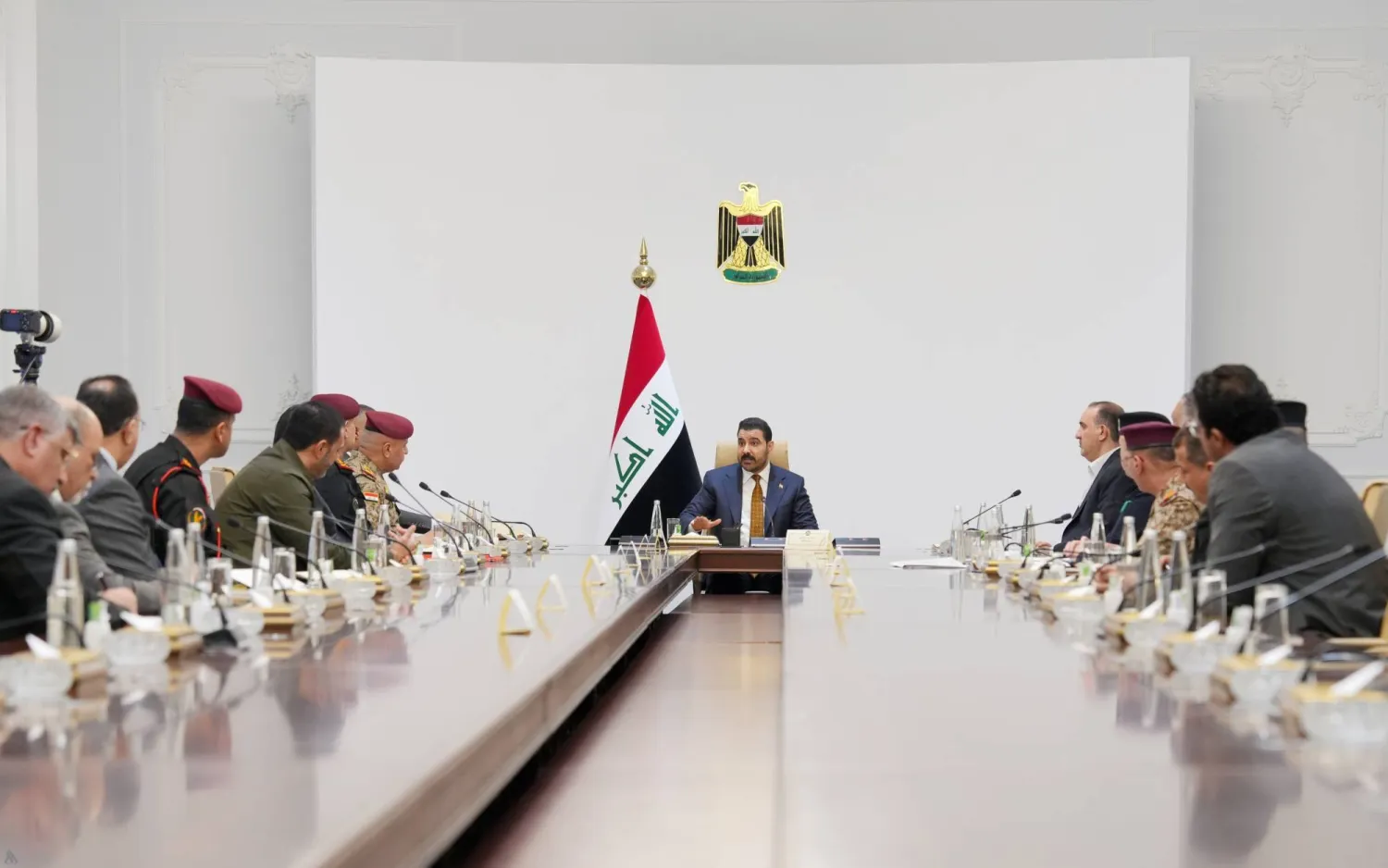
Iraqi PM Ali al-Zaidi chairs a security meeting on Sunday on oil smuggling in Jurf al-Sakhar. (INA)
TT

Confrontation between Iraqi PM, Kataib Hezbollah Intensifies

Iraqi PM Ali al-Zaidi chairs a security meeting on Sunday on oil smuggling in Jurf al-Sakhar. (INA)

Iraqi Prime Minister Ali al-Zaidi has won half the battle against armed factions by referring dozens of security and military officials across Babil province’s operational sectors to the judiciary for failing to halt oil smuggling in Jurf al-Sakhar, an area that has been held by the Kataib Hezbollah faction.

The government has made strides in its efforts to impose state monopoly over arms, including by offering government positions as incentives to several armed groups.

A number of those factions, including Kataib Hezbollah and Harakat al-Nujaba, have however refused to surrender their arms, arguing that they are “ideological” and tied to what is known as the “unity of arenas”, as promoted by Iran.

However, the sudden revelation that the armed faction, which has controlled Jurf al-Sakhar for years, was involved in smuggling oil passing near the area by puncturing pipelines has largely changed the equation.

The revelation was made after the security-political committee formed by al-Zaidi managed to enter the previously off-limits area to the authorities. There, it uncovered oil smuggling operations involving tanker trucks.

The development prompted al-Zaidi, who is also Commander-in-Chief of the Armed Forces, to issue several decisions viewed by experts as paving the way, for the first time, for a real confrontation with the armed factions to allow military units to enter the area.

According to a statement from the Office of the Commander-in-Chief of the Armed Forces, al-Zaidi chaired an emergency security meeting on Saturday evening to review the findings of a committee investigating oil smuggling in Jurf al-Sakhar.

The committee confirmed the accuracy of Federal Intelligence and Investigations Agency reports detailing oil smuggling operations, unauthorized refineries, and administrative irregularities.

“In light of the investigation’s findings, the Commander-in-Chief of the Armed Forces directed that all suspects involved in the oil smuggling operations be referred to the judiciary and that legal measures be taken against them,” it added.

He also decided to relieve the following officials in Babil of their duties: the police chief, the director of northern Babil police, the director of Babil intelligence and counterterrorism at the Ministry of Interior, the director of national security in Babil, the director of intelligence and security for Babil province at the Ministry of Defense, the director of Babil intelligence, the commander of the Popular Mobilization Forces (PMF) in Babil, the commander of the Energy Police’s Sixth Brigade at the Ministry of Interior, and the director of the Oil Pipelines Company at the Ministry of Oil.

“The Commander-in-Chief directed that operations commanders, provincial police chiefs, and directors of security and intelligence agencies bear full responsibility for any oil smuggling incidents occurring within their sectors of responsibility.”

He stressed the need to tighten oversight and security measures to prevent these practices and hold those negligent accountable, stressing that “not a single inch of Iraq, from Zakho to Basra, will remain a place where smuggling is practiced.”

Legal expert Ali al-Tamimi told Asharq Al-Awsat that “Iraq today faces the most dangerous threat to its sovereignty: weapons outside state control.”

He said the PM’s measures in Jurf al-Sakhar sparked widespread legal debate even though the moves align with the constitution.

“These referrals and dismissals are grounded in Article 78, which designates the prime minister as the direct executive responsible for the state's general policy and commander-in-chief of the armed forces,” he remarked.

He added: “Individuals who sabotage oil infrastructure are prosecuted as terrorists under the Anti-Terrorism Law and could gave penalties up to the death penalty.”