


Sudan Files Complaint Against Ethiopia at UN Security Council Over Drone Attacks

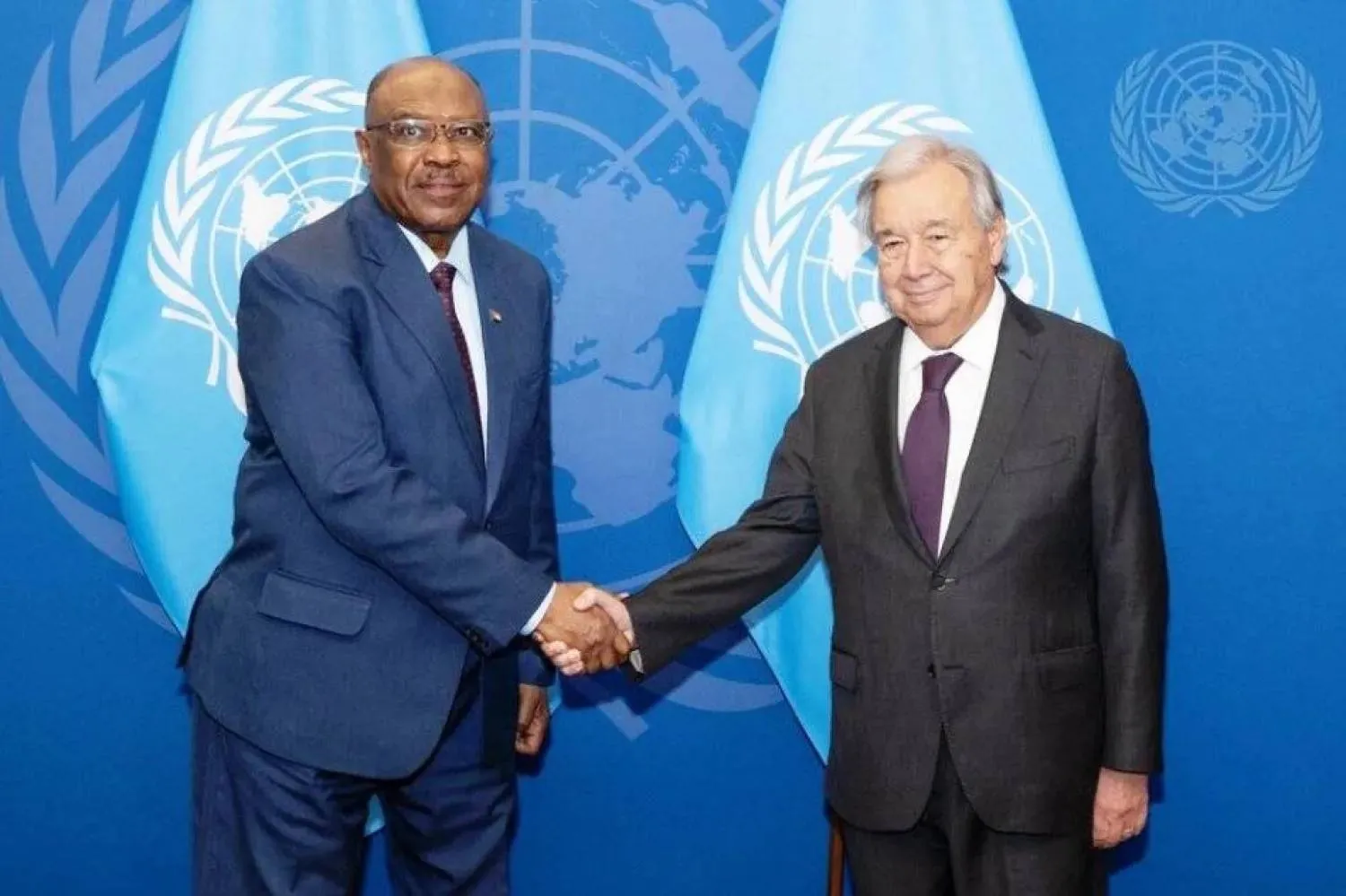
UN Secretary-General Antonio Guterres meets Sudanese Foreign Minister Mohieddin Salem in New York on September 24 (UN). 
TT

Sudan Files Complaint Against Ethiopia at UN Security Council Over Drone Attacks

UN Secretary-General Antonio Guterres meets Sudanese Foreign Minister Mohieddin Salem in New York on September 24 (UN). 

Sudan has filed complaints against Ethiopia with the UN Security Council and the African Union Peace and Security Council over what Khartoum described as attacks on civilian facilities by drones launched from Ethiopian territory, according to a statement from the Sudanese Foreign Ministry.

Khartoum accuses Addis Ababa of siding with the Rapid Support Forces (RSF), which have been fighting the Sudanese army for more than three years, leaving the country divided into areas controlled by the rival forces.

Ethiopia, for its part, accuses Sudan of supporting rebels in its Tigray region.

The attacks exchanged between the two sides have fueled unprecedented tensions between the neighboring countries, raising fears that Sudan’s war could spill across its borders.

Sudan’s Foreign Ministry declared that “the terrorist militia’s use of Ethiopian territory to target Sudanese territory constitutes a hostile act that places Ethiopia before international law.”

Sudan’s Sovereignty Council, headed by army chief Abdel Fattah al-Burhan, had previously reported that more than 180 drones launched from Ethiopian territory had attacked Sudan this year.

According to a council report, the attacks killed or wounded around 500 civilians, striking residential areas, hospitals, power stations and fuel facilities.

Both sides in Sudan’s war rely heavily on drones, with direct confrontations declining as aerial attacks intensify in the country’s west and south.

The United Nations has warned of an increase in drone attacks, which have killed more than 1,100 people since the beginning of the year, including more than 300 in the past month alone.

The war, now in its fourth year, has killed tens of thousands of people and displaced millions within Sudan and beyond its borders, while famine has spread across several areas.

Recent attacks on power stations in army-controlled areas have caused widespread electricity outages in Khartoum, Al-Jazira, White Nile and Gedaref states.

Reports indicated that around 15 power stations were targeted between October 20 and November 1, while the Emergency Lawyers group announced on Sunday that 15 stations had been targeted in October alone.



Lebanon Slams Israeli Military Official’s Visit to School in South

Israeli military's Arabic-language spokesperson Ella Waweya in a screengrab from her visit to Debel. (Ella Waweya on X)
TT

Lebanon Slams Israeli Military Official’s Visit to School in South

Israeli military's Arabic-language spokesperson Ella Waweya in a screengrab from her visit to Debel. (Ella Waweya on X)

Lebanese officials have denounced a visit by an Israeli military spokesperson to a school in a Christian village in an Israeli-occupied area of southern Lebanon.

On Sunday, as Lebanon marked its Independence Day, the Israeli military's Arabic-language spokesperson Ella Waweya shared a video showing her outside a school in Debel and then standing in front of a classroom of children.

The village is located inside the occupied "security zone" that Israel declared after the latest war erupted with Hezbollah in March and which covers a strip of southern Lebanon along the border around 10 kilometers (six miles) deep.

It is among a number of Christian-majority villages near the frontier where many residents have refused to leave despite Israeli military orders to evacuate.

Cut off from the rest of Lebanon, they are largely dependent on humanitarian aid.

"During my last visit to south Lebanon, I was amazed by the beauty of the land and the villages which have paid a heavy price due to their exploitation... by a terrorist organization," Waweya said, referring to the Iran-backed Hezbollah group.

Lebanese Prime Minister Nawaf Salam later denounced Israel for "dragging students into a military and propaganda display".

"An occupying power has no right to exploit our children to embellish the image of its occupation or impose its dominance over our people in the south," he added.

Lebanese Education Minister Rima Karami condemned what she called an "attack on the Debel school and its students".

The Debel municipality said the visit took place around a month earlier "without any prior coordination with the school's administration".

Since the video's publication, the village and local officials have been targeted on social media with accusations of collaborating with Israel.

Such attacks are particularly incendiary in the area because Israel relied on local collaborators during its around two-decade-long occupation of southern Lebanon, which ended in 2000.

The municipality said that the choice by residents to remain was not "acceptance of the occupation" but rather "an expression of our attachment to our Lebanese land".

Residents "for long months have lived in exceptional and difficult conditions under the Israeli military presence," it said.

Hezbollah drew Lebanon into the Middle East war in March with rocket fire at Israel, which responded with massive airstrikes and a ground invasion.

Lebanon says Israeli attacks since then have killed more than 4,300 people.


War in Gaza Wreaks Environmental Catastrophe, Analysis Says

 Palestinians search for reusable items at a landfill in Deir al-Balah, central Gaza Strip, Friday, Nov. 20, 2026. (AP)
Palestinians search for reusable items at a landfill in Deir al-Balah, central Gaza Strip, Friday, Nov. 20, 2026. (AP)
TT

War in Gaza Wreaks Environmental Catastrophe, Analysis Says

 Palestinians search for reusable items at a landfill in Deir al-Balah, central Gaza Strip, Friday, Nov. 20, 2026. (AP)
Palestinians search for reusable items at a landfill in Deir al-Balah, central Gaza Strip, Friday, Nov. 20, 2026. (AP)

Israel’s military offensive in Gaza has unleashed an environmental catastrophe likely to impact Palestinians for decades, according to an analysis released Monday.

The military assault, launched in response to Hamas’ Oct. 7, 2023, attack, has strewn heavy metals, explosive residues, asbestos and biological contaminants across the entire territory, according to the analysis by Oxfam and the Conflict and Environment Observatory, a British nonprofit that studies the environmental impact of war.

Oxfam International Executive Director Amitabh Behar said Gaza's destruction “will have fundamentally degraded the environmental conditions necessary for human safety and survival.”

With Gaza’s infrastructure in ruins, mountains of trash tower over the tents. Some trash is burned, contributing to respiratory issues. Residents say they also suffer from skin diseases and pest infestations.

Nisreen Hassan, from Khan Younis, said no one is handling sanitation, leaving trash to accumulate for months.

She said children are especially susceptible to stomach ailments and other health problems stemming from pests contaminating food in people's tents.


Erdogan to Visit Libya for 1st Time in 15 Years for Türkiye-Africa Summit in December

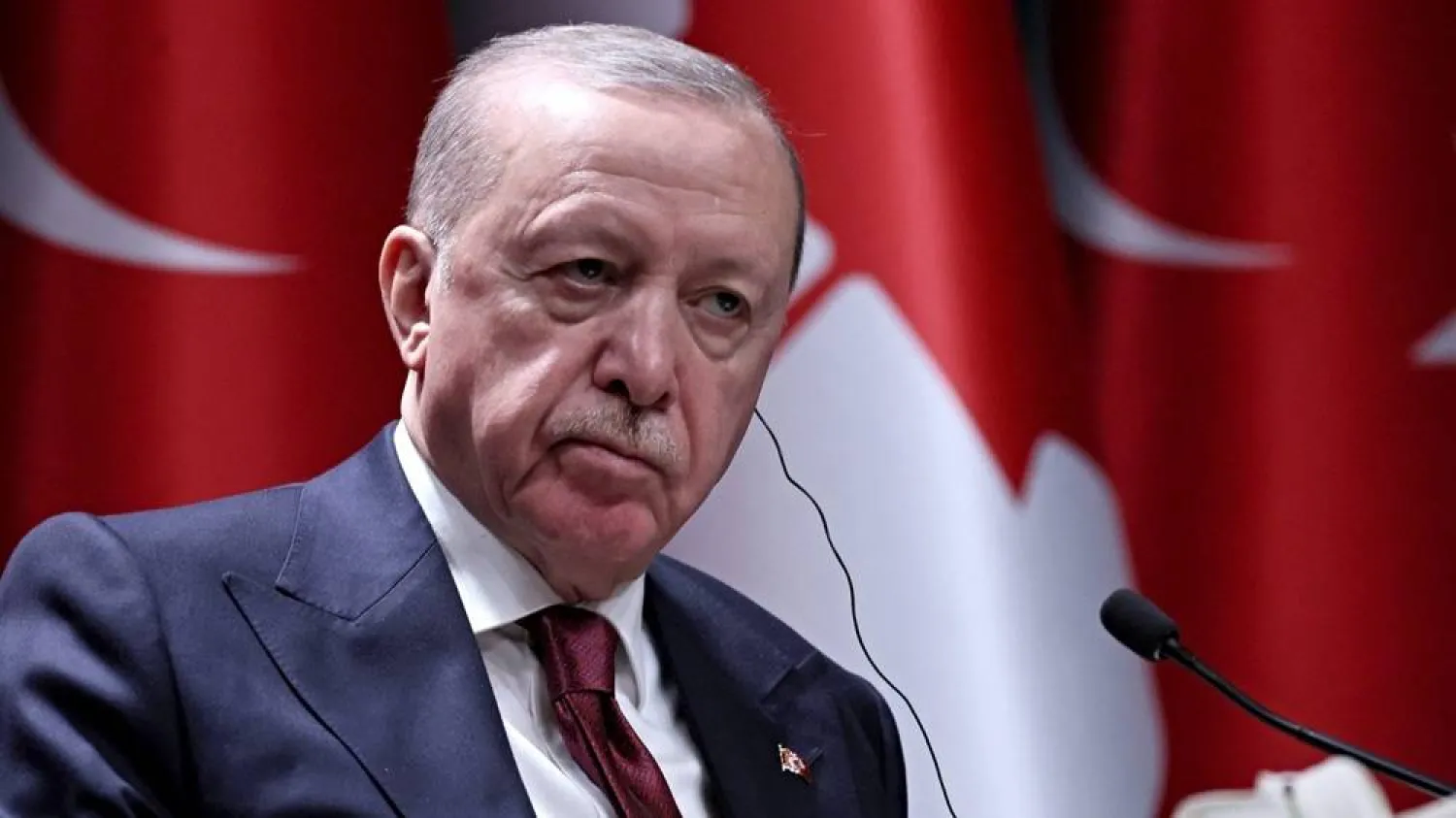
Turkish President Recep Tayyip Erdogan attends a joint press conference with Canadian Prime Minister Mark Carney in Ankara, October 22, 2026. (AFP)
TT

Erdogan to Visit Libya for 1st Time in 15 Years for Türkiye-Africa Summit in December

Turkish President Recep Tayyip Erdogan attends a joint press conference with Canadian Prime Minister Mark Carney in Ankara, October 22, 2026. (AFP)

Turkish President Recep Tayyip Erdogan will visit Libya next month for the first time in more than 15 years to attend the Türkiye-Africa Summit, scheduled to take place in Tripoli on December 8-9.

Turkish Foreign Minister Hakan Fidan announced the visit just hours after he and Turkish intelligence chief Ibrahim Kalin met with Abdulhamid Dbeibah, head of Libya’s Government of National Unity (GNU), in Istanbul on Saturday.

In a televised interview Saturday evening, the Turkish foreign minister described his talks with Dbeibah as “highly productive,” adding that the Libyan prime minister had expressed his anticipation of Erdogan’s visit.

Erdogan last visited Libya on September 16, 2011, when he was prime minister. He traveled to Tripoli and Benghazi following the fall of Moammar al-Gaddafi’s regime, meeting Mustafa Abdul Jalil, then head of the National Transitional Council, and Mahmoud Jibril, head of its executive office. Several cooperation agreements were signed during the visit.

Fidan described Erdogan as the key figure in defending western Libya and preventing the complete collapse of the GNU.

“During the war in Libya, we fought on one side, but we also established a comprehensive framework of high-level diplomacy and peacebuilding tactics to achieve peace and prevent another war,” he said.

The minister noted that Türkiye had since strengthened its ties with eastern Libya to a level approaching its relations with the west.

“We are now using our relations with both sides to unify the country,” he added.

Fidan stressed the importance of the Türkiye-Africa Summit, saying it would focus on strengthening the partnership between Türkiye and African countries across various sectors.

The summit will also address developments in Libya, including political efforts to reunify the country and hold elections.

Fidan recalled that Erdogan had discussed developments in Libya and efforts toward national reunification with Dbeibah during a meeting on the sidelines of the 31st Conference of the Parties to the UN Framework Convention on Climate Change (COP31) on November 12.

The Istanbul meeting between Fidan, Kalin and Dbeibah followed the Libyan prime minister’s visit to Egypt, where he met President Abdel Fattah al-Sisi.

Their discussions covered ways to strengthen bilateral relations, Libya’s political developments, efforts to achieve stability and regional issues of mutual concern.