French Judges Probe War Crimes Complaint against Israeli Army in Lebanon

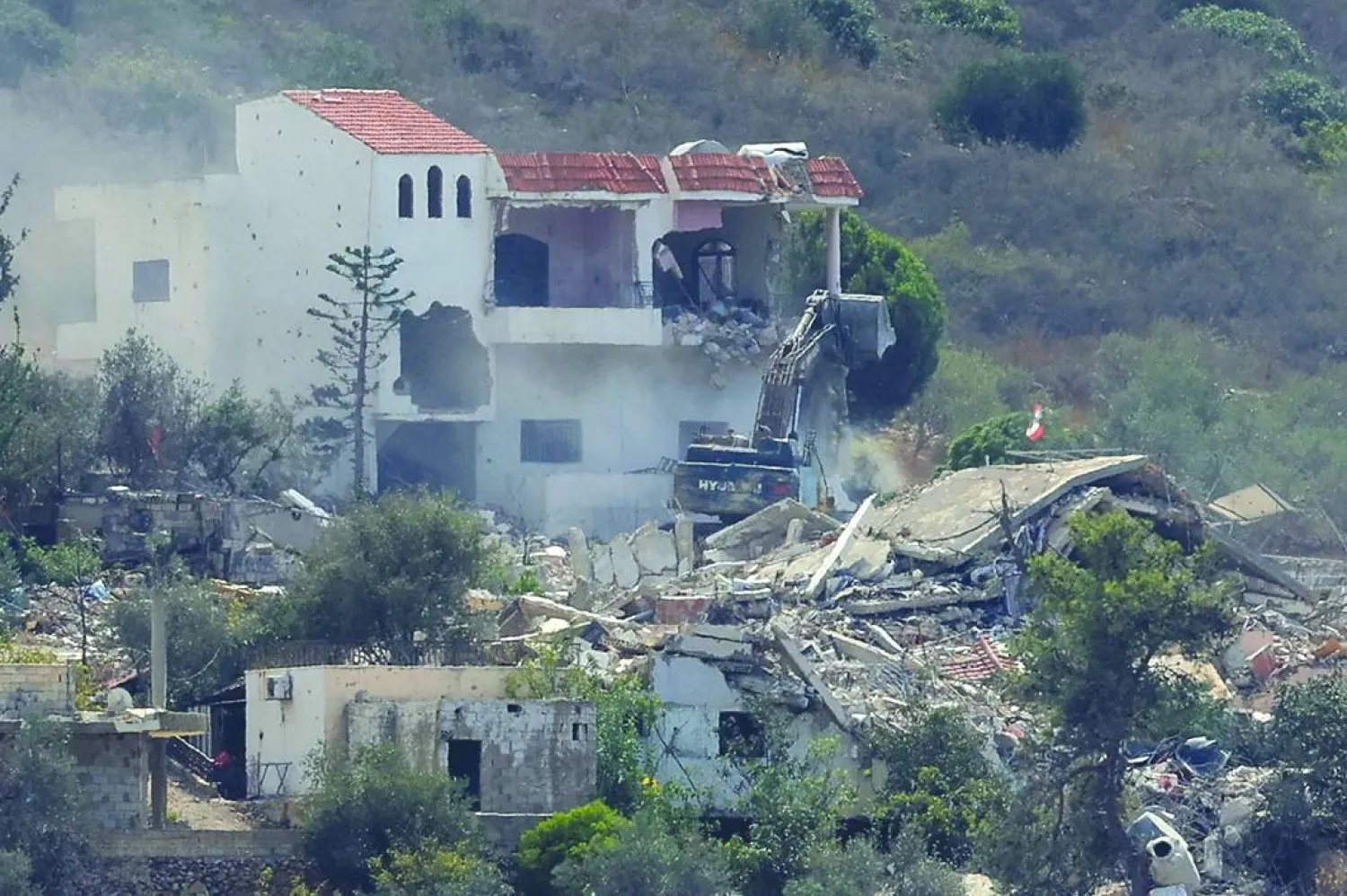
File: Israeli heavy machinery bulldozes houses in Mansouri, as seen from Hinniyeh, Southern Lebanon, September 19, 2026. (Reuters)
TT

French Judges Probe War Crimes Complaint against Israeli Army in Lebanon

File: Israeli heavy machinery bulldozes houses in Mansouri, as seen from Hinniyeh, Southern Lebanon, September 19, 2026. (Reuters)

France has opened a judicial investigation into a war crimes complaint over an Israeli strike on a residential building in Lebanon, a lawyer told AFP on Tuesday.

French-Lebanese artist Ali Cherri, whose parents were killed in the Beirut strike in 2024, filed the complaint as a civil party this year with the International Federation for Human Rights, Cherri's lawyer Clemence Bectarte explained.

The crimes against humanity unit of the Paris Judicial Court has appointed two investigating judges to the case, she added, hailing the move as "a first".

Lebanese militant group Hezbollah, an ally of Palestinian militants Hamas, opened a front against neighboring Israel at the start of the Gaza war after Hamas attacked Israel on October 7, 2023.

The hostilities, which escalated into open war in September 2024, have left more than 4,000 dead in Lebanon and forced more than a million people to flee.

Seven civilians, including Cherri's father and mother, aged 87 and 77, were killed in the bombing of their 12-storey apartment building in central Beirut on November 26, 2024, according to the complaint seen by AFP. Three floors were destroyed.

The strike occurred "just a few hours before the ceasefire agreement between Israel and Hezbollah came into effect," the complaint stated, citing detailed research by Amnesty International and Forensic Architecture into the incident.

AFP has reached out to the Israeli military for comment.

Cherri told AFP he had taken legal action "for the dignity of all civilian victims".

"For nearly two years, I have been fighting... to ensure that the Israeli bombing that killed my parents and five other civilians does not go unpunished," he said.

"What happened to my parents is not an isolated case... I hope this investigation will help break the impunity enjoyed by Israeli officials responsible for attacks against civilians in Lebanon and Palestine," he added.

- Several investigations underway -

While the judicial investigation marks a first over alleged war crimes by Israeli forces in Lebanon, other cases are pending.

French-Lebanese man Mohamad H., represented by lawyer Emmanuel Daoud, has sought action after losing his mother, sister, and two nephews in strikes on the southern city of Tyre during the night of April 16-17.

In another case, a French entrepreneur born in Lebanon has accused the Israeli army of uprooting 600-century-old olive trees belonging to his family in a village in southern Lebanon.

France's National Anti-Terrorism Prosecutor's Office (PNAT), which handles war crimes, has opened an investigation into allegations of torture and war crimes related to the Israeli forces' interception of humanitarian flotillas bound for Gaza in 2025 and 2026.

The PNAT also asked a Paris judge to open a war crimes investigation into the deaths of two French children in an Israeli bombing in Gaza in October 2023, while ruling out charges of genocide and crimes against humanity, according to sources close to the case.


Lebanon PM Warns Hezbollah Against Joining Another War

 Lebanese Prime Minister Nawaf Salam speaks to reporters at the Grand Serail in Beirut, December 3, 2025. (Reuters)
Lebanese Prime Minister Nawaf Salam speaks to reporters at the Grand Serail in Beirut, December 3, 2025. (Reuters)
TT

Lebanon PM Warns Hezbollah Against Joining Another War

 Lebanese Prime Minister Nawaf Salam speaks to reporters at the Grand Serail in Beirut, December 3, 2025. (Reuters)
Lebanese Prime Minister Nawaf Salam speaks to reporters at the Grand Serail in Beirut, December 3, 2025. (Reuters)

Lebanon's prime minister warned on Wednesday against plunging the country into a new war if the Middle East conflict resumes, in an apparent message to Hezbollah.

"Faced with the risks of renewed war in the region, I renew my warning of the dangers of dragging Lebanon into a new senseless adventure in service of outside interests," Nawaf Salam said.

Iran-backed Hezbollah has twice pulled Lebanon into a war with Israel in as many years, most recently when it attacked Lebanon's southern neighbor in support of Tehran in March.

"We do not accept the country again becoming a theatre for the conflict of others," Salam added, saying Lebanon had "already paid a heavy price".

In recent days, there has been heightened speculation about renewed US-Israeli strikes on Iran following the American midterm elections and Israeli general elections, along with bellicose threats from the leaders of both countries.

In response to Hezbollah attacks in March, Israel launched a major military campaign in Lebanon, including a ground invasion, which has killed more than 4,300 people.

It continues to occupy swathes of southern Lebanon, where it has been systematically demolishing villages.


Egypt’s Sisi Urges Trump, Iran to Show Flexibility Before ‘It Is Too Late’

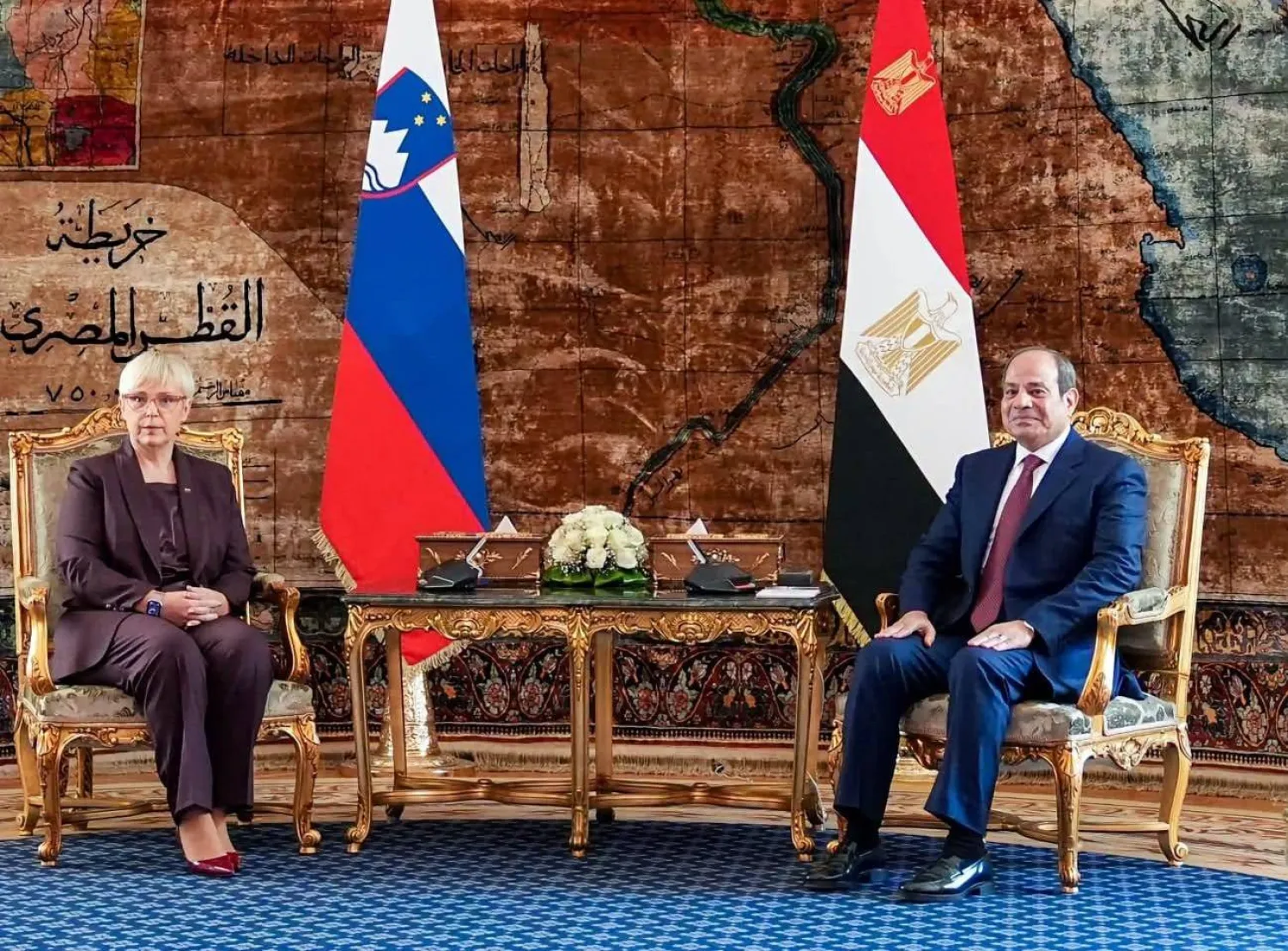
Egyptian President Abdel Fattah al-Sisi and his Slovenian counterpart Natasa Pirc Musar meet in Cairo on Tuesday. (Egyptian Presidency)
TT

Egypt’s Sisi Urges Trump, Iran to Show Flexibility Before ‘It Is Too Late’

Egyptian President Abdel Fattah al-Sisi and his Slovenian counterpart Natasa Pirc Musar meet in Cairo on Tuesday. (Egyptian Presidency)

Egyptian President Abdel Fattah al-Sisi on Tuesday appealed to the United States and Iran to show flexibility at this stage, stressing the importance of dialogue and mutual understanding “before it is too late” and warning that the alternative would have “catastrophic” consequences for the region.

Speaking at a news conference in Cairo alongside Slovenian President Natasa Pirc Musar, Sisi warned against any threat to Saudi Arabia’s security, reiterating Egypt’s “categorical rejection of any threat to the security and stability of the Kingdom and other Gulf states.”

According to the Egyptian presidency, Sisi’s talks with his Slovenian counterpart, who is making her first visit to Egypt, covered bilateral relations and the latest regional and international developments.

Sisi reaffirmed Egypt’s longstanding position on developments in the region, calling for regional de-escalation and political solutions to prevent the Middle East from sliding into a wider conflict.

He urged the parties involved in the current crisis between Iran and the US to allow room for dialogue and understanding and reach a political agreement that addresses the main demands of all sides.

The Egyptian president stressed the importance of dialogue and consensus “before it is too late.”

“The alternative would have catastrophic repercussions and consequences for the region and the world, which has been suffering successive crises for six years,” he warned.

Sisi appealed to Washington and Tehran to “show the greatest possible flexibility at this stage to find areas of common understanding that would allow the existing dispute to be resolved.”

He also reaffirmed Egypt’s full support for and solidarity with Arab countries, stressing his firm belief that Arab national security is “one indivisible whole.”

Sisi expressed confidence in Trump as “a man of peace who has succeeded in defusing many difficult crises.”

He urged the US president to “make every possible effort to provide mediators with all available forms of support and assistance to reach the best possible settlement, spare the region further suffering and give its peoples hope for a better life.”

Palestinian cause

Sisi stressed that the Palestinian cause “remains the central issue in the Middle East and one of the issues that reflects the international community’s commitment to the principles of justice and international law.”

He stressed the importance of all parties fully implementing the US president’s peace plan for Gaza and ensuring safe access for humanitarian assistance.

He also called for preserving the territorial unity of the Palestinian territories and rejecting any attempts to displace Palestinians from their land.

For her part, Pirc Musar said at the news conference that “peace cannot be achieved in the Middle East without the Palestinian people obtaining their rights.”

She reaffirmed Slovenia’s commitment to its position on the Palestinian issue and to respecting international humanitarian law.

Sisi praised his Slovenian counterpart’s international positions and policies supporting international law and peace, including in Gaza, noting that these positions had always been appreciated.

On bilateral relations, Sisi explained that the talks reflected a shared vision of building on progress made in relations between the two countries in recent years.

“We agreed to continue working to strengthen political consultations, develop economic and investment cooperation, and coordinate on regional and international issues amid the current overlapping crises,” he stated.

Cooperation and partnership

Sisi described Slovenia as an important partner for Egypt in Central Europe and announced an agreement with his counterpart on the need for a qualitative leap in bilateral cooperation.

The two leaders agreed to establish a timetable-based action plan to develop trade and investment cooperation mechanisms and strengthen direct contacts between their business communities.

Priority sectors include energy and related industries, transportation, tourism, culture, telecommunications and digital transformation, with the aim of opening new opportunities for production, investment and trade.

According to the Egyptian presidency, the talks also highlighted the importance of strengthening logistics and maritime transport cooperation, linking Egyptian ports with Slovenia’s Port of Koper and integrating supply chains between the two countries.

Sisi stressed the need to continue strengthening the partnership between Egypt and the European Union, as well as deepening Egyptian-Slovenian cooperation to advance broader Egypt-EU relations.

Former Egyptian Assistant Foreign Minister Ambassador Gamal Bayoumi described calls for de-escalation and peace in the region as essential amid signs of growing regional tensions.

“There is an awareness on the European side of Egypt’s central role in the regional peace process and Cairo’s ability to serve as a trusted mediator for de-escalation, dialogue and regional peace,” he told Asharq Al-Awsat.

Bayoumi added that Egypt and Slovenia share common positions on several regional issues, including the security of waterways, given their importance to trade between the two countries.

He noted that the Slovenian president’s visit demonstrated her commitment to strengthening trade and economic cooperation with Cairo, describing bilateral relations as “historic and a gateway to Egyptian-European relations.”

Bayoumi also pointed to Slovenia’s interest in expanding investment in the Suez Canal region, its expertise in metal industries and its imports of Egyptian food products.

“There are promising opportunities to expand cooperation between the business communities of the two countries,” he remarked.


Aoun: Lebanon Can No Longer Accommodate More Displaced Syrians

Syrian refugees at a camp in the town of Saadnayel in Lebanon’s Bekaa Valley last June. (AFP)
TT

Aoun: Lebanon Can No Longer Accommodate More Displaced Syrians

Syrian refugees at a camp in the town of Saadnayel in Lebanon’s Bekaa Valley last June. (AFP)

Although around 700,000 displaced Syrians have returned to their country since the fall of Bashar al-Assad’s regime in late 2024, the influx into Lebanon has continued. More than 854,000 Syrians remain registered with the UN refugee agency as residing in Lebanon, placing a growing burden on a country already grappling with severe financial and economic crises.

Lebanon has therefore made the issue a priority in its relations with Syria. A Lebanese ministerial delegation visiting Damascus on Monday raised the matter with Syrian authorities, urging them to help facilitate returns and provide incentives to encourage them to go back to overcome their fears and concerns.

President Joseph Aoun also addressed the issue, calling for international assistance.

During a meeting Tuesday with Susanne Raab, director general of the International Centre for Migration Policy Development (ICMPD), Aoun explained that Lebanon was working to return displaced Syrians to their country, saying the political changes in Syria had removed the reasons for their displacement.

He stressed that Lebanon could no longer accommodate more displaced Syrians and noted that contacts with Syrian authorities were continuing to organize their return in stages.

Aoun urged the international community and humanitarian organizations assisting displaced Syrians in Lebanon to provide that assistance in Syria instead, to encourage them to return.

No clear Syrian response

An official Lebanese source said Beirut was seeking Syria’s cooperation in establishing a mechanism for the planned, organized and safe return of displaced Syrians in stages, rather than returning everyone at once.

The source told Asharq Al-Awsat that Lebanon was also asking international organizations to limit funding and assistance currently provided to displaced Syrians to those who return to Syria, on the grounds that the circumstances that originally forced them to leave no longer exist.

Lebanon has yet to receive clear or definitive responses from Syrian authorities to these requests, according to the source, who identified the continued influx of Syrians into Lebanon as a major concern.

“It is true that around 700,000 people have returned to Syria since the fall of the former regime, but at the same time, large numbers of Syrians have entered Lebanon during the same period. This means that return figures alone do not reflect the full picture,” the source added.

UNHCR figures

According to records from the UN High Commissioner for Refugees (UNHCR), Lebanon currently hosts 854,633 registered Syrian refugees, along with 12,218 refugees and asylum-seekers of other nationalities.

Official figures also show that approximately 700,000 Syrians registered with UNHCR in Lebanon returned to Syria between December 2024 and the end of September 2026.

A UN-supported voluntary return program was launched in July 2025 to assist Syrians wishing to return home. Since then, 23 organized return trips have taken place, including a convoy that departed from Tripoli last week carrying 61 returnees.

UNHCR spokesperson in Lebanon Dalal Harb explained that the program supports those wishing to return by providing information, legal assistance, transportation and cash assistance through official border crossings.

Returning families receive a one-time cash grant of $100 per returning individual to help cover logistical arrangements associated with their return through official border crossings. Some particularly vulnerable families qualify for an additional one-time payment of $300 per household.

Inside Syria, eligible households among the most vulnerable groups may receive cash assistance of up to $600 per family, depending on an assessment of their circumstances and the program’s established criteria.

‘Syria Is Home’

To help refugees make informed decisions, UNHCR operates an online platform called “Syria Is Home”, which provides practical information on documentation requirements, housing, healthcare, education and return procedures.

UNHCR and its partners inside Syria also offer legal assistance, guidance, counseling and referrals to relevant authorities.

Harb told Asharq Al-Awsat that since the fall of the former regime, “refugees have increasingly expressed their intention to return to their country, whether now or in the near future.”

However, she noted that many refugees remain hesitant to make the decision because of uncertainty surrounding conditions in Syria in both the short and long term.

According to Harb, their main concerns include safety and security, unresolved housing issues, particularly whether they have homes to return to, access to essential services such as education and livelihood opportunities, land and property issues, and the availability of humanitarian assistance after their return.

A national priority

Many believe that the return of Syrian refugees is a priority for the Lebanese government rather than the Syrian government, which is occupied with addressing numerous other challenges.

Syrian writer and political researcher Dr. Maher al-Tamran, however, stressed that “the issue of return must be a Syrian national priority.”

Speaking to Asharq Al-Awsat, Tamran explained that “genuine incentives go beyond facilitating border crossings or providing financial assistance. They begin with ensuring legal security, protecting property rights and providing housing, education, healthcare and employment opportunities.”

Tamran acknowledged that the return issue “exceeds the financial capabilities of both countries,” but emphasized that this “does not absolve them of their political responsibility.”

“Lebanon wants to ease the economic and social burdens resulting from the refugee presence, while Syria needs to regain its human resources. But neither country can achieve sustainable returns without an international partnership,” he explained.

“What is needed is a shift from funding relief to financing recovery through an international fund to reintegrate returnees. Most importantly, assistance must not become a means of pressuring refugees,” he added.