


Egypt’s Sisi Urges Trump, Iran to Show Flexibility Before ‘It Is Too Late’

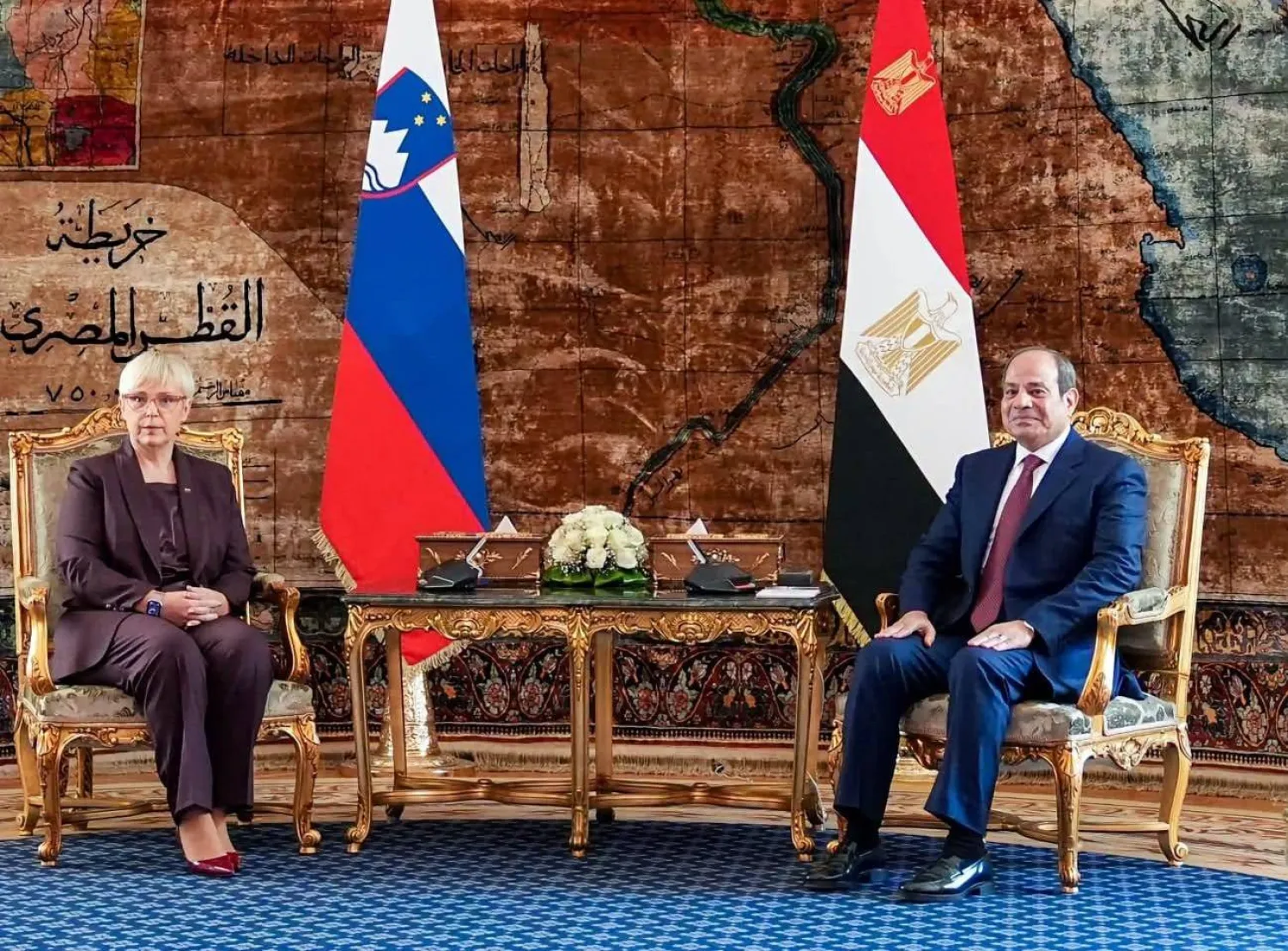
Egyptian President Abdel Fattah al-Sisi and his Slovenian counterpart Natasa Pirc Musar meet in Cairo on Tuesday. (Egyptian Presidency)
TT

Egypt’s Sisi Urges Trump, Iran to Show Flexibility Before ‘It Is Too Late’

Egyptian President Abdel Fattah al-Sisi and his Slovenian counterpart Natasa Pirc Musar meet in Cairo on Tuesday. (Egyptian Presidency)

Egyptian President Abdel Fattah al-Sisi on Tuesday appealed to the United States and Iran to show flexibility at this stage, stressing the importance of dialogue and mutual understanding “before it is too late” and warning that the alternative would have “catastrophic” consequences for the region.

Speaking at a news conference in Cairo alongside Slovenian President Natasa Pirc Musar, Sisi warned against any threat to Saudi Arabia’s security, reiterating Egypt’s “categorical rejection of any threat to the security and stability of the Kingdom and other Gulf states.”

According to the Egyptian presidency, Sisi’s talks with his Slovenian counterpart, who is making her first visit to Egypt, covered bilateral relations and the latest regional and international developments.

Sisi reaffirmed Egypt’s longstanding position on developments in the region, calling for regional de-escalation and political solutions to prevent the Middle East from sliding into a wider conflict.

He urged the parties involved in the current crisis between Iran and the US to allow room for dialogue and understanding and reach a political agreement that addresses the main demands of all sides.

The Egyptian president stressed the importance of dialogue and consensus “before it is too late.”

“The alternative would have catastrophic repercussions and consequences for the region and the world, which has been suffering successive crises for six years,” he warned.

Sisi appealed to Washington and Tehran to “show the greatest possible flexibility at this stage to find areas of common understanding that would allow the existing dispute to be resolved.”

He also reaffirmed Egypt’s full support for and solidarity with Arab countries, stressing his firm belief that Arab national security is “one indivisible whole.”

Sisi expressed confidence in Trump as “a man of peace who has succeeded in defusing many difficult crises.”

He urged the US president to “make every possible effort to provide mediators with all available forms of support and assistance to reach the best possible settlement, spare the region further suffering and give its peoples hope for a better life.”

Palestinian cause

Sisi stressed that the Palestinian cause “remains the central issue in the Middle East and one of the issues that reflects the international community’s commitment to the principles of justice and international law.”

He stressed the importance of all parties fully implementing the US president’s peace plan for Gaza and ensuring safe access for humanitarian assistance.

He also called for preserving the territorial unity of the Palestinian territories and rejecting any attempts to displace Palestinians from their land.

For her part, Pirc Musar said at the news conference that “peace cannot be achieved in the Middle East without the Palestinian people obtaining their rights.”

She reaffirmed Slovenia’s commitment to its position on the Palestinian issue and to respecting international humanitarian law.

Sisi praised his Slovenian counterpart’s international positions and policies supporting international law and peace, including in Gaza, noting that these positions had always been appreciated.

On bilateral relations, Sisi explained that the talks reflected a shared vision of building on progress made in relations between the two countries in recent years.

“We agreed to continue working to strengthen political consultations, develop economic and investment cooperation, and coordinate on regional and international issues amid the current overlapping crises,” he stated.

Cooperation and partnership

Sisi described Slovenia as an important partner for Egypt in Central Europe and announced an agreement with his counterpart on the need for a qualitative leap in bilateral cooperation.

The two leaders agreed to establish a timetable-based action plan to develop trade and investment cooperation mechanisms and strengthen direct contacts between their business communities.

Priority sectors include energy and related industries, transportation, tourism, culture, telecommunications and digital transformation, with the aim of opening new opportunities for production, investment and trade.

According to the Egyptian presidency, the talks also highlighted the importance of strengthening logistics and maritime transport cooperation, linking Egyptian ports with Slovenia’s Port of Koper and integrating supply chains between the two countries.

Sisi stressed the need to continue strengthening the partnership between Egypt and the European Union, as well as deepening Egyptian-Slovenian cooperation to advance broader Egypt-EU relations.

Former Egyptian Assistant Foreign Minister Ambassador Gamal Bayoumi described calls for de-escalation and peace in the region as essential amid signs of growing regional tensions.

“There is an awareness on the European side of Egypt’s central role in the regional peace process and Cairo’s ability to serve as a trusted mediator for de-escalation, dialogue and regional peace,” he told Asharq Al-Awsat.

Bayoumi added that Egypt and Slovenia share common positions on several regional issues, including the security of waterways, given their importance to trade between the two countries.

He noted that the Slovenian president’s visit demonstrated her commitment to strengthening trade and economic cooperation with Cairo, describing bilateral relations as “historic and a gateway to Egyptian-European relations.”

Bayoumi also pointed to Slovenia’s interest in expanding investment in the Suez Canal region, its expertise in metal industries and its imports of Egyptian food products.

“There are promising opportunities to expand cooperation between the business communities of the two countries,” he remarked.

Yemen’s Government Activates Emergency Plans to Protect Airports and Border Crossings

A displaced boy wearing an FC Barcelona jersey walks outside a tent at a displacement camp on the outskirts of Aden, Yemen, Wednesday, Nov. 11, 2026. (AP Photo/Abdulnasser Alseddik)
TT

Yemen’s Government Activates Emergency Plans to Protect Airports and Border Crossings

A displaced boy wearing an FC Barcelona jersey walks outside a tent at a displacement camp on the outskirts of Aden, Yemen, Wednesday, Nov. 11, 2026. (AP Photo/Abdulnasser Alseddik)

Military developments in Yemen have prompted the government to raise the level of preparedness at vital facilities and activate emergency plans at airports and land border crossings.

The move comes as displacement caused by Houthi escalation has expanded, surpassing 347,000 people, while the United Nations warns that civilian casualties since last August have exceeded 300 killed and wounded.

The latest measures reflect concerns that the repercussions of the fighting could spread to transportation, navigation, and supply sectors, particularly amid growing threats linked to the Bab al-Mandab Strait, one of the world's most important maritime trade routes.

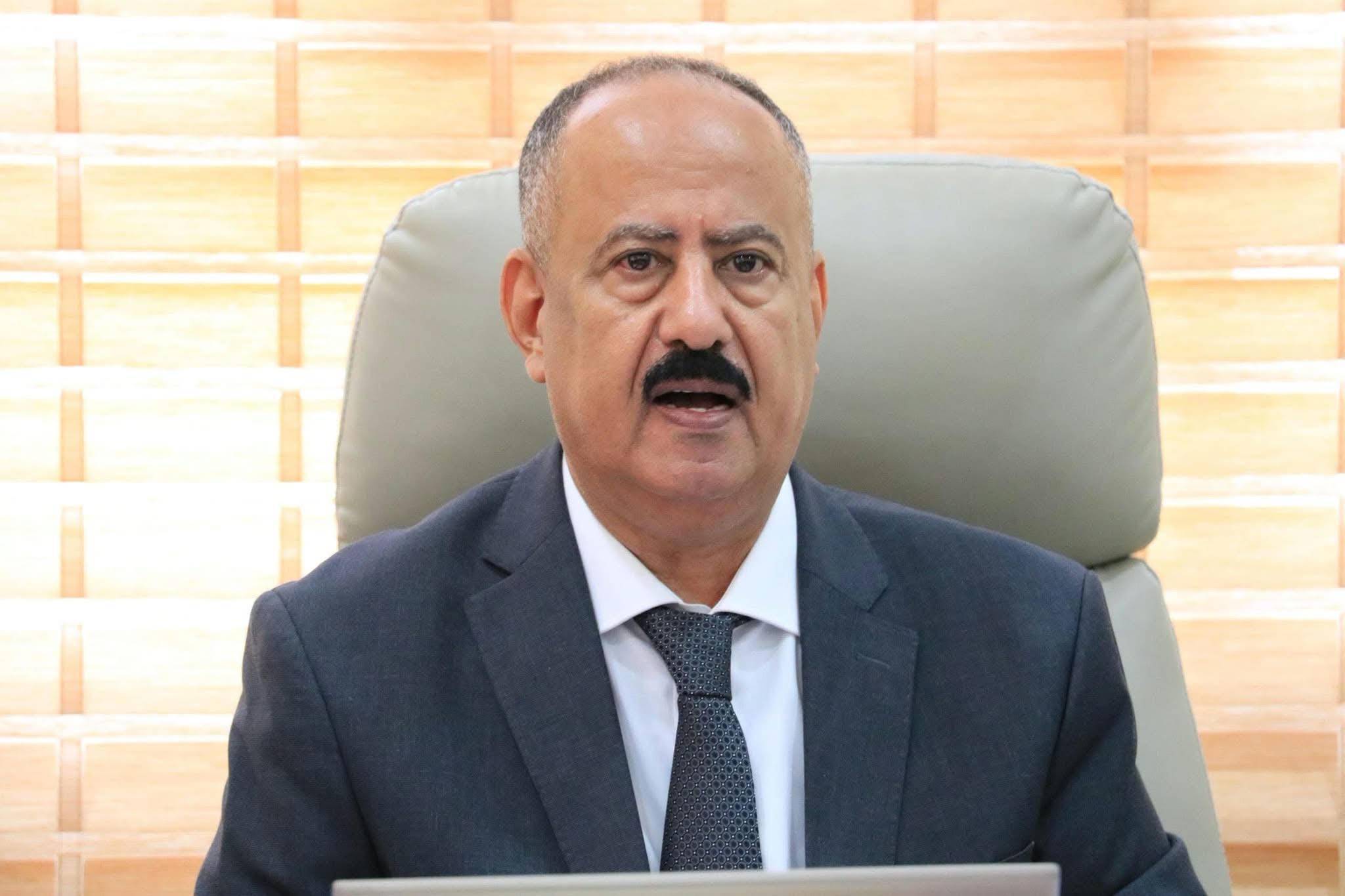
Yemeni Transport Minister Mohsen al-Omari instructed authorities to increase readiness and vigilance at airports and land crossings, activate emergency plans, tighten security and monitoring procedures, and strengthen coordination with local authorities and security agencies to ensure uninterrupted operations and the safety of critical infrastructure.

Yemeni Transport Minister Mohsen al-Omari (goverment media)

The directives were issued during a meeting with officials from the Civil Aviation and Meteorology Authority, the Land Transport Regulatory Authority, and directors of airports and border crossings to review emergency plans and the level of preparedness across ministry-affiliated institutions.

Al-Omari stressed that current circumstances require greater coordination and preparedness, noting the strategic importance of Bab al-Mandab as a vital waterway for global shipping and commerce.

He warned that any threat to international maritime routes would have consequences extending far beyond Yemen and impact global trade, and stressed that safeguarding maritime security is a shared responsibility requiring serious international action and close coordination with the Yemeni government and Saudi Arabia, which he said continues to support Yemen.

The minister also stated that Yemen has “no future under the Houthis,” describing the militias as an extremist sectarian and ideological project backed by Iran. He called for continued vigilance and strict adherence to government directives regarding developments in Bab al-Mandab and other vital areas.

Rising Wave of Displacement

Alongside the government measures, the humanitarian impact of the conflict continues to worsen. The International Organization for Migration (IOM) reported that the number of displaced people in Yemen has exceeded 347,000, including more than 14,000 individuals displaced during the last three days of the reporting period.

The organization documented the displacement of 18,780 people, representing 3,130 families, between November 8 and 14, indicating the continued flight of civilians from conflict zones and insecure areas.

Taiz Governorate has received the largest number of displaced people, hosting 143,130 individuals (41% of all recorded cases), followed by Lahj with 91,314 people (26%) and Aden with 70,404 people (20%). Additional displaced populations were recorded in Abyan, Hodeidah, Shabwa, Marib, Hadramawt, Al-Mahra, and Al-Dhalea.

The UN Office for the Coordination of Humanitarian Affairs (OCHA) reported that humanitarian agencies and partners have managed to deliver emergency assistance to more than 270,000 displaced people, roughly two-thirds of the total displaced population. More than 202,000 people have received emergency cash assistance.

In the health sector, aid programs reached over 103,000 displaced individuals, while a measles and rubella vaccination campaign launched on November 7 vaccinated more than 600,000 children.

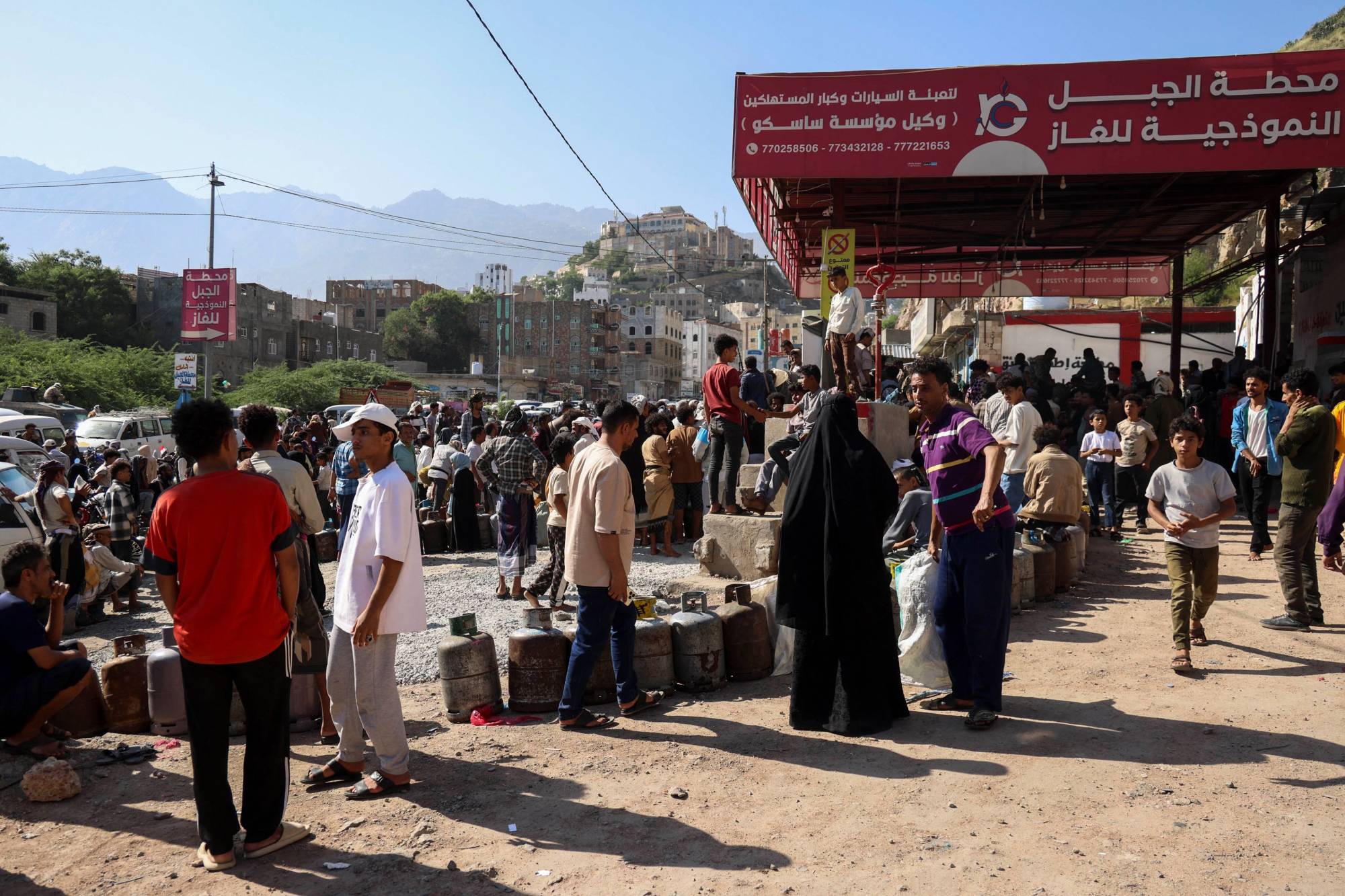
Yemenis line up to refill gas bottles at a refilling station in Taiz on October 19, 2026. (Photo by Ahmad AL-BASHA / AFP)

Civilian Casualties

The UN Human Rights Office documented more than 300 civilian casualties (killed and wounded) since the beginning of August, including over 70 deaths in cases verified by the organization.

According to the office, children account for more than one-third of all victims and nearly half of those killed. It warned that the true toll is likely much higher because the published figures include only cases independently verified by the UN.

These figures underscore the growing humanitarian consequences of the escalation, as fighting and displacement continue while the government seeks to secure critical infrastructure and reduce risks to transportation, shipping, and trade.


Syria FM Says Working Towards New Deal with EU

Foreign Minister Asaad al-Shaibani speaks at the Syria Partnership Coordination Forum in Damascus on Tuesday. (SANA)
TT

Syria FM Says Working Towards New Deal with EU

Foreign Minister Asaad al-Shaibani speaks at the Syria Partnership Coordination Forum in Damascus on Tuesday. (SANA)

Foreign Minister Asaad al-Shaibani said Tuesday that Syria was working towards a new agreement with the European Union as the sides seek to deepen ties nearly two years after the ouster of longtime ruler Bashar al-Assad.

Shaibani's remarks came a day after EU top diplomat Kaja Kallas said the bloc would look to sign a nearly 20-year-old association deal with Syria, as the country seeks recover and rebuild after more than 13 years of civil war.

Shaibani told the Syria Partnership Coordination Forum, held with the EU in Damascus, that "we are currently working with the (European) Union on a joint scope paper for a new agreement" that would "open doors to trade and investment, and make political dialogue and institutional cooperation a firm commitment".

Syria and the EU signed a cooperation agreement including on economy and trade in 1977.

In 2008, they preliminarily inked an association agreement to replace the earlier deal but it never went into force due to human rights concerns.

Kallas on Monday said that EU foreign ministers meeting in Brussels had "supported moving ahead" with the 2008 deal and launching talks for an updated one.

"Syria needs investment and a successful transition," she said, adding: "The aim is to give Europe and Syria a framework for trade, political dialogue, and closer cooperation as soon as possible."

Syria's conflict killed more than half a million people, sent millions fleeing internally and abroad, and ravaged the country's infrastructure and industry.

The EU in 2025 removed its sanctions on Syria's economy in a bid to help its post-war recovery, while in May this year the bloc restored the cooperation agreement with Syria.

On Tuesday, European Commissioner for the Mediterranean, Dubravka Suica, told the event in Damascus that "the EU wants to deepen the political dialogue, strengthen trade and economic cooperation, and support Syria's reintegration" into the European-Mediterranean space.

"Respect for human rights and the protection of minorities is fundamental to our relationship with Syria. All Syrians must have a say in their country's future," she added.

The bloc has emphasized the need for Syria to carry out reforms and for its transition to be inclusive, particularly after sectarian violence last year.


UN: Drones Account for Nearly Three-quarters of Sudan War Deaths this Year

A man sits on his home debris following a strike in Imtidad Nasser, a neighborhood east of Khartoum's airport, Sudan, Tuesday, Oct. 20, 2026. (AP Photo/Marwan Ali)
TT

UN: Drones Account for Nearly Three-quarters of Sudan War Deaths this Year

A man sits on his home debris following a strike in Imtidad Nasser, a neighborhood east of Khartoum's airport, Sudan, Tuesday, Oct. 20, 2026. (AP Photo/Marwan Ali)

The UN human rights office said on Tuesday it had confirmed 2,230 civilian deaths in Sudan's civil war so far this year, with drone strikes accounting for nearly three-quarters of the toll and emerging as the conflict's "defining feature".

United Nations High Commissioner for Human Rights Volker Turk condemned the "brazen disregard for the laws of war" by ⁠the warring parties which ⁠he said may amount to war crimes.

Sudan's army has been fighting the Rapid Support Forces in a civil war since April 2023 and both sides have stepped ⁠up drone strikes in recent months.

"The increased use of ...drones emerged as one of the defining features of the conflict in the Sudan, enabling parties to extend their reach far beyond areas of territorial control and front lines," said the UN report covering the January-June period.

Since then, the UN-verified toll has risen ⁠to ⁠2,230 of whom over 1,630 were killed by drones, according to a UN statement released alongside the report, adding that the true scale of loss was likely higher.

As well as those killed directly by the fighting, drones are increasingly targeting facilities that ensure human survival such as water sources and power supplies, the UN statement said.
