


Yemeni Govt Forces Regain Initiative Against Houthis

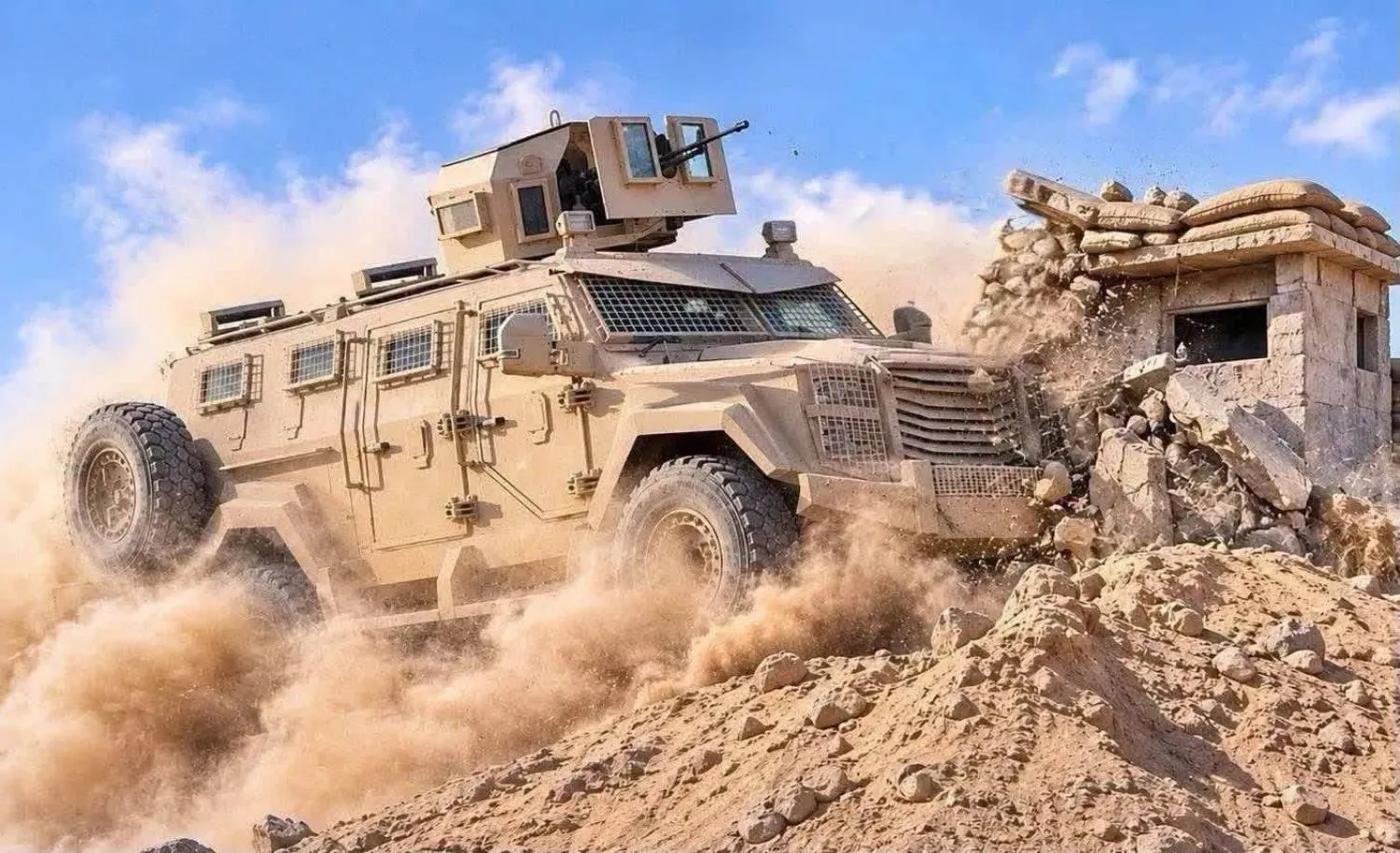
A Yemeni government military vehicle storms a Houthi position in Al-Jawf. (Military Media)
TT

Yemeni Govt Forces Regain Initiative Against Houthis

A Yemeni government military vehicle storms a Houthi position in Al-Jawf. (Military Media)

Yemeni government forces seized strategic positions in the Lahj and Al-Jawf provinces on Wednesday, beating back Houthi attacks and infiltration attempts as fighting intensified across several fronts and the group fired ballistic missiles to support its embattled fighters.

Clashes continued along the Bab al-Mandeb front, where government troops pressed an offensive to dislodge Houthi fighters from their last remaining pockets around the strategic strait.

Field sources said government troops, backed by the Giants Brigades, Nation's Shield forces and the National Resistance, recaptured positions in Al-Maqatirah district in northern Lahj and thwarted Houthi advances toward Tur al-Baha and Al-Mudaribah.

Fighting spread to areas bordering the two districts, while government forces pressed ahead with offensive operations in the eastern Al-Jawf province.

In Taiz, government forces held their defensive positions despite a continuing Houthi siege, with clashes persisting on the city's southern and eastern fronts. The Houthis suffered casualties and equipment losses, particularly around the city.

In the latest advance, the Southern Giants Brigades and Nation's Shield forces said they had seized the strategic Jabal al-Sabaa Roqud position in Al-Maqatirah, driving out Houthi fighters and snipers after clashes.

The position overlooks Wadi Maabaq and commands sections of the vital Aden-Al-Turbah road through Tur al-Baha, giving government forces greater control over supply routes and troop movements while reducing the threat of Houthi sniper fire, according to military assessments.

The advance coincided with airstrikes on Houthi positions on Jabal Araf.

Local resistance fighters, backed by government fighters, also foiled a Houthi infiltration attempt deeper into Tur al-Baha.

On the Al-Maqatirah front, fierce clashes continued near the boundary with Al-Mudaribah, where National Resistance forces and local fighters repelled Houthi attempts to seize several positions, field sources said.

Southeast of Taiz city, fighting erupted along the Kahlan and Dabbah front after Houthi fighters tried to infiltrate residential neighborhoods.

Army troops and local resistance fighters ambushed the attackers, killing and wounding several of them, according to the 35th Armored Brigade's media office.

The National Resistance's military media office also reported heavy Houthi casualties and destroyed military vehicles after government forces repelled the attacks.

Government forces push forward in Al-Jawf

In the Al-Jawf province, government troops expanded their offensive east of Al-Hazm, capturing military positions in Al-Duhaida, Mulayfiyah and surrounding areas after fighting broke out before dawn.

Clashes continued as troops pushed toward the Al-Duhaiza mountains.

Field sources said government forces were clearing recaptured positions of landmines, explosive devices and fortifications left behind by retreating Houthi fighters.

The clearance operations slowed their advance despite continued ground assaults and air support.

The Yemeni Armed Forces' media center said warplanes and drones struck Houthi fortifications, troop concentrations and weapons depots, destroying several military vehicles.

Houthis fire ballistic missiles at military positions

The Houthis stepped up ballistic missile attacks in Lahj and Al-Dhale provinces in an effort to support fighters along the front lines.

Field sources said the group fired two ballistic missiles toward the Al-Maqatirah front and Tur al-Baha.

The sources said the Houthis had installed launch platforms on high ground in the district, using them as forward positions to target government troop concentrations and supply routes.

The attack came as fighting continued across Al-Dhale, where the Houthis have sought a breakthrough by striking military camps and troop concentrations after failing to advance along the front lines.

Meanwhile, government forces pressed operations along the Bab al-Mandeb front, seeking to clear remaining Houthi pockets from scattered positions around the strait.

1,208 strikes

Yemen's armed forces said they carried out 1,208 strikes against Houthi positions and movements on Tuesday under Operation Dawn of Yemen, targeting troop concentrations, reinforcements, fortifications, firing positions and military vehicles.

The operations involved warplanes, drones, field artillery and rocket launchers.

Armed Forces spokesman Colonel Majed al-Nuzaili said the strikes had neutralized about 370 Houthi commanders and fighters and destroyed or disabled roughly 120 military vehicles and pieces of equipment across multiple fronts.

Al-Nuzaili said army troops and local resistance fighters had captured positions along several fronts in Taiz and repelled Houthi attempts to retake them, while airstrikes hit the group's troop concentrations and equipment.

He said strikes were continuing in Marib, Al-Jawf and the southern and western sectors as government forces sought to weaken Houthi combat capabilities and reclaim positions still under the group's control.



Palestinian Teen Reunites with Family After Month in Israeli Jail

The mother of Ezzedine al-Lahalia, a 15-year-old Palestinian teenager, kisses him as they reunite in the village of Al-Jib in the Israeli-occupied West Bank, late on November 12, 2026, after his release from an Israeli prison where he had spent a month in detention. (AFP)
TT

Palestinian Teen Reunites with Family After Month in Israeli Jail

The mother of Ezzedine al-Lahalia, a 15-year-old Palestinian teenager, kisses him as they reunite in the village of Al-Jib in the Israeli-occupied West Bank, late on November 12, 2026, after his release from an Israeli prison where he had spent a month in detention. (AFP)

Looking tiny in his adult-size grey prison jumpsuit, 15-year-old Palestinian Ezzedine al-Lahalia appeared stunned as his mother embraced him after a month in an Israeli jail.

His first request was a child's wish for his favorite food: stuffed cabbage and shawarma.

The teenager, who had been charged with throwing stones, was reunited with his family Thursday night in an emotional scene witnessed by an AFP photographer.

Ezzedine's mother held back tears as she kissed his cheeks, while the older men released alongside him greeted their wives and children.

Then Israeli troops fired tear gas, interrupting the families' reunions.

Lahalia, from the West Bank city of Sair, reunited with his family in the village of Al-Jib near Jerusalem, where Israeli authorities typically release Palestinian prisoners on Thursdays.

"After the Israelis brought the prisoners out, after we had received them, they fired tear gas," Ezzedine's mother, Rania Jaradat told AFP, adding that the scene was reminiscent of when soldiers took the boy from the family home on October 14, 2026.

"They were afraid that the families would assemble near the gate and celebrate," she said.

After Lahalia's release, she said, "the first thing he asked for was stuffed cabbage and shawarma". She happily complied.

He was released after the family paid 5,000-shekels (around $1,500) in bail.

As the eldest of five, his absence was particularly felt by his younger siblings.

"They're happy that I've returned, but they were very distressed while I wasn't with them," Ezzedine told AFP.

According to the Addameer Prisoner Support and Human Rights Association, 9,300 Palestinians are currently held in Israeli jails, including 350 minors.

Earlier this week, the military said it had shot a 14-year-old in a group of boys it suspected of throwing stones at a passing car in the north of the West Bank.

The Israeli human rights group B'Tselem noted an increase in deaths of Palestinians after the easing of open-fire rules in 2022 for stone throwers.


Lebanon Hands Over Al-Alwani’s Body to Iraq without Autopsy

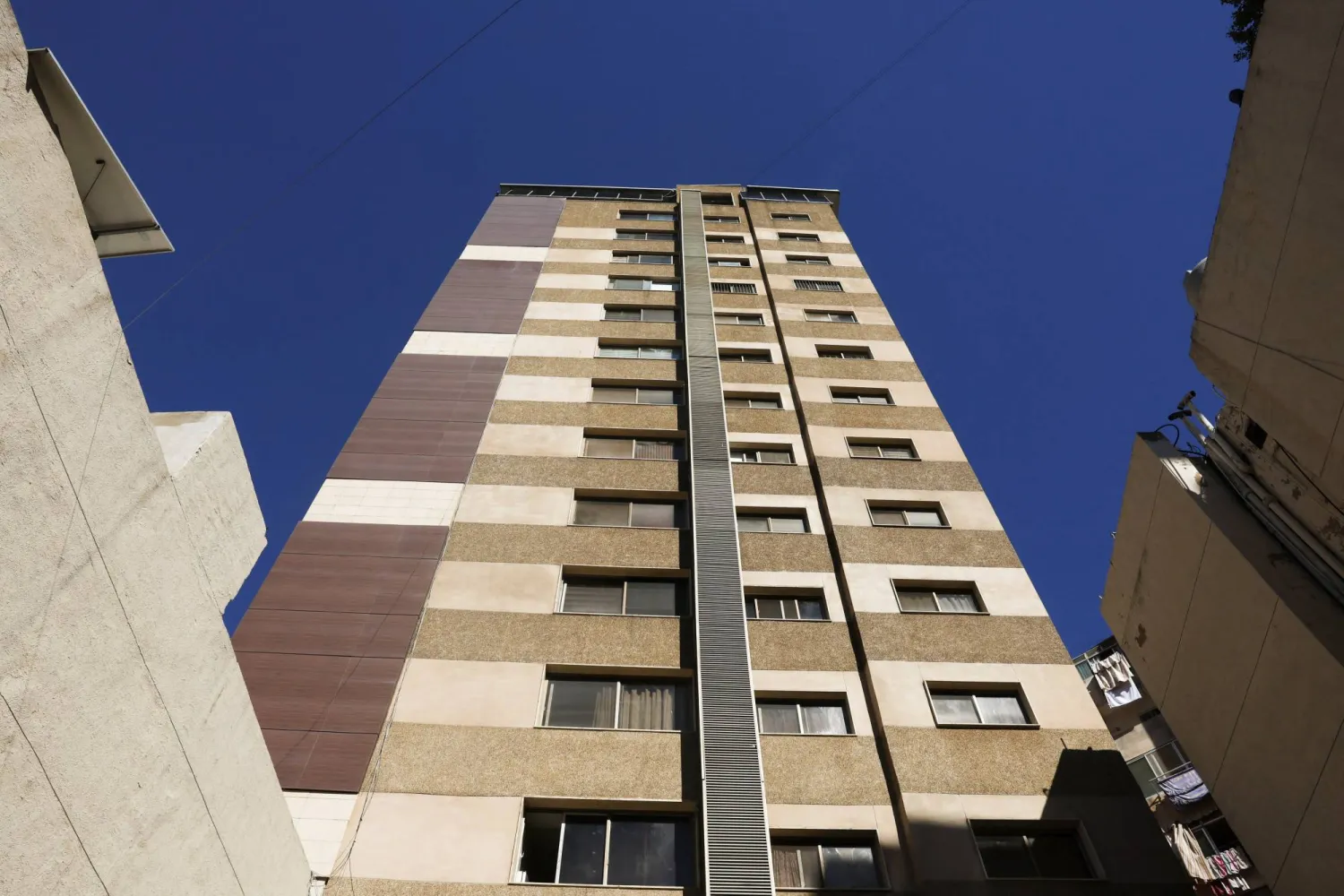
The building where former Iraqi MP Ahmed al-Alwani was found strangled to death in Beirut, Lebanon, November 11, 2026. (Reuters)
TT

Lebanon Hands Over Al-Alwani’s Body to Iraq without Autopsy

The building where former Iraqi MP Ahmed al-Alwani was found strangled to death in Beirut, Lebanon, November 11, 2026. (Reuters)

Lebanon's Public Prosecutor at the Court of Cassation Judge Ahmad Rami al-Hajj ordered the handover of the body of former Iraqi MP Ahmed al-Alwani to the Iraqi Embassy in Beirut for transfer to Baghdad, at the request of his family.

A judicial source explained that X-rays conducted Thursday on al-Alwani’s body revealed a quantity of fluid in the victim's lower abdomen and pelvis.

It said the judiciary had ordered an autopsy to determine the nature of the fluid and whether it was blood, which could indicate that he had been beaten and suffered internal bleeding.

However, the Iraqi Embassy asked the judiciary to forego the autopsy and transfer the body to Baghdad so that those procedures could be carried out there. The request was granted.

The judicial source said that determining the causes of death can be accomplished once the suspects or those accused in the crime are arrested and through their confessions.

The source also revealed that two individuals who sold phone lines to the perpetrators in the Tariq al-Jdideh area in Beirut have been placed under investigation, with no decision made yet on whether to detain or release them.

The judicial source further noted that Lebanon has so far received no response from Damascus about the arrest and extradition of the two Syrian suspects who fled into Syrian territory.


An Israeli Strike on a Hospital Highlights the Devastation to Gaza’s Healthcare System

 A medical staff member salvages medical equipment at Nasser Hospital after it was hit by an Israeli airstrike overnight in Khan Younis, Gaza Strip, Thursday, Nov. 12, 2026. (AP)
A medical staff member salvages medical equipment at Nasser Hospital after it was hit by an Israeli airstrike overnight in Khan Younis, Gaza Strip, Thursday, Nov. 12, 2026. (AP)
TT

An Israeli Strike on a Hospital Highlights the Devastation to Gaza’s Healthcare System

 A medical staff member salvages medical equipment at Nasser Hospital after it was hit by an Israeli airstrike overnight in Khan Younis, Gaza Strip, Thursday, Nov. 12, 2026. (AP)
A medical staff member salvages medical equipment at Nasser Hospital after it was hit by an Israeli airstrike overnight in Khan Younis, Gaza Strip, Thursday, Nov. 12, 2026. (AP)

A deadly airstrike on the biggest hospital in the southern Gaza Strip highlighted the devastation that Israel's campaign has wreaked on the Palestinian territory's healthcare system over the past three years.

The strike that hit Nasser Hospital's surgical wing killed six people, including a surgeon and a 13-year-old boy, and heavily damaged operating rooms and patient wards. The Israeli military said it targeted a Hamas commander using the hospital as a base, though it did not provide evidence for the claim.

Israel has carried out near daily strikes in Gaza despite a ceasefire agreement with Hamas that took effect in October 2025. Israel says it is targeting fighters. Israel launched its campaign in Gaza in retaliation for Hamas' deadly October 2023 attack on southern Israel.

Direct attacks on hospitals have become rarer during the truce. But Thursday's strike underscored how Gaza's health system is still struggling to recover.

Here is a look at Israel's attacks on hospitals, its accusations against Hamas and the impact on Gaza's healthcare system.

Israel has attacked Gaza hospitals frequently in the war

The Israeli military besieged multiple hospitals around Gaza throughout the war, often surrounding them for weeks and battering them with strikes and gunfire while patients and staff were trapped inside and supplies ran out. Some sieges ended with troops storming hospitals, often leaving medical equipment destroyed, or with staff and patients forced to evacuate. Troops detained hundreds of healthcare workers.

Two major raids left Gaza City’s Shifa Hospital, the territory’s largest, in ruins.

Aside from the sieges, hospitals and other medical facilities have frequently come under Israeli fire or been hit by airstrikes that the military says target Hamas fighters. During some of the worst months, as few as 14 of Gaza's 36 prewar hospitals were functioning, and shortages of medicine meant patients writhed in pain without painkillers and deadly infections ran rampant.

The World Health Organization says it has documented more than 1,050 attacks on health facilities in Gaza, causing more than 1,000 deaths. The UN says more than 1,700 medical personnel were killed in the war, including in strikes away from medical facilities. At least six medical staffers from Gaza, including three prominent doctors, have died in Israeli prisons, according to rights groups that have documented abuses in custody.

Israeli forces have struck Nasser Hospital repeatedly. In 2025, the military killed 22 people when it shelled a vantage point used by reporters on the hospital roof, then hit rescue workers and journalists rushing to help the wounded. Among those killed were five journalists, including Mariam Dagga, who was working with The Associated Press.

While attacks during the ceasefire have waned, some strikes in recent months have damaged medical facilities, according to the UN.

Israel accuses Hamas of using the facilities for military purposes

Israel has sought to justify the assaults by accusing Hamas of using the hospitals as command-and-control centers, though it has provided limited evidence. Palestinian and hospital officials have denied these claims.

Hamas security men have sometimes been seen in hospitals, controlling access to certain areas.

The international medical aid group Doctors Without Borders suspended most operations at Nasser Hospital in January because of the presence of masked armed men and situations in which patients were arrested or intimidated. It resumed operations a few months later, citing “concrete improvements” after talks with Gaza authorities, including restrictions on entry of armed individuals.

In the case of Nasser Hospital, the Israeli military said Thursday that it was targeting Muhammad Abu Ismail, who it said headed Hamas’ Khan Younis Brigade and had been using the facility as a headquarters for planning attacks.

It did not explain why the hospital’s surgical unit was targeted. The strike smashed through a patient recovery area and wrecked operating rooms and a rest area for doctors.

The military did not say whether it had killed Abu Ismail. He was not on the hospital’s list of people killed.

International law gives protections to hospitals Hospitals are protected under international humanitarian law and attacking them is a war crime.

Medical facilities can lose that protected status if they are used for military purposes “to commit acts harmful to the enemy.” But the Geneva Conventions, passed in 1949, say there must be a warning with a reasonable period of time before any attack, and that the attack must be proportional to the military threat and take care to avoid civilian casualties.

The Israeli military said it had held “warning conversations” with Gaza health officials before Thursday's strike regarding militant use of hospitals. It said it made clear that “if the activity was not halted, it would act to remove the threats posed by it.”

Medical organizations and rights groups also have criticized Israel’s restrictions on medical aid and equipment entering Gaza as a violation of international law. The Israeli military says it allows aid to enter Gaza but bars some “dual use” items it asserts could be used for military purposes.

Gaza's healthcare system is struggling to recover

Israel’s attacks, along with restrictions on aid, have left Gaza’s healthcare system in ruins. Twenty of Gaza’s 36 pre-war hospitals are functioning, though none is fully operational.

During much of the war, some of those hospitals offered little beyond first aid even as they dealt with scores of wounded people. They struggled to keep lights and equipment functioning because of fuel shortages.

The ceasefire deal has given aid groups and the Health Ministry breathing room to get some services functioning again. But the sector continues to suffer from Israel’s restrictions on entry or slow approvals for medicines, supplies and equipment. The World Health Organization said in a Sept. 30 report that 47% of essential medicines were out of stock and that shortages in lab supplies, medical equipment, spare parts and fuel hampered health work.

At the same time, hospitals and clinics struggle to treat a population where almost everyone has lost their homes and more than 1.6 million live in tents or other ramshackle shelters. Communicable diseases and infections are widespread, and thousands have life-changing wounds from the war.