


Iraqi Investigation Accuses Armed Factions of Manipulating Airport Contracts

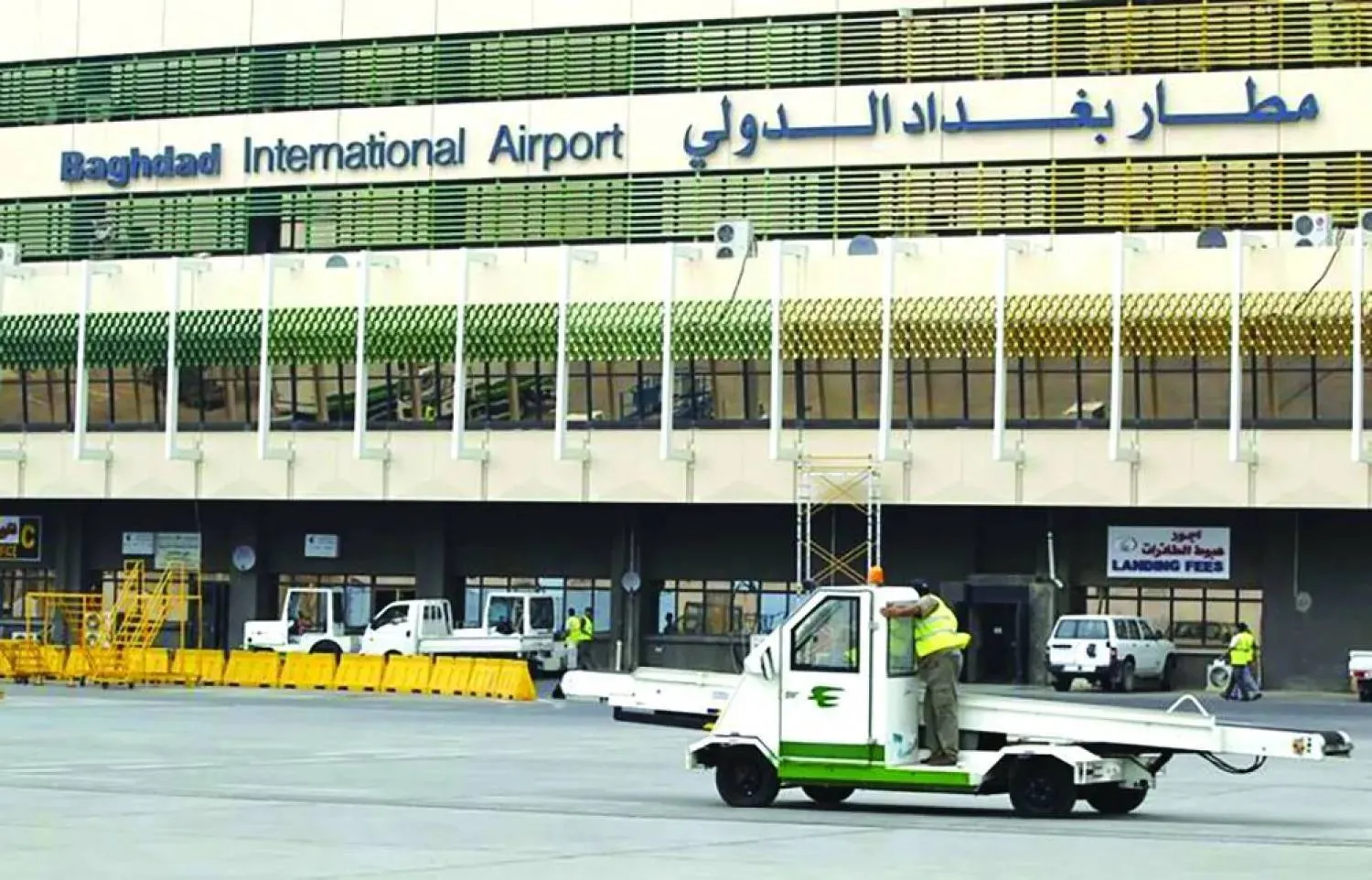
 Baghdad International Airport (Archive – Reuters) 
 Baghdad International Airport (Archive – Reuters) 
TT

Iraqi Investigation Accuses Armed Factions of Manipulating Airport Contracts

 Baghdad International Airport (Archive – Reuters) 
 Baghdad International Airport (Archive – Reuters) 

An Iraqi official source has disclosed suspected irregularities in airport contracts that may have benefited armed groups operating outside the law.

Separately, Kataib Hezbollah accused authorities in Baghdad of selling oil at discounted prices, while an informed source said Iraq had been forced to do so because of the closure of the Strait of Hormuz and its lack of an oil tanker fleet.

The official source told the Iraqi News Agency (INA) on Wednesday that the Federal Commission of Integrity was scrutinizing contracts involving the Ministry of Transport and airports and had detected suspected manipulation linked to the financing of armed groups.

Some contracts had been manipulated “for the economic benefit of armed groups operating outside the law,” the source added.

The official did not identify the groups involved, explain the nature of the alleged manipulation or specify how much money was suspected of being directed to them.

The investigation comes amid growing questions about the relationship between the political influence of armed factions and their economic interests, as pressure continues on the Iraqi government to bring all weapons under state control.

The controversy over transport and airport contracts in Iraq recalls the experience of Beirut’s Rafic Hariri International Airport, where Hezbollah’s influence within the airport’s security and administrative institutions has raised questions about the state’s ability to maintain effective oversight of vital facilities.

In Iraq, the influence of armed factions extends beyond their military presence. Groups linked to them hold political roles and positions within state institutions, while investigations into government contracts have raised questions about the extent to which these factions benefit from state resources and public spending.

Escalation Over State Control of Weapons

The disclosure of the investigation came amid escalating tensions between Iraq’s Kataib Hezbollah and the government and the Coordination Framework. The group is demanding the release of a draft agreement that it says the so-called “Islamic Resistance” reached with a Framework committee on placing weapons under state control.

An account on X under the name Abu Mujahid al-Assaf, whose holder identifies himself as a security official in Kataib Hezbollah, said the armed factions were still awaiting a copy of the agreement. He added that they had suspended all military operations inside Iraq until further notice.

Baghdad authorities had not previously announced receiving a copy of any agreement concluded by the factions. However, spokespeople for Shiite parties had disclosed that the groups were negotiating with a four-member committee from the Coordination Framework to reach an agreement on their weapons.

Al-Assaf criticized the government’s performance, accusing it of making promises it had failed to fulfill.

He also questioned oil sales contracts with a regional company, asking whether Coordination Framework members approved of selling oil at discounted prices and sharing the profits.

He claimed the profits exceeded 4.5 trillion Iraqi dinars a month, without providing details or evidence to support the figure. No comment could be obtained from the country’s relevant energy authorities.

An informed political source, however, explained that Iraq was selling oil shipments at discounted prices because of “the shipping crisis in the Strait of Hormuz, the transport and transit risks borne by buyers, and the pressure facing the country because it does not have its own tanker fleet.”

The escalation followed the failure to convene a regular Coordination Framework meeting on Sunday evening because several members were absent, amid continuing disagreements over the allocation of positions and ministerial portfolios in PM Ali al-Zaidi’s government.

Political researcher Falah al-Mishal attributed Kataib Hezbollah’s escalation to several factors, including the Coordination Framework’s approval of measures to close border crossings with Iran, pressure to bring factional weapons under state control, and objections to certain government foreign policy measures.

Al-Mishal told Asharq Al-Awsat that Iraq’s efforts to develop relations with Syria and Jordan, expand ties with the Arab world and honor its agreements with the United States had led Kataib Hezbollah to feel that the Coordination Framework, once its ally, had abandoned its previous commitments and pledges.

Divisions Within the Shiite Camp

Tensions have not been confined to Kataib Hezbollah. Asaib Ahl al-Haq, led by Qais al-Khazali, also criticized armed factions refusing to surrender their weapons, without naming them.

Ahmed al-Moussawi, a senior Asaib Ahl al-Haq figure and member of parliament, told the movement’s Al-Ahd television channel that these factions would produce nothing more than “a resistance with 10 rockets.”

Al-Moussawi questioned whom the factions were resisting, adding that those refusing to surrender their weapons were attacking Asaib Ahl al-Haq but were, in his words, “not worth responding to.”

The exchange of criticism reflects widening divisions within the Shiite political camp, at a time when the Coordination Framework had been expected to consolidate its position following the completion of the government formation process.

Instead, competition over positions and ministerial portfolios, coupled with conflicting interests among its members, has reignited disputes within the alliance and raised questions about its ability to coordinate the positions of armed factions.

Despite the escalating exchanges, security and political affairs expert Fadel Abu Ragheef does not necessarily believe efforts to bring weapons under state control are losing momentum.

Abu Ragheef told Asharq Al-Awsat that the issue “remains on the table as long as there is a final deadline extending into next year.”

He added that “US statements on bringing weapons under state control are increasing pressure on the Iraqi public and putting the government in a difficult position.”

Abu Ragheef also pointed to “cooperation from some factions on this issue, including parties that had previously refused to cooperate,” but warned that the outbreak of a regional war could change the situation.



UN Rights Chief Demands Houthis Return Body of Yemeni Staff Member

UN High Commissioner for Human Rights Volker Turk delivers a statement at the United Nations Offices in Geneva, on September 16, 2025. (AFP)
TT

UN Rights Chief Demands Houthis Return Body of Yemeni Staff Member

UN High Commissioner for Human Rights Volker Turk delivers a statement at the United Nations Offices in Geneva, on September 16, 2025. (AFP)

The UN's ‌human rights chief on Friday demanded the return of the body of a Yemeni staff member of his office who died of unknown causes weeks ago after being held in Houthi custody for more than two years.

Mohammad el-Shami's family learned of his death on October 30, more than a month after it occurred, but ‌they have received no ‌explanation of the cause ‌or ⁠circumstances. El-Shami ⁠had been held by the Houthi militia since June 6, 2024.

"Our colleague must be laid to rest in a dignified manner, in accordance with the wishes of his family – which was denied contact with him ⁠for two years while he ‌was in detention," ‌said United Nations High Commissioner for Human Rights Volker ‌Turk.

His family said the Houthis had ‌agreed in principle to an investigation in a statement earlier this week. "Do not allow Mohamed to die twice: once when he was taken from ‌his family and disappeared, and again when the truth about his ⁠fate ⁠is allowed to disappear from the world."

There was no immediate comment from the Houthis, who have previously alleged those detained were part of a spy network working for the United States and Israel.

More than 70 UN employees and dozens of humanitarian workers remain in detention in Yemen. A video circulating this week appeared to show one of them "confessing", Turk's office said, voicing fears that the group may be subject to torture or ill-treatment.


Palestinian Teen Reunites with Family After Month in Israeli Jail

The mother of Ezzedine al-Lahalia, a 15-year-old Palestinian teenager, kisses him as they reunite in the village of Al-Jib in the Israeli-occupied West Bank, late on November 12, 2026, after his release from an Israeli prison where he had spent a month in detention. (AFP)
TT

Palestinian Teen Reunites with Family After Month in Israeli Jail

The mother of Ezzedine al-Lahalia, a 15-year-old Palestinian teenager, kisses him as they reunite in the village of Al-Jib in the Israeli-occupied West Bank, late on November 12, 2026, after his release from an Israeli prison where he had spent a month in detention. (AFP)

Looking tiny in his adult-size grey prison jumpsuit, 15-year-old Palestinian Ezzedine al-Lahalia appeared stunned as his mother embraced him after a month in an Israeli jail.

His first request was a child's wish for his favorite food: stuffed cabbage and shawarma.

The teenager, who had been charged with throwing stones, was reunited with his family Thursday night in an emotional scene witnessed by an AFP photographer.

Ezzedine's mother held back tears as she kissed his cheeks, while the older men released alongside him greeted their wives and children.

Then Israeli troops fired tear gas, interrupting the families' reunions.

Lahalia, from the West Bank city of Sair, reunited with his family in the village of Al-Jib near Jerusalem, where Israeli authorities typically release Palestinian prisoners on Thursdays.

"After the Israelis brought the prisoners out, after we had received them, they fired tear gas," Ezzedine's mother, Rania Jaradat told AFP, adding that the scene was reminiscent of when soldiers took the boy from the family home on October 14, 2026.

"They were afraid that the families would assemble near the gate and celebrate," she said.

After Lahalia's release, she said, "the first thing he asked for was stuffed cabbage and shawarma". She happily complied.

He was released after the family paid 5,000-shekels (around $1,500) in bail.

As the eldest of five, his absence was particularly felt by his younger siblings.

"They're happy that I've returned, but they were very distressed while I wasn't with them," Ezzedine told AFP.

According to the Addameer Prisoner Support and Human Rights Association, 9,300 Palestinians are currently held in Israeli jails, including 350 minors.

Earlier this week, the military said it had shot a 14-year-old in a group of boys it suspected of throwing stones at a passing car in the north of the West Bank.

The Israeli human rights group B'Tselem noted an increase in deaths of Palestinians after the easing of open-fire rules in 2022 for stone throwers.


Lebanon Hands Over Al-Alwani’s Body to Iraq without Autopsy

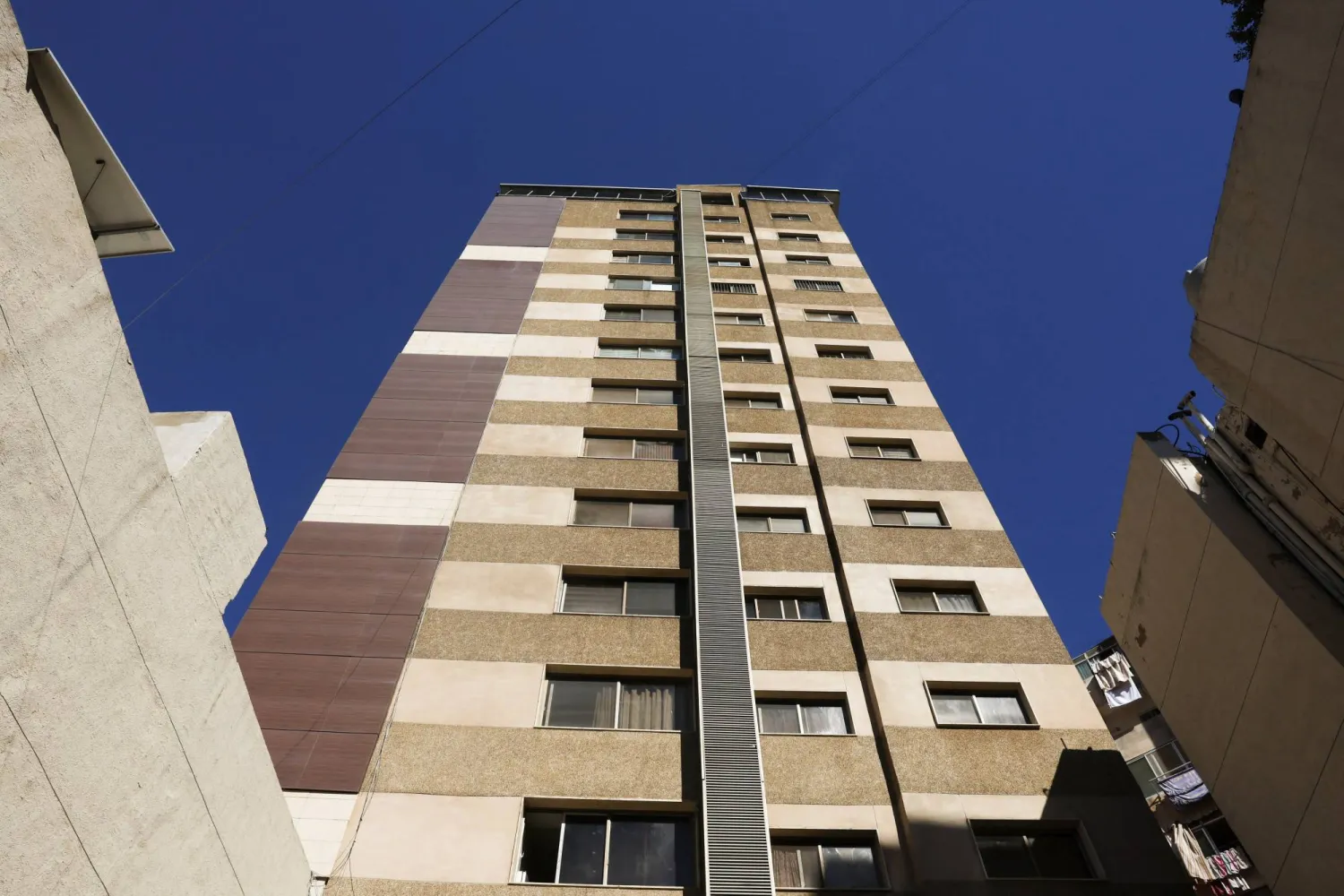
The building where former Iraqi MP Ahmed al-Alwani was found strangled to death in Beirut, Lebanon, November 11, 2026. (Reuters)
TT

Lebanon Hands Over Al-Alwani’s Body to Iraq without Autopsy

The building where former Iraqi MP Ahmed al-Alwani was found strangled to death in Beirut, Lebanon, November 11, 2026. (Reuters)

Lebanon's Public Prosecutor at the Court of Cassation Judge Ahmad Rami al-Hajj ordered the handover of the body of former Iraqi MP Ahmed al-Alwani to the Iraqi Embassy in Beirut for transfer to Baghdad, at the request of his family.

A judicial source explained that X-rays conducted Thursday on al-Alwani’s body revealed a quantity of fluid in the victim's lower abdomen and pelvis.

It said the judiciary had ordered an autopsy to determine the nature of the fluid and whether it was blood, which could indicate that he had been beaten and suffered internal bleeding.

However, the Iraqi Embassy asked the judiciary to forego the autopsy and transfer the body to Baghdad so that those procedures could be carried out there. The request was granted.

The judicial source said that determining the causes of death can be accomplished once the suspects or those accused in the crime are arrested and through their confessions.

The source also revealed that two individuals who sold phone lines to the perpetrators in the Tariq al-Jdideh area in Beirut have been placed under investigation, with no decision made yet on whether to detain or release them.

The judicial source further noted that Lebanon has so far received no response from Damascus about the arrest and extradition of the two Syrian suspects who fled into Syrian territory.