


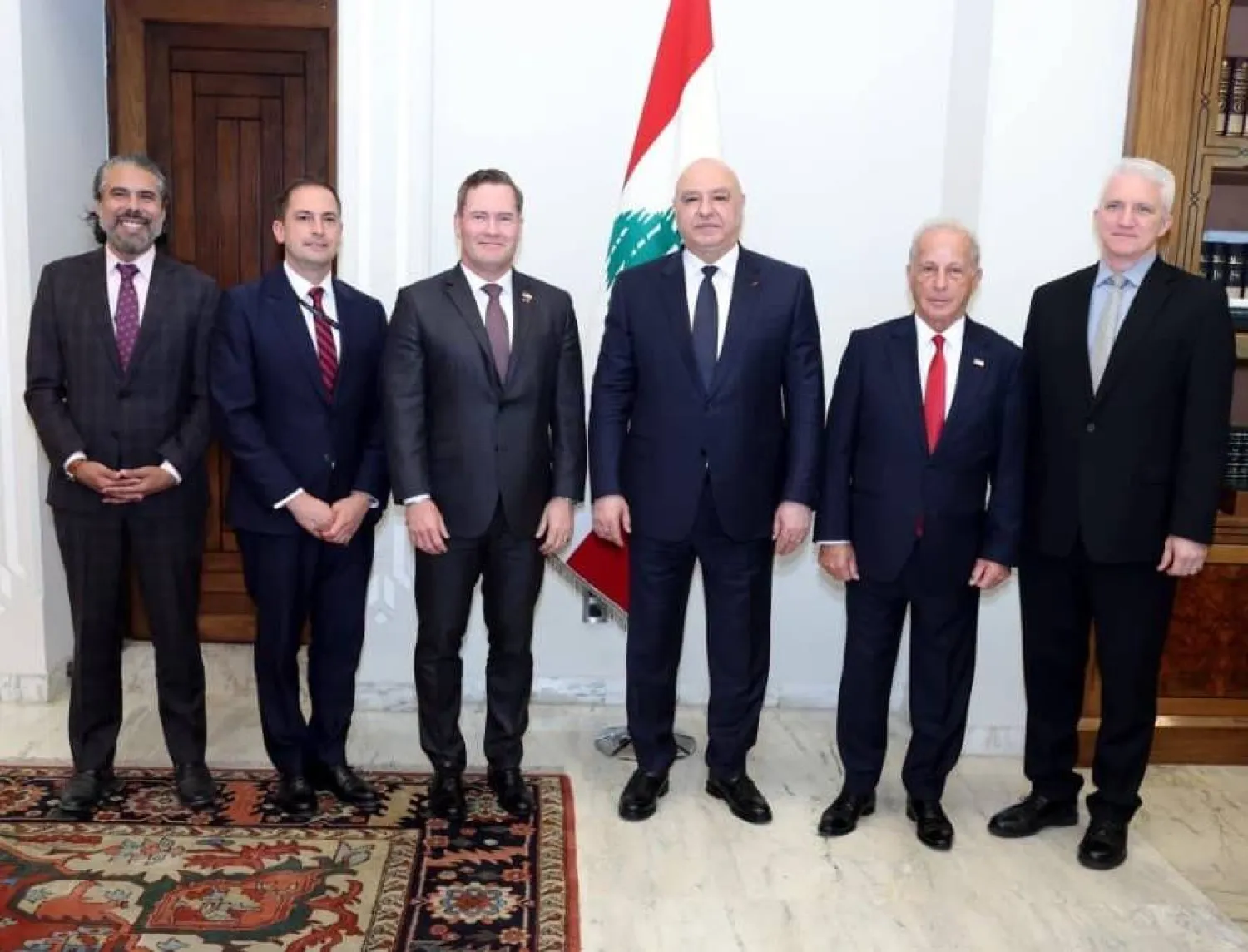

Iran-backed Hezbollah should "voluntarily" lay down its weapons and hand them over to the Lebanese state, visiting US envoy Mike Waltz said on Monday, adding that "no country can have two armies".
"I think the message should be loud and clear, that Lebanese sovereignty must be fully restored," said Waltz, who is the US ambassador to the United Nations.
"And the mechanism to do that will be the Lebanese armed forces."
Waltz held separate talks in Lebanon with President Joseph Aoun, Parliament Speaker Nabih Berri and Prime Minister Nawaf Salam. The meetings focused on the future of the international peacekeepers in the South and Lebanon’s vision for a new force.
They tackled the Lebanese army’s role in carrying out security arrangements and the US-mediated framework agreement between Lebanon and Israel. Waltz notably did not meet with Army Commander Rodolphe Haykal during his trip even though the military is key to any future security plans.
Hezbollah, which has fought successive wars with Israel, is under pressure to disarm. It was the only armed group that refused to hand over its weapons after Lebanon's civil war ended in 1990.
"I appreciate every Lebanese soldier that steps forward to defend their country, to restore their sovereignty, to defend their people. This is a unique opportunity in history to do that, one," Waltz said.
"And two, to Hezbollah and to their Iranian backers, no country can have two armies. I hope and pray Hezbollah will disarm. They should do that voluntarily."
He also added that it was inevitable to amend UN Security Council Resolution 1701.
Three official Lebanese sources told Asharq Al-Awsat that Waltz did not propose any new initiative during his visit.
They revealed that he and Aoun agreed on three key issues: there should be no security vacuum in the South after the end of the mandate of the UN Interim Force in Lebanon (UNIFIL); commitment to Resolution 1701 in full; and support for the army and strengthening to carry out its duties.
Informed ministerial sources told Asharq Al-Awsat that Waltz told officials that Washington did not want to extend UNIFIL’s mandate, which ends in December.
Aoun, for his part, explained the importance of maintaining an international force in the South and that the deployment should be in line with Resolution 1701.
However, the same sources acknowledged that discussions on modifying the resolution do not merely imply introducing technical amendments to the current resolution, but rather mean "ending the existing structure and working on an alternative international formula that combines the reference framework of Resolution 1701 with the new tasks of the force that will succeed UNIFIL."
The sources pointed out that "the issue is not merely about changing the force's name or composition, but redefining the nature of its work, tasks, and authorities, with proposed duties including playing a role in verifying and scrutinizing the implementation of the framework agreement, and monitoring mutual commitments."
"France, as the penholder on Resolution 1701, will be the party tasked with working on the new formula within the Security Council, in coordination with the concerned parties,” they added.
Salam stressed the need to translate the principles of reciprocity and phased implementation into practical steps and tangible results.
He called for a clear timeline ensuring parallel progress on two tracks: a full Israeli withdrawal from Lebanese territory, and extending state authority while confining weapons exclusively to state hands, as well as a credible mechanism to verify both sides' commitments.
He highlighted the importance of the US role in activating this framework to halt Israeli attacks and secure a full withdrawal, underscoring the need for a sustainable solution that restores Lebanon's sovereignty rather than merely managing the conflict.
Waltz’s visit is significant as the Security Council, under US pressure, will not extend UNIFIL’s mandate beyond its expiration on December 31, 2026. The force is scheduled to cease operations starting January 1, 2027, and begin withdrawing its roughly 7,500 troops from around 50 countries.
This comes amid growing Lebanese and international fears of a security vacuum in the South, particularly given ongoing Israeli attacks and an incomplete Israeli withdrawal. Since the November 2024 ceasefire agreement, UNIFIL has been tasked with supporting the Lebanese Army in implementing the government's plan to confine weapons to the state.
During their meeting in Paris this month, G7 foreign ministers stressed the need to avoid a security vacuum following the international force's withdrawal.
Meanwhile, Washington is tying its approach for the upcoming phase to the implementation of the framework agreement and the creation of a credible mechanism to verify both parties' commitments, particularly regarding Hezbollah's disarmament and the Israeli withdrawal.


