


Saudi Industrial Production Sees 4.1% Increase in March

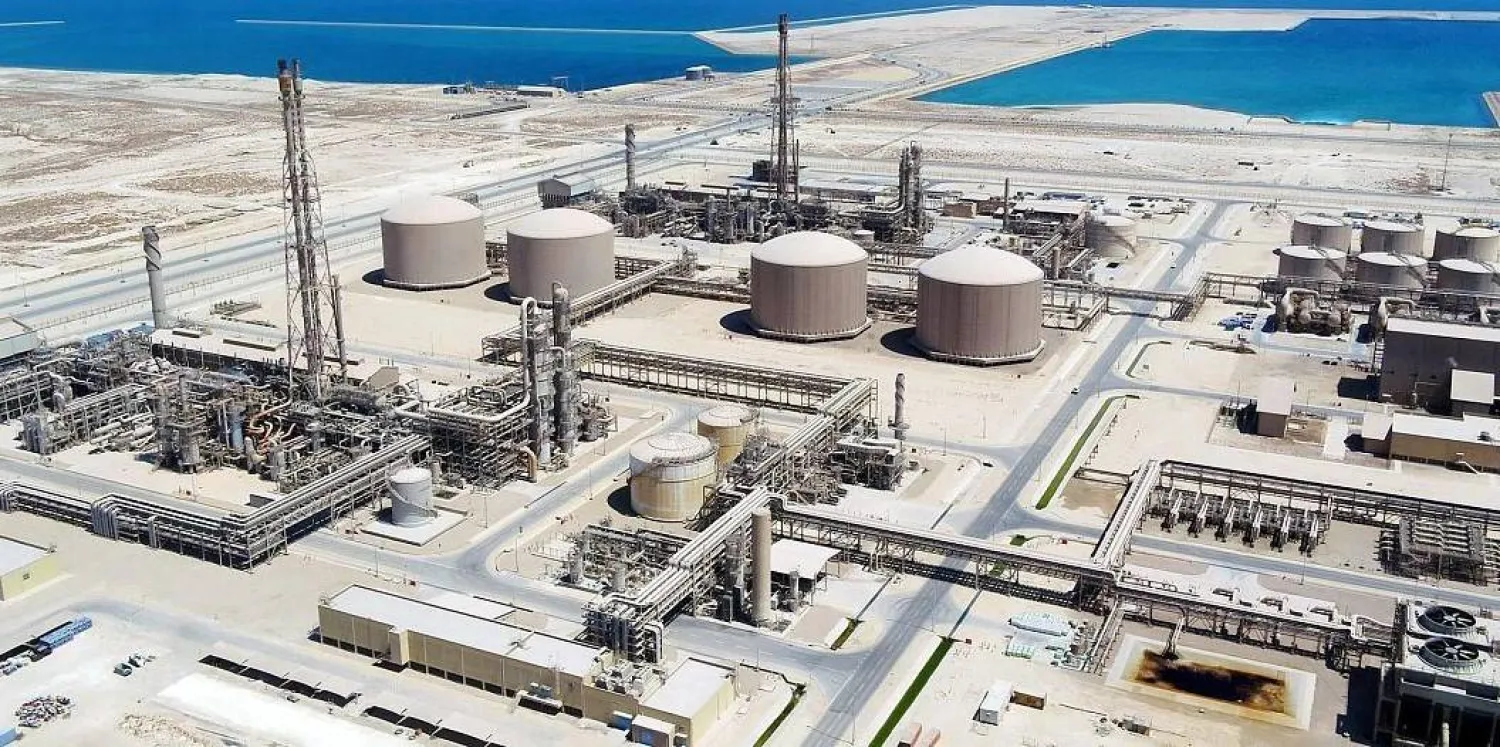
Ras al-Khair Industrial City represents the backbone of the mining industry (SPA)
TT

Saudi Industrial Production Sees 4.1% Increase in March

Ras al-Khair Industrial City represents the backbone of the mining industry (SPA)

The Industrial Production Index (IPI) saw a 4.1 percent year-on-year growth due to high production in mining, quarrying, and manufacturing in Saudi Arabia’s industrial output volume, according to the latest report from the General Authority for Statistics (GASTAT).

The Authority issued a statistical release on IPI, noting that mining and quarrying grew by 1.6 percent in March 2023, compared to March 2022, as Saudi Arabia increased its oil production to more than 10 million barrels per day in March 2023.

Manufacturing activity increased by 10.5 percent compared to the same month of the previous year.

During 2022, the IPI recorded growth rates that peaked in April 2022. The annual growth rates gradually decreased from one month to another since May 2022 to record a 4.1 percent increase in March 2023.

Compared to February 2023, overall IPI increased by 0.2 percent due to the production increase in the three sub-sectors.

The mining and quarrying sector increased by 0.1 percent, the manufacturing sector grew by 0.3 percent, and electricity and gas supplies rose by 1.9 percent.

GASTAT regularly issues several economic indicators, including the Industrial Production Index (IPI), which indicates the relative changes in industrial output volume.

IPI is calculated using data from an industrial production survey. It targets mining, quarrying, manufacturing activity, and electricity and gas supplies.



Oil Prices Up 1% as Iran Crisis Disrupts Middle East Supply

A woman fills up her car at a gas station in Seoul, South Korea, March 4, 2026. REUTERS/Kim Hong-Ji
TT

Oil Prices Up 1% as Iran Crisis Disrupts Middle East Supply

A woman fills up her car at a gas station in Seoul, South Korea, March 4, 2026. REUTERS/Kim Hong-Ji

Oil prices rose about 1% on Wednesday as US-Israeli strikes on Iran disrupted Middle East supplies, but the pace of gains slowed from past sessions after President Donald Trump suggested the US Navy could escort vessels through the Strait of Hormuz.

Brent rose 91 cents, or 1.1%, to $82.31 a barrel by 1015 GMT, after closing on Tuesday at its highest since January 2025, Reuters reported.

US West Texas Intermediate crude rose 63 cents, or 0.8%, to $75.19, after settling at its highest since June.

"The primary near-term driver for oil prices remains the US-Iran conflict," said ⁠OANDA senior market ⁠analyst Kelvin Wong.

"At this stage, only clear signs of de-escalation could mitigate or reverse the current bullish trend for WTI, and such signals are currently lacking."

Israeli and US forces struck targets across Iran on Tuesday, prompting Iranian strikes against energy infrastructure in a region that accounts for just under a third of global oil production.

Iraq, the second-largest crude producer in the ⁠Organization of the Petroleum Exporting Countries, has cut output by nearly 1.5 million barrels a day, about half its production, due to storage limits and the lack of an export route, officials told Reuters.

They said the country may have to shut nearly 3 million bpd of output within days if exports do not resume.

Iran has also targeted tankers in the Strait of Hormuz, through which about a fifth of the world's oil and liquefied natural gas flow. Traffic through the Strait remains effectively closed.

Trump said the US Navy could begin escorting oil tankers through the Strait if necessary, ⁠adding that he ⁠had ordered the US International Development Finance Corporation to provide political risk insurance and financial guarantees for maritime trade in the Gulf.

"While oil prices declined on the headline, we think the insurance proposal is likely in a concepts-of-a-plan stage and question whether there has been sufficient coordination with the multiple international tanker insurers," RBC analyst Helima Croft said.

Countries and companies have begun seeking alternative routes and supplies.

India and Indonesia said they were looking for other energy supplies, while some Chinese refineries were shutting or moving up maintenance plans.

In the United States, crude stocks rose by 5.6 million barrels last week, according to market sources citing American Petroleum Institute figures, well above the 2.3 million projected by analysts.


COSCO Shipping Suspends Bookings on its Middle East Routes

Containers of China Shipping and Cosco shipping companies are stacked at a transshipment station in Frankfurt am Main, western Germany, on April 15, 2025. (Photo by Kirill KUDRYAVTSEV / AFP)
TT

COSCO Shipping Suspends Bookings on its Middle East Routes

Containers of China Shipping and Cosco shipping companies are stacked at a transshipment station in Frankfurt am Main, western Germany, on April 15, 2025. (Photo by Kirill KUDRYAVTSEV / AFP)

Chinese shipping and logistics conglomerate COSCO Shipping's container liner unit said on Wednesday it had suspended all new bookings for routes to and from ports in the Middle ⁠East region, including ⁠those in the United Arab Emirates and Saudi Arabia.

The move was due to ⁠escalating conflict in the region and traffic restrictions in the Strait of Hormuz, COSCO Shipping Lines said in a statement.

Bookings for routes to and from Bahrain, Iraq and ⁠Kuwait have ⁠also been suspended, it added.

The company said it was evaluating follow-up disposal plans, including possible alternative unloading ports, for goods currently on board.


France Says Planning G7 Finance Meeting on Middle East

French Minister for Economy, Finance, and Industrial, Energy and Digital Sovereignty Roland Lescure attends a debate before votes on two no-confidence motions against the French government following the adoption of a new energy law through decree, at the National Assembly in Paris, France, February 25, 2026. (Reuters)
TT

France Says Planning G7 Finance Meeting on Middle East

French Minister for Economy, Finance, and Industrial, Energy and Digital Sovereignty Roland Lescure attends a debate before votes on two no-confidence motions against the French government following the adoption of a new energy law through decree, at the National Assembly in Paris, France, February 25, 2026. (Reuters)

France is planning a meeting of G7 finance ministers on the Middle East crisis, with central bankers also in attendance, the country's Economy and Finance Minister, Roland Lescure, said on Wednesday.

"I have spoken with various counterparts, in particular Scott Bessent, who is the US Treasury Secretary. And we agreed to hold a meeting which will place at the beginning of next week," he told Franceinfo radio.

"We want to let a week go by to see how the conflict develops, how the markets evolve. We'll have the finance ministers and the central bank governors there as well."

France currently holds the rotating presidency of the Group of Seven advanced economies, which also includes Canada, Germany, Italy, Japan, the United Kingdom and the United States.

A first meeting of finance ministers under the French presidency was held on January 27.

Lescure said next week's meeting was expected to be an exchange of views.

"We're going to listen to what is coming up from the ground, from businesses, from economists in these different parts of the world," he added.

"The idea is to be able to discuss the state of the situation, so that we can assess any responses that might be needed, if we have to act.

"In a conflict which is currently a local conflict in one region but has global repercussions, it is obviously essential that we coordinate."

The war in the Middle East, sparked by the US-Israeli bombing of Iran on Saturday, has in recent days led to a sharp fall in stock markets, particularly in Europe and Asia.

Since the start of the week, France's benchmark CAC40 index has lost more than five percent. Its German equivalent, the Dax, has fallen by nearly six percent, while London's FTSE 100 has dropped nearly four percent.

Investors are concerned about the sharp rise in hydrocarbon prices due to disruptions to supplies through the Strait of Hormuz, which handles some 20 percent of the seaborne world's oil and liquefied natural gas.