Foreign, Joint Investments in Saudi Industrial Sector Surpass Half Trillion Saudi Riyalshttps://english.aawsat.com/business/4335881-foreign-joint-investments-saudi-industrial-sector-surpass-half-trillion-saudi
Foreign, Joint Investments in Saudi Industrial Sector Surpass Half Trillion Saudi Riyals
Foreign and joint investments in the industrial sector have totaled more than 542 billion Saudi Riyals
Foreign and joint investments in the industrial sector have totaled more than 542 billion Saudi Riyals, constituting 37 percent of the sector’s total investments, the Ministry of Industry and Mineral Resources said.
The foreign and joint investments in the industrial sector also represent 17 percent of the total number of existing factories until May 2023, the ministry added Thursday.
The number of factories with foreign investment in the Kingdom has amounted to 930, representing 9 percent of the total number of factories, with investments surpassing 71 billion Saudi Riyals.
Meanwhile, the number of factories with joint investment totaled 924, constituting 8 percent of the total factories, with investments estimated at more than 470 billion Saudi Riyals.
Also, the total number of factories existing in the industrial sector until May this month has reached 10,910 with investments amounting to more than 1.455 trillion Saudi Riyals.
US Black Friday Online Spend Rises 11% to a New High of $13.1 Billionhttps://english.aawsat.com/business/5346676-us-black-friday-online-spend-rises-11-new-high-131-billion
A shopper stands next to a large sale sign at the Citadel Outlets in Commerce, Calif., Friday, Nov. 27, 2026. (AP)
TT
TT
US Black Friday Online Spend Rises 11% to a New High of $13.1 Billion
A shopper stands next to a large sale sign at the Citadel Outlets in Commerce, Calif., Friday, Nov. 27, 2026. (AP)
US online spending rose 11% to $13.1 billion on Black Friday, data from Adobe Analytics showed, topping its forecast as shoppers snapped up popular toys and AI-powered gadgets and stocked up on essentials as inflation weighs on holiday budgets.
The spending total beat Adobe's forecast of about $12.9 billion, helped by discounts and promotions on apparel and appliances as retailers sought to woo Americans weighed down by inflation and high gas prices.
While electronics and gaming were among the strongest-selling categories, shoppers also used discounts to stock up on everyday essentials such as cleaning supplies, pet care products and personal hygiene items, the Adobe report said.
The data comes as inflation, running at 3.8%, continues to strain household finances. Foot traffic at US stores was down 2.2% from a year earlier at nearly 930 million visits on Black Friday, according to PassBy, a geospatial analytics company.
Black Friday and Cyber Monday bookend one of the retail sector's busiest periods of the year.
Adobe expects US online spending on Cyber Monday to jump 6.2% to $15.1 billion, contributing to about $47.5 billion in overall sales during the five-day Thanksgiving shopping period, the report said.
The morning after Black Friday, Kristy Martinez, 46, in Williamsburg, Brooklyn, said she planned to spend slightly more on gifts this holiday season after she and her husband “really pulled back” on spending last year.
Buy now, pay later options are expected to contribute $1.09 billion in online spending on Cyber Monday, up 5.3% from a year ago, Adobe Analytics said.
Consumers are also increasingly using AI-powered shopping tools to compare prices, with traffic from chatbots and AI-enabled browsers converting into purchases 68% more effectively than a year earlier, according to Adobe data.
Saudi Petrochemicals Slash Losses by Over Half, Boosting Recovery Hopeshttps://english.aawsat.com/business/5346564-saudi-petrochemicals-slash-losses-over-half-boosting-recovery-hopes
Saudi Petrochemicals Slash Losses by Over Half, Boosting Recovery Hopes
Two engineers at a Yansab plant. (Yansab)
Saudi petrochemical companies narrowed their combined net losses by 57.2 percent during the first nine months of 2026 to roughly 1.41 billion riyals ($377 million), down from about 3.3 billion riyals ($880 million) in the same period last year. The improvement was primarily driven by a 93.4 percent drop in losses at Saudi Basic Industries Corporation (SABIC), coupled with stronger results from several other firms.
This improvement came despite persistent challenges facing the global petrochemical industry, chief among them oversupply, volatile product prices, and rising production and transportation costs. In addition to SABIC, results improved at Yansab, Saudi Industrial Investment Group (SIIG), and Alujain, while losses narrowed at Saudi Kayan and Chemanol.
On the other hand, widening losses at Sipchem and a swing into the red for Tasnee and Advanced Petrochemical Company curbed the pace of recovery. According to announced results, only four companies turned a profit during the nine-month period compared to six posting losses, reflecting that the improvement in combined results has yet to translate into a broad-based profitability recovery across the sector.
SABIC leads the improvement
SABIC recorded a sharp drop in net losses during the first nine months of 2026 to around 320 million riyals ($85.3 million), compared to 4.84 billion riyals ($1.29 billion) in the corresponding period of 2025. The company attributed this to a roughly 3.07 billion riyal ($819 million) reduction in losses from discontinued operations, resulting from the non-recurrence of provisions and asset impairments linked to the closure of the cracker unit at its Teesside plant in the United Kingdom.
The improvement was further bolstered by a 2.43 billion riyal ($648 million) uptick in results from associates and joint ventures, as well as the absence of 1.07 billion riyals ($285 million) in restructuring costs recorded in the first quarter of the previous year.
However, these factors were offset by a roughly 1.21 billion riyal ($323 million) decline in gross profit due to lower sales volumes, though the company benefited from higher product selling prices that mitigated the impact of lower quantities sold amid ongoing geopolitical and logistical challenges.
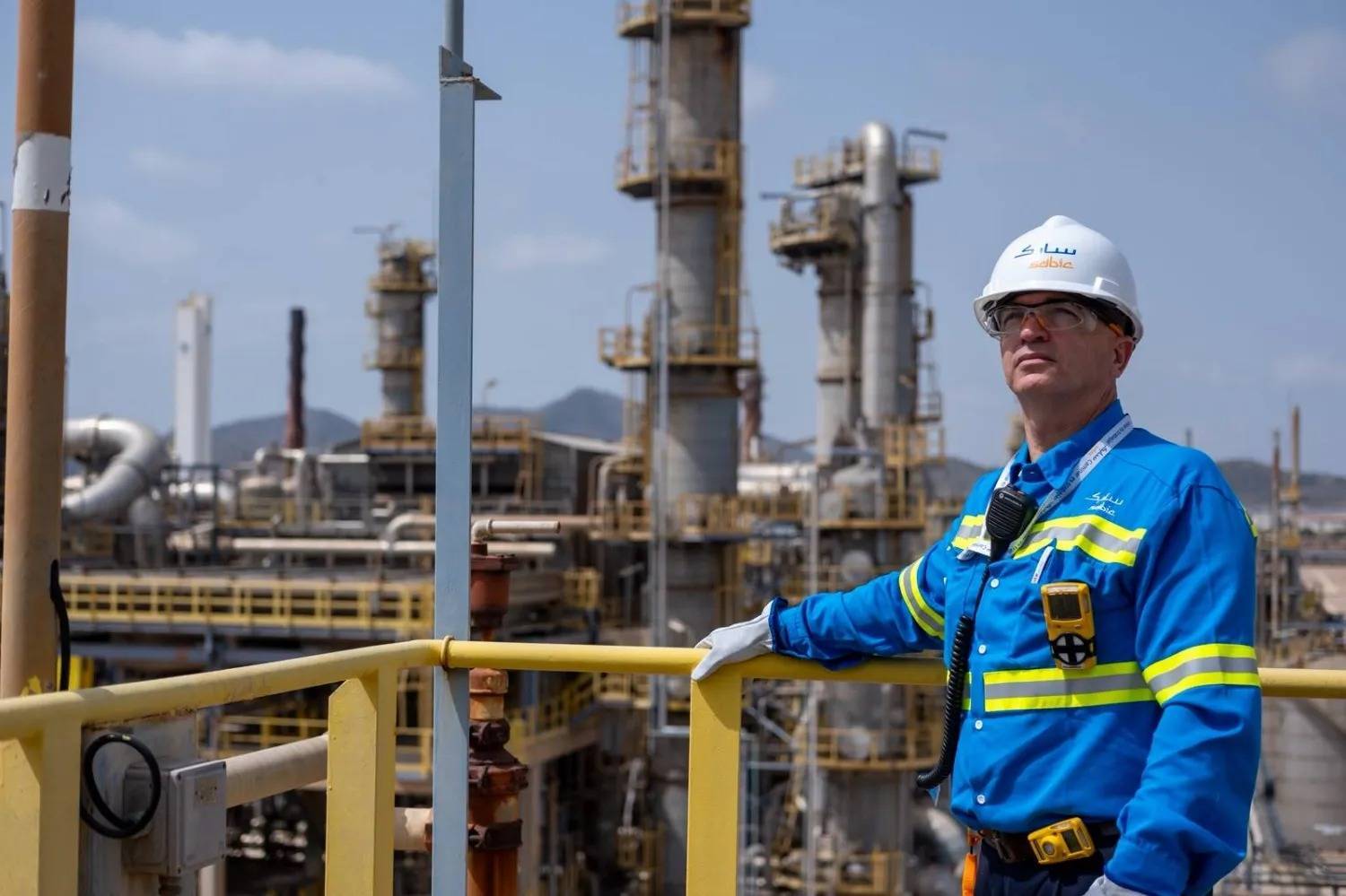
An engineer at work at a SABIC plant. (SABIC)
SABIC Agri-Nutrients tops profits
SABIC Agri-Nutrients led profitable companies with a net profit of around 2.09 billion riyals ($557.3 million) during the first nine months of 2026, down 37.3 percent from about 3.33 billion riyals ($888 million) in the same period last year.
The company’s revenues fell 13.9 percent to 8.51 billion riyals ($2.27 billion), weighed down by lower sales volumes and supply chain challenges, as well as higher shipping and distribution expenses, despite improved average selling prices for certain products.
Profit surge for Yansab and SIIG
Yansab’s profits jumped 283.1 percent in the first nine months of 2026 to roughly 507.3 million riyals ($135.3 million), supported by a 15.5 percent rise in revenues to 4.88 billion riyals ($1.3 billion) on the back of improved selling prices and higher sales volumes.
Profits at Saudi Industrial Investment Group (SIIG) rose to 284 million riyals ($75.7 million), compared to about 46.2 million riyals ($12.3 million) in the same period last year, while Alujain’s profits reached 133.1 million riyals ($35.5 million), up from 11.6 million riyals ($3.1 million).
In contrast, Advanced Petrochemical swung to a loss of about 65 million riyals ($17.3 million), compared to a profit of 225.1 million riyals ($60 million) during the same period in 2025.
Losses deepen for Tasnee and Sipchem
Tasnee swung to a net loss of around 1.33 billion riyals ($354.7 million) in the first nine months of 2026, compared to a profit of 271.5 million riyals ($72.4 million) a year earlier, impacted by supply chain disruptions and rising shipping, insurance, and logistics costs.
Sipchem’s losses also widened by 173.1 percent to around 1.21 billion riyals ($322.7 million), coinciding with a 32.8 percent drop in revenues to 3.52 billion riyals ($938.7 million). The company attributed this to lower sales volumes and higher costs for certain feedstocks, in addition to investment losses and asset impairment provisions.
Meanwhile, Saudi Kayan narrowed its losses by 14.1 percent to 1.38 billion riyals ($368 million), and Chemanol reduced its losses by 71.3 percent to about 123 million riyals ($32.8 million), reflecting uneven corporate performance in navigating sector pressures.
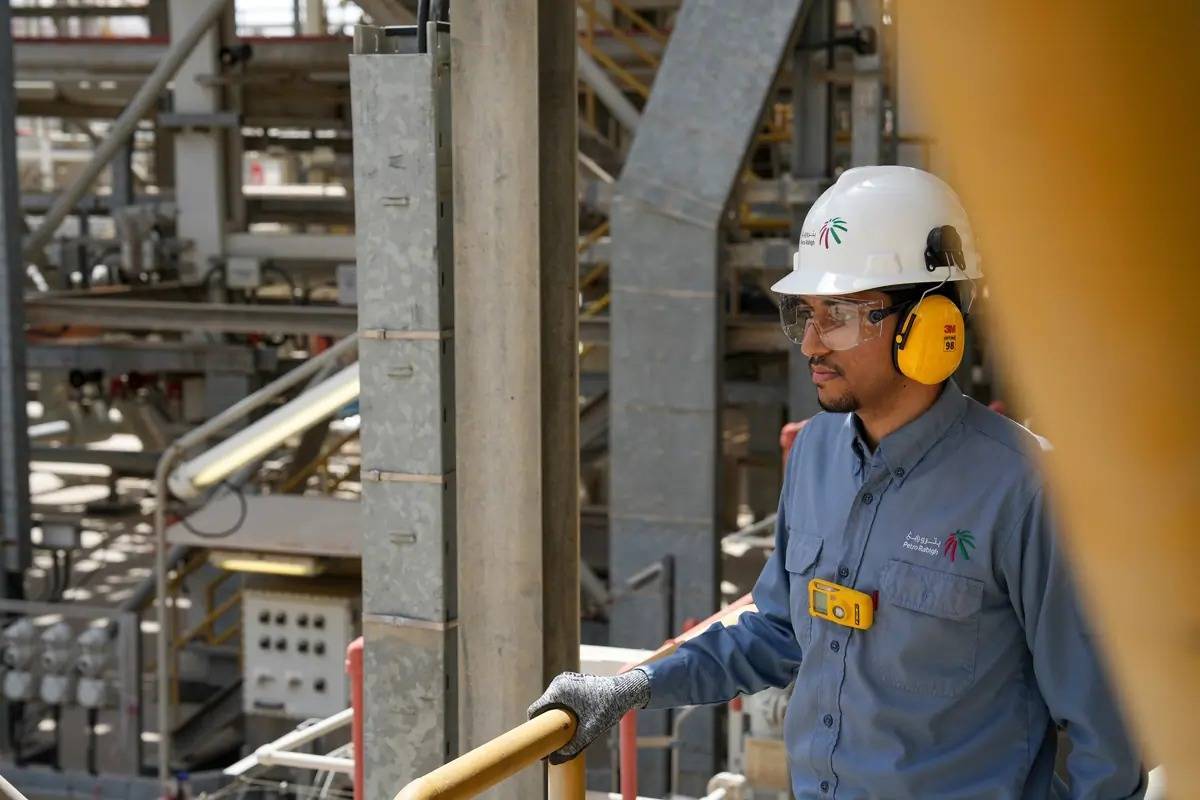
An engineer working at Petro Rabigh. (Petro Rabigh)
Third-quarter results
Third-quarter results for 2026 showed mixed improvements across petrochemical firms, with SABIC returning to profitability with a net income of 499.5 million riyals ($133.2 million), up 15.2 percent year-on-year, following losses of 832.9 million riyals ($222.1 million) in the prior quarter.
On a quarterly basis, SABIC’s revenues rose 13.6 percent to 28.17 billion riyals ($7.51 billion), gross profit climbed 47.7 percent, and adjusted EBITDA rose 40 percent to 4.75 billion riyals ($1.27 billion).
In contrast, SABIC Agri-Nutrients saw profits decline 62.5 percent year-on-year to 484 million riyals ($129.1 million), despite rising 27.7 percent compared to the previous quarter. Yansab’s profits surged 219.8 percent to 237.3 million riyals ($63.3 million), supported by better selling prices and higher sales volumes.
SIIG posted profits of about 90.3 million riyals ($24.1 million), and Alujain recorded 29 million riyals ($7.7 million), while Advanced Petrochemical Company returned to profitability with a modest profit of 4 million riyals ($1.1 million).
Quarterly losses narrow at several firms
Tasnee recorded losses of 438.8 million riyals ($117 million) in the third quarter of 2026, compared to 558.5 million riyals ($148.9 million) in the same period last year. Sipchem’s losses also fell 14.3 percent year-on-year to 401.6 million riyals ($107.1 million), and 32.2 percent quarter-on-quarter, as its revenues jumped 66.7 percent to 1.44 billion riyals ($384 million).
Saudi Kayan achieved a steeper improvement, cutting its losses by 72 percent to 94.2 million riyals ($25.1 million), while Chemanol’s losses stood at roughly 41.4 million riyals ($11 million).
The results reflect a relative improvement in the performance of several firms, though it remains uneven amid volatile product prices and elevated feedstock and shipping costs. Profit margins, operational efficiency, and cost control, together with a rebound in global demand, will remain decisive factors shaping the sector's trajectory in upcoming periods.
Sustainability of earnings
Reading into the sector’s results, Mohammed Hamdy Omar, Founder and CEO of G.WORLD, said that the 57.2 percent contraction in combined losses for Saudi petrochemical firms during the first nine months of 2026 is a positive indicator of improved financial results.
This does not necessarily mean the sector has overcome its challenges or entered a phase of sustainable recovery, given persistent disparities among companies in operational performance and their ability to withstand global market pressures, he told Asharq Al-Awsat.
Omar explained that the recorded improvement stemmed from a combination of factors, including higher selling prices for certain products, increased sales volumes, and improved operational efficiency at several firms, as well as lower non-recurring losses, stronger investment returns, and reduced provisions compared to the same period last year.
He noted that SABIC accounted for the largest share in reducing combined losses after its losses fell 93.4 percent, despite a 10.7 percent drop in revenues and a 39 percent decline in operating income.
This reflects the impact of accounting and non-recurring items on bottom-line results, combined with improved performance from associates and joint ventures and reduced losses from discontinued operations, he went on to say.
Omar stressed that evaluating corporate performance requires focusing on the quality and sources of earnings rather than merely growth rates or loss-reduction percentages. In this context, he cited Yansab as a model of improvement tied to core operational activity, after its profits rose on the back of better selling prices and higher sales volumes, enhancing the sustainability of its profitability.
Engineers at a SABIC manufacturing site in Jubail. (SABIC)
He explained that the sector still faces structural headwinds, led by expanding global production capacity and oversupply in certain products, as well as pricing pressures, fluctuating feedstock, shipping, and logistics costs, and weak demand in some markets.
These factors squeeze profit margins and limit companies' ability to pass higher costs on to customers.
He added that companies with higher operational efficiency and greater capacity to control production and financing costs while diversifying their product mix will be better equipped to navigate these challenges than firms burdened with high debt or reliant on products facing intense price competition.
Omar stressed that the true indicator of sector recovery lies in sustained improvement in operating margins, growth in sales volumes and cash flows, and reduced reliance on non-recurring items, not merely a reduction in accounting losses.
Recovery outlook in 2027
On his outlook for 2027, Omar expected uneven recovery opportunities across the petrochemical sector, tied to improvements in global supply-demand balance, stability in product margins, and companies' ability to boost operational efficiency and rein in costs.
He explained that global demand growth, particularly from the manufacturing, packaging, construction, and automotive sectors, could support petrochemical sales, though persistent global overcapacity may limit the translation of this growth into higher prices and profit margins.
He noted that improving product margins - the spread between selling prices and feedstock, energy, and transport costs - will be a decisive factor in determining corporate performance, in addition to expanding into specialty, higher-value-added materials, strengthening industrial integration, investing in modern technologies, and enhancing energy efficiency.
On the other hand, he warned that continued high financing, debt, shipping, and feedstock costs, combined with fierce global competition and potential economic slowdowns, could decelerate the pace of recovery, especially for companies requiring continuous financing to upgrade plants or restructure operations.
The companies best positioned to recover will be those combining operational efficiency, effective working capital management, product diversification, and access to high-demand markets, rather than relying solely on an economic cycle upturn, he added.
Omar noted that 2027 may offer better opportunities for the Saudi petrochemical sector, though it does not guarantee a return to profitability for all firms.
Competition in the coming phase will not be confined to boosting output, but will focus more heavily on cutting costs, raising efficiency, and maximizing product value-add to propel the sector toward a more sustainable recovery, he remarked.
US Shoppers Confront Uphill Battle in Black Friday Discount Questhttps://english.aawsat.com/business/5346526-us-shoppers-confront-uphill-battle-black-friday-discount-quest
Shoppers load Black Friday purchases into their car at a Walmart store on November 27, 2026 in Torrance, California. (AFP)
TT
TT
US Shoppers Confront Uphill Battle in Black Friday Discount Quest
Shoppers load Black Friday purchases into their car at a Walmart store on November 27, 2026 in Torrance, California. (AFP)
Inflation-weary US shoppers thronged malls and websites on Black Friday, the traditional kickoff to the holiday spending season, but many said they were struggling to find robust enough bargains to counter the pinch of high gas and grocery prices.
Spending is seen topping last year's strong results by 4%-6%, and early Black Friday figures point to particularly robust online growth. But brick-and-mortar foot traffic was mixed, and beneath top-line forecasts lie signs of stress.
Most of the gains will be attributable to inflation, which at 3.8% is about a percentage point higher than in each of the last two years, while consumer sentiment remains shaky.
Jasmine Peters, 37, went to the Westfield Century City mall in Los Angeles on Friday hoping to find steeper discounts in-store than online, but they didn't materialize, and by late morning, she was planning to leave the mall empty-handed.
Chris Nile, 30, was hoping for more than the $50 discount he saw on a Nintendo Switch 2 gaming console, which brought the price to $450. "Inflation is higher - even the (McDonald's) McChicken is up," said Nile as he shopped for his two boys at the Crabtree Valley Mall in Raleigh, North Carolina.
Observers said consumers seemed less impressed by discounts, with stores needing to do more to draw them in. Target Corp, for example, gave away $100 gift cards to the first 100 people in line at each store -- with one lucky recipient receiving a $1,000 card.
"Traffic levels in general seemed off compared to past holidays and seemed to lose steam early," said Michael Brown, Americas retail leader at consulting firm Kearney, who visited several stores in Westchester County, New York, on Friday morning.
US store visits were tracking 2.4% behind last year's, at 760 million a little after 6:30 p.m. EST (2330 GMT), according to Passby, a geospatial analytics company that measures real-time foot traffic.
A November survey by the National Retail Federation found that 82% of consumers are taking steps to manage holiday costs this year, like buying less expensive gifts. Nile - like many US shoppers - said he chose to bargain-hunt in person, in part to avoid shipping costs.
AI could also scramble the year's shopping dynamics. As consumers use it to find bargains or even complete purchases — and retailers become increasingly adept at altering prices — the deepest discounts could come closer to Christmas.
Online spending on Black Friday itself, though, jumped 12.8% from a year ago to $9.7 billion, according to initial figures through 6:30 p.m. EST from Adobe Analytics, the arm of Adobe that analyzes customer behavior. That figure put the day on track to surpass Adobe's prediction for a 9.2% increase.
The first half of the day alone drove $5.9 billion in US online sales, up 2.9% from a year ago, Salesforce data showed.
MEASURED GROWTH
Economic worries aside, top-line spending is expected to be robust.
Thanksgiving Day saw consumers spend $7.1 billion online, according to Adobe, a 10.4% jump over last year, fueled by big discounts on electronics, toys and apparel. Indeed, store visits to electronics retailer Best Buy were tracking 3.2% higher than last Black Friday in the late afternoon, according to Passby. Visits to Walmart and Target were slightly up.
Overall, the National Retail Federation sees November-December holiday retail sales rising 4.2% year-over-year, to just above $1 trillion.
High living costs emerged as a key issue earlier this month when voters handed Democrats sweeping electoral victories, punishing US President Donald Trump for an Iran war that's pushed the cost of living higher.
Even higher earners may be stretched.
Holiday spending forecasts mostly predated the recent stock market correction that followed the midterms, turmoil at chipmaker Nvidia, and mounting concerns around an AI bubble. The decline could dampen the wealth effect that has seen affluent shoppers splurge, UBS analysts said in a note on Tuesday.
EMBATTLED TOYS
Higher input costs, particularly from oil derivatives like plastic, are hitting some products more than others.
Prices of toys, generally high in plastic, have risen 13.2% since the start of the year, pushing Barbie maker Mattel this month to cut its annual forecast as consumers balked at higher costs.
But some unlikely products are buoying the toy category. Best Buy and Target have both flagged trading cards, including Pokemon and Magic: The Gathering products, as a key growth driver. Squishy NeeDoh toys are also in hot demand, according to e-commerce marketing platform Omnisend.
Lego also appeared to be in high demand, with the Passby figures showing its stores' foot traffic up more than 5% in mid-afternoon versus the same time of day last Black Friday. It wasn't necessarily kids driving the growth - many of those shopping were adults, part of the "kidult" craze that has swept the toy industry in recent years.
Jaime Oquendo, 46, was the first to enter the Lego store at the Westfield Century City mall in Los Angeles when it opened, to buy a new Godzilla set, released on Black Friday at $450.
“I actually made sure I had money set aside all year, back when they announced it, just to make sure I could get my hands on one,” Oquendo said.
لم تشترك بعد
انشئ حساباً خاصاً بك لتحصل على أخبار مخصصة لك ولتتمتع بخاصية حفظ المقالات وتتلقى نشراتنا البريدية المتنوعة