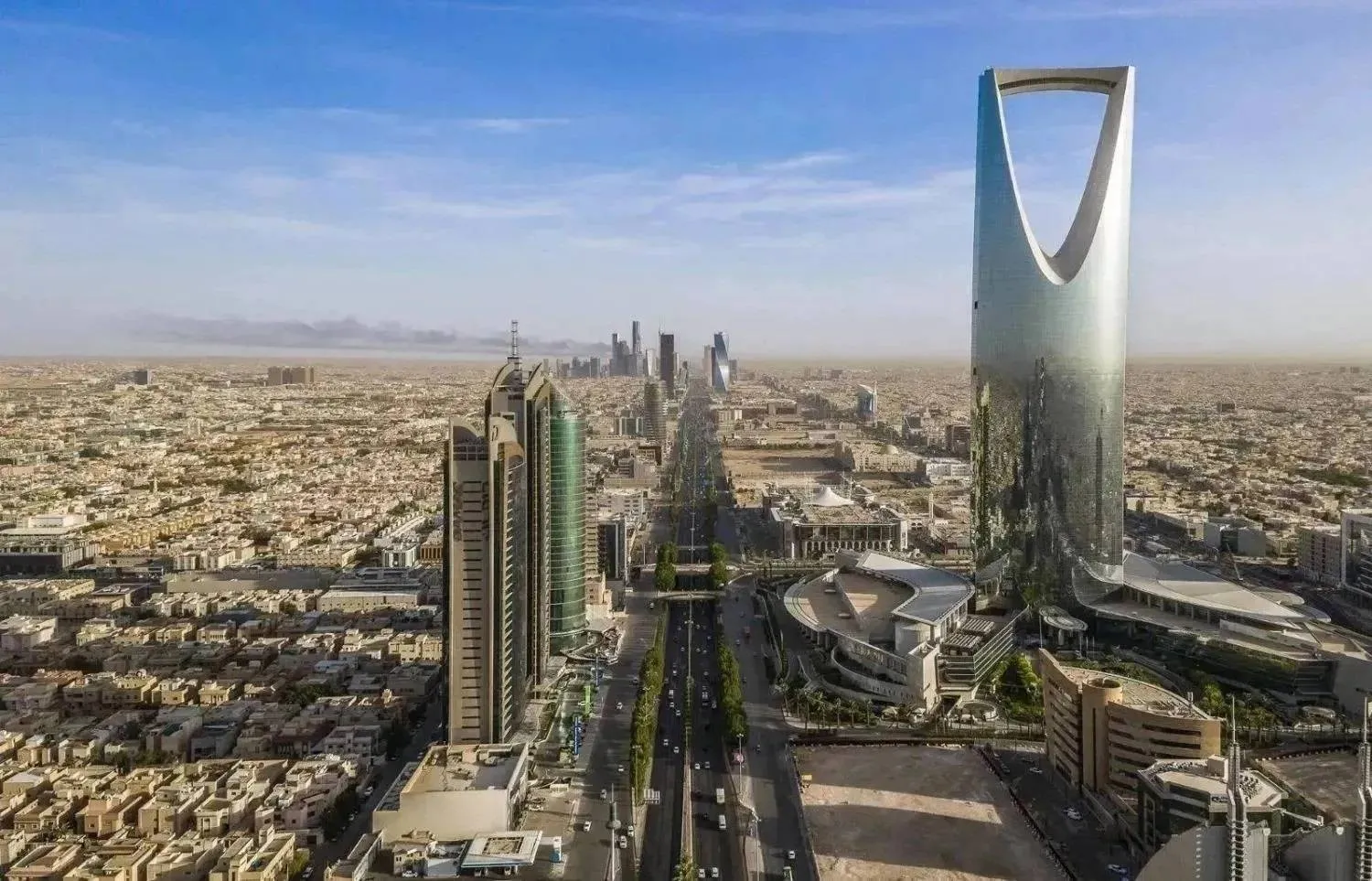
UAE Energy Minister: OPEC’s Role is Key in Stabilizing Global Oil Market

Prince Abdulaziz bin Salman, Saudi Minister of Energy, Suhail Al-Mazrouei, UAE Minister of Energy, and a number of OPEC energy ministers (WAM)
TT

UAE Energy Minister: OPEC’s Role is Key in Stabilizing Global Oil Market

Prince Abdulaziz bin Salman, Saudi Minister of Energy, Suhail Al-Mazrouei, UAE Minister of Energy, and a number of OPEC energy ministers (WAM)

UAE Energy Minister Suhail Al-Mazrouei stressed on Saturday the significant and pivotal role played by OPEC and the OPEC Plus alliance to serve the interests of producers and consumers alike, and promote sustainable investment in the energy sector.

The Minister emphasized that joint teamwork is always a source of positive results and a pillar of strength for cooperation and unity, the Emirates News Agency, WAM said.

In remarks he made at the OPEC’s 60th anniversary celebration held in Iraq’s Baghdad, Mazrouei indicated that the main goal of OPEC is based on ensuring market stability and achieving a balance between demand and supply, hence supporting global economic growth.

The Minister pointed out that Iraq's hosting of the celebration is an affirmation of strengthening and consolidating the spirit of joint action to achieve stability in the global oil market.

On Friday, Saudi Energy Minister Prince Abdulaziz bin Salman said that the Organization of the Petroleum Exporting Countries (OPEC) and the OPEC Plus alliance only target market stability, including the benefit of producers, the petroleum industry and the concept of energy security.

OPEC had announced that the OPEC Plus alliance decided, during its June 4 meeting, to adjust the bloc’s production level to 40.4 million barrels per day, starting from January 2024, for a period of one year.

On the same day, Saudi Arabia announced an additional voluntary cut in oil production, amounting to one million barrels per day, starting in July, for a renewable month, while other producers, including Russia and Iraq, announced an extension of previous cuts.


FedEx Sues US for Refund on Trump's Emergency Tariffs

A driver of FedEx stands with packages near a delivery truck during Black Friday preparations in the Georgetown neighborhood of Washington, US, November 26, 2024. REUTERS/Benoit Tessier/File Photo 
TT

FedEx Sues US for Refund on Trump's Emergency Tariffs

A driver of FedEx stands with packages near a delivery truck during Black Friday preparations in the Georgetown neighborhood of Washington, US, November 26, 2024. REUTERS/Benoit Tessier/File Photo 

Global transportation company FedEx on Monday filed a lawsuit in the US Court of International Trade seeking a refund for President Donald Trump's emergency tariffs, one of the highest profile moves to recover funds since the US Supreme Court last week deemed the tariffs illegal.

A flood of lawsuits to recover billions of dollars is expected by trade attorneys after the blockbuster ruling. The recovery process still has to be worked out by a lower court, though, complicating the matter, according to Reuters.

More than $175 billion in US tariff collections are subject to potential refunds after the US Supreme Court on Friday ruled 6-3 that Trump overstepped his authority by using the International Emergency Economic Powers Act, a sanctions law, to impose tariffs on imported goods, Penn-Wharton Budget Model economists said.

“Plaintiffs seek for themselves a full refund from Defendants of all IEEPA duties Plaintiffs have paid to the United States,” FedEx said in the lawsuit, referring to tariffs Trump imposed.

FedEx and its logistics arm served as importer of record on goods subject to IEEPA tariffs. The Memphis-based company did not provide the dollar value of the refund it is seeking.

FedEx in its lawsuit named US Customs and Border Protection, the agency's commissioner Rodney Scott and the United States of America as defendants. CBP and the White House did not immediately respond to requests for comment.

Washington, DC-based Crowell & Moring is representing FedEx in the lawsuit and referred Reuters to the company, which did not immediately comment.


Turkish Central Bank Total Reserves Fell Nearly $6 Bln Last Week, Bankers Say 

People walk with the Suleymaniye Mosque in the background ahead of the holy month of Ramadan in Istanbul, Wednesday, Feb. 18, 2026. (AP)
TT

Turkish Central Bank Total Reserves Fell Nearly $6 Bln Last Week, Bankers Say 

People walk with the Suleymaniye Mosque in the background ahead of the holy month of Ramadan in Istanbul, Wednesday, Feb. 18, 2026. (AP)

The Turkish Central Bank's total reserves are expected to have decreased by around $5.8 billion last week to $206 billion, due to a eurobond redemption, bankers ‌said.

Three bankers ‌consulted by ‌Reuters ⁠calculated that net reserves ⁠decreased by $7 billion to $89 billion in the week ending February 20.

Bankers estimated that ⁠an increase in ‌gold ‌prices in the week ‌to February 20 ‌had an upward impact of around $1 billion on reserves. According to ‌the calculations, the central bank sold $3 ⁠billion ⁠in the market last week.

The reserve calculations are based on preliminary data from the central bank. Official data will be released on Thursday.


Despite Drop in 2025, Russian Oil Exports Exceed Pre-war Volumes

Russia relies on a shadow fleet of tankers to get past Western restrictions on its oil exports. Damien MEYER / AFP/File
TT

Despite Drop in 2025, Russian Oil Exports Exceed Pre-war Volumes

Russia relies on a shadow fleet of tankers to get past Western restrictions on its oil exports. Damien MEYER / AFP/File

While Russian oil exports dropped last year, Russia is still exporting higher volumes than before its invasion of Ukraine in 2022, researchers said Tuesday, calling for stricter sanctions enforcement.

The volume of Russian crude oil exports remained six percent above pre-invasion levels in the fourth year of the war, despite Western sanctions aimed at curbing Russia's "shadow fleet," according to a report by Finnish think tank Center for Research on Energy and Clean Air (CREA).

Russia's shadow fleet consists of ageing tankers, with often opaque ownership, used to circumvent sanctions imposed by the European Union, the United States and the G7 group of nations.

However, oil revenues, which are fueling Moscow's war chest, have dropped below pre-invasion levels, as Russia has been forced to adopt price discounts, the report said.

"We've seen a significant drop in Russian fossil fuel export earnings as a result of new measures and greater enforcement," Isaac Levi, a CREA analyst and co-author of the report, told AFP.

But he added that "there are still significant loopholes and areas that have been unaddressed by sanctioning countries", allowing volumes to remain high.

Loopholes include the false flagging of ships but also the issue of re-exportation of refined fuels made from Russian crude oil to sanctioning countries.

"We propose a ban of imports from any refinery or storage terminal that has received a shipment of Russian oil in the previous six months," Levi said.

- Crude to China, India, Türkiye-

Russian revenues from crude oil exports -- one of Russia's main exports -- decreased by 18 percent to 85.5 billion euros in the 12 months leading up to February 24, compared to the year before, according to the report.

Meanwhile volumes fell by six percent to 215 million tons, for the same period, according to the report.

Ninety-three percent of Russian crude was exported to China, India and Türkiye.

The report urged the EU and UK to "detain Russian shadow fleet vessels that pose huge environmental and security threats to European and UK coastlines".

The European Union lists 598 vessels suspected of being part of the "shadow fleet" that are banned from European ports and maritime services.

It also called for an end to Hungary's and Slovakia's continued imports of Russian crude oil.

The two countries, which were exempted from EU sanctions on Russian oil imports, imported 11 percent more Russian crude oil in the first 10 months of 2025 compared to the same period a year earlier, the report stated.