

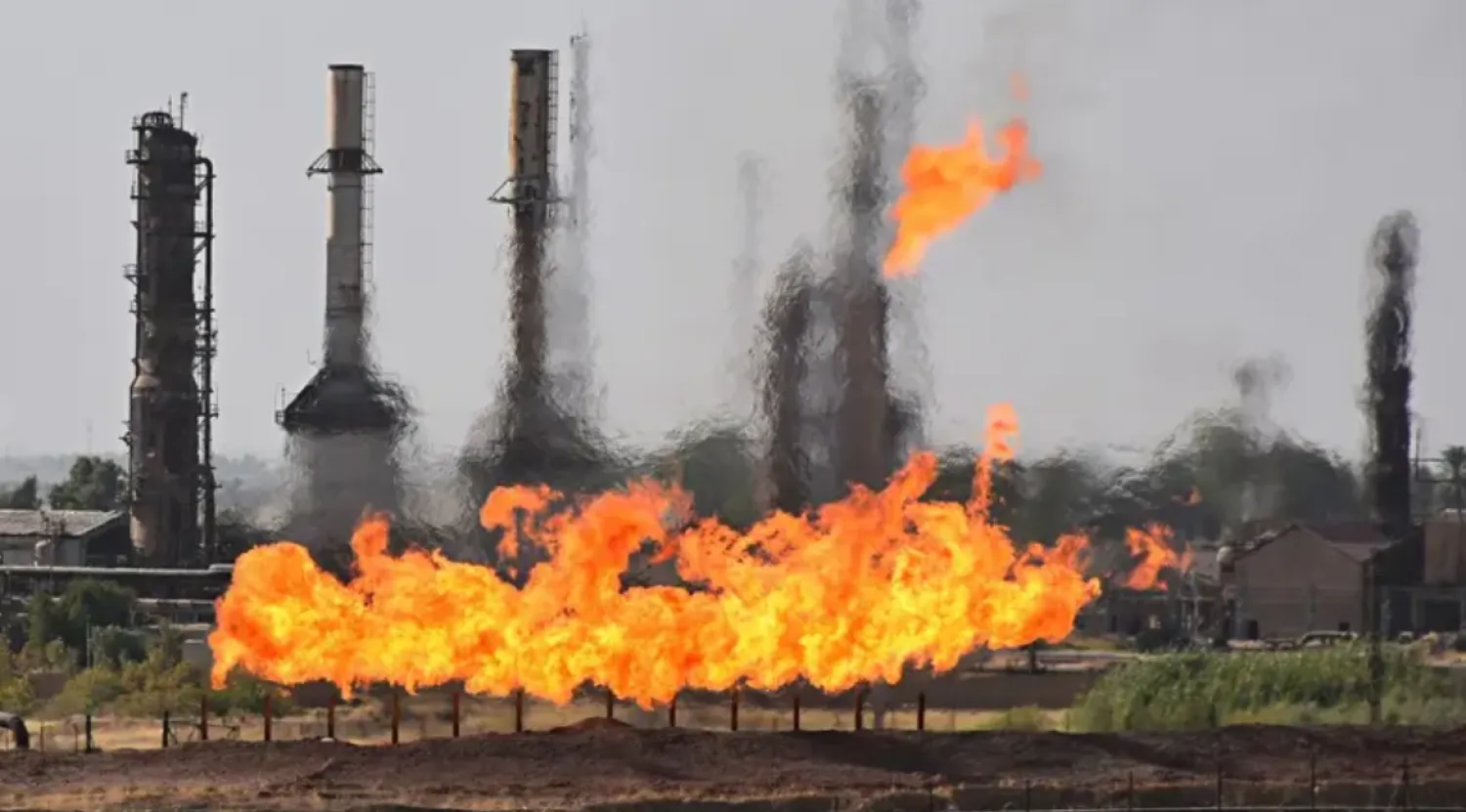

Iraq Invites Foreign Bids for 11 Gas Blocks in New Areas

Fires flare off the gas from in Kirkuk, Iraq, Wednesday, Oct. 18, 2017. (The Associated Press)
TT

Iraq Invites Foreign Bids for 11 Gas Blocks in New Areas

Fires flare off the gas from in Kirkuk, Iraq, Wednesday, Oct. 18, 2017. (The Associated Press)

Iraq on Sunday invited foreign companies to bid for contracts to explore and develop natural gas reserves in 11 new blocks as the OPEC member seeks to produce much-needed natural gas for power stations and cut imports that weigh on the country’s budget.

Eight blocks are located in western Anbar province, one in the northern city of Mosul and two others are located along province borders, including one between Anbar region with Mosul and another with Iraq’s southern city of Naja, the oil ministry said in a statement on Sunday, Reuters reported.

Iraq’s oil ministry has ended preparation to launch a sixth bidding round to auction off the gas blocks, the ministry said, without setting a date for the bidding process.

Iraq, OPEC’s second-largest producer after Saudi Arabia, flares much of its own gas, extracted alongside crude oil at its fields, because it lacks the facilities to process it into fuel and instead uses Iranian power imports to generate electricity.

Baghdad has been under pressure from the US to reduce its reliance on gas imports from Iran.



EU Wrestles over How to Tackle China Export Flood

There is a growing consensus in the European Union that it is too dependent on China. Nicolas TUCAT / AFP/File
TT

EU Wrestles over How to Tackle China Export Flood

There is a growing consensus in the European Union that it is too dependent on China. Nicolas TUCAT / AFP/File

EU leaders will grapple on Thursday over whether the bloc needs new beefed-up trade defenses to curb the surge of Chinese exports deemed an existential threat to European industry and jobs by Brussels.

There is a growing consensus in the European Union that it is too dependent on China, and Brussels fears this makes it vulnerable to potential coercion and supply shocks, AFP said.

The bloc's trade deficit in goods hit around 360 billion euros ($417 billion) last year, meaning Chinese exports sharply exceeded the EU's.

"Our trading relationship with China has reached a point that requires a reset. Not confrontation, but rebalancing," EU trade chief Maros Sefcovic said.

While EU capitals agree on a common diagnosis on China, the positions differ on the cure.

One way to beef up the EU's arsenal could be creating a new tool to impose sector-specific tariffs such as chemicals or green tech -- taking a page out of President Donald Trump's playbook.

French President Emmanuel Macron last month called for a "European equivalent of Section 301" -- the trade tool Trump has employed to set sweeping tariffs -- arguing Europe's "sovereignty is at stake".

Germany has until now adopted a cautious posture because its economy is more exposed to potential retaliation, while Spain has sought to avoid tensions as it chases Chinese investment.

But Berlin appeared to be coming around to France's way of thinking.

A German official said Berlin was "open" to new tools if they are necessary so long as they were "not targeted at specific recipients".

Concern about Chinese dominance is not limited to the EU.

Fears are rising in the West over Beijing's control in the market for rare earth minerals used in everyday electronic appliances, and China was on the menu during talks between G7 leaders in France this week.

The real wake-up call came last year when China imposed export controls on rare earths, sending shockwaves across supply chains globally.

- China's massive subsidies -

Brussels often evokes the need for fair competition, pointing to the unfair advantage Chinese companies have because of massive state subsidies.

Between 2005 and 2024, Chinese firms received around three to eight times more government support than firms in the Organization for Economic Co-operation and Development, according to the OECD, which called it "a conservative estimate".

Over dinner, the leaders will chew over what current tools the EU can use to address the imbalance and whether there should be new instruments and actions, which the European Commission has stridently pushed for.

The discussion will reveal just how far the EU will go to protect its industries, with leaders due to guide the commission on its next steps.

"There may be a member state or two who are more cautious," an EU diplomat said, but he said the majority see "the situation the same way".

"We have to be ready to do more," he said.

The commission, in charge of EU trade policy, is also mulling whether to introduce safeguard measures for the chemicals industry, like it did for steel.

- EU appetite for a fight? -

Even as its resolve appears to be hardening, the EU has showed no appetite to trigger a broader trade war with China.

Fears over Chinese retaliation are not unfounded.

After the EU hit Chinese electric cars with higher tariffs in 2024, China imposed anti-dumping duties on European cognac.

And Beijing has vowed to retaliate if the EU pushes through rules that would exclude certain products manufactured outside the bloc from public contracts.

Sefcovic has invited Chinese Commerce Minister Wang Wentao to Brussels later this month as the bloc still hopes it can prevent escalation through dialogue with China -- but an EU official would not confirm the visit.


Oil Prices Sink Further as Trump Signs Deal to Reopen Hormuz

(FILES) This aerial view shows the fuel depot of Aral at the Ruhr Oel petroleum refineries of BP Gelsenkirchen GmbH in Gelsenkirchen, western Germany on March 9, 2026. (Photo by Ina FASSBENDER / AFP)
TT

Oil Prices Sink Further as Trump Signs Deal to Reopen Hormuz

(FILES) This aerial view shows the fuel depot of Aral at the Ruhr Oel petroleum refineries of BP Gelsenkirchen GmbH in Gelsenkirchen, western Germany on March 9, 2026. (Photo by Ina FASSBENDER / AFP)

Oil prices tumbled again Thursday after US President Donald Trump and his Iranian counterpart signed off on a deal to end their war and reopen the Strait of Hormuz.

The news boosted optimism for a lasting peace between the two nations after more than three months of war that has rattled energy markets and fueled a fresh spike in inflation.

However, the upbeat mood on trading floors was tempered by expectations the US Federal Reserve will hike interest rates before year's end, after its new boss held his first policy meeting and acknowledged "persistently high prices are a burden for the American people", reported AFP.

Trump put his signature to the memorandum of understanding in Versailles after a G7 summit, telling reporters: "Just signed it."

Iranian foreign ministry spokesman Esmaeil Baqaei, quoted by state news agency IRNA, said the document "was finalized with the signatures of the presidents".

All eyes are now on the strait, through which a fifth of world oil normally passes and which Tehran effectively closed after the United States and Israel launched their war on Iran on February 28.

"As a first step, Islamic Republic of Iran will instantly reopen the Strait of Hormuz and the United States of America will immediately lift the naval blockade," Pakistan's Prime Minister Shehbaz Sharif, whose officials mediated the agreement, said on X.

The deal will see Washington commit to immediately waive oil sanctions and facilitate the release of a $300 billion reconstruction fund, while Tehran agrees to dilute its enriched uranium as talks on a longer-term agreement are held.

Crude fell more than three percent Thursday, extending the losses sustained since news broke at the weekend. Both main contracts have plummeted more than 15 percent since last week, when talk of an agreement began swirling.

"A signed MOU and a faster path toward reopening the Strait of Hormuz should pull some of the panic premium out of crude," wrote Stephen Innes at SPI Asset Management.

"That matters because oil was not just trading war risk. It was trading the possibility that reserve drawdowns and blocked Gulf flows would create an energy cliff."

Equities were mixed as they struggled to maintain the positive momentum seen this week.

Seoul was again at the forefront of the gains, ploughing past 9,000 points for the first time thanks to another surge in chip titans Samsung and SK hynix as the AI boom continues apace.

"South Korea supplies around 80 percent of the world's memory chips, and artificial intelligence is expected to continue growing for at least another decade," Kim Dae-jong, a professor at Sejong University, told AFP.

"Semiconductors account for roughly half of South Korea's industrial output, and this is seen as the biggest reason why Kospi broke through the 9,000-point mark."

Tokyo, Singapore, Taipei, Mumbai and Manila also rose but Hong Kong, Shanghai, Sydney, Wellington, Bangkok and Jakarta fell along with London. Paris was flat while Frankfurt rose.

The mixed performance followed the Fed's latest policy meeting that saw it hold rates as expected but indicate it could hike in the next six months.

The gathering was the first for new boss Kevin Warsh, who flagged the fact that inflation has been well above the bank's two percent target for years but vowed to "deliver price stability".

"Persistently high prices are a burden for the American people, but the recent past need not be prologue," he said after the meeting at which he also wanted wide-ranging reforms at the bank.

Warsh was appointed by Trump, who has launched an unprecedented assault on the Fed's independence and called previous boss Jerome Powell incompetent for not cutting rates enough.

Analysts pointed out that the Fed's post-meeting statement did not make mention of an easing bias, as it had done previously.

The fact there was more emphasis on prices rather than jobs was also noted.

Data this month has shown inflation at a three-year high, while the labor market remains healthy.

"While there is no suggestion the Fed's dual mandate has shifted away from unemployment as well as price stability, markets have been left with a view (that) the emphasis appears to have shifted to the latter for now," wrote National Australia Bank's Gavin Friend.


MODON Boosts Saudi Supply Chains With More Than $147 Million in Investments

A safety and security vehicle operated by MODON (MODON) 
TT

MODON Boosts Saudi Supply Chains With More Than $147 Million in Investments

A safety and security vehicle operated by MODON (MODON) 

Saudi Arabia’s Industrial Cities and Technology Zones Authority (MODON) has strengthened the Kingdom’s position as a global logistics platform and a key hub for trade linking three continents, backed by more than SAR553 million ($147.5 million) in new investments during 2025.

The spending expanded developed logistics space within industrial cities to more than 16 million square meters, representing annual growth of 35 percent and supporting the objectives of the National Transport and Logistics Strategy.

The investment surge underscores MODON’s growing role in developing and managing industrial land and integrated logistics zones across the Kingdom.

Established in 2001, the authority currently oversees a network of 36 industrial cities, either operational or under development, in addition to private industrial complexes and cities. It also serves as a strategic enabler for investors by providing advanced infrastructure, smart logistics solutions and ready-built factories, in line with Saudi Vision 2030 goals to increase private-sector participation and diversify the economy.

Speaking to Asharq Al-Awsat, logistics expert Nashmi Al-Harbi said MODON has become the operational backbone of Saudi Arabia’s drive to establish itself as a global logistics hub.

He noted that the authority attracted SAR24 billion ($6.4 billion) in high-quality investments in 2024, including SAR6 billion ($1.6 billion) in foreign direct investment, strengthening national supply chains and increasing the sector’s contribution to gross domestic product.

Alignment With National Strategies

MODON’s expansion is closely aligned with the National Transport and Logistics Strategy. The authority is developing industrial and logistics platforms, as well as advanced distribution centers designed to ensure the smooth and flexible flow of goods.

The effort has been supported by the National Industrial Development and Logistics Program (NIDLP), which enabled MODON to develop more than 13 million square meters of land, launch new industrial cities in Taif and Asir, and establish a specialized logistics zone in Dammam.

NIDLP’s support also included adding more than 600 megawatts of electrical capacity and creating over 700 ready-built factories and industrial products, as well as self-storage facilities, support units and multi-story factory complexes aimed at simplifying business operations for investors and small and medium-sized enterprises.

Al-Harbi said the real value of these projects lies in their ability to translate national strategies into tangible infrastructure, linking industrial cities directly with international gateways while reducing both transit times and transportation costs.

Integrated Logistics Ecosystem

In recent years, MODON has expanded its logistics offerings to include logistics land plots of varying sizes, dedicated distribution centers, third-party logistics (3PL) warehouses, cold-storage facilities, container yards, fully serviced truck parks, self-storage units and open-air storage areas.

According to Al-Harbi, MODON now hosts 23 operational logistics centers covering more than 34 million square meters. Their proximity to ports and airports, combined with integrated support services, provides investors with a cost-efficient and highly productive operating environment.

Investments Strengthening Supply Chains

In 2025, logistics land covering more than one million square meters was allocated across 18 industrial cities, attracting investments exceeding SAR500 million ($133.3 million). Projects included warehouses, distribution centers, truck-service facilities and third-party logistics operations.

Among the major investments was a project by Jingdong Property to develop a 40,000-square-meter warehouse complex at MODON Oasis in Jeddah, with investments totaling SAR100 million ($26.7 million).

At Jeddah’s Third Industrial City, Kudu Food and Catering established an 18,000-square-meter distribution center valued at SAR50 million ($13.3 million). Saudi Commercial MASCO Co. Ltd. launched a 10,000-square-meter third-party logistics project worth SAR10 million ($2.7 million), while SMSA Express developed a logistics facility in Al-Ahsa’s First Industrial City on a 6,000-square-meter site with investments of SAR10 million.

Al-Harbi said manufacturing and food-processing industries are driving demand for logistics services, while rapid growth in e-commerce and pharmaceuticals is increasing the need for specialized distribution centers.

Connecting Industrial Cities to Trade Gateways

As part of its infrastructure development program, MODON completed a freight rail station at Dammam’s Second Industrial City, linking the logistics zone directly to King Abdulaziz Port and improving cargo flows between industrial centers and maritime gateways.

The authority also allocated six fuel stations across industrial cities in Al-Kharj, Tabuk, Madinah, Jeddah and Makkah, covering 65,100 square meters and attracting SAR36.6 million ($9.8 million) in investments.

In addition, 14 fully serviced truck yards covering nearly 500,000 square meters were allocated in several industrial cities, including Jeddah, Riyadh and Dammam. MODON also signed 16 logistics contracts worth SAR500 million ($133.3 million) to develop bus-support parking facilities for the Hajj and Umrah seasons within Makkah’s Second Industrial City on a site exceeding 850,000 square meters.

To support sustainability goals, the authority launched two electric-vehicle charging stations in Riyadh’s Second Industrial City, with capacity to serve four vehicles.

Smart Logistics and Future Growth

Al-Harbi said technology has become the main driver of logistics operations, noting SAR8.8 billion ($2.35 billion) in investments across 15 data centers supporting digital transformation and Fourth Industrial Revolution applications.

MODON is increasingly adopting automation and smart technologies to improve tracking accuracy and operational efficiency, while seeking to transform 100 factories into global “Factories of the Future.”

He identified rapid digitalization and environmental sustainability requirements as the sector’s main challenges, adding that MODON is addressing them through its Green Cities initiative, cybersecurity investments and workforce development programs.

Saudi Arabia recorded more than 290 million delivery orders in 2024, underscoring the need for advanced warehouses and efficient distribution networks. Al-Harbi said automated smart warehouses, specialized logistics centers, cold-chain solutions for food and pharmaceuticals, and green logistics services represent some of the Kingdom’s most promising investment opportunities.

He added that logistics services have become a critical enabler of Saudi exports by reducing costs and accelerating access to global markets through direct connections to international shipping routes and supply chains. Looking ahead, he expects the logistics sector’s contribution to GDP to rise to 10 percent as Saudi Arabia strengthens its role as a pivotal trade gateway linking Asia, Europe and Africa through expanding logistics and digital infrastructure.