


Saudi Aramco Sees ‘Sound’ Oil Outlook for H2 on China, India Demand

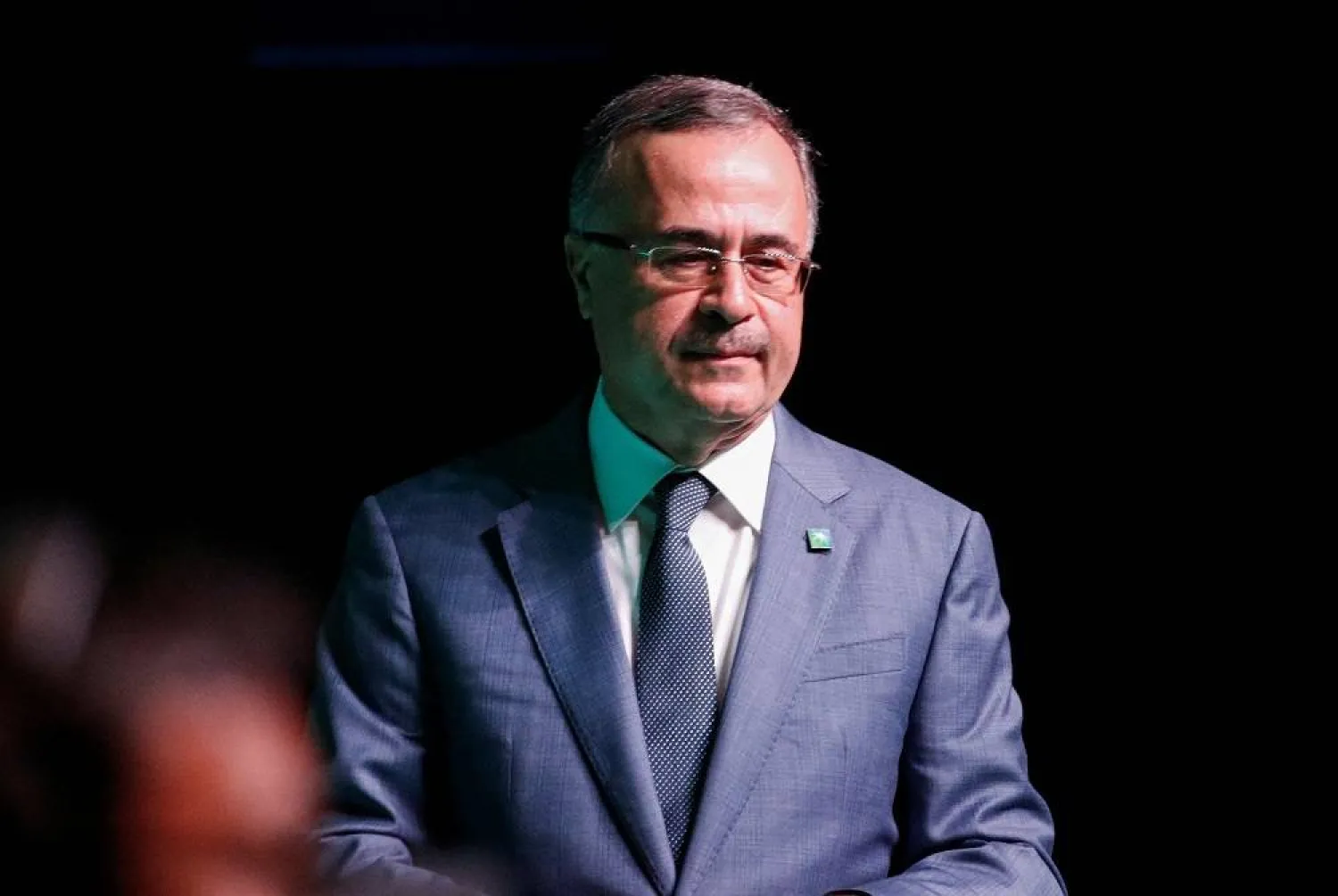
President and CEO of Aramco Amin Nasser attends the Energy Asia conference in Kuala Lumpur, Malaysia June 26, 2023. (Reuters)
TT

Saudi Aramco Sees ‘Sound’ Oil Outlook for H2 on China, India Demand

President and CEO of Aramco Amin Nasser attends the Energy Asia conference in Kuala Lumpur, Malaysia June 26, 2023. (Reuters)

Saudi Aramco believes market fundamentals remain "sound" for the second half as demand from emerging markets led by China and India will offset recession risk in developed markets, CEO Amin Nasser told an industry gathering on Monday.

"Overall, we believe that oil market fundamentals remain generally sound for the rest of the year," said Nasser, who heads the world's largest oil company.

"Despite the recession risks in several OECD countries, the economies of developing countries – especially China and India – are driving healthy oil demand growth of more than 2 million barrels per day this year," he told the Energy Asia conference in Kuala Lumpur.

Although China faces economic headwinds, the transport and petrochemical sectors are still showing signs of demand growth, he added.

Brent crude futures are down about 14% since the start of the year as rising interest rates hit investor appetite, while China's promising economic recovery has faltered after several months of softer-than-expected consumption, production and property market data.

While a failed mutiny by mercenaries in Russia over the weekend has raised concerns about political instability and pushed up oil prices, none of the industry executives and officials speaking on the first day of the conference mentioned it during their onstage remarks.

"There's not much geopolitical impact on the market now. It is dominated by economics, not geopolitics," Daniel Yergin, vice chairman of S&P Global, said on the sidelines of the event.

Mixed views

Russell Hardy, CEO of Vitol, the largest independent oil trader, said the industry probably faces a period of reasonably strong fundamentals in the next three or four months, but uncertainty with Russian supply and Chinese demand make it more difficult to forecast market balances and where prices are going.

"What has happened so far this year is the supply side has slightly overperformed, particularly Russia, where there were expectations of production loss as a result of the difficulty getting oil to market because of the sanctions," he said.

Sazali Hamzah, Petronas' executive vice president and CEO of downstream, was less optimistic, saying that demand for petroleum and petrochemicals started slowing in the second quarter despite a recovery in jet fuel consumption.

He expects new refining capacity coming online this year to put "a lot of pressure on the market".

"We believe in second-half of this year we will still see weak demand, and that will be extended to part of next year," he added.

Looking ahead, Vitol and Petronas executives said oil demand could peak around 2030.

"We got it peaking in about 2030 and a gradual decline out to 2040 ... And then (it's a) rapid decline thereafter as the EV fleet and energy transition takes over," Hardy said.

As part of its transition, Petronas will focus on improving natural gas efficiency and find solutions for carbon abatement while exploring other renewable energy such as biofuel in the mid-term and hydrogen in the long run, Hamzah said.

The company is working on a pilot plant and engineering design as it plans to start its first biorefinery in 2026.

"If the trend continues to grow, we are ready to convert the Kerteh refinery into biofuel in the future," Hamzah said.



Mexico Eyes Trade Expansion, Targets Saudi Market with Premium Rice Exports

Rice products at a commercial market in Saudi Arabia (SPA)
TT

Mexico Eyes Trade Expansion, Targets Saudi Market with Premium Rice Exports

Rice products at a commercial market in Saudi Arabia (SPA)

Mexico is preparing to expand its trade ties with Saudi Arabia by exporting high-quality rice to the Kingdom, sources told Asharq Al-Awsat.

They said Mexico has an export offer for three premium rice varieties that meet the highest international standards.

Saudi Arabia imports limited quantities of Mexican rice, mainly for use in Mexican cuisine and restaurants.

The latest initiative reflects the Kingdom’s position as one of the world’s largest rice consumers, with per capita consumption averaging 45.77 kilograms annually, the highest among plant-based food products.

Around 70 percent of consumption consists of basmati rice, while total annual imports exceed 1.3 million tons.

According to the information obtained by Asharq Al-Awsat, the Saudi Ministry of Foreign Affairs received a request from the Mexican Embassy in Riyadh conveying the interest of the Mexican state of Nayarit in exporting premium rice to the Saudi market.

The embassy said three varieties are available for export: Super Extra Whole Grain Rice (long grain) with a monthly supply of 120 tons; Milagro Super Extra Rice (polished broad grain) with a capacity of 30 tons per month; and Morelos rice, an additional premium-grade variety.

Saudi Arabia has previously taken steps to encourage private-sector imports of Cambodian rice in a move aimed at diversifying supply sources alongside imports from India, Pakistan, the United States and Egypt.

Strong demand for favored rice varieties in Saudi Arabia and across the Gulf, combined with challenges such as rising shipping costs and climate-related disruptions, has occasionally led to price fluctuations. These factors have prompted the Kingdom to broaden its supplier base to ensure the availability of this commodity and maintain price stability.

The government recently decided to increase Pakistani rice imports to account for 20 percent of total needs, reinforcing supply stability and food security.

Forecasts suggest that per capita rice consumption in Saudi Arabia could rise to around 50 kilograms annually in the coming years, up from the current 45.77 kilograms, underscoring rice’s central role in the Kingdom’s food industry and traditional cuisine.


Capricorn Energy Sees Production Boost, Driven by Growth in Egypt

People run to catch a tram in the coastal city of Alexandria, on February 18, 2026. (Photo by Khaled DESOUKI / AFP)
TT

Capricorn Energy Sees Production Boost, Driven by Growth in Egypt

People run to catch a tram in the coastal city of Alexandria, on February 18, 2026. (Photo by Khaled DESOUKI / AFP)

Oil producer Capricorn Energy said on Monday it expects higher production in 2026 compared with last year, supported by the expansion of its Egypt operations.

In May, the Scottish company and Egyptian General Petroleum Corporation (EGPC) agreed to merge eight concessions ⁠in Egypt into a ⁠single deal under a joint venture with Cheiron Oil and Gas.

Capricorn expects 2026 production in the range of 18,000-22,000 barrels ⁠of oil equivalent per day (boepd), boosted by the agreement with EGPC and growth in the region.

Capricorn CEO Randy Neely said, "We have entered 2026 with strong momentum as our 2025 exit rate of 21,003 boepd and robust balance sheet ⁠position ⁠us to capitalize on development opportunities on the merged concession."

According to Reuters, Capricorn Energy also said it continues to evaluate M&A opportunities in the UK North Sea, Egypt and general MENA region.

The company forecast 2025 production between 17,000 and 21,000 boepd.


US to Stop Collecting Tariffs Deemed Illegal by Supreme Court on Tuesday

LOS ANGELES, CALIFORNIA - FEBRUARY 20: Shipping containers stand stacked while others rest on truck transport chassis at the Port of Los Angeles on February 20, 2026 in Los Angeles, California. Mario Tama/Getty Images/AFP
TT

US to Stop Collecting Tariffs Deemed Illegal by Supreme Court on Tuesday

LOS ANGELES, CALIFORNIA - FEBRUARY 20: Shipping containers stand stacked while others rest on truck transport chassis at the Port of Los Angeles on February 20, 2026 in Los Angeles, California. Mario Tama/Getty Images/AFP

The US Customs and Border Protection agency said it will halt collections of tariffs imposed under the International Emergency Economic Powers Act at 12:01 a.m. EST (0501 GMT) on Tuesday, more than three days after the Supreme Court declared the duties illegal.

The agency said in a message to shippers on its Cargo Systems ‌Messaging Service (CSMS) ‌that it will de-activate all tariff ‌codes ⁠associated with President ⁠Donald Trump's prior IEEPA-related orders as of Tuesday.

The IEEPA tariff collection halt coincides with Trump's imposition of a new, 15% global tariff under a different legal authority to replace the ones struck down by the Supreme ⁠Court on Friday.

CBP gave no reason why ‌it was continuing ‌to collect the tariffs at ports of entry days ‌after the Supreme Court's ruling, and its message ‌offered no information about possible refunds for importers.

The message noted that the collection halt does not affect any other tariffs imposed by Trump, including ‌those under the Section 232 national security statute and the Section 301 unfair ⁠trade practices ⁠statute.

"CBP will provide additional guidance to the trade community through CSMS messages as appropriate," the agency said.

Reuters reported on Friday that the Supreme Court decision made more than $175 billion in US Treasury revenue generated by the IEEPA tariffs subject to potential refunds, based on an estimate by Penn-Wharton Budget Model economists.

Their estimate from a ground-up forecasting model showed that IEEPA-based tariffs were generating more than $500 million per day in gross revenue.