Four Years into Crisis, Lebanon’s Leaders Hope Tourism Boom Will Help Bypass Reforms in IMF Bailout 

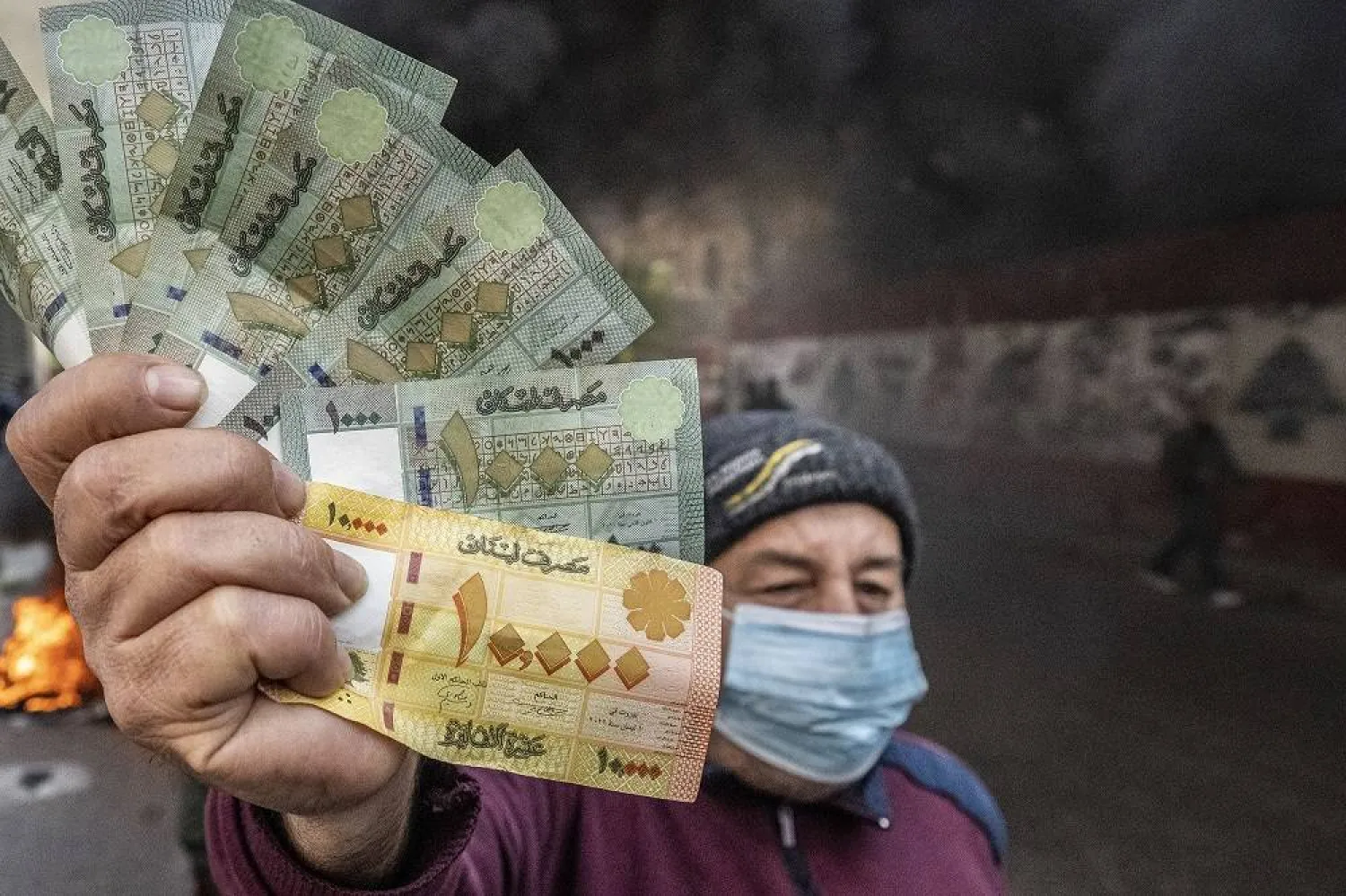
A man holds Lebanese pounds in front of the Central Bank building during a rally against the Lebanese Central Bank Governor Riad Salameh and the deepening financial crisis in Beirut, Lebanon, Wednesday, Jan. 25, 2023. (AP)
TT

Four Years into Crisis, Lebanon’s Leaders Hope Tourism Boom Will Help Bypass Reforms in IMF Bailout 

A man holds Lebanese pounds in front of the Central Bank building during a rally against the Lebanese Central Bank Governor Riad Salameh and the deepening financial crisis in Beirut, Lebanon, Wednesday, Jan. 25, 2023. (AP)

Four years into its historic economic meltdown, Lebanon’s political elites, masters at survival, are pushing for a recovery that would sidestep tough reforms demanded by the International Monetary Fund.

Economic experts and former officials involved in designing Lebanon’s original IMF-approved recovery plan in 2020 say the political leadership and associates in the banking sector are deliberately implementing a “shadow plan” to torpedo the deal and place the burden of bailing out the financial system on ordinary Lebanese who are already impoverished by the crisis.

Carrying out the IMF reforms, which include audits of Lebanon’s long secretive central bank and other banks, would not just force the elites to bear much of the cost of repairing the financial meltdown. It would also threaten the networks of corruption, patronage and waste that allowed them to milk the system for years, experts say.

“I would have never thought that these people, despite the size of the catastrophe, would still act with so much cold blood and irresponsibility,” said Alain Bifani, a former Finance Ministry director general and an architect of the recovery plan, speaking to The Associated Press about the elite’s refusal to implement it.

A growing number of politicians are now betting that a rebounding tourism sector, remittances from Lebanese abroad, and a fledgling natural gas industry will revive the economy without reforms requiring major sacrifices from them.

The financial meltdown has widely been blamed on the political leadership that has held power for decades — as well as top banking officials and former Central Bank Governor Riad Salameh.

Salameh, who ran the bank for 30 years until July, is under investigation on money laundering and embezzlement allegations and was slapped with sanctions two weeks ago by the United States, the United Kingdom and Canada.

For years before the crisis hit, the central bank operated what the World Bank says amounted to a Ponzi scheme to keep the economy afloat. It enticed commercial banks to lend it dollars at high interest rates to stay flush with cash. The banks then attracted customers to deposit dollar savings with even higher interest rates, turning a profit.

In late 2019, the scheme collapsed when the pipeline of dollars slowed, sparking a panic and a run on the banks. The banks locked down dollar accounts, allowing depositors to withdraw only in local currency at a fraction of the market rate. The life savings of many effectively melted away.

Lebanon’s inflation hit triple-digits. Its currency, the lira, which had been pegged at 1,500 to the dollar for a quarter century, now goes for around 90,000 on the black market. Sucked dry of funds, state electricity is now nearly non-existent. Public schools and hospitals can barely afford to keep their lights on. Officials beg for humanitarian aid similar to that for a nation in war.

“Before the crisis, they were extracting air from the lungs of society,” said Sami Zoughaib, an economist at Beirut-based think tank The Policy Initiative. “Now that society is dead, they are preying on the carcass.”

The lira incomes of public sector workers and pensions of retirees, who together make up a large sector of the population, have become nearly worthless. For survival, Lebanese scrounge for dollars, most often sent by relatives abroad. Most businesses now require payment in dollars — everything from grocery stores and pharmacies to private hospitals and private electricity generators.

Jeanette Fares, 62 and unemployed, relies on money from her brothers, who are themselves struggling. She rarely drives her 1995-model car anymore because gas is expensive.

“It’s all lies. I can’t even fix my faucet,” she said, calling the country’s rulers “mafias."

An IMF bailout was once seen as Lebanon’s only hope.

After nearly two years of talks, Lebanon reached a tentative deal with the IMF in April 2022 for a $3 billion rescue package. But finalizing it is contingent on major financial restructuring and reforms to combat corruption and waste.

The IMF plan would place much of the burden of backfilling the financial system’s losses on commercial bank shareholders, who include many prominent Lebanese political families and private sector associates. After extensive audits, many banks would have to sell assets or merge with others. Small depositors, meanwhile, would be able to recover most of their money.

A finalized deal with the IMF would open the door for the rescue package and billions of dollars of international investments and loans badly needed to rebuild productive sectors.

Without the deal and its associated reforms, Lebanon won’t get the investment and will be left “dependent on the handouts from the international community,” the IMF head of mission in Lebanon Ernesto Rigo warned in June.

Caretaker Economy Minister Amin Salam told the AP in a recent interview that a growing number of officials in government believe Lebanon can do without an IMF plan, or can better its negotiation position, “with a little bit of housekeeping” in the financial system.

Salam and other officials are banking on remittances from the diaspora that now make up almost 40% of the economy, while welcoming record numbers of tourists this summer. Tourists shell out hard cash in private beach clubs along the Mediterranean by day before flocking to nightclubs until sunrise.

Meanwhile, commercial banks — spared from restructuring — are instead cleaning up their losses on the backs of small depositors, who are forced to withdraw their trapped dollars as lira at a rate of 15,000, a sixth of their current market value.

Lebanon started negotiating with the IMF in May 2020, but Bifani called the discussions a joke given the divisions on the Lebanese side.

Ruling parties, commercial banks and the central bank played down the crisis, claiming the estimates of financial losses, a gargantuan $70 billion, were inflated.

Reformist ministers and advisers promoting the initial IMF-backed recovery plan say they faced resistance and animosity. One former senior government official said they and other officials had received threats for advocating tough reforms. The official spoke on condition of anonymity out of fear of retaliation.

Then-central bank chief Salameh, who was on the negotiating team, often ignored requests to send crucial information about the financial situation and dwindling foreign reserves, Bifani said. Salameh also did not cooperate with a forensic audit into the central bank’s questionable financial transactions.

The banks, meanwhile, proposed a plan placing the majority of the financial burden on the government, calling for a sale of state assets — or in other words, a government bailout. Talks froze within weeks, prompting Bifani and finance minister adviser Henri Chaoul to resign in late June 2020.

“I will not stand witness to this detrimental inaction,” Chaoul said in his resignation statement.

The government has put talks on the back burner. The negotiating portfolio is held by Deputy Prime Minister Saade Chami, a reformist economist who spent almost two decades working at the IMF, but he has virtually no political support.

Parliament’s budget and finance committee has ignored reform legislation, several parliamentarians told the AP. Instead, they said, it mostly focuses on setting up a sovereign wealth fund for hoped-for oil and gas revenues, though exploration in an offshore gas field has not started.

Outside the buzzing nightlife spots and fancy hotels, much of Lebanon’s impoverished population is losing hope.

“They live in their palaces,” Fares said of the country’s ruling elite, “and don’t notice the poor people who can barely afford to eat.”


IMF: Any Slowdown in AI-driven Growth Would be Factor for Central Banks

IMF Managing Director Kristalina Georgieva speaks during the Annual Meetings Plenary at the Annual Meetings of the International Monetary Fund (IMF) and the World Bank Group (WBG) at the Queen Sirikit National Convention Center (QSNCC) in Bangkok on October 16, 2026. (Photo by Lillian SUWANRUMPHA / AFP)
TT

IMF: Any Slowdown in AI-driven Growth Would be Factor for Central Banks

IMF Managing Director Kristalina Georgieva speaks during the Annual Meetings Plenary at the Annual Meetings of the International Monetary Fund (IMF) and the World Bank Group (WBG) at the Queen Sirikit National Convention Center (QSNCC) in Bangkok on October 16, 2026. (Photo by Lillian SUWANRUMPHA / AFP)

Central bankers around the world would need to consider any slowdown in AI-driven growth as they assess steps in their fight against inflation, International Monetary Fund Managing Director Kristalina Georgieva said on Friday.

Georgieva said concerns about dependence on the AI investment boom and high valuations were impacting markets around the world.

"Things are going up and down, and this is likely to continue," she told an audience at IMF headquarters in Washington, adding that the volatility would complicate the job of central banks at a time when risks to price stability had been growing.

A steep rout in technology stocks on Thursday rippled through markets on fears that ⁠the Democrats' victory ⁠in the US midterm elections would increase regulatory scrutiny of AI and slow the data center build-out, sending investors to the safety of bonds.

The political jitters are hitting an AI trade already on shaky footing due to worry about return on massive spending on AI-related infrastructure, with the meltdown spurring margin calls and spooking retail investors and hedge ⁠funds alike.

Georgieva said the AI investment boom was lifting growth in some countries, helping to offset a negative oil-supply shock triggered by the war in the Middle East, but it was also adding to inflationary pressures and financial stability concerns.

The IMF last month flagged significant growth and financial stability risks from a potential ending of the AI investment boom, among other factors, including a prolonged Middle East war. At the time, it warned that a steep drop in AI investment could lead to a sharp fall in asset prices, ultimately cutting global GDP ⁠by 1.1% ⁠by 2028, including a 1.8% drop in US output.

Georgieva did not repeat the downside forecast on Friday, but acknowledged the recent market volatility.

"Should there be a slowdown in the AI-driven growth impulse, it would need to be factored in as central banks assess the necessary steps in the fight against stubborn inflation," she said.

Democrats are planning to unleash a flood of new legislation targeting artificial intelligence systems and data-center development when they take control of the US Congress in January, Reuters reported on Friday, citing congressional aides and advocates.

That would mark a sharp shift from the Republican-led Congress, where lawmakers largely focused on promoting AI development and declined to pass legislation restricting the technology.


World Food Prices Dip in October, but Remain Higher Than a Year Ago

A worker carries loaves of bread for sale at a bakery in the capital city of Cairo, Egypt November 4, 2026. (Reuters)
TT

World Food Prices Dip in October, but Remain Higher Than a Year Ago

A worker carries loaves of bread for sale at a bakery in the capital city of Cairo, Egypt November 4, 2026. (Reuters)

World food prices edged lower in October as weaker import demand contributed to monthly declines in cereal, dairy and meat prices, but were still nearly 6% higher than a year earlier, the United Nations' Food and Agriculture Organization said on Friday.

The FAO Food Price Index, which tracks monthly changes in international prices for a basket of food commodities, ‌averaged 133.9 points ‌in October, down from a revised ‌135.6 ⁠in September.

The index ⁠was 5.9% higher than a year earlier, but remained 16.4% below its March 2022 peak.

FAO's cereal price index fell 4.5% from September and was 12.6% lower than a year ago, as wheat and maize quotations declined. Wheat prices eased on weak import demand ⁠and improved production prospects, especially in Argentina.

"Expectations of ‌easing constraints on Black ‌Sea export flows added to the downward pressure on prices, ‌although continued disruptions to Black Sea logistics limited the decline," ‌FAO said in a statement.

Maize prices also eased after reaching a three-year high in September, pressured by the US harvest, expectations of ample supplies in South America and renewed ‌prospects of easing tensions in the Black Sea region.

Vegetable oil prices edged up 0.3%, ⁠as ⁠higher soybean and sunflower oil prices more than offset a fall in rapeseed oil prices.

Sugar prices rose 6.6%, their fourth straight monthly increase, to the highest level since December 2024, after rainfall disrupted harvesting in Brazil. They were now 28.8% above a year ago.

The dairy index fell 1.1%, as lower butter and cheese prices linked to ample supplies and subdued demand outweighed gains in milk powder.

The meat index declined 1.2%, while still slightly above its year-earlier level, as ovine and bovine meat prices fell.


Copper Falls, Set for Worst Week Since March on AI Rout

Copper at the Aurubis copper smelting and refining plant in Hamburg, Germany. (Reuters)
TT

Copper Falls, Set for Worst Week Since March on AI Rout

Copper at the Aurubis copper smelting and refining plant in Hamburg, Germany. (Reuters)

Copper dropped on Friday and was set for its biggest weekly drop in London since March, as a rout in technology stocks battered markets.

Benchmark three-month copper on the London Metal Exchange was down 1.3% at $13,663 a metric ton by 0700 GMT. That placed it on track to fall 3.44% in the week, Reuters said.

The most-traded copper contract on the Shanghai Futures Exchange fell 1.08% to 106,830 yuan ($16,018.17) a ton.

The weakness reflects worries over AI investment, ‌with copper increasingly ‌influenced by "sentiment towards data center expansion," said ‌Craig ⁠Lang, principal analyst ⁠at CRU.

Technology shares were battered after Democratic wins in the US midterms fueled concerns that new regulatory oversight could cap the AI buildout.

On the other hand, supply constraints cushioned copper's decline.

"I would be cautious about calling this a sustained correction, given ongoing mine supply challenges and exceptionally tight ⁠metal availability outside the US," Lang said.

Copper stocks ‌in SHFE-monitored warehouses <CU-STX-SGH> fell by ‌over 24% this week to just 33,848 tons — the lowest ‌in almost three years. The closely watched Yangshan copper ‌premium <SMM-CUYP-CN>, a gauge of appetite for imports into key consumer China, increased to $210 a ton on Thursday, matching its record high.

Smelters in the country are facing a double squeeze of negative treatment ‌charges and lower sulfuric acid prices.

Meanwhile, warehouse inventories outside the US have been drawn ⁠down as ⁠material was pulled into the country ahead of a potential tariff on imports of refined copper.

"These physical constraints should provide some support against weaker investor sentiment," Lang said.

Among LME metals, aluminium lost 0.54%, zinc lost 1.42%, lead lost 0.45%, nickel dipped 0.23% and tin gained 0.83%.

On the SHFE, aluminium nudged down only 0.04%, zinc lost 1.35%, lead was little changed, down only 0.03%, nickel rose 2.14% and tin dropped 3.45%.

SHFE inventories were down across the board this week, led by sharp drops in aluminium <AL-STX-SGH> and lead <PB-STX-SGH>.