Saudi Arabia’s Commercial Franchising Sector Valued at $1 billion

Roaa Al-Issawi (Asharq Al-Awsat)
TT

Saudi Arabia’s Commercial Franchising Sector Valued at $1 billion

Roaa Al-Issawi (Asharq Al-Awsat)

Finance Specialist at the Social Development Bank, Roaa Al-Issawi, said that the value of the franchise market in Saudi Arabia has reached one billion dollars, noting that the Kingdom was expected to witness the launch of 60 Saudi brands by the end of this year.

Al-Issawi noted that the Social Development Bank has approved 10 national trademarks, while 50 others would be qualified during the current year, adding that the bank’s strategy was aimed at focusing on national brands rather than resorting to imports.

Speaking at the first session of the Commercial Franchise Forum in Al-Khobar, Al-Issawi said that the Social Development Bank has set specific conditions and standards to reduce the fees required by trademark grantors, which range between 4 and 10 percent, explaining that the launching of the commercial franchise product aims to provide a source of income for the citizens, as well as support the national economy.

The bank official estimated the value of the commercial franchise market in the Kingdom at more than one billion dollars, with an annual growth rate ranging between 10 and 12 percent.

Al-Issawi presented the advantages of the commercial franchise program offered by the bank, saying that the dedicated financing amount reaches SAR 4 million.

She added that the bank would provide the necessary follow up on projects during the establishment and operation phases, solve obstacles and problems facing beneficiaries, and organize specialized training courses, on-the-job training at the franchisee company, in addition to technical workshops and financial and marketing consultations.

As for the conditions for applying for the commercial franchise program, Al-Issawi stated that the applicant must be of Saudi nationality, aged between 21 and 65 years, and fully devoted to operating the project.


Saudi Banks’ Nine-Month Profits Near $20 Billion

Several Saudi banks in a public space (Company handout).
TT

Saudi Banks’ Nine-Month Profits Near $20 Billion

Several Saudi banks in a public space (Company handout).

Saudi Arabia’s banking sector continued to post record profits in the first nine months of 2026, driven by lending growth, strong credit demand and expanding economic activity.

Combined net profit at the 10 banks listed on the Saudi main stock market rose 6.84% to SAR 73.58 billion ($19.62 billion), from SAR 68.87 billion ($18.37 billion) a year earlier, an increase of SAR 4.71 billion ($1.26 billion).

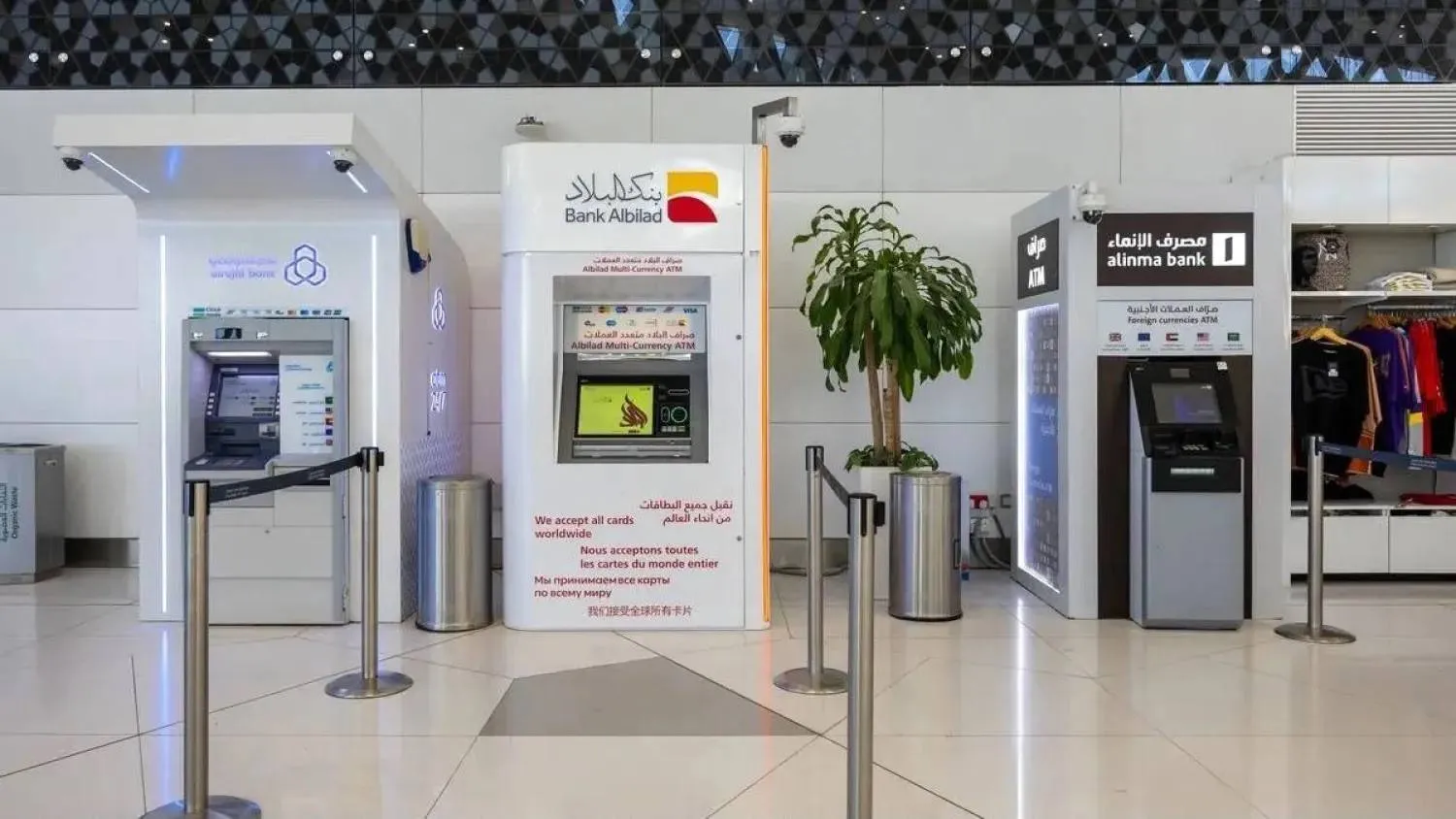
The banks are Saudi National Bank, Al Rajhi Bank, Riyad Bank, Saudi Awwal Bank, Banque Saudi Fransi, Arab National Bank, Alinma Bank, Bank AlBilad, Saudi Investment Bank and Bank AlJazira.

Al Rajhi Leads Profit Rankings

Al Rajhi Bank reported the highest net profit for the nine-month period at SAR 20.87 billion, up 13.3% from approximately SAR 18.41 billion a year earlier.

Saudi National Bank ranked second with SAR 19.48 billion, an increase of 4.57% from SAR 18.62 billion, followed by Riyad Bank with nearly SAR 8.13 billion, up 4.6% from SAR 7.77 billion.

In the third quarter alone, combined profits at the 10 banks rose 4.8% to SAR 24.75 billion ($6.6 billion), compared with SAR 23.62 billion ($6.3 billion) in the same period of 2025, an increase of SAR 1.13 billion ($301 million).

Al Rajhi Bank again led the sector with quarterly net profit of SAR 7.1 billion, up 11.73%.

Saudi National Bank followed with SAR 6.45 billion, despite a marginal decline of 0.29%, while Riyad Bank ranked third with SAR 2.865 billion, up 6.6%.

Lending Growth and Revenue Diversification

Financial and economic expert Sulaiman Al-Humaid Al-Khaldi, a member of the Saudi Economic Association, told Asharq Al-Awsat that the nine-month results reflected the strength of Saudi banks and their ability to turn economic expansion into sustainable returns while financing investment and productive projects.

He attributed the growth to increased lending, efficient management of funding costs, diversified revenue streams and tighter control of expenses and risks.

Economic expansion and development projects were also creating opportunities for corporate lending and banking services, including payments and cash management, he added.

Al-Khaldi said profit growth across all 10 listed banks indicated a broad improvement rather than gains concentrated in a few institutions.

However, sustaining that performance would depend on the quality of earnings, growth in core operating revenue, adequate liquidity and capital levels, and effective management of nonperforming loans and provisions.

He said the slowdown in quarterly profit growth to 4.8%, compared with 6.84% for the nine-month period, reflected uneven performance among lenders amid competition for deposits, funding costs and differences in asset utilization efficiency.

Maintaining growth would require greater operational efficiency, sustainable revenue generation and lending expansion without compromising asset quality or risk management, he added.

He also stressed that banking growth should translate into wider economic benefits through financing productive projects, supporting business expansion and creating jobs.

Profits Could Approach SAR 100 Billion

Al-Khaldi forecast that Saudi banks’ combined profits could approach SAR 100 billion by the end of 2026, compared with approximately SAR 90 billion in 2025, representing growth of more than 10%, provided momentum continues through the final quarter.

Mohamed Hamdy Omar, CEO of G World for Studies, also told Asharq Al-Awsat that the nine-month results underscored the banking sector’s strength and its ability to benefit from Saudi Arabia’s expanding economy.

He said higher lending volumes and stronger demand for credit from individuals and businesses had driven growth in net financing and investment income and expanded banks’ loan portfolios.

Banks had benefited particularly from financing major projects linked to Saudi Vision 2030, including infrastructure, real estate development, energy and utilities, he added.

Continued demand for mortgage and consumer financing had supported operating revenue, notably at Al Rajhi Bank, whose large retail market share and extensive deposit base provided a competitive advantage in managing funding costs.

Omar said lending growth had also boosted non-financing income from banking fees, brokerage and wealth management, while larger asset and financing portfolios helped improve operational efficiency.

Interest Rates and Asset Quality

Looking ahead to the fourth quarter, Omar expected Saudi bank profits to continue rising, potentially reaching record levels for 2026 as credit demand remained strong and financing deals linked to government and capital projects accelerated before the end of the financial year.

He said a shift toward lower interest rates could ease banks’ funding and deposit costs while encouraging private-sector borrowing and investment.

However, the ability to manage profit margins and financing costs would remain crucial to future performance.

Omar also highlighted asset quality and credit-loss provision coverage as factors supporting banks’ resilience against potential defaults and helping sustain profitability.

Continued earnings growth, he underlined, reflected the sector’s expanding role in financing economic activity and development projects and supporting Saudi Arabia’s economic diversification goals.


US Official Warns EU Airbus Loan Puts Trade Deal at Risk

Airbus logo at the Paris Air Show (Le Bourget), near Paris on June 17, 2025. Bertrand Guay, AFP
TT

US Official Warns EU Airbus Loan Puts Trade Deal at Risk

Airbus logo at the Paris Air Show (Le Bourget), near Paris on June 17, 2025. Bertrand Guay, AFP

A tariff truce between the European Union and United States is potentially at risk due to a multibillion-dollar loan approved by the bloc's investment bank for Airbus this summer, President Donald Trump's top trade official said Monday.

US Trade Representative Jamieson Greer expressed concern that his office had received "no details about this loan" and pressed for the situation to be "resolved as soon as possible."

"I had sincerely hoped that trade-distorting European subsidies to Airbus were a thing of the past," Greer said in a statement.

"This situation injects substantial uncertainty into transatlantic trade in the aerospace sector," he continued.

In June, the European Investment Bank (EIB) said it would provide Airbus with a record three billion euros ($3.4 billion) in financing to boost its research and development.

"This new financing -- unprecedented in the EIB's history -- aims to provide Airbus with not only the capacity but also the flexibility needed to invest in long-term research, development and innovation across both commercial aviation and the security and defense sectors," EIB vice president Ambroise Fayolle told AFP at the time.

The United States and European Union had been squabbling over alleged unfair trade practices since 2004, with both sides claiming the other provided support to private companies, such as aircraft manufacturers Boeing and Airbus, in violation of international trade agreements.

The 17-year-long feud saw the United States and EU impose tariffs on billions of dollars worth of each other's products.

But in 2021, a five-year deal was agreed between both sides under former president Joe Biden's administration.

Both sides have not reimposed the tariffs since. 


Gold Eases on Firmer Dollar Ahead of Fed Decision

Gold bars bearing the phrase 'Lucky Gold' written in Chinese characters displayed at a gold shop in Hangzhou (AFP)
TT

Gold Eases on Firmer Dollar Ahead of Fed Decision

Gold bars bearing the phrase 'Lucky Gold' written in Chinese characters displayed at a gold shop in Hangzhou (AFP)

Gold prices slipped on Tuesday, weighed down by a firmer dollar, while investors looked ahead to the Federal Reserve's policy meeting for fresh guidance on the outlook for interest rates.

Spot gold eased 0.3% to $4,004.55 per ounce by 0721 GMT, while US gold futures for December delivery dropped 0.5% to $4,017.00, Reuters reported.

The US dollar held steady near a two-week high, reducing the appeal of greenback-priced bullion for overseas buyers.

"We're seeing gold basically digest ⁠within Friday's range (after) ⁠the big drop last week," said Ilya Spivak, head of global macro at Tastylive.

"If we can get a break through $3,900, we're in for a pretty significant further decline, maybe to test the $3,800 area."

Bullion dropped below the $4,000 mark for the first time since mid-July last week, and posted a weekly fall ⁠of 4%, its worst in about four months, as higher energy prices fueled inflation concerns and reinforced US rate hike expectations.

Federal Reserve policymakers have telegraphed they will not raise US short-term borrowing costs again this week, but with inflation concerns still front and center, investors doubt a pause will last for long.

Markets await the Fed's policy decision on Wednesday along with the Personal Consumption Expenditures data on Thursday, the central bank's preferred gauge as it targets a 2% inflation rate.

Traders are pricing in about an 11% ⁠chance of ⁠a rate hike this week and an 80% chance of a December increase, according to the CME's FedWatch Tool.

While gold is often seen as a hedge against inflation, higher interest rates hurt its appeal as a non-yielding asset.

Among other metals, spot silver slid 2.1% to $52.77 per ounce, platinum lost 2.1% to $1,495.62 and palladium dropped nearly 3% to $1,020.18.