Oil Eases as Aid Convoys Arrive in Embattled Gaza Strip

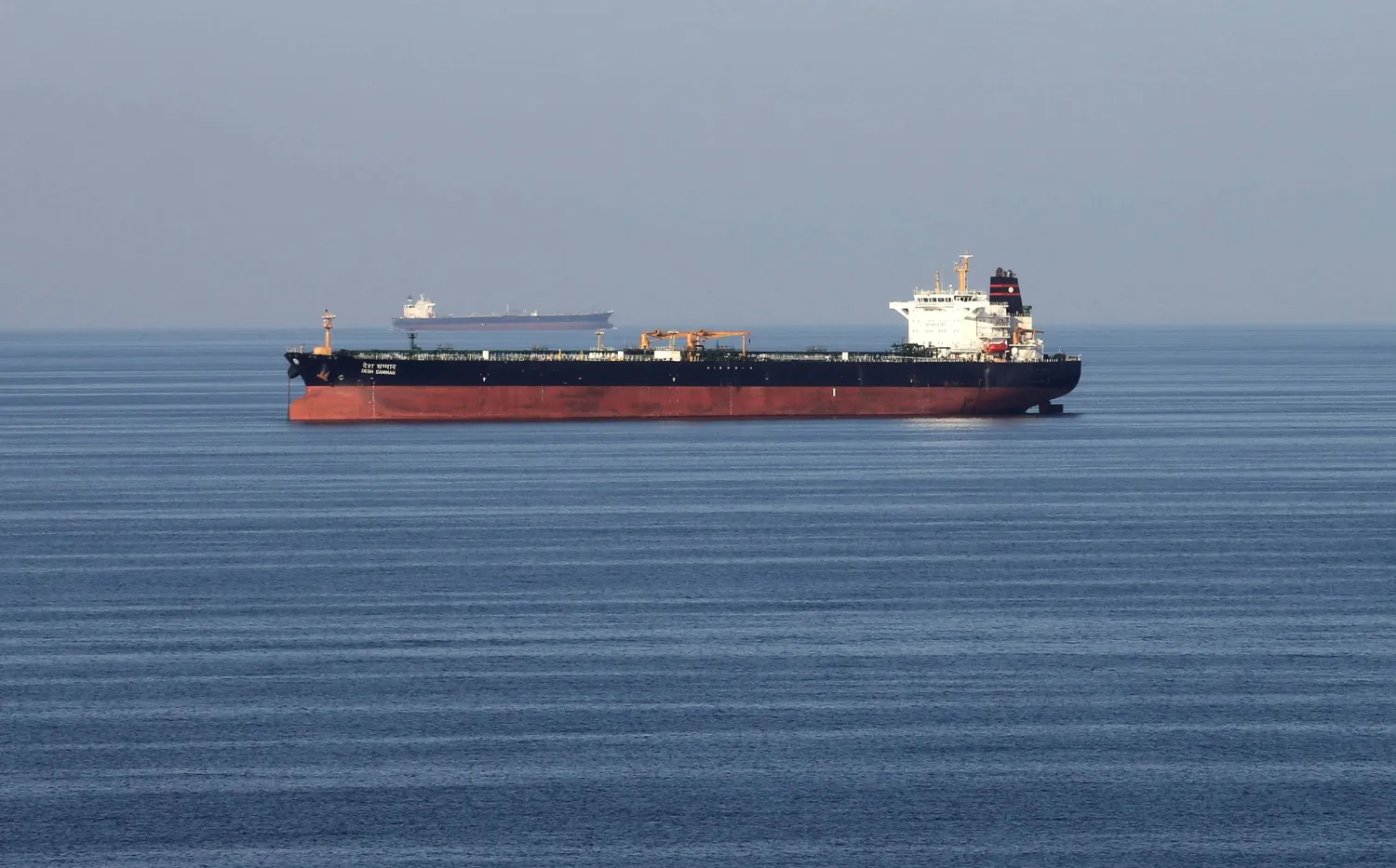
FILE PHOTO: Oil tankers pass through the Strait of Hormuz, December 21, 2018. REUTERS/Hamad I Mohammed/File Photo
TT

Oil Eases as Aid Convoys Arrive in Embattled Gaza Strip

FILE PHOTO: Oil tankers pass through the Strait of Hormuz, December 21, 2018. REUTERS/Hamad I Mohammed/File Photo

Oil prices slid more than $1 on Monday as diplomatic efforts grew over the weekend to contain the conflict between Israel and the Palestinian group Hamas, although Gaza continued to be bombarded.
Brent crude futures fell 79 cents to $91.37 a barrel, as of 0410 GMT, having lost $1.02 to $91.14 a barrel earlier in the session. US West Texas Intermediate crude futures were down 91 cents at $87.17 a barrel, after sliding $1.72 to $87.03 a barrel earlier on Monday, said Reuters.
The contracts had risen more than 1% last week for a second consecutive weekly jump on fear of potential supply disruption if the Israel-Hamas war grows into a wider confrontation in the Middle East, the world's biggest oil-supplying region.
Aid convoys started to arrive in the Gaza Strip from Egypt over the weekend, as Arab leaders and foreign ministers gathered for a summit in Cairo which was unable to yield a joint statement.
"There is some relief in the oil market that Israel is holding off on a planned ground incursion of northern Gaza to negotiate a release of hostages, which opens up a window for diplomacy," said Vandana Hari, founder of oil market analysis provider Vanda Insights.
"A ground siege is seen as a potential trigger for widening the Israel-Hamas conflict into the Middle East region, the factor behind crude's risk premium over the past fortnight," Hari said.
Analysts at ANZ Research echoed the sentiment, adding in a client note this provided hope that the Israel-Hamas war would not spread across the Middle East and disrupt supplies.
But, in the latest developments, Israel bombarded Gaza and its aircraft struck Lebanon. Asian shares drifted lower on Monday.
To ease oil supply pressure - already tight due to output cuts by the Organization of the Petroleum Exporting Countries (OPEC) and affiliates including Russia - the US suspended sanctions on OPEC member Venezuela after a Venezuelan government deal with the opposition.
US President Joe Biden, who visited Israel last week, had calls on Sunday with the leaders of Canada, France, Britain, Germany and Italy, after speaking with Israeli Prime Minister Benjamin Netanyahu and Pope Francis.
Leaders of France and the Netherlands will visit Israel this week in search of a solution for the conflict which ignited on Oct. 7 after a Hamas attack.



Saudi Industry Minister Discusses Digital Transformation, Industrial Cooperation with Kazakh Ministers

Minister of Industry and Mineral Resources Bandar Alkhorayef and the Saudi delegation are seen during the meeting in Astana. (SPA)
TT

Saudi Industry Minister Discusses Digital Transformation, Industrial Cooperation with Kazakh Ministers

Minister of Industry and Mineral Resources Bandar Alkhorayef and the Saudi delegation are seen during the meeting in Astana. (SPA)

Saudi Minister of Industry and Mineral Resources Bandar Alkhorayef held two bilateral meetings in Astana with Kazakhstan’s Deputy Prime Minister and Minister of Artificial Intelligence and Digital Development Zhaslan Madiyev and Foreign Minister Yermek Kosherbayev focusing on strengthening economic ties and expanding cooperation in digital transformation, artificial intelligence, and industrial and mining innovation, reported the Saudi Press Agency on Saturday.

Attended by Saudi Vice Industry Minister for Mining Affairs Eng. Khalid Al-Mudaifer, the meeting also tackled strengthening economic ties and expanding cooperation in digital transformation, artificial intelligence, and industrial and mining innovation.

During his meeting with Madiyev, the officials explored opportunities to exchange expertise in digital technologies and AI, emphasizing the role of advanced technologies in enhancing efficiency and competitiveness in the industrial and mining sectors.

Alkhorayef highlighted the Kingdom’s efforts to develop its digital infrastructure and build an integrated innovation ecosystem that accelerates the adoption of advanced technologies.

Alkhorayef and Kosherbayev discussed ways to deepen economic cooperation, expand investment partnerships in industry and mining, and facilitate the access of Saudi exports to Kazakh markets.

The meetings were held as part of Alkhorayef’s official visit to Kazakhstan that is aimed at strengthening bilateral cooperation in industry and mining, promoting knowledge exchange in digital transformation and advanced technologies, and supporting the objectives of Saudi Vision 2030.


US Refiners Can Still Absorb More Venezuelan Oil, Energy Secretary Wright Says

US Secretary of Energy Chris Wright attends the 2026 Infrastructure Summit of government officials, corporate executives, and labor leaders, in Washington, DC, US, March 11, 2026. (Reuters)
TT

US Refiners Can Still Absorb More Venezuelan Oil, Energy Secretary Wright Says

US Secretary of Energy Chris Wright attends the 2026 Infrastructure Summit of government officials, corporate executives, and labor leaders, in Washington, DC, US, March 11, 2026. (Reuters)

US refiners can still absorb more Venezuelan crude, Energy Secretary Chris Wright said on Friday, as the South American country's output bounces following the US capture of President Nicolas Maduro in January and facilities on the Gulf Coast make adjustments to process higher volumes of heavy oil.

Venezuela is sending about half of its total exports of 1.25 million barrels a day to the US, with the remaining volumes going mainly to India and Europe, according to figures based on tanker monitoring. Wright said the exports are expected to increase in the coming months.

The country's oil ministry forecast crude output of 1.37 million bpd by year-end, which ‌would imply a ‌22% increase from the 1.12 million bpd produced in late 2025.

"It ‌takes ⁠time because you ⁠buy your crude mixes by month from slates. It's a blend from everywhere. So you don't just flip on a switch, but you'll see more and more Venezuelan crude demanded by US refineries," Wright said at an event in Port Houston, Texas.

US oil output also is expected to continue rising, with production of shale oil and gas growing modestly and stronger crude growth off the US Gulf Coast and in Alaska, according to Wright.

US crude production increased 3% last year, setting a new annual record of 13.6 million ⁠bpd. The country has become the world's largest exporter of oil and ‌fuel, sending out 10.5 million bpd.

STRAIT OF HORMUZ FLOWS

Earlier in ‌the day, Wright said 7 million bpd of oil were getting out of the Gulf with ‌US military help. Flows through the Strait of Hormuz have been largely choked off since the US-Israeli ‌war on Iran began in late February.

Asked about those comments, Wright said Iran is not currently exporting any oil or products and that the US is stepping up to fill the oil export void amid the Middle East conflict.

The International Energy Agency had estimated that Gulf supply was down by 14 million bpd, around ‌14% of world supply. But the figure could be closer to 5 million to 6 million bpd as producers find ways to keep cargoes ⁠moving.

Some 136 million barrels ⁠of non-Iranian crude moved through the Strait of Hormuz and the Gulf of Oman between early April and June 10, or about 1.9 million bpd, shipping data firm Kpler estimates.

"We have had days where we've exported well above the number I gave," Wright said when asked about the 7 million bpd passing through. "If you look at our trend right now, we'll be past replacing more than half of the lost oil."

Flows passing through Hormuz are coming from all oil exporters in the Arabian Gulf except Iran, Wright said.

Asked about gasoline prices in the US, which have climbed since the start of the Middle East conflict, Wright said President Donald Trump has been a champion of low energy prices.

"He has not changed that desire for low energy prices across the board, but he was simply unwilling to kick a 47-year conflict and a nuclear-armed Iran down to the next administration," Wright said, adding that allowing Iran to obtain nuclear weapons would lead to "massively higher" energy prices in future.


Saudi Industry Minister Discusses Mining Investment Opportunities with Kazakh Companies

Saudi Minister of Industry and Mineral Resources Bandar Alkhorayef held a series of bilateral meetings in Astana on Friday with leaders of several Kazakh mining and metals companies. (SPA)
TT

Saudi Industry Minister Discusses Mining Investment Opportunities with Kazakh Companies

Saudi Minister of Industry and Mineral Resources Bandar Alkhorayef held a series of bilateral meetings in Astana on Friday with leaders of several Kazakh mining and metals companies. (SPA)

Saudi Minister of Industry and Mineral Resources Bandar Alkhorayef held a series of bilateral meetings in Astana on Friday with leaders of several Kazakh mining and metals companies, in the presence of Vice Minister for Mining Affairs Eng. Khalid Almudaifer, the Saudi Press Agency reported.

Discussions focused on opportunities for cooperation in the mining sector, particularly in strategic minerals and rare earth elements. The talks also covered mineral exploration, geological surveying, and sustainable mining.

Participants included representatives of Tau-Ken Samruk National Mining Company, KAZ Minerals, and Kazatomprom.

The meetings are part of the Kingdom’s efforts to strengthen international partnerships and attract high-quality investments in the mining and minerals sector, in line with the goals of Saudi Vision 2030.