


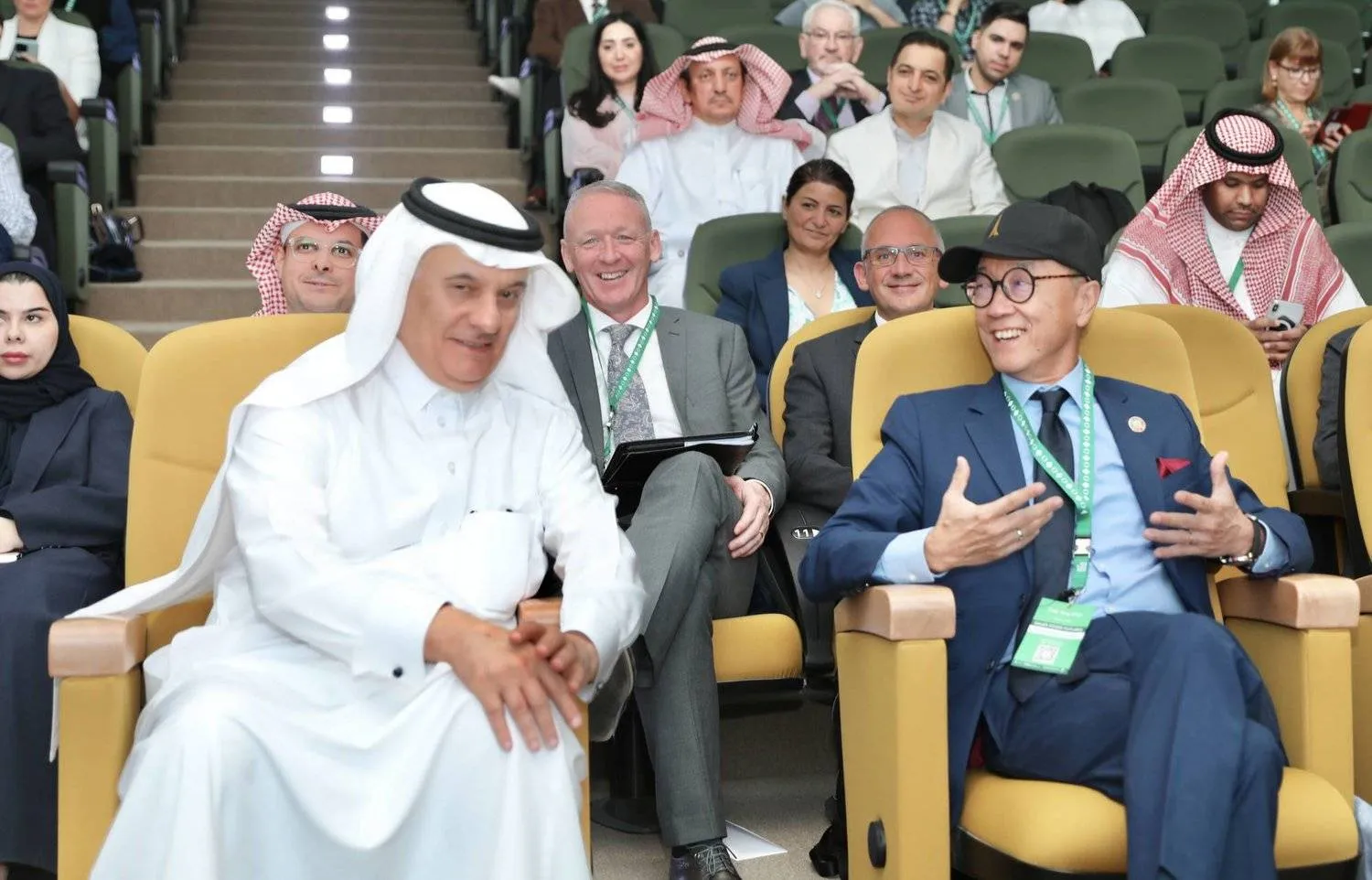

Saudi Minister of Environment, Water, and Agriculture, Eng. Abdulrahman Al-Fadhli stressed that the future of sustainable food security in the Kingdom largely depends on scientific research and innovation.
This makes it imperative to unite efforts and exchange ideas to achieve this, he urged.
He noted that the continuous cooperation between his ministry and academic institutions helped boost the agricultural sector through developing ideas, conducting research and preparing future leaders in food security, agriculture, environment, and water domains.
He made his remarks during a workshop held in cooperation with the King Abdullah University of Science and Technology (KAUST) at the ministry’s headquarters in Riyadh on Sunday.
The “Saudi Food Futures” workshop aimed to discuss the increasing challenges faced by the food system due to climate change, resource scarcity, and deterioration of biological diversity.
Al-Fadhli revealed that his ministry has launched several national strategies based on innovation and technology, which reinforce the use of natural resources with high efficiency, enhance agricultural production, secure food supply chains, and allocate sufficient resources.
Al-Fadhli added that the global agricultural sector is witnessing developments in technologies and systems of enormous potential. Some examples are gene editing applications, soilless farming systems, and remote sensing technologies.
He said he was confident scientists can develop these techniques in order to reach pioneering innovations that can transform the agricultural sector.
KAUST President Tony Chan highlighted the significance of strategic cooperation between the university and the ministry in such crucial matters.
Chan added that these matters are at the core of the university’s vision and its new strategy that was launched by Crown Prince Mohammed bin Salman in August.
The workshop witnessed several panel discussions covering a range of topics, such as food security strategies, policies, investment, and partnerships.
It also discussed updates in developing sustainable agricultural systems, in addition to the production of alternative proteins, improvements in sustainable agriculture of animal products, and modernizing grazing and domestication systems.


