


World Bank Forecasts 3.6% Growth in GCC in 2024

The World Bank launched a report on the economic updates in the GCC countries. (Asharq Al-Awsat)
TT

World Bank Forecasts 3.6% Growth in GCC in 2024

The World Bank launched a report on the economic updates in the GCC countries. (Asharq Al-Awsat)

The Gulf Cooperation Council (GCC) region is estimated to grow by 1% in 2023 before picking up again to 3.6 and 3.7 % in 2024 and 2025, respectively, according to the recently published World Bank Gulf Economic Update (GEU) report.

“The diversification efforts in the GCC region are paying off but more reforms are still needed,” said the report.

In Saudi Arabia, “the oil sector is expected to contract by 8.4 % during 2023 to reflect oil production curbs agreed within the OPEC+ alliance. Meanwhile, non-oil sectors are expected to cushion the contraction, growing at 4.3% supported by looser fiscal policy, robust private consumption, and public investment drive. As a result, overall GDP will show a contraction of 0.5% in 2023 before reporting a recovery of 4.1% in 2024 to reflect expansions of oil and non-oil sectors.”

The latest issue of the GEU report, titled “Structural Reforms and Shifting Social Norms to Increase Women’s Labor Force Participation” states that “the weaker performance this year is driven primarily by lower oil sector activities, which is expected to contract by 3.9%, to reflect OPEC+ successive production cuts and the global economic slowdown.”

“However, the reduction in oil sector activities will be compensated for by the non-oil sectors, which are expected to grow by 3.9 % in 2023 and 3.4 % in the medium term supported by sustained private consumption, strategic fixed investments, and accommodative fiscal policy”.

“To maintain this positive trajectory, GCC countries must continue to exercise prudent macroeconomic management, stay committed to structural reforms, and focus on increasing non-oil exports,” said Safaa El Tayeb El-Kogali, World Bank Country Director for the GCC.

“However, it is important to acknowledge the downside risks that persist. The current conflict in the Middle East poses significant risks to the region and the GCC outlook, especially if it extends or involves other regional players. As a result, global oil markets are already witnessing higher volatility,” El-Kogali added.

“The region has shown notable improvements in the performance of the non-oil sectors despite the downturn in oil production during most of 2023,” said Khaled Alhmoud, Senior Economist at the World Bank. “Diversification and the development of nonoil sectors has a positive impact on the creation of employment opportunities across sectors and geographic regions within the GCC.”

“The Special Focus section of the report takes a deep dive into the remarkable rise of female labor force participation (FLFP) in Saudi Arabia. Since 2017, the Kingdom has witnessed a significant increase in FLFP across all age groups and education levels. Importantly, this surge in participation did not lead to unemployment—to the contrary, unemployment rates have decreased as Saudi women have embraced job opportunities in almost every sector of the economy. This positive development was a result of an effective reform drive, started by the Kingdom’s Vision 2030, that made it significantly easier for more women to join the workforce, and shifts in social norms that were facilitated by the government’s commitment and effective communications.”

According to the GEU report, “the Saudi private sector workforce has grown steadily, reaching 2.6 million in early 2023. Additionally, the labor force participation of Saudi women more than doubled in a span of six years, from 17.4% in early 2017 to 36 % in the first quarter of 2023.”

“GCC countries have witnessed a remarkable increase in female labor force participation,” said Johannes Koettl, Senior Economist at the World Bank. “Saudi Arabia’s achievements in advancing women’s economic empowerment in just a few years is impressive and offers lessons for the MENA region and the world.”

In Qatar, “real GDP growth is estimated to slow down to 2.8 % in 2023 and continue at this rate in the medium term. Despite the weakening of the construction sector and tighter monetary policy, robust growth is anticipated in the non-hydrocarbon sectors, reaching 3.6% propelled by thriving tourist arrivals and large events. Qatar’s standing as a global sporting hub will be further reinforced by an additional 14 major sporting events during 2023. Meanwhile, the hydrocarbon sector is estimated to grow by 1.3% in 2023.”

In UAE, “economic activity is anticipated to slowdown in 2023 to 3.4% due to weaker global activity, stagnant oil output, and tighter financial conditions. Following tighter OPEC+ production quotas, oil GDP growth is projected at 0.7% in 2023 but expected to recover strongly in 2024 as production quotas are relaxed. On the other hand, non-oil output is forecast to support economic activity in 2023, growing at 4.5% with the strong performance in tourism, real estate, construction, transportation, manufacturing, and a surge in capital expenditure.”

In Bahrain, “growth is estimated to moderate to 2.8% in 2023 capped by a soft performance of the oil sector while the non-oil sector remains the key driver for growth. The hydrocarbon sector is expected to register small growth of 0.1% during 2023-24 while the non-hydrocarbon sectors will continue expanding at nearly 4% supported by the recovery in the tourism, service sectors, and the continuation of infrastructure projects.”

In Kuwait, “economic growth is projected to decelerate sharply to 0.8% in 2023 due to a decrease in oil output, monetary tightening, and sluggish global economic activity. Following tighter OPEC+ production quotas and reduced global demand, oil GDP growth is expected to contract by 3.8% in 2023 but is anticipated to recover in 2024 as production quotas are relaxed—supported by higher activity from the AlZour refinery. The non-oil sector is projected to grow by 5.2% supported by private consumption and loose fiscal policy.”

As for Oman’s economy it “is estimated to slowdown in 2023 capped by OPEC+ production cuts and slower global economic activity. However, the economy is anticipated to strengthen over the medium-term driven by higher energy production and wide-ranging structural reforms. Overall growth is projected to decelerate to 1.4% in 2023, as oil output falls, while nonoil sectors are expected to support growth, rising by over 2%, driven by the rebound in construction, investments in renewable energy, and tourism sectors.”



Türkiye TPAO, Shell Sign Deal to Carry out Exploration Work offshore Bulgaria

A Shell logo is seen at a gas station in Buenos Aires, Argentina, March 12, 2018. (Reuters)
TT

Türkiye TPAO, Shell Sign Deal to Carry out Exploration Work offshore Bulgaria

A Shell logo is seen at a gas station in Buenos Aires, Argentina, March 12, 2018. (Reuters)

Türkiye Petrolleri (TPAO) has signed a partnership agreement with Shell to carry out exploration work in Bulgaria's maritime zone, the Turkish energy ministry and British oil major said on Wednesday.

European Union member Bulgaria, which had been totally dependent on Russian gas until 2022, has been seeking to diversify its gas supplies and find cheaper sources, Reuters reported.

TPAO and Shell will jointly explore the Khan Tervel block, located near Türkiye's Sakarya gas field, and will hold a five-year licence in Bulgaria's exclusive economic zone, Minister Alparslan Bayraktar said.

Shell will continue as operator of the block, while TPAO will take a 33% interest in the licence, a Shell spokesperson said.

Since the start of this year, TPAO has signed energy cooperation agreements with ExxonMobil, Chevron and BP for possible exploration work in the Black Sea and the Mediterranean.

In April, Shell signed a contract with Bulgaria's government to allow the oil major to explore 4,000 square metres in the block.


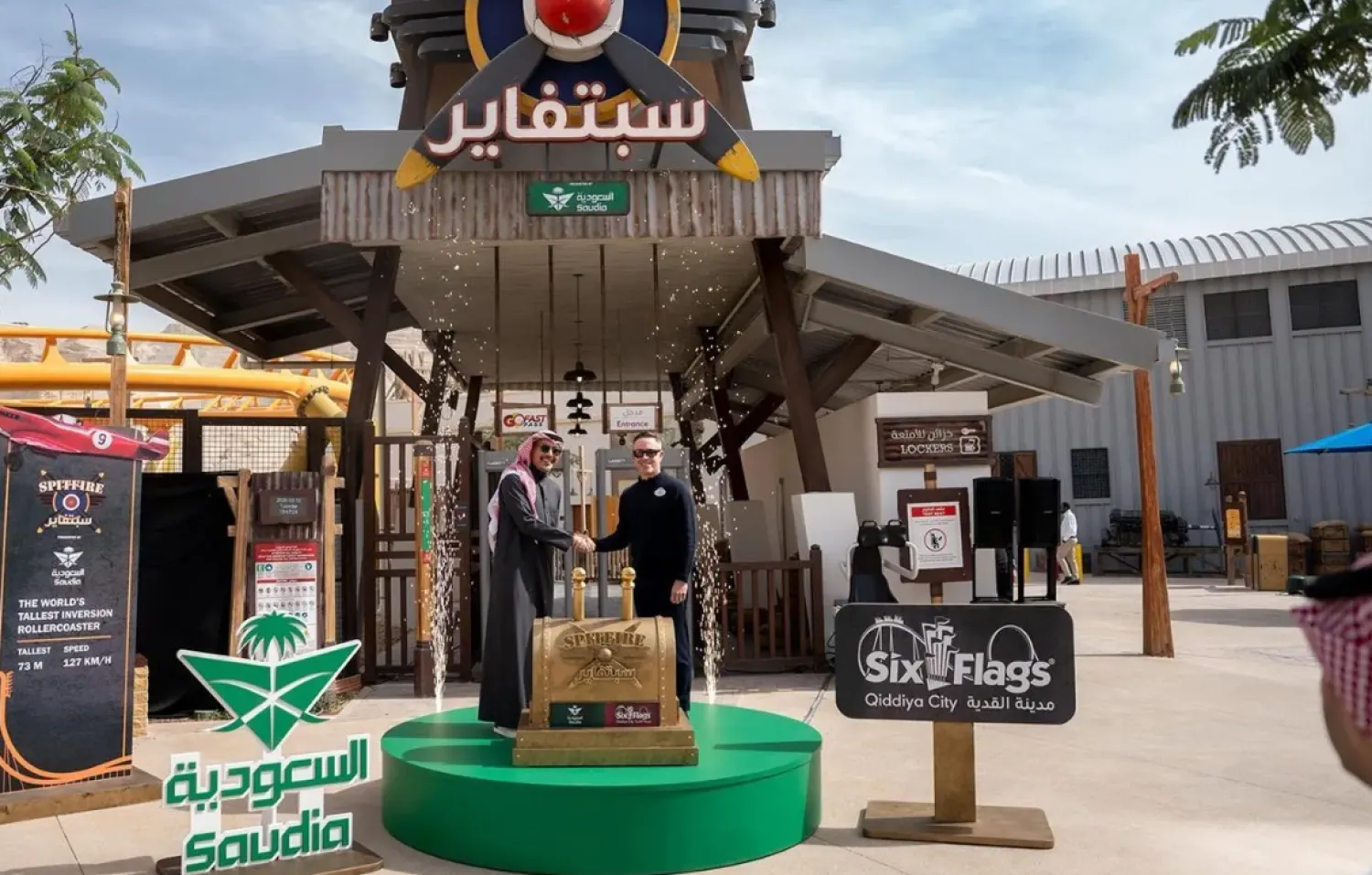
Saudia Signs Strategic Partnership Agreement with Six Flags and Aquarabia Qiddiya City

udia will develop special travel packages designed to enable visitors to experience world-class attractions - SPA
TT

Saudia Signs Strategic Partnership Agreement with Six Flags and Aquarabia Qiddiya City

udia will develop special travel packages designed to enable visitors to experience world-class attractions - SPA

Saudia Airlines has signed a five-year strategic partnership with Six Flags and Aquarabia Qiddiya City, becoming the official premier partner exclusively in the airline category.

As part of the partnership, Saudia will develop special travel packages designed to enable visitors to experience world-class attractions. The collaboration also brings the spirit of Six Flags and Aquarabia Qiddiya City to the skies through special aircraft branding across Saudia’s fleet, SPA reported. 

Chief Marketing Officer of Saudia Group Khaled Tash said in a press release: "Saudia is committed to supporting national development projects as part of its contribution to Vision 2030, aligned with our strategy to bring the world to the Kingdom. Partnerships of this scale with national partners play a key role in positioning Saudi Arabia as a leading global destination for entertainment and tourism."

Park President of Six Flags and Aquarabia Qiddiya City Brian Machamer added: "Our partnership with Saudia not only reflects a shared ambition to connect the Kingdom to the world through world-class entertainment experiences, but strengthens our ability to attract visitors from around the world and realize our vision of setting a new global benchmark for immersive, world-class theme park entertainment and reinforcing Saudi Arabia’s growing presence on the global tourism stage."

Six Flags Qiddiya City sets a new benchmark for exceptional entertainment regionally and globally. Spanning six iconic themed lands, the theme park takes visitors on an immersive journey across 28 rides and attractions designed to world-class standards. Beyond the scale and diversity of its offerings, Six Flags Qiddiya City stands out for pushing the boundaries of engineering and entertainment, featuring five exclusive, record-breaking rides that have redefined global benchmarks. Leading these innovations is Falcons Flight, the roller coaster that has captured global attention as the fastest, tallest, and longest in the world.

Aquarabia Qiddiya City delivers a distinctive aquatic entertainment experience, offering 22 rides and water attractions, along with a man-made river designed for both relaxation and family-friendly water fun. For guests seeking privacy and elevated comfort, Aquarabia features 91 luxury cabanas, positioning the destination as a fully integrated leisure offering that redefines water-based entertainment to the highest international standards.

Located in the Tuwaiq Mountains near Riyadh, Qiddiya City is an emerging destination bringing together entertainment, sports, and culture. Six Flags and Aquarabia Qiddiya City form part of its entertainment offering.


Moody’s Establishes Regional HQ in Riyadh, Deepening Presence in Region

(FILES) Signage for Moody's Corporation is displayed at their headquarters at 7 World Trade Center on March 18, 2025 in New York City. (Photo by ANGELA WEISS / AFP)
TT

Moody’s Establishes Regional HQ in Riyadh, Deepening Presence in Region

(FILES) Signage for Moody's Corporation is displayed at their headquarters at 7 World Trade Center on March 18, 2025 in New York City. (Photo by ANGELA WEISS / AFP)

Moody’s Corporation announced that it has established its regional headquarters in Riyadh, reflecting ongoing commitment to support the development of the Kingdom’s capital markets and economy.

“This investment aligns to the Kingdom's Vision 2030 initiative and underscores its dynamism and growth,” Moody’s said in a statement this week.

The new regional headquarters marks an expansion of Moody’s presence in Saudi Arabia, where the company first opened an office in 2018, and reflects its longstanding commitment to the Middle East.

“The headquarters will strengthen Moody’s engagement with Saudi institutions and enable broader access to Moody’s decision grade data, analytics and insights,” said the statement.

“Our decision to establish a regional headquarters in Riyadh reflects our confidence in Saudi Arabia’s strong economic momentum, as well as our commitment to helping domestic and international investors unlock opportunities with our expertise and insights,” said President and Chief Executive Officer of Moody’s Rob Fauber.

“We are well positioned to provide the analytical capabilities and market intelligence that investors and institutions need to navigate evolving markets across the Middle East,” the statement quoted him as saying.

Mahmoud Totonji will lead the regional headquarters as General Manager.