

China's oil trade with Iran has stalled as Tehran withholds shipments and demands higher prices from its top client, tightening cheap supply for the world's biggest crude importer, refinery and trade sources said.
The cutback in Iranian oil, which makes up some 10% of China's crude imports and hit a record in October, could support global prices and squeeze profits at Chinese refiners.
The abrupt move, which one industry executive called a "default", could also represent the backfiring of an October US waiver on sanctions of Venezuelan oil, which diverted shipments from the South American producer to the US and India, elevating prices for China as shipments dwindled.
The National Iranian Oil Co, China's commerce ministry and the US Treasury Department did not immediately respond to Reuters requests for comment.
Early last month Iranian sellers told Chinese buyers they were narrowing discounts for December and January deliveries of Iranian Light crude to between $5 and $6 a barrel below dated Brent, five traders who handle the oil or are familiar with the transactions told Reuters.
Those deals had been struck in November at discounts around $10 a barrel, the traders said.
"This is considered as an extensive default and the order to hike prices apparently came from the headquarters in Tehran, as they're holding back supplies also to the intermediaries," a China-based trading executive said.
An executive at a Chinese middleman that procures direct from Iran said the OPEC producer was "holding back some shipments", leading to a "stalemate" between Chinese buyers and Iranian suppliers.
"It's not clear how things would end," this executive said. "Let's wait a bit and see if refineries are willing to accept the new price."
China has saved billions of dollars buying often deeply discounted oil from sanctioned producers Iran, Venezuela and, more recently, Russia - countries that supply almost 30% of China's crude imports.
'TEAPOTS' SQUEEZED
It is not clear how extensive Iran's cutbacks to China are. At least one buyer has accepted higher prices: a Shandong-based refiner bought a cargo late last month at discounts between $5.50 and $6.50 on a delivered ex-ship basis, two traders said.
The discounts could narrow further, as the latest offer heard was $4.50, the traders said. Last year's average discount for Iranian Light, a key grade China buys with a high middle-distillates yield, was about $13, traders say.
"The buyers are still struggling to find a solution as the new prices are too high," said a Shandong-based buyer. "But since they have limited choices and the Iranian side is very tough, the room for price negotiations is difficult and is not favoring Chinese buyers."
China's smaller independent refiners, called "teapots", have become Tehran's top clients since first buying Iranian oil in late 2019. They replaced state-run refiners, which stopped dealing with Iran over concerns about falling afoul of US sanctions.
Teapots absorb about 90% of Iran's total oil exports, usually passed off as oil originating in Malaysia or the United Arab Emirates, trade sources say.
Amid the tussle over prices, Iran's overall exports and China's imports from Iran have fallen.
China imported about 1.18 million barrels per day (bpd) of Iranian oil last month, down from 1.22 million bpd in November and 23% off October's record 1.53 million bpd, tanker tracker Vortexa Analytics reckons.
That represents the bulk of Iran's global seaborne crude exports, which another tracker, Kpler, estimates at 1.23 million bpd for December, down from 1.52 million bpd in November. Floating storage off Iran and nearby waters rose by about 2 million barrels to 15.5 million barrels over the past week, Kpler says.
"The Iranians want to play catch-up in prices with (Russia's) ESPO. But they don't fully realize the extent of sanctions on Iranian oil is different from that on Russian," said a trading manager at an independent refiner.
Washington has sanctioned more than 180 people and entities related to Iran's petroleum and petrochemical sectors since 2021, identifying 40 vessels as blocked property of the sanctioned entities.
The main restrictions on Russian oil have been a $60-a-barrel price cap imposed in December 2022 by the US and its allies, aiming to punish Moscow over its invasion of Ukraine. Major buyer India has mostly paid above $60 for Russian oil, hitting $85.42 in November, the highest since the Group of Seven industrial powers imposed the cap.


Iran's Oil Trade with China Stalls as Tehran Demands Higher Prices
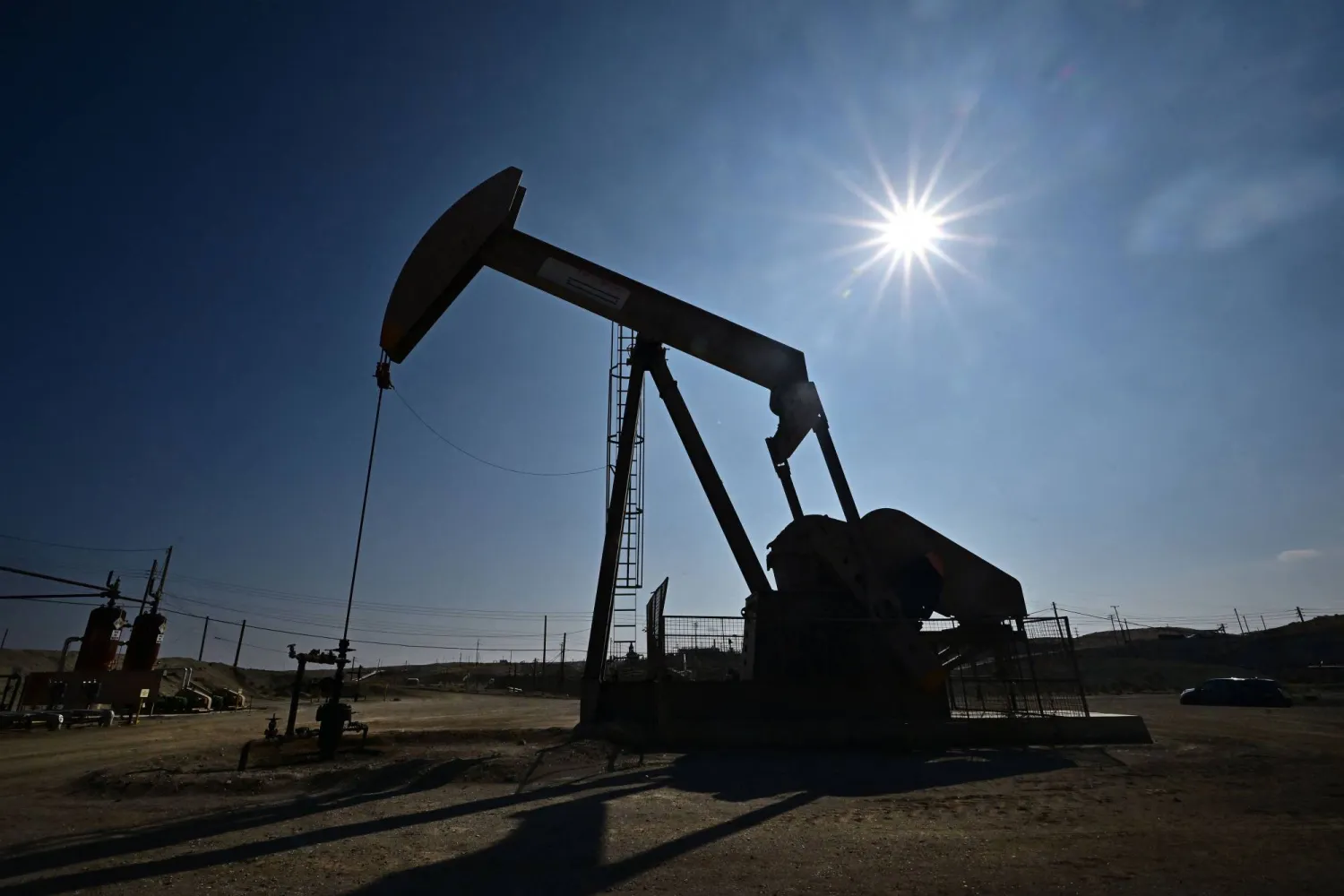
(FILES) A working oil pumpjack is pictured in Taft, Kern County, California on September 21, 2023. US energy company APA Corporation has agreed to buy competitor Callon Petroleum in a transaction valued around $4.5 billion including debt, the firms announced January 4, 2024, marking the latest deal in the sector. (Photo by Frederic J. BROWN / AFP)

Iran's Oil Trade with China Stalls as Tehran Demands Higher Prices
(FILES) A working oil pumpjack is pictured in Taft, Kern County, California on September 21, 2023. US energy company APA Corporation has agreed to buy competitor Callon Petroleum in a transaction valued around $4.5 billion including debt, the firms announced January 4, 2024, marking the latest deal in the sector. (Photo by Frederic J. BROWN / AFP)




لم تشترك بعد
انشئ حساباً خاصاً بك لتحصل على أخبار مخصصة لك ولتتمتع بخاصية حفظ المقالات وتتلقى نشراتنا البريدية المتنوعة
