


Israel’s Eilat Port Faces Layoffs Amid Red Sea Shipping Crisis, Union Says 

New imported cars are seen in a parking lot next to the Eilat port, Israel, June 12, 2018. (Reuters)
TT

Israel’s Eilat Port Faces Layoffs Amid Red Sea Shipping Crisis, Union Says 

New imported cars are seen in a parking lot next to the Eilat port, Israel, June 12, 2018. (Reuters)

Half the workers at Israel's Eilat Port are at risk of losing their jobs after the seaport took a major financial hit due to the crisis in Red Sea shipping lanes, Israel's main labor federation said on Wednesday.

Eilat sits on a northern tip of the Red Sea and was one of the first ports to be affected as shipping firms rerouted vessels to avoid attacks by Houthi militants in Yemen.

The Histadrut labor federation, the umbrella organization for hundreds of thousands of public sector workers, said port management has announced it intends to fire half of the 120 employees. The dock workers will hold a protest on Wednesday, it said.

Officials at the port did not immediately respond for comment.

Eilat, which primarily handles car imports and potash exports coming from the Dead Sea, pales in size compared to Israel's Mediterranean ports in Haifa and Ashdod, which handle nearly all the country's trade.

But Eilat, which sits adjacent to Jordan's only coastal access point at Aqaba, offers Israel a gateway to the East without the need to navigate the Suez Canal.

In December, Eilat Port's chief executive told Reuters that they saw an 85% drop in activity since Iran-backed Houthis began their attacks on ships in the Red Sea. He said at the time they may have to furlough workers should the crisis continue.

"It would have been right for the company at this time to have embraced the workers and their families, and not chose the easy way of attempting mass layoffs," said Eyal Yadin, chairman of the transportation workers union on Wednesday. "We won't be a part of this."

The Houthis have also fired drones and missiles at Israel in a campaign they say aims to support Palestinians in the Gaza war, where Hamas is also backed by Iran.

The alternative route to the Red Sea takes shipping around the southern tip of Africa, extending voyages to the Mediterranean by two to three weeks which will add extra costs down the line, Israeli officials say.

IMF Says Syria Ended 2025 with a Small Budget Surplus

The International Monetary Fund logo is seen outside the headquarters building in Washington, US September 4, 2018. REUTERS/Yuri Gripas/File Photo
TT

IMF Says Syria Ended 2025 with a Small Budget Surplus

The International Monetary Fund logo is seen outside the headquarters building in Washington, US September 4, 2018. REUTERS/Yuri Gripas/File Photo

The International Monetary Fund said on Wednesday that the Syrian government ended 2025 with a small budget surplus and that its revenue projections were ambitious but feasible, as the agency's staff concluded a visit to Damascus.


"Syria’s economy continues to show signs of recovery, with activity increasing at an accelerating pace as consumer and investor sentiment continues to improve," the IMF said in its statement.


Oil Hovers Near Seven-month Highs Ahead of US-Iran Talks

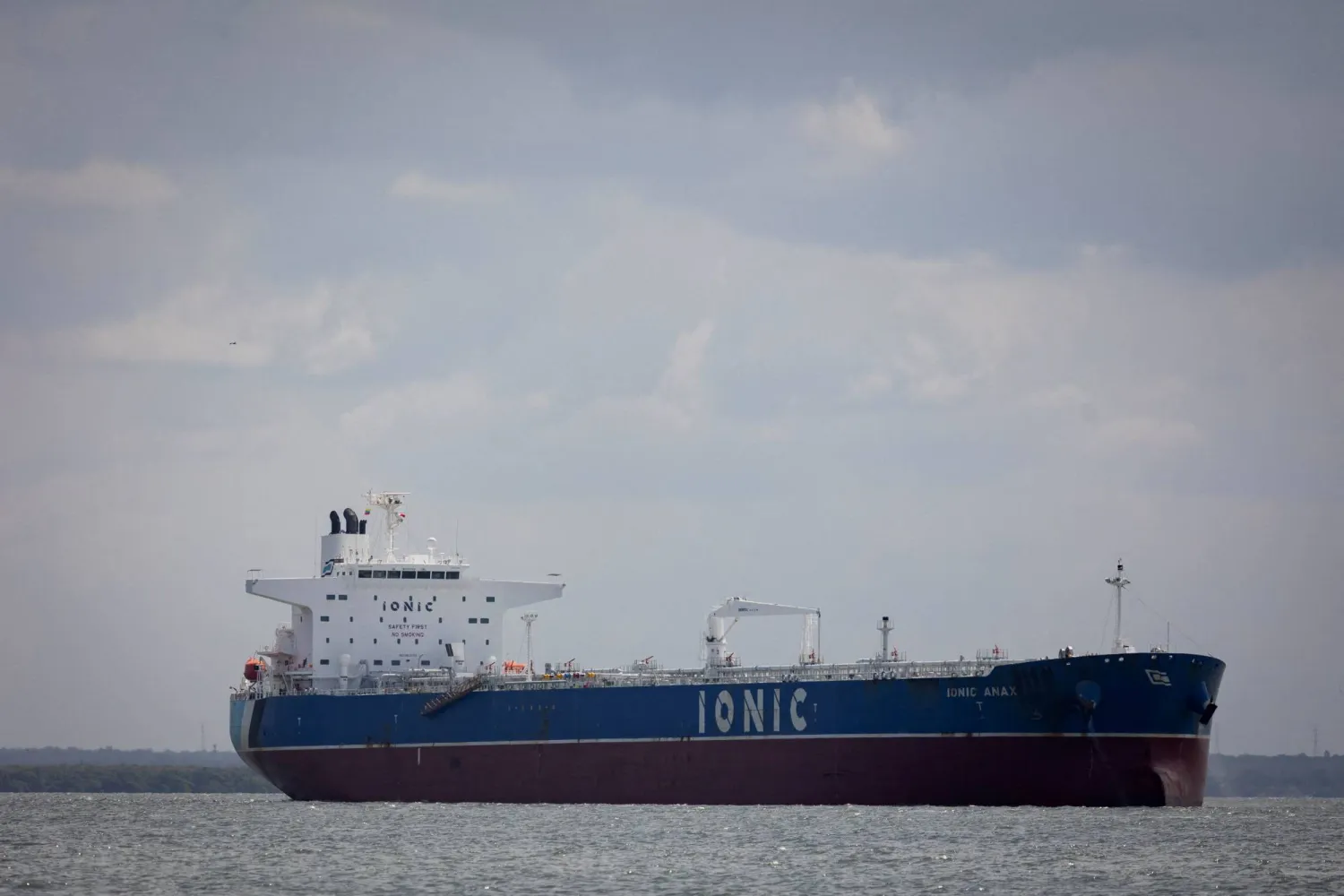
FILE PHOTO: Chevron-chartered Ionic Anax oil tanker sits anchored in Lake Maracaibo, near the Bajo Grande crude port operated by state oil company PDVSA, in Maracaibo, Venezuela, February 9, 2026. REUTERS/Marco Bello/File Photo
TT

Oil Hovers Near Seven-month Highs Ahead of US-Iran Talks

FILE PHOTO: Chevron-chartered Ionic Anax oil tanker sits anchored in Lake Maracaibo, near the Bajo Grande crude port operated by state oil company PDVSA, in Maracaibo, Venezuela, February 9, 2026. REUTERS/Marco Bello/File Photo

Oil prices edged higher on Wednesday, as investors weighed the threat of military conflict between the US and Iran that could disrupt supply and a big build in US crude inventories.

Brent futures were up 6 cents at $70.83 per barrel at 0957 GMT. WTI futures rose 4 cents to $65.67 per barrel.

Brent prices reached their highest since July 31 on Friday, while WTI hit its highest since August 4 on Monday, as the US positioned military ‌forces in ‌the Middle East to try to compel Iran to ‌negotiate ⁠an end to ⁠its nuclear and ballistic missile program.

An extended conflict could disrupt supplies from Iran, the third-biggest crude producer in the Organization of the Petroleum Exporting Countries, and other countries in the key Middle East producing region.

Supporting oil prices, US President Donald Trump briefly laid out his case for a possible attack on Iran in his State of the Union speech on Tuesday, saying he would ⁠not allow a country he described as the world's biggest ‌sponsor of terrorism to have a nuclear ‌weapon.

"This uncertainty means the market will continue to price in a large risk premium ‌and remain sensitive to any fresh developments," ING commodities strategists said on ‌Wednesday.

US envoys Steve Witkoff and Jared Kushner are due to meet an Iranian delegation for a third round of talks on Thursday in Geneva.

Iran's Foreign Minister Abbas Araqchi said on Tuesday that a deal with the US was "within reach, but ‌only if diplomacy is given priority.”

"Trump has warned that without a deal, there will be 'very bad consequences'. Whether (Iran's) concessions ⁠will meet ⁠the US's 'zero enrichment' red line remains to be seen," Tony Sycamore, IG market analyst, said in a note.

Amid the heightened tensions, Iran has accelerated talks to purchase Chinese anti-ship cruise missiles, according to Reuters sources, which could target the US naval forces that have assembled near the Iranian coast.

While geopolitical tensions have supported prices, the market is also contending with concerns of large inventory gains as global supply exceeds demand.

According to market sources, the American Petroleum Institute late on Tuesday reported a massive increase in US oil stockpiles of 11.43 million barrels in the week ended February 20.


Iraq’s West Qurna 2 Oilfield Poised for Output Surge with Chevron, Minister Says 

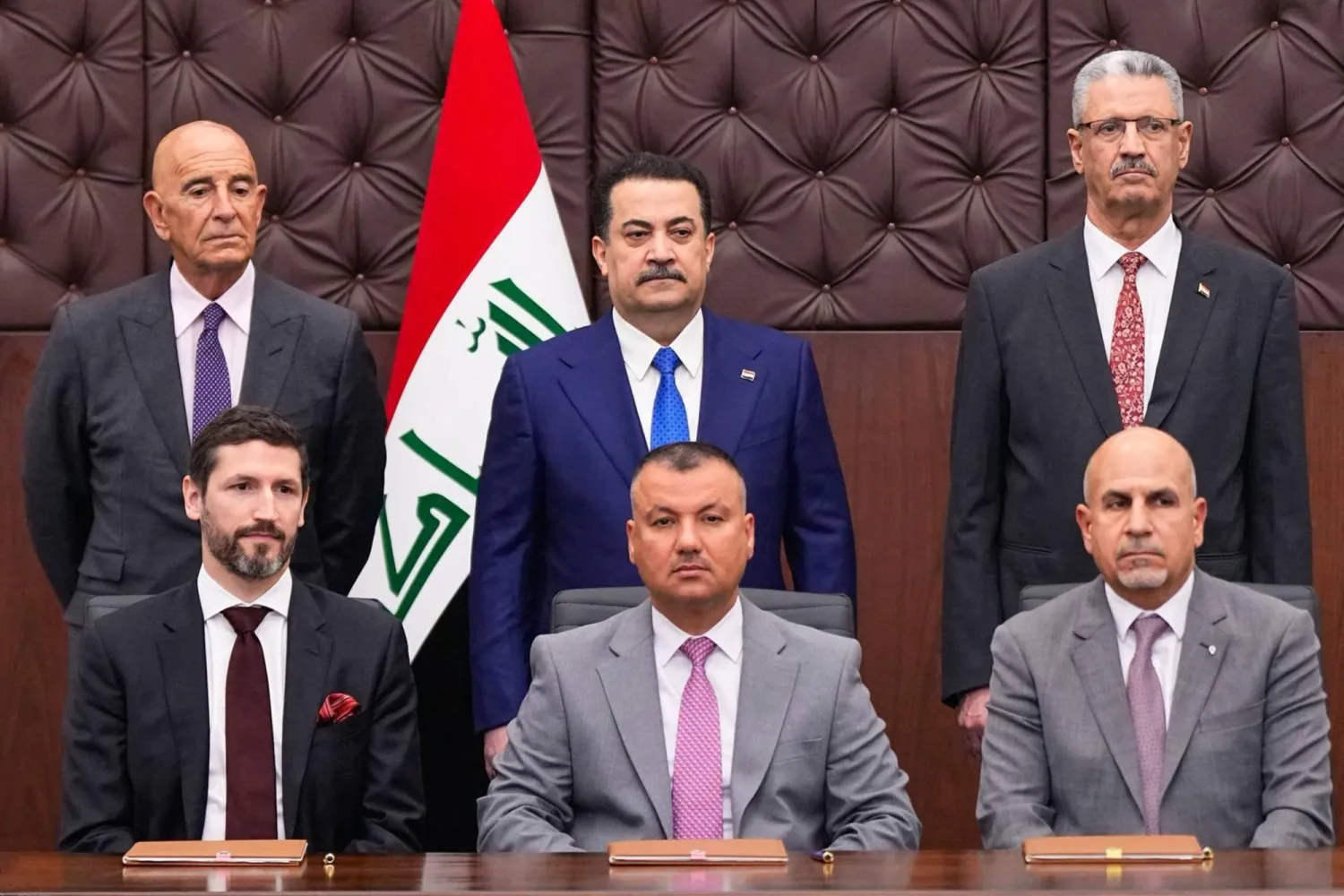
This handout picture made available by the Iraqi prime minister's office shows Iraq's Prime Minister Mohammed Shia al-Sudani (top C), Oil Minister Hayan Abdel-Ghani (top R), US Special Envoy to Iraq Tom Barrack (top L), Chevron's Director of Business Development Joe Koch (bottom L), Iraq's North Oil Company Director Amer Khalil (bottom C), and the Director of the Dhi Qar Oil Company Said Zghair Shallagha (bottom R) attending the signing of agreements between Chevron Corporation and the Dhi Qar and North Oil Companies at the government palace in Baghdad on February 23, 2026. (Handout / Iraqi Prime Minister’s Press Office / AFP)
TT

Iraq’s West Qurna 2 Oilfield Poised for Output Surge with Chevron, Minister Says 

This handout picture made available by the Iraqi prime minister's office shows Iraq's Prime Minister Mohammed Shia al-Sudani (top C), Oil Minister Hayan Abdel-Ghani (top R), US Special Envoy to Iraq Tom Barrack (top L), Chevron's Director of Business Development Joe Koch (bottom L), Iraq's North Oil Company Director Amer Khalil (bottom C), and the Director of the Dhi Qar Oil Company Said Zghair Shallagha (bottom R) attending the signing of agreements between Chevron Corporation and the Dhi Qar and North Oil Companies at the government palace in Baghdad on February 23, 2026. (Handout / Iraqi Prime Minister’s Press Office / AFP)

Iraq could nearly double its output from West Qurna 2 oilfield to 800,000 barrels per day as Chevron enters exclusive talks to take over operations from Russia's Lukoil, Iraq's oil minister said on Wednesday.

Iraq has been seeking to increase its oil and gas production, with oil majors vying to expand their operations in Iraq, after they had previously scaled back due to years of political instability.

Oil Minister Hayan Abdel-Ghani told ‌Kurdish TV ‌channel Rudaw that output could rise to between 750,000 ‌and ⁠800,000 bpd after Chevron ⁠takes over the operations in the field. The US firm has secured one-year exclusive rights to negotiate taking over the project.

The deal would expand Chevron's footprint by giving it control of one of the world's largest oilfields, which accounts for nearly 10% of Iraq's production and about 0.5% of global supply.

Chevron had already agreed to develop several fields in the country as part of ⁠an international expansion.

The Chevron deal is the latest in ‌a string of agreements with global oil ‌majors such as Exxon, BP, and TotalEnergies, in which Baghdad offers more generous terms in ‌a bid to beef up production.

Iraq, the second-largest producer within the ‌OPEC+ group comprising the Organization of the Petroleum Exporting Countries and allies including Russia, plans to raise oil production capacity to more than 6 million barrels per day (bpd) by 2029.

It has frequently produced in excess of its agreed target with OPEC+.

The ‌deal could also bolster relations between Baghdad and Washington, which threatened to curb Iraq's access to oil revenues if ⁠Iranian-backed groups ⁠were included in the upcoming government.

The agreement with Chevron, however, aligns Iraq more closely with Western energy interests as a US major replaces a sanctioned Russian firm, Lukoil, within broader efforts to isolate Moscow over its war in Ukraine.

Lukoil declared force majeure in November at West Qurna 2 after it was hit with sanctions alongside Rosneft as part of US President Donald Trump's push to end the war in Ukraine.

Iraq stripped Lukoil of operatorship of the field in January and temporarily transferred the field to the state-run Basra Oil Company (BOC).

In January, Iraq's cabinet said an "amicable settlement" with Lukoil for the transfer was approved. A final deal requires approval from Iraq's cabinet and the US Office of Foreign Assets Control, Chevron has said.