


Saudi Arabia Enjoys Fastest Growing Airport Technology Sector in Middle East

SITA’s pavilion at the annual meeting of the General Assembly of the Airports Council International in Riyadh. (Turky Al-Agili)
TT

Saudi Arabia Enjoys Fastest Growing Airport Technology Sector in Middle East

SITA’s pavilion at the annual meeting of the General Assembly of the Airports Council International in Riyadh. (Turky Al-Agili)

A recent study, “Investment trends in travel technology” by Amadeus, showed that airports are witnessing a rapid digital transformation, as the pace of travel industry transformation is set to accelerate with an average 14% increase in technology investment planned for 2024.

In recent years, passengers have seen tremendous changes in travel services, beginning with quick online purchase of tickets to electronic boarding passes and other areas.

Digital transformation in Saudi Arabia is one of the most important pillars of Vision 2030, as the Kingdom is considered the fastest growing in the field of airport technology in the Middle East region, according to Jihad Boueri, the Regional Vice President for Airport Affairs for the Middle East, India and Africa region at SITA.

Speaking to Asharq Al-Awsat on the sidelines of the first annual meeting in the Middle East of the General Assembly of the Airports Council International (ACI) in Riyadh, Boueiri pointed to a global technical revolution in the airport sector, but added that its implementation in the Kingdom was faster and stronger as a result of a solid budget and the development of new airports.

Asked about the challenges facing the sector, he said the need to train human resources and discover and develop young talents could delay the process of adopting modern technologies.

Sustainability also represents another challenge as the aviation sector is responsible for 4 percent of carbon emissions, he remarked, while highlighting projects such as reducing engine operation time, saving fuel to reduce thermal emissions, and choosing environmentally friendly devices at airports

Commenting on the future outlook for the travel industry, he stressed that airport technology was leaning towards allowing travelers to pass through free zones based on the biological fingerprint that collects all individuals’ information in a data cloud.

Travelers will also be able to check in luggage from home through airline companies, he said, noting that the Kingdom is taking great steps towards applying these advanced technologies.

In April, Saudia Airlines launched a trial version of the “Virtual Assistant with Artificial Intelligence Technology” platform, in cooperation with Accenture, the global management consulting and professional services company. The platform enables individuals to plan travel and complete all procedures with the aim of redefining digital travel standards.



Third ‘Mirkaz AlBalad AlAmeen Platform’ to Open in Makkah on Sunday 

A street in the holy city of Makkah is decorated with Ramadan lights. (SPA)
TT

Third ‘Mirkaz AlBalad AlAmeen Platform’ to Open in Makkah on Sunday 

A street in the holy city of Makkah is decorated with Ramadan lights. (SPA)

The third edition of the “Mirkaz ABalad AlAmeen”, a leading platform for exchanging opportunities in Makkah, will kick off on Sunday, under the theme “Makkah Inspires the World.”

The platform, organized by the Holy Makkah Municipality, will feature 15 exceptional Ramadan evenings focused on dialogue, knowledge exchange, and cross-sector engagement.

Makkah Mayor Musad Aldaood said the platform redefines development from Makkah, where faith meets inspiration and values are transformed into a comprehensive civilizational experience.

He noted that the initiative reflects the ambitions of Saudi Vision 2030 and showcases Makkah to the world as a living model of creativity, leadership, and innovation.

The upcoming edition will host more than 65 speakers, including executive leaders and decision-makers from across all three sectors, alongside futurists, entrepreneurs, and leading voices in culture and inspiration from artists, writers, media professionals, and innovators.

The program targets 12 key sectors: technology and digital transformation, financial investment, communications and media, real estate development, transport and logistics, banking services, youth and sports, tourism and culture, hospitality and catering, Hajj and Umrah, the third sector, and healthcare.


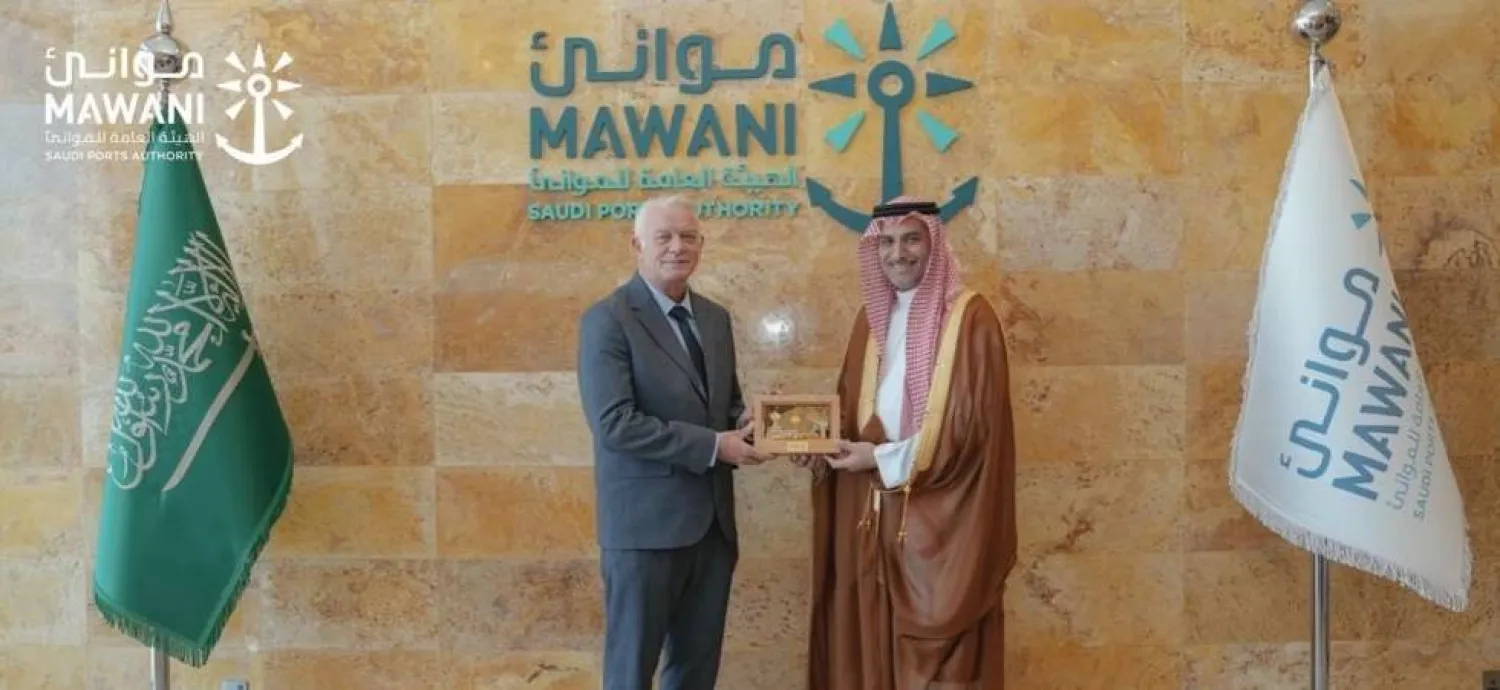
Saudi Arabia’s Mawani Grants Unified License to Global Shipping Line 

The initiative is part of Mawani's ongoing efforts to develop the maritime business environment, enable international companies to invest in the Saudi market, and increase competitiveness within the maritime sector. (Mawani)
TT

Saudi Arabia’s Mawani Grants Unified License to Global Shipping Line 

The initiative is part of Mawani's ongoing efforts to develop the maritime business environment, enable international companies to invest in the Saudi market, and increase competitiveness within the maritime sector. (Mawani)

The Saudi Ports Authority (Mawani) granted on Thursday a unified license to international shipping line Global Shipping Line (PIL), officially recognizing it as an authorized foreign investor to operate maritime agencies in the Kingdom's ports, reported the Saudi Press Agency.

The license is issued in accordance with the regulations outlined in the Maritime Agency Services, reflecting Mawani's commitment to boosting the efficiency of the maritime sector and improving the quality of operational services provided at ports.

It aims to attract global expertise and facilitate knowledge transfer within the Kingdom, aligning with international best practices in the maritime transport industry.

The initiative is part of Mawani's ongoing efforts to develop the maritime business environment, enable international companies to invest in the Saudi market, and increase competitiveness within the maritime sector.

PIL, which operates from its regional headquarters in Riyadh, manages operations in 29 countries.

The move strengthens the Kingdom's position as a crucial logistics hub, in line with the National Transport and Logistics Strategy, while attracting more international shipping lines. It reinforces Saudi Arabia's role as a key link among three continents.


IMF: Restoring Lebanon's Economic Growth Will Require Comprehensive Reforms

FILE PHOTO: A view of the International Monetary Fund (IMF) logo at its headquarters in Washington, D.C., US, November 24, 2024. REUTERS/Benoit Tessier//File Photo
TT

IMF: Restoring Lebanon's Economic Growth Will Require Comprehensive Reforms

FILE PHOTO: A view of the International Monetary Fund (IMF) logo at its headquarters in Washington, D.C., US, November 24, 2024. REUTERS/Benoit Tessier//File Photo

Lebanon's economy has shown resilience despite conflicts in the region, with tourism fueling a bit of a rebound, but restoring growth will require comprehensive reforms, the International Monetary Fund said on Thursday.

IMF spokeswoman Julie Kozack said the global lender remains engaged in complex discussions with Lebanese ‌authorities following their ‌request for an IMF-supported ‌program ⁠in March 2025. The ⁠IMF sent a staff mission to Beirut earlier this month, said Reuters.

The talks have been focused on two big issues, she said, citing the need for banking sector restructuring and a medium-term fiscal ⁠strategy. "The economy has shown resilience ‌despite the impact ‌of conflicts in the region. It has had ‌a bit of a rebound ‌on the back of tourism from the strong diaspora," Kozack said.

"But at the same time, really restoring strong and sustainable growth will ‌require a comprehensive set of reforms to tackle some of the ⁠structural ⁠weaknesses that have really hampered Lebanon's economic performance for many years," she said. Reforms also are needed to attract international support to help Lebanon address its substantial reconstruction needs.

Kozack said Lebanon needs an updated medium-term fiscal framework that includes concrete measures to mobilize additional revenues for much-needed capital spending, as well as a sovereign debt restructuring to restore debt sustainability.