Israel’s ‘Economic War’ Chokes Occupied West Bank

Palestinians queue to withdraw money from an ATM in the main market in Ramallah city in the Israel-occupied West Bank on June 9, 2024.
TT

Israel’s ‘Economic War’ Chokes Occupied West Bank

Palestinians queue to withdraw money from an ATM in the main market in Ramallah city in the Israel-occupied West Bank on June 9, 2024.

Palestinian teenagers bounced on trampolines and jumped through hoops inside a towering tent on the outskirts of Ramallah, the financial hub of the occupied West Bank.

But the circus students weren't the only ones bending over backwards in the pavilion: the school's director faced financial hurdles to buy the tent from Europe and trampolines from Asia.

"We are suffering with international payments," said Mohamad Rabah, head of the Palestinian Circus School, describing a bureaucratic process that could delay equipment delivery by up to a month.

Banking in the Palestinian territories is challenging, with the Palestinian Authority (PA) under scrutiny for potential terror financing, hindering transactions.

Israel has occupied the West Bank since 1967, with strong economic ties allowing two Israeli lenders to serve as correspondent banks in the Palestinian territory.

But this may change if Israel's far-right Finance Minister Bezalel Smotrich carries out threats to sever a vital banking route next month.

Since Hamas's October 7 attack triggered the Gaza war, Israel has imposed economic curbs on the PA, withholding tax revenues it collects on its behalf.

Smotrich said this week he had redirected $35 million in PA tax revenues to families of "terrorism" victims, a move condemned by the United States.

After three European countries recognized Palestinian statehood in May, Smotrich told Prime Minister Benjamin Netanyahu he would not extend indemnity to banks that transfer the funds from the end of June.

Israel's Bank Hapoalim and Israel Discount Bank need protection, expiring on July 1, to avoid sanctions for dealing with Palestinian lenders.

Israel's central bank and finance ministry declined to comment when contacted by AFP.

A Palestinian fruit vendor arranges his street cart in the main market in Ramallah city in the Israel-occupied West Bank on June 9, 2024. (AFP)

- 'Humanitarian crisis' -

The banking channel used to pay for West Bank imports -- including essential goods like water, fuel and food -- handles $8 billion yearly.

Palestinian businesses receive nearly $1.7 billion annually for exports, according to the Palestine Monetary Authority.

"For us, because our economy is dependent on the Israeli economy, because Israel is controlling the border, the impact will be high," said PMA governor Feras Milhem.

The Palestinian economy is largely governed by the 1994 Paris Protocol, which granted sole control over the territories' borders to Israel, including the right to collect import duties and value-added tax for the PA.

Palestinian livelihoods have also been hurt by bans on laborers crossing into Israel and by a sharp downturn in tourism in the territory, including a quiet Christmas season in Bethlehem.

The United States has urged Israel to improve conditions, warning that severing the banking route would have a dire impact on the West Bank economy.

"I believe it would create a humanitarian crisis in due course if Palestinian banks are cut off from Israeli correspondence," US Treasury Secretary Janet Yellen said last month.

Western governments fear Israel's economic policies could destabilize the West Bank.

"The banking system may collapse and therefore the PA may collapse as well," a European diplomatic source in Jerusalem told AFP on condition of anonymity.

"The PA is in a financial crisis and it could collapse before August."

A Palestinian vendor unloads his stock in front of a shop in the main market in Ramallah city in the Israel-occupied West Bank on June 9, 2024. (AFP)

- Digital currency -

Palestinian businessmen say their bottom lines have been hit since October 7.

Imad Rabah, who owns a plastics company, said his net income had fallen 50 percent in one year.

Musa Shamieh, who owns a womenswear company said the Israeli policies were designed to push Palestinians to leave the West Bank.

"They want us to leave our land and they know it will be hard for us to stay if we can't do business," Shamieh said.

Israel's harsh economic policies could eventually drive Palestinian policymakers to pursue sweeping changes to the monetary system.

"We need to work on a plan B when it comes to the trade relations," said Milhem, governor of the PMA, which uses an image of the former Palestinian pound as its logo.

Yousef Daoud, professor at the West Bank's Birzeit University, said the territory could scrap the shekel as its de facto currency in favor of a digital alternative.

"We can make our e-currency, just collect all the shekels, issue an equivalent amount of Palestinian pounds, one-to-one fixed exchange rate, and have the Palestinians deal with e-currency," he said.

"Somehow, eventually, we'll get rid of the shekel."


Third ‘Mirkaz AlBalad AlAmeen Platform’ to Open in Makkah on Sunday 

A street in the holy city of Makkah is decorated with Ramadan lights. (SPA)
TT

Third ‘Mirkaz AlBalad AlAmeen Platform’ to Open in Makkah on Sunday 

A street in the holy city of Makkah is decorated with Ramadan lights. (SPA)

The third edition of the “Mirkaz ABalad AlAmeen”, a leading platform for exchanging opportunities in Makkah, will kick off on Sunday, under the theme “Makkah Inspires the World.”

The platform, organized by the Holy Makkah Municipality, will feature 15 exceptional Ramadan evenings focused on dialogue, knowledge exchange, and cross-sector engagement.

Makkah Mayor Musad Aldaood said the platform redefines development from Makkah, where faith meets inspiration and values are transformed into a comprehensive civilizational experience.

He noted that the initiative reflects the ambitions of Saudi Vision 2030 and showcases Makkah to the world as a living model of creativity, leadership, and innovation.

The upcoming edition will host more than 65 speakers, including executive leaders and decision-makers from across all three sectors, alongside futurists, entrepreneurs, and leading voices in culture and inspiration from artists, writers, media professionals, and innovators.

The program targets 12 key sectors: technology and digital transformation, financial investment, communications and media, real estate development, transport and logistics, banking services, youth and sports, tourism and culture, hospitality and catering, Hajj and Umrah, the third sector, and healthcare.


Saudi Arabia’s Mawani Grants Unified License to Global Shipping Line 

The initiative is part of Mawani's ongoing efforts to develop the maritime business environment, enable international companies to invest in the Saudi market, and increase competitiveness within the maritime sector. (Mawani)
TT

Saudi Arabia’s Mawani Grants Unified License to Global Shipping Line 

The initiative is part of Mawani's ongoing efforts to develop the maritime business environment, enable international companies to invest in the Saudi market, and increase competitiveness within the maritime sector. (Mawani)

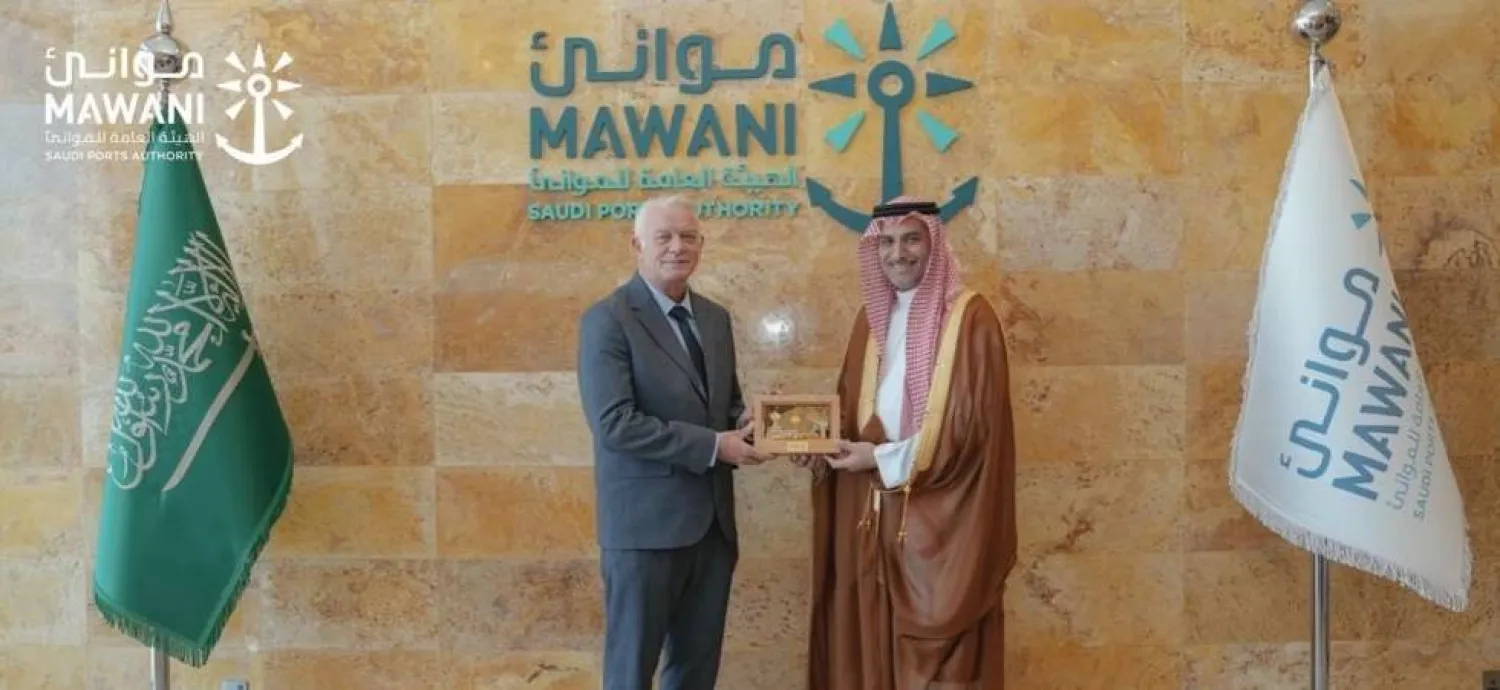
The Saudi Ports Authority (Mawani) granted on Thursday a unified license to international shipping line Global Shipping Line (PIL), officially recognizing it as an authorized foreign investor to operate maritime agencies in the Kingdom's ports, reported the Saudi Press Agency.

The license is issued in accordance with the regulations outlined in the Maritime Agency Services, reflecting Mawani's commitment to boosting the efficiency of the maritime sector and improving the quality of operational services provided at ports.

It aims to attract global expertise and facilitate knowledge transfer within the Kingdom, aligning with international best practices in the maritime transport industry.

The initiative is part of Mawani's ongoing efforts to develop the maritime business environment, enable international companies to invest in the Saudi market, and increase competitiveness within the maritime sector.

PIL, which operates from its regional headquarters in Riyadh, manages operations in 29 countries.

The move strengthens the Kingdom's position as a crucial logistics hub, in line with the National Transport and Logistics Strategy, while attracting more international shipping lines. It reinforces Saudi Arabia's role as a key link among three continents.


IMF: Restoring Lebanon's Economic Growth Will Require Comprehensive Reforms

FILE PHOTO: A view of the International Monetary Fund (IMF) logo at its headquarters in Washington, D.C., US, November 24, 2024. REUTERS/Benoit Tessier//File Photo
TT

IMF: Restoring Lebanon's Economic Growth Will Require Comprehensive Reforms

FILE PHOTO: A view of the International Monetary Fund (IMF) logo at its headquarters in Washington, D.C., US, November 24, 2024. REUTERS/Benoit Tessier//File Photo

Lebanon's economy has shown resilience despite conflicts in the region, with tourism fueling a bit of a rebound, but restoring growth will require comprehensive reforms, the International Monetary Fund said on Thursday.

IMF spokeswoman Julie Kozack said the global lender remains engaged in complex discussions with Lebanese ‌authorities following their ‌request for an IMF-supported ‌program ⁠in March 2025. The ⁠IMF sent a staff mission to Beirut earlier this month, said Reuters.

The talks have been focused on two big issues, she said, citing the need for banking sector restructuring and a medium-term fiscal ⁠strategy. "The economy has shown resilience ‌despite the impact ‌of conflicts in the region. It has had ‌a bit of a rebound ‌on the back of tourism from the strong diaspora," Kozack said.

"But at the same time, really restoring strong and sustainable growth will ‌require a comprehensive set of reforms to tackle some of the ⁠structural ⁠weaknesses that have really hampered Lebanon's economic performance for many years," she said. Reforms also are needed to attract international support to help Lebanon address its substantial reconstruction needs.

Kozack said Lebanon needs an updated medium-term fiscal framework that includes concrete measures to mobilize additional revenues for much-needed capital spending, as well as a sovereign debt restructuring to restore debt sustainability.