Chinese Automakers Seek Retaliatory Tariffs on EU Cars

A BYD Ocean-M electric car is displayed at the Beijing Auto Show in Beijing on April 25, 2024. (Photo by Pedro PARDO / AFP)
TT

Chinese Automakers Seek Retaliatory Tariffs on EU Cars

A BYD Ocean-M electric car is displayed at the Beijing Auto Show in Beijing on April 25, 2024. (Photo by Pedro PARDO / AFP)

Chinese automakers have urged Beijing to retaliate against Brussels' decision to place curbs on Chinese electric vehicle exports by raising tariffs on imported European gasoline-powered cars, the state-backed Global Times newspaper said on Wednesday.
In a closed-door meeting on Tuesday also attended by European automakers, Chinese car companies and industry groups suggested authorities hike tariffs on large gasoline-powered vehicles imported from the European Union, the report said, according to Reuters.
EU trade policy is turning increasingly protective owing to concerns China's production-focused, debt-driven development model could see the 27-member bloc flooded with cheap goods, including EVs, as Chinese firms look overseas due to weak domestic demand.
The European Commission's June 12 announcement that it would impose anti-subsidy duties of up to 38.1% on imported Chinese EVs from July follows the United States hiking tariffs on Chinese cars in May, and opens a new front in the West's trade war with Beijing, which began with Washington's initial import tariffs in 2018.
The Global Times first reported late last month that a Chinese government-affiliated auto research center was suggesting China raise its import tariffs on large gasoline-powered cars to 25%, citing an industry expert.
China's current import tariff for cars is 15%.
Chinese authorities have previously hinted at possible retaliatory measures through state media commentaries and interviews with industry figures.
The same newspaper last month also hinted that Chinese firms planned to ask authorities to open an anti-dumping investigation into European pork products, which China's commerce ministry on Monday announced it would undertake. It has also urged Beijing to look into EU dairy imports.



Hapag-Lloyd Says US Plans to Block Hormuz Difficult to Assess

(FILES) A Hapag Lloyd container ship is seen in Rotterdam's harbour on August 1, 2022. (Photo by JOHN THYS / AFP)
TT

Hapag-Lloyd Says US Plans to Block Hormuz Difficult to Assess

(FILES) A Hapag Lloyd container ship is seen in Rotterdam's harbour on August 1, 2022. (Photo by JOHN THYS / AFP)

Germany's Hapag-Lloyd said on Monday that it is difficult to assess what effect US President Donald Trump's plans to block the Strait of Hormuz would have on shipping.

"What's important is that passage through the Strait of Hormuz be restored as soon as possible," said a company spokesperson in an emailed statement.

From Hapag-Lloyd's view, as long as there are mines, passage is not possible, and in addition, insurance for passage is also difficult to obtain at this time, added the spokesperson.


UN: Iran War Could Plunge 32 million into Poverty

People shop at the fruit and vegetable market the day after negotiations between Iran and the US in Pakistan failed to produce a deal, in the capital Tehran on April 13, 2026. (Photo by ATTA KENARE / AFP)
TT

UN: Iran War Could Plunge 32 million into Poverty

People shop at the fruit and vegetable market the day after negotiations between Iran and the US in Pakistan failed to produce a deal, in the capital Tehran on April 13, 2026. (Photo by ATTA KENARE / AFP)

More than 32 million people worldwide could be plunged into poverty by the economic fallout from the Iran war, with developing countries expected to be hit hardest, the United Nations Development Program (UNDP) warned.

In a report issued amid doubts over a fragile ceasefire, the UNDP said the world is facing a “triple shock” involving energy, food and weaker economic growth.

The agency said the conflict is reversing gains in international development, with the impact expected to be felt unevenly across regions.

Alexander De Croo, UNDP administrator and former prime minister of Belgium, said: “A conflict like this is development in reverse. Even if the war stops, and a ceasefire is very welcome, the impact is already there.”

“You will see an enduring impact, especially in poorer countries, where people are being pushed back into poverty. This is the most painful aspect. The people being pushed into poverty are very often the same people who were in poverty, escaped it, and are now being pushed back.”

Energy prices surged sharply during the six weeks of the Iran war after Iran’s closure of the Strait of Hormuz choked global oil and gas supplies. With knock-on effects on fertilizer supplies and global shipping, experts warn of a “time bomb” threatening food security in the developing world.

The head of the International Monetary Fund said the war’s “devastating effects” have caused lasting damage to the global economy, even if the conflict ends.

Publishing its report alongside meetings of world leaders in Washington for the IMF Spring Meetings, the UNDP said a global response is required to support countries hardest hit by the economic fallout.

It said targeted and temporary cash transfers are needed to protect the most vulnerable households in developing countries, at a cost of about $6 billion to mitigate the shocks for those living below the poverty line.

De Croo said international agencies and development banks could provide financial support. “There is a positive economic return from short-term cash transfers to avoid people being pushed back into poverty,” he said. Alternative measures could include temporary subsidies or vouchers for electricity or cooking gas.

Setting out three scenarios for the war, the UNDP found that in the worst case – involving six weeks of major disruption to oil and gas production and eight months of sustained higher costs – up to 32.5 million people globally would fall into poverty.

The report used the upper-middle-income poverty line defined by the World Bank, set at less than $8.30 per person per day.

The UNDP said that while richer countries are in a stronger position to cushion the economic fallout, countries in the global south face weaker conditions and already severe financial constraints.

This comes as western governments, including the US, Germany, France and the UK, cut aid spending amid rising borrowing and debt levels in advanced economies and calls to increase defense spending.

Data from the Organization for Economic Co-operation and Development published last week showed that countries in its Development Assistance Committee cut aid spending to $174.3 billion in 2025, nearly a quarter lower than in 2024.


EU Member States Must Coordinate on Energy Prices amid Iran conflict, Von Der Leyen Says

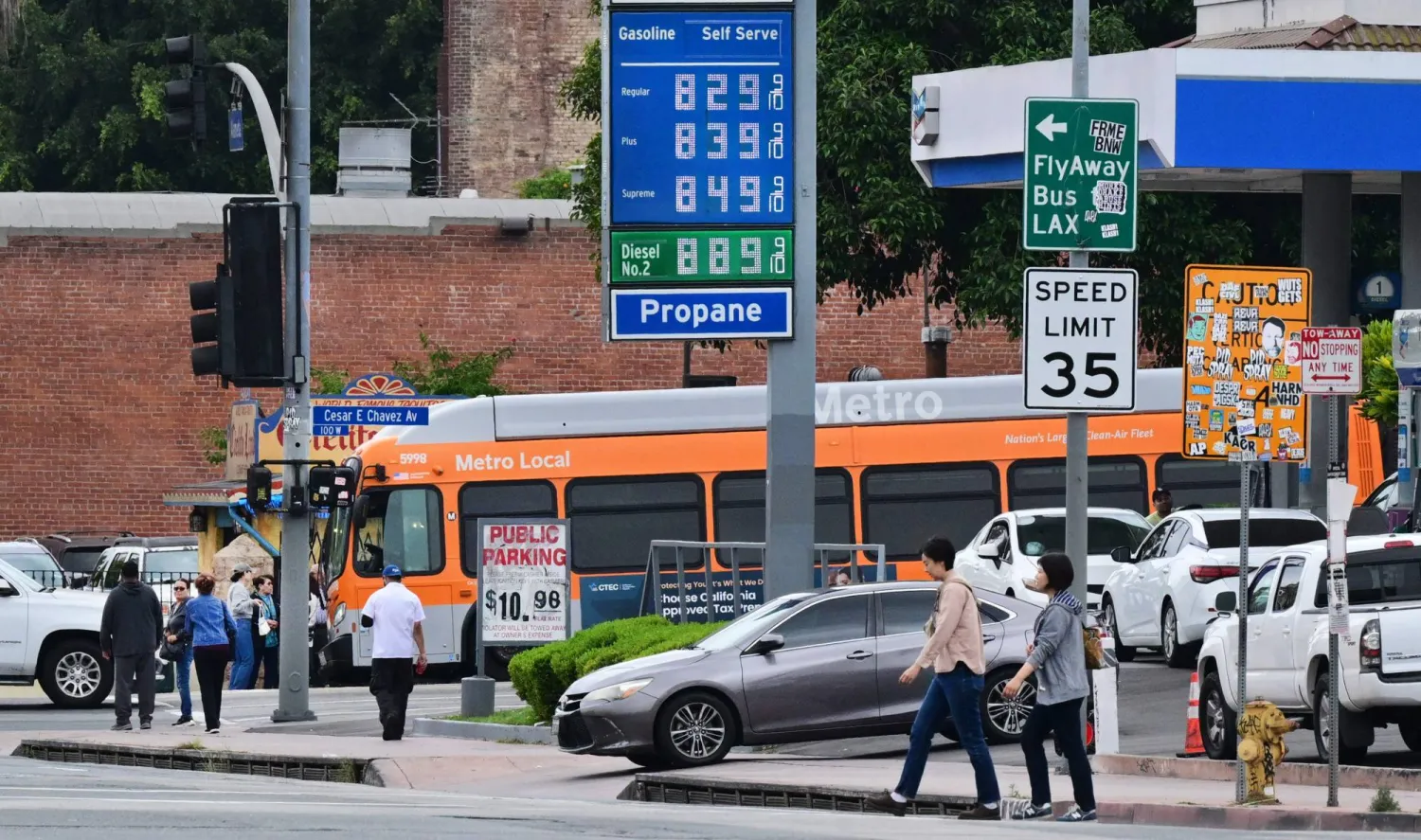
Gas prices are displayed at a Chevron station in Los Angeles, California, on March 31, 2026,(Photo by Frederic J. BROWN / AFP)
TT

EU Member States Must Coordinate on Energy Prices amid Iran conflict, Von Der Leyen Says

Gas prices are displayed at a Chevron station in Los Angeles, California, on March 31, 2026,(Photo by Frederic J. BROWN / AFP)

The European Union's member states must coordinate on energy prices amid a 22 billion euro ($25.70 billion) increase in fossil fuel bills since the start of the Iran war, EU Commission President Ursula von der Leyen said on Monday.

"We're also looking into ... coordination of member states' gas storage filling to avoid that many member states go to the market at the same time," von der Leyen told reporters in Brussels.

"And we will coordinate oil stock releases, to achieve the largest possible effect, and we will ensure that member states' emergency measures will not impact the single market."

The EU Commission is planning to publish proposals for energy price measures on April 22, to be discussed by EU leaders at their informal summit next week, according to Reuters.

Separately the EU's executive arm will present an electrification strategy before the summer, von der Leyen said as she stressed the need for structural measures to lower energy prices as well.

"We are paying a very high price for our global dependency on fossil fuels, and the grim reality for our continent is fossil fuel energy will remain the most expensive option in the years to come," von der Leyen said.

"Our strategy to decarbonize has not only been confirmed in the last years, but is growing in importance day by day," she added.