


France’s Finances to Come under Further Strain Whoever Wins Election

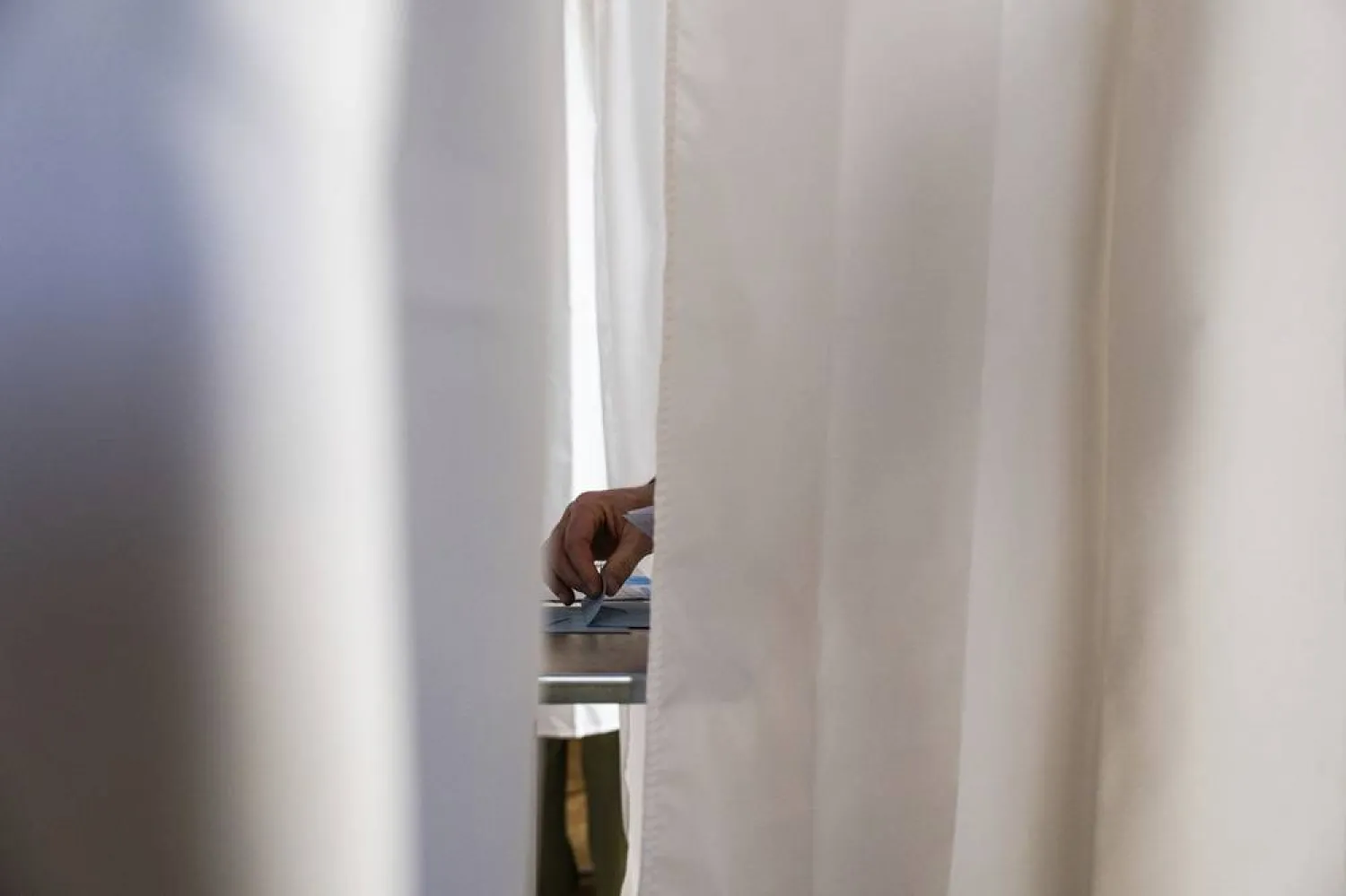
 A voter prepares to cast a ballot at a polling station for the first round of the parliamentary elections in Paris, Sunday June 30, 2024. (AP)
A voter prepares to cast a ballot at a polling station for the first round of the parliamentary elections in Paris, Sunday June 30, 2024. (AP)
TT

France’s Finances to Come under Further Strain Whoever Wins Election

 A voter prepares to cast a ballot at a polling station for the first round of the parliamentary elections in Paris, Sunday June 30, 2024. (AP)
A voter prepares to cast a ballot at a polling station for the first round of the parliamentary elections in Paris, Sunday June 30, 2024. (AP)

Already under scrutiny from ratings agencies, financial markets and Brussels, France's public finances are likely to come under more strain no matter what the outcome of a snap parliamentary election, which starts with a first round of voting on Sunday.

The main parties have all promised new spending but their plans to pay for it are short on detail and do not always stack up.

Polls indicate that the far-right National Rally (RN) will come first, followed by the New Popular Front left-wing alliance and President Emmanuel Macron's Together trailing in third.

The outgoing government had promised to cut the budget deficit from 5.5% of Gross Domestic Product last year to a European Union ceiling of 3% by 2027 - an objective that may be unattainable after the vote, which concludes with a second round on July 7.

FAR-RIGHT NATIONAL RALLY

If it forms a government, the RN wants as soon as July to cut value added (VAT) sales tax on energy, which it says would cost 7 billion euros for the rest of this year and 12 billion in a full year.

The RN says it would be financed by obtaining a 2-billion-euro rebate on France's EU budget contribution, although the bloc's 2021-27 budget has long since been voted into the books.

The party is counting on big gains from ramping up a levy on exceptional profits from power producers and replacing a tonnage tax on shipowners with normal corporate tax, although that sector's bumper profits of recent years is likely to subside.

The RN also wants to annul a cutback in the duration of unemployment benefits due from in July, a move that the outgoing government says would cost 4 billion euros.

Further out, the RN aims to index pensions to inflation, reduce the retirement age to 60 for people who started work at 20 or before, exempt some workers under the age of 30 from income tax and raise teacher and nurses wages.

It also wants to go ahead with cuts in local business taxes that the current government has had to suspend because they could not be afforded.

The RN would also scrap a 2023 increase in the retirement age to 64 from 62, replacing it with a more progressive system which remains to be specified. The party says it would stick with existing plans to cut the budget deficit in line with France's commitments to EU partners.

Targeting welfare spending on foreign citizens and cutting red tape, the RN has pledged to go head with 20 billion in budget savings this and next year, which the current government has struggled to come up with and detail.

It further wants to renegotiate the European Central Bank's mandate to give it a new focus on jobs, productivity and financing long-term projects.

LEFT-WING NEW POPULAR FRONT

The New Popular Front (NFP) alliance says its first moves would include a 10% civil servant pay hike, providing free school lunches, supplies and transport while raising housing subsidies by 10%.

It says that it can cover the cost by raising 15 billion euros with a tax on superprofits, which remains to be detailed, and reinstating a wealth tax on financial assets, also for 15 billion euros.

Additionally the group wants to freeze prices of basic food items and energy while raising the minimum wage by 14% with subsidies for small firms that cannot otherwise cope.

The alliance would then in 2025 hire more teachers and healthcare workers, step up home insulation with subsidies, boosting public spending by an additional 100 billion euros.

It says the cost would be covered by closing tax loopholes, making income tax much more progressive, restoring the wealth tax on financial assets and setting a maximum inheritance for families of 12 million euros.

From 2026, public spending would reach 150 billion euros annually, notably by increasing the culture and sports ministries' budgets to 1% of GDP.

The NFP would also scrap the 2023 increase in the retirement age and wants to eventually reduce it to 60. The alliance says the extra spending would be financed by tax hikes and stronger growth, but it does not plan to reduce the budget deficit and rejects the EU's fiscal rules.

CENTRIST 'TOGETHER' ALLIANCE

While Macron's party is committed to cutting the budget deficit to 3% of GDP by 2027, institutions from the national auditor to the IMF had serious doubts even before the snap election was called.

Since then, the party has pledged to cut power bills by 15% from 2025 and to match pension hikes to increases in inflation. It says that it will raise public sector wages, but its program does not say by how much.

The party remains committed to no broad tax hikes and will increase the amount parents can gift children tax-free.



Lagarde Dampens ECB Exit Talk, Expects to Finish her Term

FILE PHOTO: European Central Bank (ECB) President Christine Lagarde reacts during an address to the media after the ECB's Governing Council meeting, at the ECB headquarters in Frankfurt, Germany, December 18, 2025. REUTERS/Heiko Becker/File Photo
TT

Lagarde Dampens ECB Exit Talk, Expects to Finish her Term

FILE PHOTO: European Central Bank (ECB) President Christine Lagarde reacts during an address to the media after the ECB's Governing Council meeting, at the ECB headquarters in Frankfurt, Germany, December 18, 2025. REUTERS/Heiko Becker/File Photo

European Central Bank President Christine Lagarde has attempted to calm speculation about her stepping down early that has called into question the central bank's separation from politics, telling the Wall Street Journal she expects to complete her term.

Lagarde's status as leader of Europe's most important financial institution
was plunged into doubt this week after the Financial Times reported she planned to leave her job ahead of next spring's French presidential election, giving outgoing leader
Emmanuel Macron a say in picking her successor.

In an interview with the WSJ on Thursday, Lagarde dampened speculation about an imminent exit but still left the door slightly ajar to the possibility that she might leave before the end of her contract in October 2027.

“When I look back at all these years, I ‌think that we have ‌accomplished a lot, that I have accomplished a lot,” she told the ‌paper. “We ⁠need to consolidate ⁠and make sure that this is really solid and reliable. So my baseline is that it will take until the end of my term.”

Reuters exclusively reported that Lagarde had sent a private message to fellow policymakers reassuring them that she was still concentrating on her job and that they would hear it from her, rather than the press, if she wanted to step down.

The ECB has said that Lagarde has not made a decision about the end of her term, but stopped short of denying the FT report.

Some analysts thought an ⁠early exit risked tangling the ECB up in European politics as it could ‌give the impression of trying to make sure France's eurosceptic far ‌right, which could win next year's presidential vote, had no say in her succession.

Lagarde said last year she intended ‌to complete her term, a commitment she has conspicuously failed to repeat this week.

Bank of France Governor Francois ‌Villeroy de Galhau announced plans to step down from his job last week, in a move that gives President Macron a chance to pick the next French central bank chief, drawing sharp criticism from the far-right who called the move anti-democratic.

Villeroy's early departure and the confusion about Lagarde's future come just as US President Donald Trump is attacking the Federal Reserve, ‌further stoking debates about central bank independence from politics.

"After the recent events in the US, this is another reminder that although central banks are nominally ⁠independent, who leads them and ⁠their worldview is a matter for high politics," economists at Oxford Economics wrote on Friday.

As the head of the euro zone's second largest economy, the French president plays an important role in wider negotiations to select the head of the ECB.

Polls show either far-right National Rally leader Marine Le Pen, or her protege Jordan Bardella, could win the French presidency.

While the party has long dropped a call for France to leave the euro, it is still seen as something of an unknown quantity in central banking circles.

According to Reuters, Lagarde told the WSJ that she viewed her mission as price and financial stability, as well as "protecting the euro, making sure that it is solid and strong and fit for the future of Europe."

She also said that the World Economic Forum was "one of the many options" she was considering once she left the central bank.

When Lagarde's name first emerged as a possible candidate for ECB president in 2019, she said she had no interest in the job and would not leave the International Monetary Fund, where she was the managing director.


Stocks Drop, Oil Rises after Trump Iran Threat

Donald Trump has deployed warships, fighter jets and other military hardware to the Middle East as he puts pressure on Iran. Hannah Tross / US NAVY/AFP
TT

Stocks Drop, Oil Rises after Trump Iran Threat

Donald Trump has deployed warships, fighter jets and other military hardware to the Middle East as he puts pressure on Iran. Hannah Tross / US NAVY/AFP

Most Asia equities fell and oil prices rose on Friday after Donald Trump ratcheted up Middle East tensions by hinting at possible military strikes on Iran if it did not make a "meaningful deal" in nuclear talks.

The remarks fanned geopolitical concerns and cast a pall over a tentative rebound in markets following an AI-fueled sell-off this month.

Traders are also looking ahead to the release of US data later in the day that will provide a fresh snapshot of the world's top economy, said AFP.

A slew of forecast-beating figures over the past few days have lifted optimism about the outlook but tempered expectations for more interest rate cuts.

The US president told the inaugural meeting of the "Board of Peace", his initiative to secure stability in Gaza, that Tehran should make a deal.

"It's proven to be over the years not easy to make a meaningful deal with Iran. We have to make a meaningful deal otherwise bad things happen," he said, as he deployed warships, fighter jets and other military hardware to the region.

He warned that Washington "may have to take it a step further" without any agreement, adding: "You're going to be finding out over the next probably 10 days."

Israeli Prime Minister Benjamin Netanyahu earlier warned: "If the ayatollahs make a mistake and attack us, they will receive a response they cannot even imagine."

The threats come days after the United States and Iran held a second round of Omani-mediated talks in Geneva as Washington looks to prevent the country from getting a nuclear bomb, which Tehran says it is not pursuing.

The prospect of a conflict in the crude-rich Middle East has sent oil prices surging this week, and they extended the gains Friday to sit at their highest levels since June.

Equity traders were also spooked.

Hong Kong fell as it reopened from a three-day break, while Tokyo, Sydney, Wellington and Bangkok were also down. However, Seoul continued to rally to a fresh record thanks to more tech buying, with Singapore, Manila and Mumbai also up.

City Index market analyst Matt Simpson said a strike was not certain.

"At its core, this looks like pressure and leverage rather than a prelude to invasion," he wrote.

"The US is pairing military readiness with stalled nuclear negotiations, signaling it has credible strike options if talks fail. That doesn't automatically translate into boots on the ground or a regime-change campaign.

"While military assets dominate headlines, diplomacy is still in motion. The fact talks are continuing at all suggests both sides are still probing for a diplomatic off-ramp before tensions harden further."

Shares in Jakarta slipped even after Trump and Indonesian President Prabowo Subianto reached a trade deal after months of wrangling.

The accord sets a 19 percent tariff on Indonesian goods entering the United States. The Southeast Asian country had been threatened with a potential 32 percent levy before the pact.

Jakarta also agreed to $33 billion in purchases of US energy commodities, agricultural products and aviation-related goods, including Boeing aircraft.


Third ‘Mirkaz AlBalad AlAmeen Platform’ to Open in Makkah on Sunday 

A street in the holy city of Makkah is decorated with Ramadan lights. (SPA)
TT

Third ‘Mirkaz AlBalad AlAmeen Platform’ to Open in Makkah on Sunday 

A street in the holy city of Makkah is decorated with Ramadan lights. (SPA)

The third edition of the “Mirkaz ABalad AlAmeen”, a leading platform for exchanging opportunities in Makkah, will kick off on Sunday, under the theme “Makkah Inspires the World.”

The platform, organized by the Holy Makkah Municipality, will feature 15 exceptional Ramadan evenings focused on dialogue, knowledge exchange, and cross-sector engagement.

Makkah Mayor Musad Aldaood said the platform redefines development from Makkah, where faith meets inspiration and values are transformed into a comprehensive civilizational experience.

He noted that the initiative reflects the ambitions of Saudi Vision 2030 and showcases Makkah to the world as a living model of creativity, leadership, and innovation.

The upcoming edition will host more than 65 speakers, including executive leaders and decision-makers from across all three sectors, alongside futurists, entrepreneurs, and leading voices in culture and inspiration from artists, writers, media professionals, and innovators.

The program targets 12 key sectors: technology and digital transformation, financial investment, communications and media, real estate development, transport and logistics, banking services, youth and sports, tourism and culture, hospitality and catering, Hajj and Umrah, the third sector, and healthcare.