


France’s Finances to Come under Further Strain Whoever Wins Election

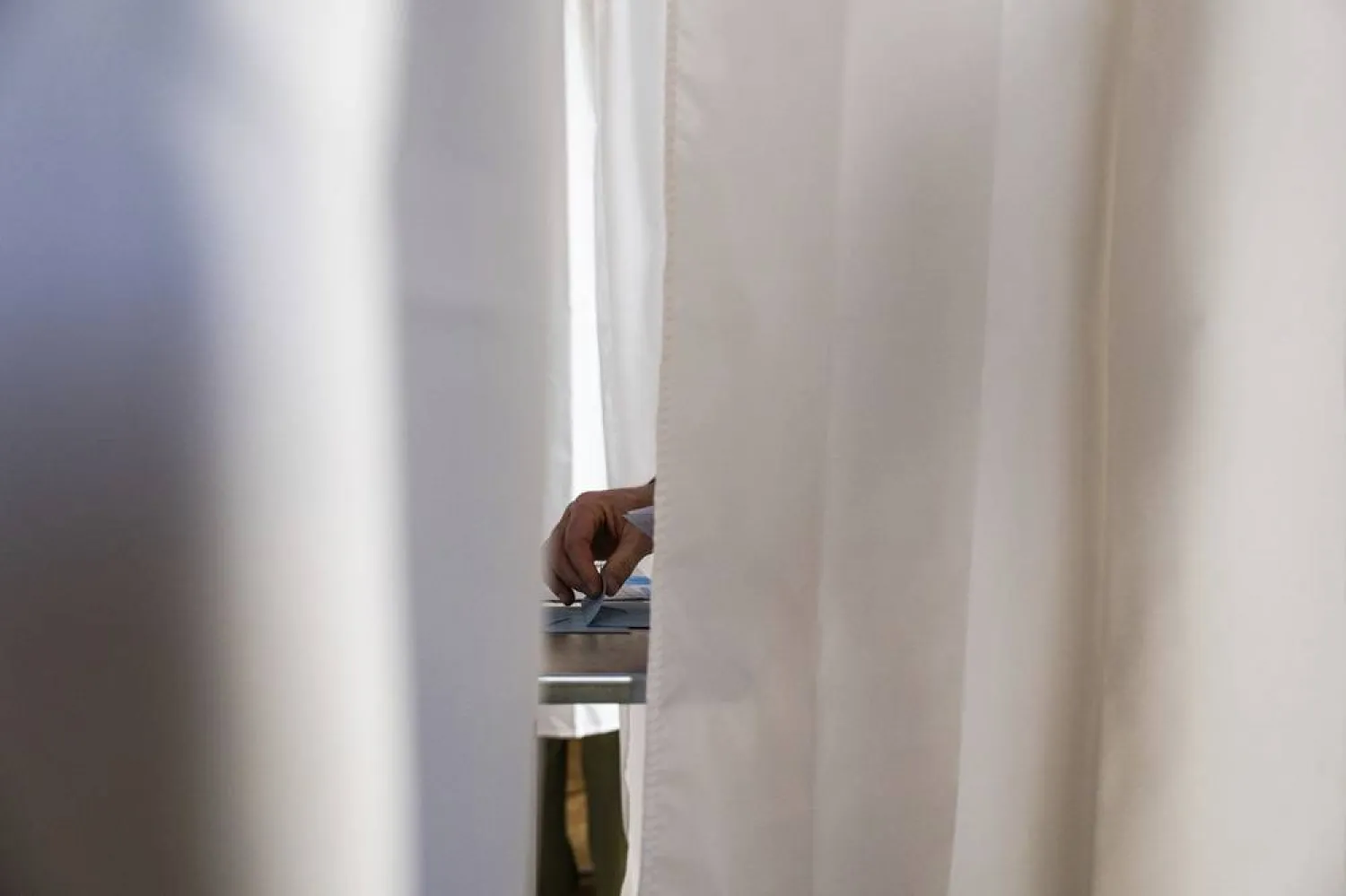
 A voter prepares to cast a ballot at a polling station for the first round of the parliamentary elections in Paris, Sunday June 30, 2024. (AP)
A voter prepares to cast a ballot at a polling station for the first round of the parliamentary elections in Paris, Sunday June 30, 2024. (AP)
TT

France’s Finances to Come under Further Strain Whoever Wins Election

 A voter prepares to cast a ballot at a polling station for the first round of the parliamentary elections in Paris, Sunday June 30, 2024. (AP)
A voter prepares to cast a ballot at a polling station for the first round of the parliamentary elections in Paris, Sunday June 30, 2024. (AP)

Already under scrutiny from ratings agencies, financial markets and Brussels, France's public finances are likely to come under more strain no matter what the outcome of a snap parliamentary election, which starts with a first round of voting on Sunday.

The main parties have all promised new spending but their plans to pay for it are short on detail and do not always stack up.

Polls indicate that the far-right National Rally (RN) will come first, followed by the New Popular Front left-wing alliance and President Emmanuel Macron's Together trailing in third.

The outgoing government had promised to cut the budget deficit from 5.5% of Gross Domestic Product last year to a European Union ceiling of 3% by 2027 - an objective that may be unattainable after the vote, which concludes with a second round on July 7.

FAR-RIGHT NATIONAL RALLY

If it forms a government, the RN wants as soon as July to cut value added (VAT) sales tax on energy, which it says would cost 7 billion euros for the rest of this year and 12 billion in a full year.

The RN says it would be financed by obtaining a 2-billion-euro rebate on France's EU budget contribution, although the bloc's 2021-27 budget has long since been voted into the books.

The party is counting on big gains from ramping up a levy on exceptional profits from power producers and replacing a tonnage tax on shipowners with normal corporate tax, although that sector's bumper profits of recent years is likely to subside.

The RN also wants to annul a cutback in the duration of unemployment benefits due from in July, a move that the outgoing government says would cost 4 billion euros.

Further out, the RN aims to index pensions to inflation, reduce the retirement age to 60 for people who started work at 20 or before, exempt some workers under the age of 30 from income tax and raise teacher and nurses wages.

It also wants to go ahead with cuts in local business taxes that the current government has had to suspend because they could not be afforded.

The RN would also scrap a 2023 increase in the retirement age to 64 from 62, replacing it with a more progressive system which remains to be specified. The party says it would stick with existing plans to cut the budget deficit in line with France's commitments to EU partners.

Targeting welfare spending on foreign citizens and cutting red tape, the RN has pledged to go head with 20 billion in budget savings this and next year, which the current government has struggled to come up with and detail.

It further wants to renegotiate the European Central Bank's mandate to give it a new focus on jobs, productivity and financing long-term projects.

LEFT-WING NEW POPULAR FRONT

The New Popular Front (NFP) alliance says its first moves would include a 10% civil servant pay hike, providing free school lunches, supplies and transport while raising housing subsidies by 10%.

It says that it can cover the cost by raising 15 billion euros with a tax on superprofits, which remains to be detailed, and reinstating a wealth tax on financial assets, also for 15 billion euros.

Additionally the group wants to freeze prices of basic food items and energy while raising the minimum wage by 14% with subsidies for small firms that cannot otherwise cope.

The alliance would then in 2025 hire more teachers and healthcare workers, step up home insulation with subsidies, boosting public spending by an additional 100 billion euros.

It says the cost would be covered by closing tax loopholes, making income tax much more progressive, restoring the wealth tax on financial assets and setting a maximum inheritance for families of 12 million euros.

From 2026, public spending would reach 150 billion euros annually, notably by increasing the culture and sports ministries' budgets to 1% of GDP.

The NFP would also scrap the 2023 increase in the retirement age and wants to eventually reduce it to 60. The alliance says the extra spending would be financed by tax hikes and stronger growth, but it does not plan to reduce the budget deficit and rejects the EU's fiscal rules.

CENTRIST 'TOGETHER' ALLIANCE

While Macron's party is committed to cutting the budget deficit to 3% of GDP by 2027, institutions from the national auditor to the IMF had serious doubts even before the snap election was called.

Since then, the party has pledged to cut power bills by 15% from 2025 and to match pension hikes to increases in inflation. It says that it will raise public sector wages, but its program does not say by how much.

The party remains committed to no broad tax hikes and will increase the amount parents can gift children tax-free.



From Two Hours to 30 Minutes: Qiddiya Bullet Train to Cut Riyadh Travel Time by 75%

A Riyadh Metro train carriage in the Saudi capital (SPA). 
TT

From Two Hours to 30 Minutes: Qiddiya Bullet Train to Cut Riyadh Travel Time by 75%

A Riyadh Metro train carriage in the Saudi capital (SPA). 

Qiddiya is set to become significantly more accessible under plans to link the entertainment and tourism hub to King Salman International Airport and the King Abdullah Financial District (KAFD) through the new Qiddiya Bullet Train.

The project will reduce travel time to around 30 minutes, down from nearly two hours using other transport options, a 75% cut in commuting time. Operational speeds are expected to reach 250 kilometers per hour, according to the Royal Commission for Riyadh City.

The railway forms part of a broader transport strategy aimed at improving connectivity across the capital and enhancing mobility between key destinations, in line with population growth and urban expansion in western and southwestern Riyadh.

In a related development, the commission announced the awarding of the Red Line extension of the Riyadh Metro to Diriyah. The expansion includes 7.1 kilometers of tunnels and 1.3 kilometers of elevated track, with stations at King Saud University and Diriyah. The latter is expected to serve as a future interchange with the planned Line 7.

Officials estimate the project could remove around 150,000 cars from daily traffic, improving access to tourist destinations such as Bujairi Terrace and Wadi Safar, while supporting more sustainable mobility patterns.

Bandar Al-Saadoun, Vice Chairman of Khaleejiah Holding, told Asharq Al-Awsat that the Diriyah development ranks among the largest projects under Vision 2030. He pointed to additional landmark initiatives in Wadi Safar, alongside the Opera House project and King Salman Grand Mosque.

He said extending the Red Line along King Abdullah Road to Diriyah would generate strong real estate demand, particularly as the rail network integrates routes from King Salman International Airport through KAFD, Diriyah and the New Murabba development.

Al-Saadoun added that roughly 30 projects have been announced in Qiddiya, raising the prospect of gradual real estate growth along corridors connected to the rail line. The project’s links to major developments — including Expo 2030 Riyadh, New Murabba and The Avenues — as well as the airport, expected to become one of the world’s largest by 2030, are likely to reinforce demand.

Real estate analyst Khaled Almobid said large-scale transport projects such as the Qiddiya Bullet Train do more than lift prices; they reshape market structure and asset values over the medium and long term.

Historically, properties within one to three kilometers of transport stations see capital appreciation and rising investment demand, particularly for undeveloped “white land,” which often transitions into higher-density projects, he remarked.

Almobid expects a dual impact: both redistribution of demand within Riyadh and genuine market expansion driven by what he called “manufactured demand” from Qiddiya, which is projected to attract 17 million visitors and generate 325,000 jobs. He also anticipates a population shift toward western Riyadh and areas surrounding the new stations.

Land prices near Qiddiya have already risen between 30% and 40% since 2023, reflecting early market anticipation, he said, predicting more sustainable growth once operations begin and prices align with the tangible value of cutting travel time to 30 minutes between the airport, KAFD and Qiddiya.

Residential and tourism-related real estate are likely to lead the next phase, supported by Saudi Arabia’s goal of raising homeownership to 70% and attracting 150 million annual visitors by 2030, with mixed-use locations along the rail corridor expected to draw the strongest investment interest.


New US Tariffs Come in at Lower 10% Rate 

Shipping containers at the port of Oakland following the Supreme Court's ruling that Trump had exceeded his authority when he imposed tariffs, in Oakland, California, US, February 23, 2026. (Reuters)
TT

New US Tariffs Come in at Lower 10% Rate 

Shipping containers at the port of Oakland following the Supreme Court's ruling that Trump had exceeded his authority when he imposed tariffs, in Oakland, California, US, February 23, 2026. (Reuters)

The ‌United States imposed an additional tariff from Tuesday of 10% on all goods not covered by exemptions, a notice issued by US Customs and Border Protection said, the rate initially announced by President Donald Trump on Friday rather than the 15% he promised a day later.

Reacting to the Supreme Court ruling that threw out his tariffs that had been justified on grounds of an emergency, Trump initially announced a new temporary global tariff of 10%. He said on Saturday he would increase it to ‌15%.

In a ‌notice described as intended to "provide guidance regarding the ‌February ⁠20, 2026 Presidential ⁠Proclamation," CBP said that, aside from products specified as subject to exemptions, imports would "be subject to an additional ad valorem rate of 10%".

The move added to confusion surrounding US trade policy, with no explanation offered for why the lower rate had been used. The Financial Times quoted a White House official saying the ⁠increase up to 15% would come later. ‌Reuters could not immediately confirm this.

Collection ‌of the new tariffs began at midnight, while the collection of ‌the tariffs annulled by the Supreme Court was halted. They ‌had ranged from 10% to as much as 50%.

The Section 122 law allows the president to impose the new duties for up to 150 days on any and all countries to address "large and ‌serious" balance-of-payments deficits and "fundamental international payments problems."

Trump's tariff order argued that a serious balance ⁠of payments deficit ⁠existed in the form of a $1.2 trillion annual US goods trade deficit and a current account deficit of 4% of GDP and a reversal of the US primary income surplus.

On Monday Trump Warned countries against backing away from recently negotiated trade deals with the US, saying that if they did, he would hit them with much higher duties under different trade laws.

Japan said on Tuesday it had Asked the United States to ensure its treatment under a new tariff regime would be as favorable as in an existing agreement. Both the European Union and Britain have indicated they want to stick to deals already agreed.


Saudi Arabia’s 2025 Budget: Record Non-Oil Revenues, Sustained Investment in Well-Being

The Saudi capital, Riyadh (SPA) 
TT

Saudi Arabia’s 2025 Budget: Record Non-Oil Revenues, Sustained Investment in Well-Being

The Saudi capital, Riyadh (SPA) 

Saudi Arabia closed the 2025 fiscal year with a strong economic performance underscoring the momentum of its national transformation drive and the resilience of its economy.

Official results pointed to what authorities described as a strategic balance between expansionary spending and maintaining fiscal discipline.

The year marked a significant milestone in the implementation of Vision 2030, with fiscal indicators translating into major projects and enhanced public services that directly affect citizens’ quality of life.

The results also reinforced international confidence in the Kingdom’s economic stability and long-term prospects.

Total government revenues for 2025 reached approximately SAR 1.111 trillion (USD 296.5 billion). Non-oil revenues rose to a historic SAR 505.3 billion (USD 134.7 billion), underscoring the effectiveness of reforms aimed at reducing reliance on oil and building more stable and diversified revenue streams capable of sustaining growth under varying global conditions.

Government expenditure in 2025 totaled SAR 1.388 trillion (USD 370.2 billion). Spending was primarily directed toward sectors central to quality of life. Health and social development accounted for the largest allocation at SAR 278.9 billion (USD 74.4 billion), followed by education at SAR 212.5 billion (USD 56.6 billion).

The allocations highlight the leadership’s emphasis on strengthening healthcare systems, expanding social protection and improving educational outcomes, with human capital development remaining a cornerstone of long-term economic transformation.

As capital spending accelerated and major projects advanced, the 2025 budget recorded a deficit of SAR 276.6 billion (USD 73.8 billion), including SAR 94.8 billion (USD 25.3 billion) in the fourth quarter.

Authorities said the deficit was fully financed through debt issuances and capital market instruments, without drawing on government reserves. Official reserves remained stable at SAR 399.1 billion (USD 106.4 billion).

By financing the annual deficit entirely through debt markets rather than reserve withdrawals, the government demonstrated confidence in its access to capital and its ability to manage liquidity and financial obligations effectively.

Officials say the strong fiscal position sends a positive signal to domestic and international investors, reinforcing private-sector confidence and supporting continued investment momentum.