France 'Dangerously Exposed' in Case of Economic Shock, National Audit Office Says

A participant holds a French flag during an election night rally following the first results of the second round of France's legislative election at Place de la Republique in Paris on July 7, 2024. (AFP)
TT

France 'Dangerously Exposed' in Case of Economic Shock, National Audit Office Says

A participant holds a French flag during an election night rally following the first results of the second round of France's legislative election at Place de la Republique in Paris on July 7, 2024. (AFP)

France's public finances and its rising deficit are worrying and leave the country "dangerously exposed" in the event of a new, macroeconomic shock, the national public audit office said on Monday.
The audit office, known as the Cour des Comptes, reiterated it was vital for France, the euro zone's second biggest economy, to reduce its public deficit, Reuters reported.
"Due to delays in making real structural reforms, the cost of public debt, which has been exacerbated by recurring deficits and the weight of these deficits, has become more and more expensive," it said.
This "has hampered other spending, hinders the ability to make investments and leaves the country dangerously exposed in case of a new macroeconomic shock," it added.
It said France's public financing programs did not adequately take into account costs linked to policies aimed at protecting the environment, such as using more renewable energy.
Last month, the European Commission said France and six other countries should be disciplined for running budget deficits in excess of EU limits, with deadlines for reducing the gaps to be set in November.
France had a budget gap of 5.5% of gross domestic product (GDP) in 2023, up from 4.8% in 2022 and above the EU's deficit limit of 3%.
French public debt was 110.6% of GDP in 2023. The EU Commission expects this to increase to 112.4% this year and to 113.8% in 2025 while the EU limit is 60%.
President Emmanuel Macron's government has pledged to meet the EU's deficit limit of 3% by 2027, but the outlook has been complicated by this month's parliamentary election which resulted in a hung parliament.
Credit rating agencies Moody's and S&P Global have warned of negative impacts on the French economy from the political deadlock, where no political party won an outright majority.


IMF: Restoring Lebanon's Economic Growth Will Require Comprehensive Reforms

FILE PHOTO: A view of the International Monetary Fund (IMF) logo at its headquarters in Washington, D.C., US, November 24, 2024. REUTERS/Benoit Tessier//File Photo
TT

IMF: Restoring Lebanon's Economic Growth Will Require Comprehensive Reforms

FILE PHOTO: A view of the International Monetary Fund (IMF) logo at its headquarters in Washington, D.C., US, November 24, 2024. REUTERS/Benoit Tessier//File Photo

Lebanon's economy has shown resilience despite conflicts in the region, with tourism fueling a bit of a rebound, but restoring growth will require comprehensive reforms, the International Monetary Fund said on Thursday.

IMF spokeswoman Julie Kozack said the global lender remains engaged in complex discussions with Lebanese ‌authorities following their ‌request for an IMF-supported ‌program ⁠in March 2025. The ⁠IMF sent a staff mission to Beirut earlier this month, said Reuters.

The talks have been focused on two big issues, she said, citing the need for banking sector restructuring and a medium-term fiscal ⁠strategy. "The economy has shown resilience ‌despite the impact ‌of conflicts in the region. It has had ‌a bit of a rebound ‌on the back of tourism from the strong diaspora," Kozack said.

"But at the same time, really restoring strong and sustainable growth will ‌require a comprehensive set of reforms to tackle some of the ⁠structural ⁠weaknesses that have really hampered Lebanon's economic performance for many years," she said. Reforms also are needed to attract international support to help Lebanon address its substantial reconstruction needs.

Kozack said Lebanon needs an updated medium-term fiscal framework that includes concrete measures to mobilize additional revenues for much-needed capital spending, as well as a sovereign debt restructuring to restore debt sustainability.


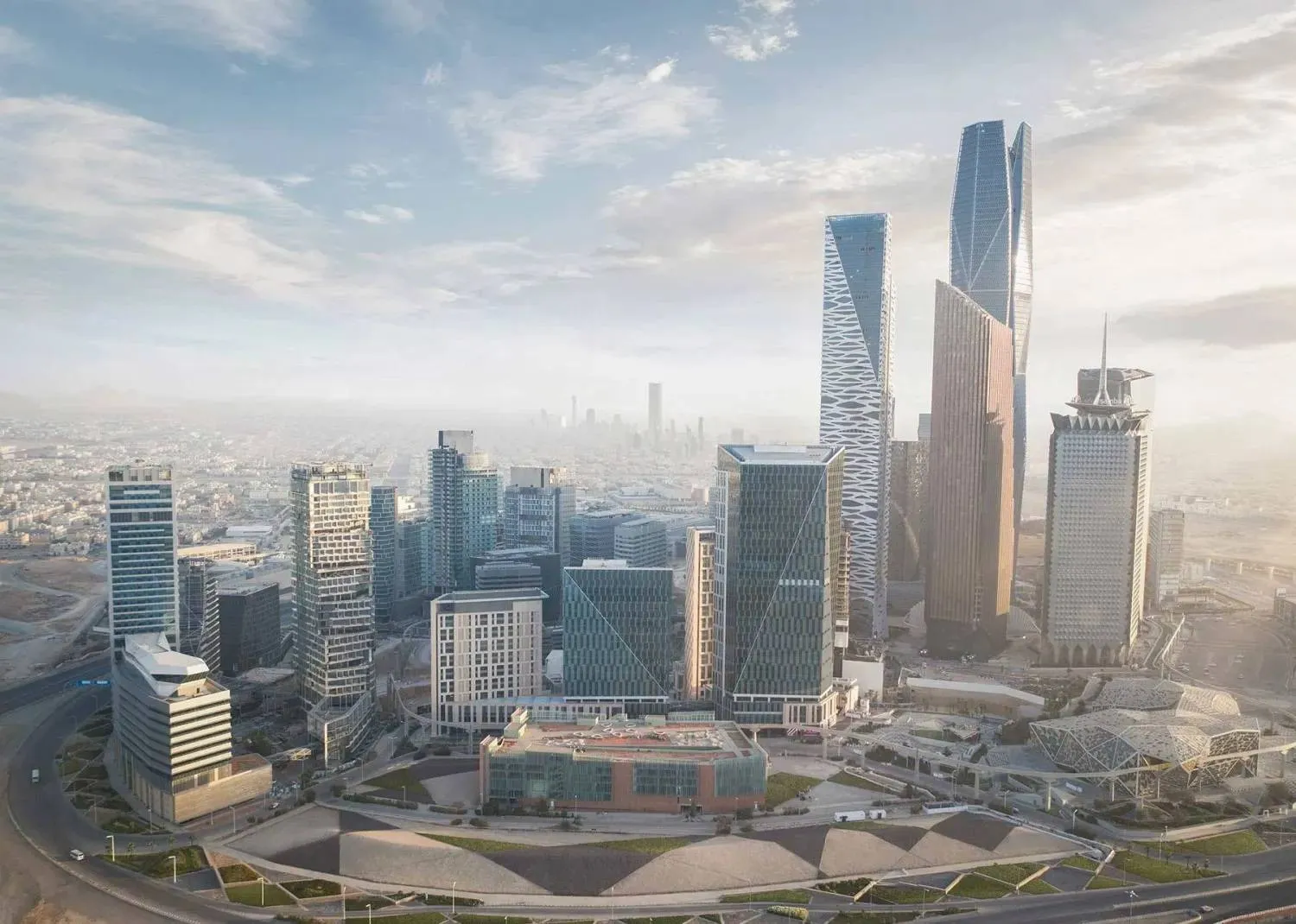
Saudi Arabia Allows Contracting Exceptions for Firms without Regional HQ

The King Abdullah Financial District in Riyadh (Asharq Al-Awsat)
TT

Saudi Arabia Allows Contracting Exceptions for Firms without Regional HQ

The King Abdullah Financial District in Riyadh (Asharq Al-Awsat)

Saudi Arabia has introduced greater flexibility into its investment environment, allowing government entities, under strict controls to safeguard spending efficiency and ensure the delivery of critical projects, to seek exceptions to contract with international companies that do not have regional headquarters in the kingdom.

The Local Content and Government Procurement Authority notified all government bodies of the mechanism to apply for exemptions through the Etimad digital platform.

The step is designed to balance enforcement of the “regional headquarters relocation” decision, in force since early 2024, with the needs of technically specialized projects or those driven by intense price competition.

Under a government decision that took effect at the start of 2024, state entities, including authorities, institutions and government-affiliated funds, are barred from contracting with any foreign commercial company whose regional headquarters in the region is located outside Saudi Arabia.

According to the information, the Local Content and Government Procurement Authority informed all entities of the rules governing contracts with companies that lack a regional headquarters in the kingdom and related parties.

Government entities may request an exemption from the committee for specific projects, multiple projects or a defined time period, provided the application is submitted before launching a tender or initiating direct contracting procedures.

Submission mechanism

In two circulars, the authority detailed how to submit exemption requests and clarified the cases in which contracting is permitted under the controls. It said the exemption service was launched on the Etimad platform in November 2025.

The service is available to entities that float tenders through Etimad. Requests for tenders launched before the service went live, as well as those issued outside the platform, will continue to follow the previously adopted process.

Etimad is the kingdom’s official financial services portal run by the Ministry of Finance, aimed at driving digital transformation of government procedures and boosting transparency and efficiency in managing budgets, contracts, payments, tenders and procurement. The platform streamlines transactions between state entities and the private sector.

Technical criteria

When issuing the contracting controls, the government made clear that companies without a regional headquarters in Saudi Arabia, or related parties, are not barred from bidding for public tenders.

However, their offers can only be accepted in two cases: if there is no more than one technically compliant bid, or if the offer ranks among the best technically and is at least 25% lower in price than the second-best bid after overall evaluation.

Contracts with an estimated value of no more than 1 million riyals ($266,000) are also exempt. The minister may, in the public interest, amend the threshold, cancel the exemption or suspend it temporarily.

More than 700 headquarters

More than 700 multinational companies had relocated their regional headquarters to Riyadh by early 2026, exceeding the initial target of attracting 500 companies by 2030. The program seeks to cement the kingdom’s position as a regional business hub and to localize global expertise.

When announcing the contracting ban, Saudi Arabia said the move was intended to incentivize foreign firms dealing with the government and its affiliated entities to adjust their operations.

It aims to create jobs, curb economic leakage, raise spending efficiency and ensure that key goods and services procured by government entities are delivered inside the kingdom with appropriate local content.

The government said the policy aligns with the objectives of the Riyadh 2030 strategy unveiled during the recent Future Investment Initiative forum, where 24 multinational companies announced plans to move their regional headquarters to the Saudi capital.

It stressed that the decision does not affect any investor’s ability to enter the Saudi economy or continue working with the private sector.



IMF Board to Review Staff-level $8.1 Bln Agreement for Ukraine

The city's downtown on a frosty winter day, amid Russia's attack on Ukraine, in Kyiv, Ukraine February 19, 2026. REUTERS/Alina Smutko
TT

IMF Board to Review Staff-level $8.1 Bln Agreement for Ukraine

The city's downtown on a frosty winter day, amid Russia's attack on Ukraine, in Kyiv, Ukraine February 19, 2026. REUTERS/Alina Smutko

The International Monetary Fund on Thursday said its board ​would review a staff-level agreement for a new $8.1 billion lending program for Ukraine in coming days.

IMF spokeswoman Jule Kozack told reporters that Ukrainian authorities had completed the prior actions needed to move forward with the request ⁠of a new ⁠IMF program, including submission of a draft law on the labor code and adoption of a budget.

She said Ukraine's economic growth in 2025 ⁠was likely under 2%. After four years of war, the country's economy had settled into a slower growth path with larger fiscal and current account balances, she said, noting that the IMF continues to monitor the situation closely.

"Russia's invasion continues to take a ⁠heavy ⁠toll on Ukraine's people and its economy," Kozack said. Intensified aerial attacks by Russia had damaged critical energy and logistics infrastructure, causing disruptions to economic activity, Reuters quoted her as saying.

As of January, she said, 5 million Ukrainian refugees remained in Europe and 3.7 million Ukrainians were displaced inside the country.