

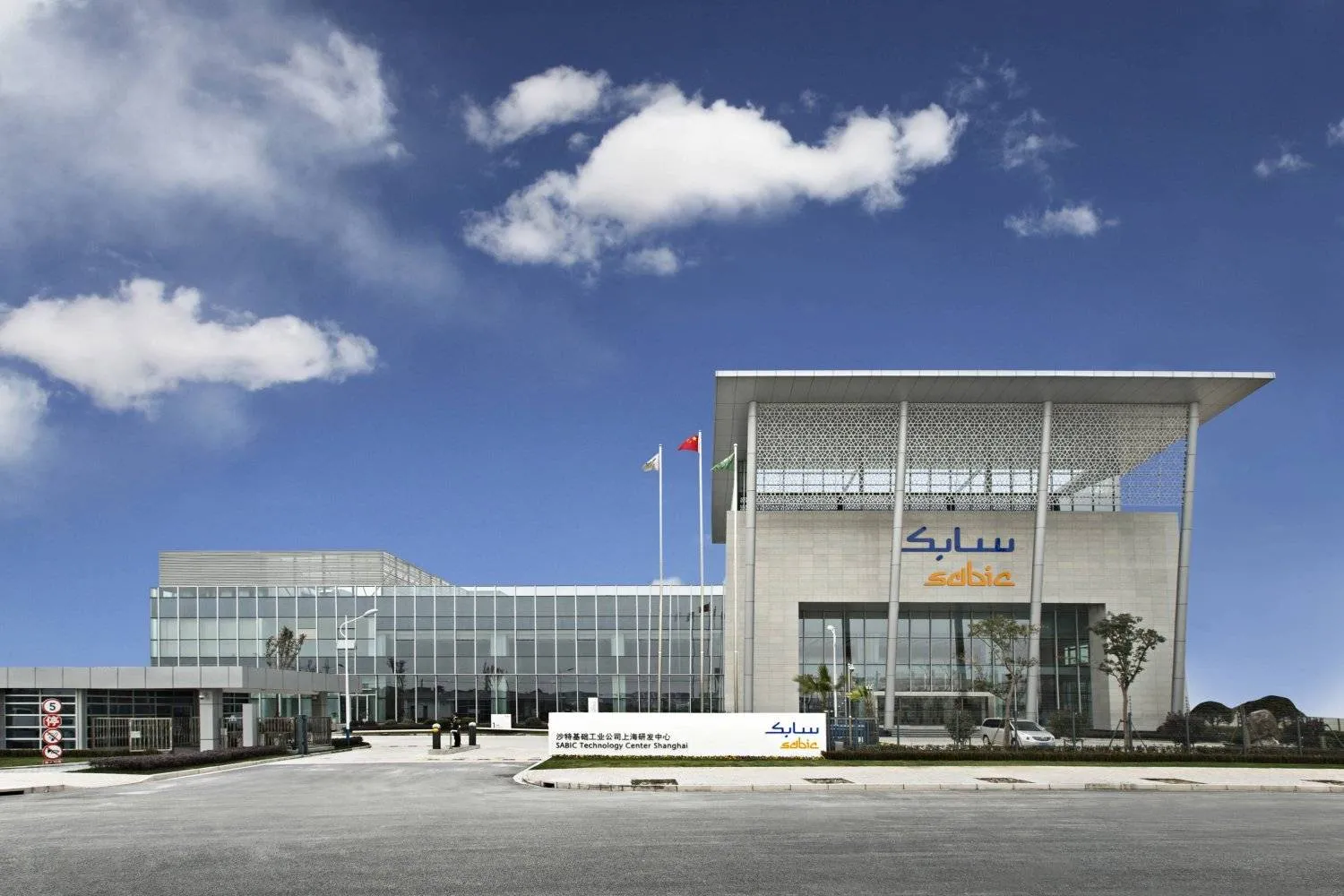

Petrochemical Recovery Boosts Saudi SABIC’s Profits by 84.7%

SABIC’s technical center in Shanghai, China (company website)
TT

Petrochemical Recovery Boosts Saudi SABIC’s Profits by 84.7%

SABIC’s technical center in Shanghai, China (company website)

Saudi Basic Industries Corp (SABIC), one of the world’s biggest petrochemical companies, beat analysts’ forecasts in the second quarter, indicating a recovery in the petrochemical sector.
SABIC, 70% owned by Aramco, posted a profit of SAR 2.18 billion ($581 million), significantly higher than the expected SAR 859.5 million. This represents an 84.7% jump from the previous year.
The company attributed the rise to better product margins and reiterated its commitment to improving its strategic portfolio and restructuring weak assets.
The global petrochemical industry is recovering after a tough 2023, characterized by slow demand growth and overproduction.
SABIC credited its growth to a 32% rise in gross profit to SAR 1.76 billion ($469 million), due to better margins on key products, though higher operating expenses from one-off charges partly offset this.
Additionally, reversing a Zakat provision resulted in non-cash gains of SAR 545 million in Q2, up from SAR 440 million in the same period in 2023, due to recent regulatory updates.

Global trade showed signs of recovery, driven by higher exports, inventory restocking and increased financial activities, said SABIC CEO Abdulrahman Al-Fageeh.
As inflationary pressures ease some central banks have begun reducing interest rates, potentially providing additional stimulus to the global economy, he added.
Mohammed Al-Farraj, Senior Asset Management Director at Arbah Capital, stated that improved profit margins boosted SABIC’s earnings despite higher operating expenses in Q2.
Speaking to Asharq Al-Awsat, Al-Farraj highlighted potential future challenges for SABIC, including price volatility, as its profits depend heavily on fluctuating raw material and product prices.
He also mentioned intense competition in the petrochemical industry and changes in the global economy.
Al-Farraj added that anticipated interest rate cuts by the US Federal Reserve could further grow SABIC’s profits in the second half of the year by reducing borrowing costs and encouraging investment in new projects and expansion.
Former senior advisor to the Saudi Energy Minister, Dr. Mohammed Al-Sabban, predicted a recovery in the petrochemical sector, driven by increased demand from Asian countries, especially China.
He noted that despite current economic fluctuations in China, government efforts to avoid a recession are expected to succeed by the fourth quarter, with a more significant recovery in 2025.
Al-Sabban told Asharq Al-Awsat that the recovery will be supported by other developing countries, leading to gradual price increases, benefiting Saudi petrochemical companies. He expressed optimism about continued sector growth in the coming phase.



Turkmenistan, China Launch Expansion of World’s Second-largest Gas Field

Former Turkmen president Gurbanguly Berdymukhamedov and Chinese Vice Premier Ding Xuexiang applaud during a ceremony launching the fourth of seven planned development phases at Galkynysh gas field, the world's second-largest gas field in the Karakum desert about 400 kilometres (250 miles) east of the capital Ashgabat, on April 17, 2026. (Photo by AFP)
TT

Turkmenistan, China Launch Expansion of World’s Second-largest Gas Field

Former Turkmen president Gurbanguly Berdymukhamedov and Chinese Vice Premier Ding Xuexiang applaud during a ceremony launching the fourth of seven planned development phases at Galkynysh gas field, the world's second-largest gas field in the Karakum desert about 400 kilometres (250 miles) east of the capital Ashgabat, on April 17, 2026. (Photo by AFP)

Turkmenistan and China broke ground Friday on works to expand production at the giant Galkynysh gas field, strengthening Beijing's already dominant position in the secretive Central Asian nation's energy sector.

The former Soviet republic, which holds the world's fourth-largest gas reserves, has exported nearly all its production to China since 2009, when the Central Asia-China pipeline opened.

In the middle of the desert, former president Gurbanguly Berdymukhamedov -- who effectively runs the country alongside his son, President Serdar Berdymukhamedov -- formally inaugurated the launch of the fourth of seven planned development phases at Galkynysh.

The ceremony was attended by Chinese Vice Premier Ding Xuexiang, an AFP correspondent saw.

"Turkmen gas is a symbol of happiness -- it is present in every Chinese household," Ding said.

The event featured songs and dances celebrating Turkmen-Chinese friendship, staged with the lavish pomp typical of Turkmenistan's state-sponsored events.

Gurbanguly Berdymukhamedov, officially titled "Hero-Protector" and vested with sweeping powers, presided over the gathering.

Galkynysh, in the Karakum desert about 400 kilometers (250 miles) east of the capital Ashgabat, has been producing gas since 2013 and is the world's second-largest gas field, according to the British consulting firm GaffneyCline.

Expansion works are being carried out by the state-owned China National Petroleum Corporation (CNPC).

On a visit to Ashgabat the day before the ceremony, CNPC chairman Dai Houliang said "the friendship between China and Turkmenistan is as deep as the roots of a tree."


$27 Billion City to be Built East of Cairo

The project covers approximately 2.4 million square meters of land. Asharq Al-Awsat
TT

$27 Billion City to be Built East of Cairo

The project covers approximately 2.4 million square meters of land. Asharq Al-Awsat

Egypt's Talaat Moustafa Group (TMG) will build a new 1.4 trillion Egyptian pound ($27 billion) mixed-use city east of Cairo, CEO and Managing Director Hisham Talaat Moustafa said at a press conference on Saturday.

The project, called The Spine, is to be developed in partnership with ⁠the National Bank ⁠of Egypt, with a paid-up capital of 69 billion Egyptian pounds ($1.3 billion).

The project, to be built as a Special Investment ⁠Zone with TMG's Madinaty, covers approximately 2.4 million square meters of land, combining residential, commercial, hospitality, retail, entertainment, and public green space within a single continuous urban environment.

The investment is equivalent to roughly 1% of Egypt's GDP, according to Moustafa, and is ⁠projected ⁠to generate approximately 818 billion Egyptian pounds in tax revenues for the state budget over time.

The project is expected to create more than 55,000 direct jobs and hundreds of thousands of indirect positions.


Türkiye Says Iran Gas Pipeline Contract Nearing Expiry, No Talks Yet on Extension

Türkiye's Minister of Energy and Natural Resources Alparslan Bayraktar -  REUTERS/Umit Bektas
Türkiye's Minister of Energy and Natural Resources Alparslan Bayraktar - REUTERS/Umit Bektas
TT

Türkiye Says Iran Gas Pipeline Contract Nearing Expiry, No Talks Yet on Extension

Türkiye's Minister of Energy and Natural Resources Alparslan Bayraktar -  REUTERS/Umit Bektas
Türkiye's Minister of Energy and Natural Resources Alparslan Bayraktar - REUTERS/Umit Bektas

Türkiye's long-term contract for importing natural gas from Iran is due to expire in the coming months, and the two countries could hold talks on a possible extension, though no negotiations are under way yet, Türkiye's energy minister said on Saturday.

The agreement, due to expire in July, provides for delivery of 9.6 billion cubic metres of gas a year, but actual flows have often fallen short, Reuters reported.

Türkiye imported 7.6 bcm from Iran last year, accounting for 13% of total gas imports. Regulator data show the pipeline last hit the contracted volume in 2022.

"According to our forecast, we might need this gas pipeline or the gas flow from Iran for the security of supply of Türkiye. There is no negotiation right now ongoing. I think they are busy with so many other things. But we might sit and discuss a potential extension," Alparslan Bayraktar told reporters on the sidelines of a diplomacy forum in the southern Turkish province of Antalya.

"But we haven't started a negotiation during the current circumstances in the region," Bayraktar said, referring to the Iran war.

Bayraktar also said Türkiye was seeking to diversify natural gas supplies, including through Russian liquefied natural gas.