


Pakistan Eyes $4 Billion from Middle East Banks

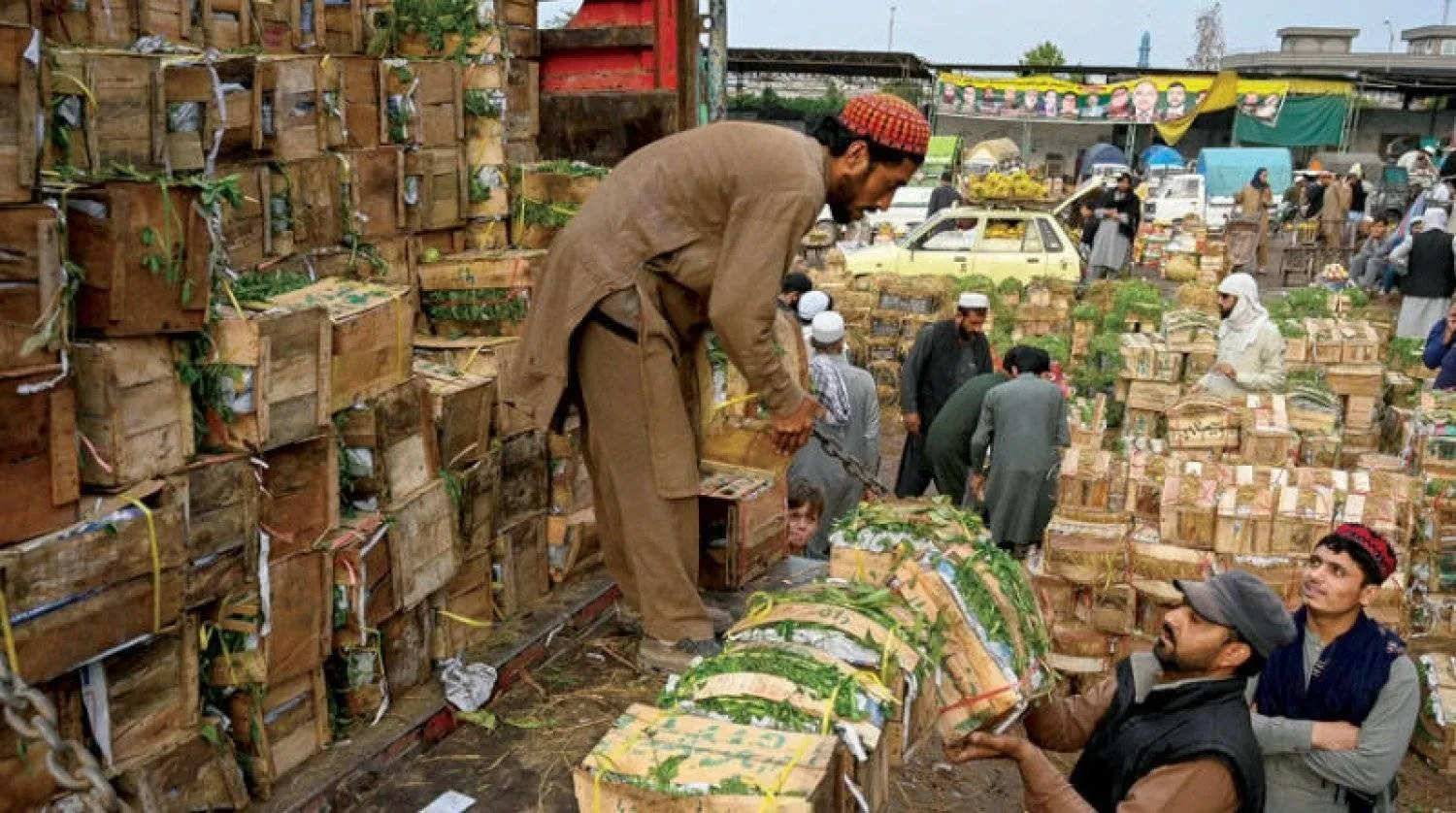
Laborers busy in unloading fruits from truck at market in Peshawar (AFP)
TT

Pakistan Eyes $4 Billion from Middle East Banks

Laborers busy in unloading fruits from truck at market in Peshawar (AFP)

State Bank of Pakistan Governor Jameel Ahmad said his country aims to raise up to $4 billion from Middle Eastern commercial banks by the next fiscal year, as the country looks to plug its external financing gap.

In a wide-ranging interview with Reuters, Ahmad said Pakistan was also in the “advanced stages” of securing $2 billion in additional external financing required for International Monetary Fund approval of a $7 billion bailout program.

This came as Pakistan is making good progress with the International Monetary Fund and hopes to get board approval in September for a new $7 billion loan program, Pakistan's Finance Minister Muhammad Aurangzeb said last Wednesday.

Pakistan and the IMF reached an agreement on the 37-month loan program in July. The IMF said the program was subject to approval from its executive board and obtaining “timely confirmation of necessary financing assurances from Pakistan's development and bilateral partners.”

In his interview with Reuters on Tuesday, Ahmad said he expected the country's gross financing needs would be smoothly met - both over the next fiscal year and in the medium term.

In addition, Ahmad said the central bank reckoned Pakistan's gross financing needs for the coming years would be lower than the 5.5% of gross domestic product projected by the IMF in its latest country report in May.

Asked about monetary policy, Ahmad said recent interest rate cuts in Pakistan have had the desired effect, with inflation continuing to slow and the current account remaining under control, despite the cuts.

Pakistan's annual consumer price index inflation was 11.1% in July, having fallen from highs of over 30% in 2023.

“The Monetary Policy Committee will review all these developments,” Ahmad said, adding that future rate decisions could not be pre-determined.

Pakistan's central bank cut rates for two straight meetings from a historic high of 22% to 19.5%, and will meet again to review monetary policy on September 12.

There have been some concerns in markets that the government might take advantage of lower interest rates to borrow more, but the central bank chief said this was not his expectation.

“We understand that the government will continue on the path of fiscal consolidation, notwithstanding the reduction in interest rates,” said Ahmad.



Gold Set for Weekly Gain as Markets Focus on US-Iran Peace Deal Prospects

FILE PHOTO: Gold ornaments are placed for polishing inside a Senco Gold & Diamonds jewelry workshop in Kolkata, India, January 29, 2026. REUTERS/Sahiba Chawdhary/File Photo
TT

Gold Set for Weekly Gain as Markets Focus on US-Iran Peace Deal Prospects

FILE PHOTO: Gold ornaments are placed for polishing inside a Senco Gold & Diamonds jewelry workshop in Kolkata, India, January 29, 2026. REUTERS/Sahiba Chawdhary/File Photo

Gold rose on Friday and was headed for a weekly gain on easing fears of inflation and higher interest rates, as investors remained optimistic about a US-Iran peace deal despite renewed hostilities.

Spot gold was up 0.85% at $4,709.06 per ounce, as of 0739 GMT. Bullion has gained 2% so far this week.

US gold ‌futures for June ‌delivery rose 0.1% to $4,716.50. The United States ‌and ⁠Iran exchanged fire ⁠on Thursday in the most serious test yet of their month-long ceasefire, but Iran said the situation returned to normal while the US said it did not want to escalate.

"The comments that we've had from the Trump administration this morning that the ceasefire is holding and that there's still lingering optimism that ⁠a deal will get done between the US ‌and Iran - that's kind of ‌supporting the gold market for now," said Kyle Rodda, a senior financial ‌market analyst at Capital.com.

Gold prices have fallen more than 10% ‌since the war began in late February, pressured by higher oil prices. Elevated crude oil prices can stoke inflation, increasing the likelihood of higher interest rates. While gold is seen as an inflation hedge, high ‌interest rates tend to weigh on the non-yielding asset.

"We just wait for the next ⁠headline about ⁠whether the US and Iran are getting close to agreeing on something. I think that there could be some choppy price action in the next 24 hours going into the end of the week," Rodda said.

Markets now await the monthly US employment report due later in the day to assess how the Federal Reserve will move forward with monetary policy this year. Nonfarm payrolls likely increased by 62,000 last month after rebounding by 178,000 in March, a Reuters survey of economists predicted.

Spot silver rose 1.5% to $79.68 per ounce, platinum gained 1.2% to $2,045.38, and palladium was up 1.4% at $1,500.91.


Governor: Indonesia Central Bank Has Sufficient Foreign Reserves to Stabilize Rupiah

A man walks past Bank Indonesia headquarters in Jakarta, Indonesia, September 2, 2020. REUTERS/Ajeng Dinar Ulfiana
TT

Governor: Indonesia Central Bank Has Sufficient Foreign Reserves to Stabilize Rupiah

A man walks past Bank Indonesia headquarters in Jakarta, Indonesia, September 2, 2020. REUTERS/Ajeng Dinar Ulfiana

Indonesia's central bank has sufficient foreign exchange reserves to make the strong market interventions required to stabilize the rupiah, Governor Perry Warjiyo said on Thursday.

The central bank will intervene not only in domestic but also offshore markets around the clock, he added, according to Reuters.

The rupiah slid to a fresh record low on Tuesday, falling to 17,445 per dollar, as markets reacted to rising tensions linked ⁠to the war in Iran.

The drop prompted Bank Indonesia to renew its pledge to defend the currency by intervening consistently and measurably, and it was trading 0.3% stronger on Thursday.

Warjiyo said that rupiah's depreciation was due to rising tensions in the Middle East, high rates from the US Federal Reserve, and the exit of many global investors from all emerging markets.

Many companies paid off their debts in foreign currencies during April and May, which was another factor contributing to the rupiah's ⁠weakness, he added.

The central bank announced on Tuesday that it would tighten domestic FX rules by lowering the threshold at which dollar purchases would require documentation, cutting it to $25,000 per party per month to curb speculative demand and further ⁠shore up the rupiah.

The currency was under pressure even before the Middle East conflict broke out at the end of February, with investors concerned ⁠about Indonesia's fiscal health, the independence of its central bank and transparency issues in its capital markets.

The rupiah has weakened 4% ⁠against the US dollar so far this year, making it one of the worst performing currencies in Asia.


Norway Breaks European Silence by Swiftly Raising Rates to Face War Repercussions

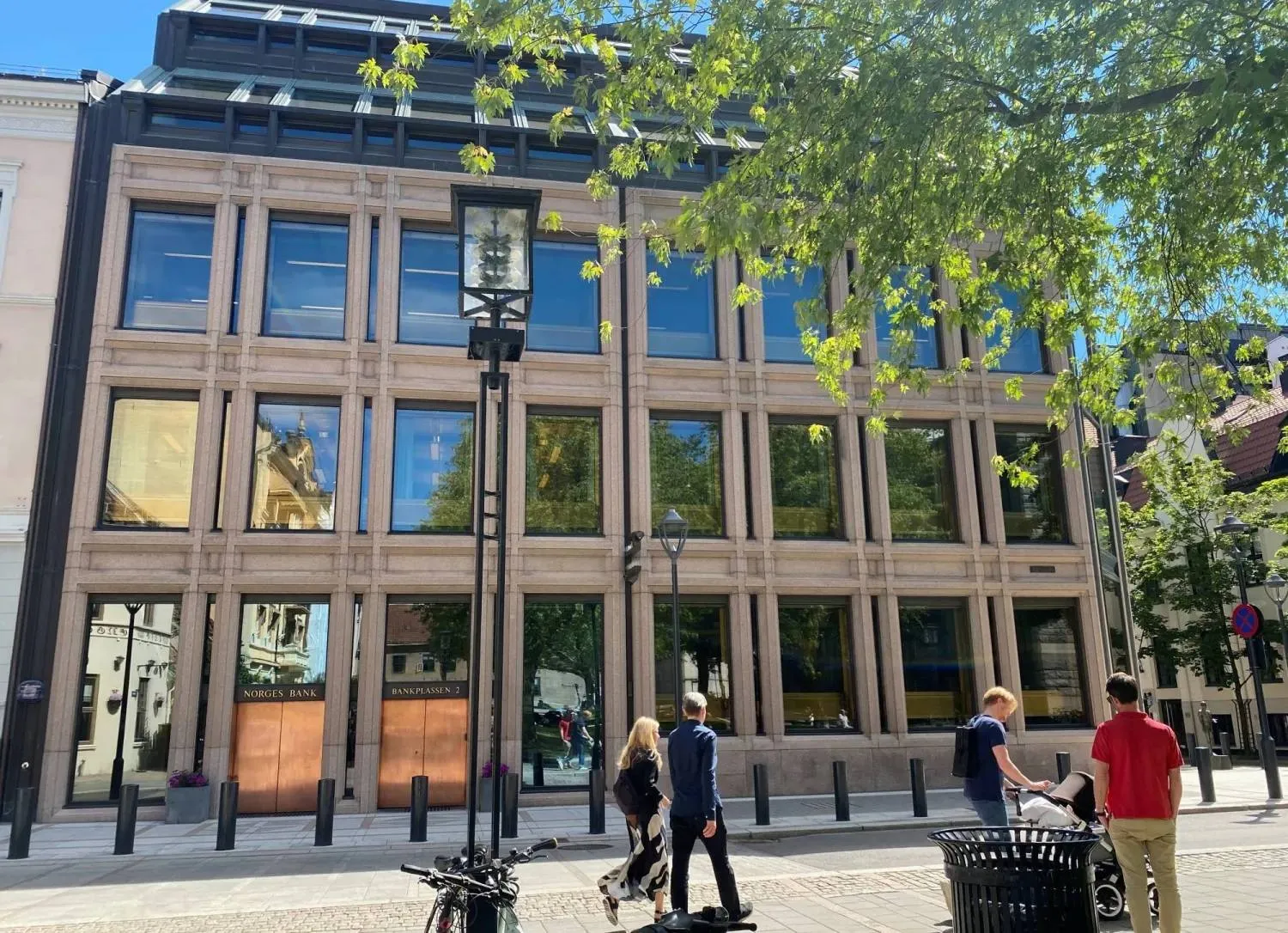
A view shows the building of Norway’s central bank (Norges Bank) in Oslo, Norway, June 23, 2022. REUTERS/Victoria Klesty/File Photo 
TT

Norway Breaks European Silence by Swiftly Raising Rates to Face War Repercussions

A view shows the building of Norway’s central bank (Norges Bank) in Oslo, Norway, June 23, 2022. REUTERS/Victoria Klesty/File Photo 

Norway’s central bank became one of the first to raise interest rates as a result of the US-Israeli attacks on Iran, warning that the conflict in the Middle East had lifted inflationary pressures as well as heightened economic uncertainty.

Meanwhile, the Swedish central bank, the Riksbank, kept its key rate unchanged and said that while the risk of higher inflation had increased somewhat due to the war in the Middle East, it could wait on developments before adjusting its policy.

On Thursday, Norway’s Norges Bank increased its policy rate by 0.25 percentage points to 4.25 %, following the lead of Australia among advanced economy central banks in raising rates.

The move was sooner than most analysts in a Reuters poll had expected.

The rich Scandinavian country is western Europe’s largest petroleum producer and has struggled to get inflation down to the central bank’s 2% target despite cutting interest rates far less in recent years than the European Central Bank, US Federal Reserve or Sweden’s Riksbank, which on Thursday held its own rates unchanged.

“The war in the Middle East is still causing substantial uncertainty about the economic outlook,” said Ida Wolden Bache, Norges Bank’s governor. She added: “Inflation is too high and has run above target for several years.”

Norway's annual core inflation rate came in at 3.0% in March, slightly lower than forecast but well above the central bank's target of 2.0%.
Norges Bank said that the Iran conflict meant “external price pressures appear to be slightly stronger” than in March, but that the recent appreciation in the krone should damp imported inflation.

It warned that if war in the Middle East changed the economic outlook, it would be forced to revise its rate forecast.

Norges Bank estimated in March that mainland GDP in Norway — stripping out the effects of oil and gas — would increase by 1.6% this year, lower than in 2025.

A majority ‌of respondents, 15 of the 23 economists in a Reuters poll conducted ahead of the announcement, had said Norges Bank would keep the policy rate ⁠on hold today, while the remaining eight expected a 25-basis-point hike.

The Norwegian crown strengthened to 10.85 against the euro by 0948 GMT, from 10.92 just before the announcement.

The bank’s statement points to a further rate hike this year, Sparebank 1 Chief Economist Elisabeth Holvik said.

“Norges Bank will raise borrowing costs again after the summer, so that the policy rate reaches 4.5% by year-end,” Holvik said.

For its part, Sweden's central bank earlier on Thursday kept its policy rate unchanged at 1.75%, as expected, but said the risk that the war in the Middle East will lead to higher inflation had increased somewhat.

The Riksbank has been in wait-and-see mode since cutting interest rates by a quarter percentage point in September last year, according to Reuters.

“There is scope to wait until there is a clearer picture of the effects of the war and the supply shocks it entails,” the central bank said in a statement.

In Poland, the central bank Governor Adam Glapinski said the likelihood of interest rate increases has grown over the past month although a hike is not a forgone conclusion for policymakers.

“Rate hikes are likely but they may not occur,” Glapinski told a news conference on Thursday. On the other hand, “rate cuts are very unlikely.”