


Ukraine Threatens to Halt Transit of Russian Oil to Europe

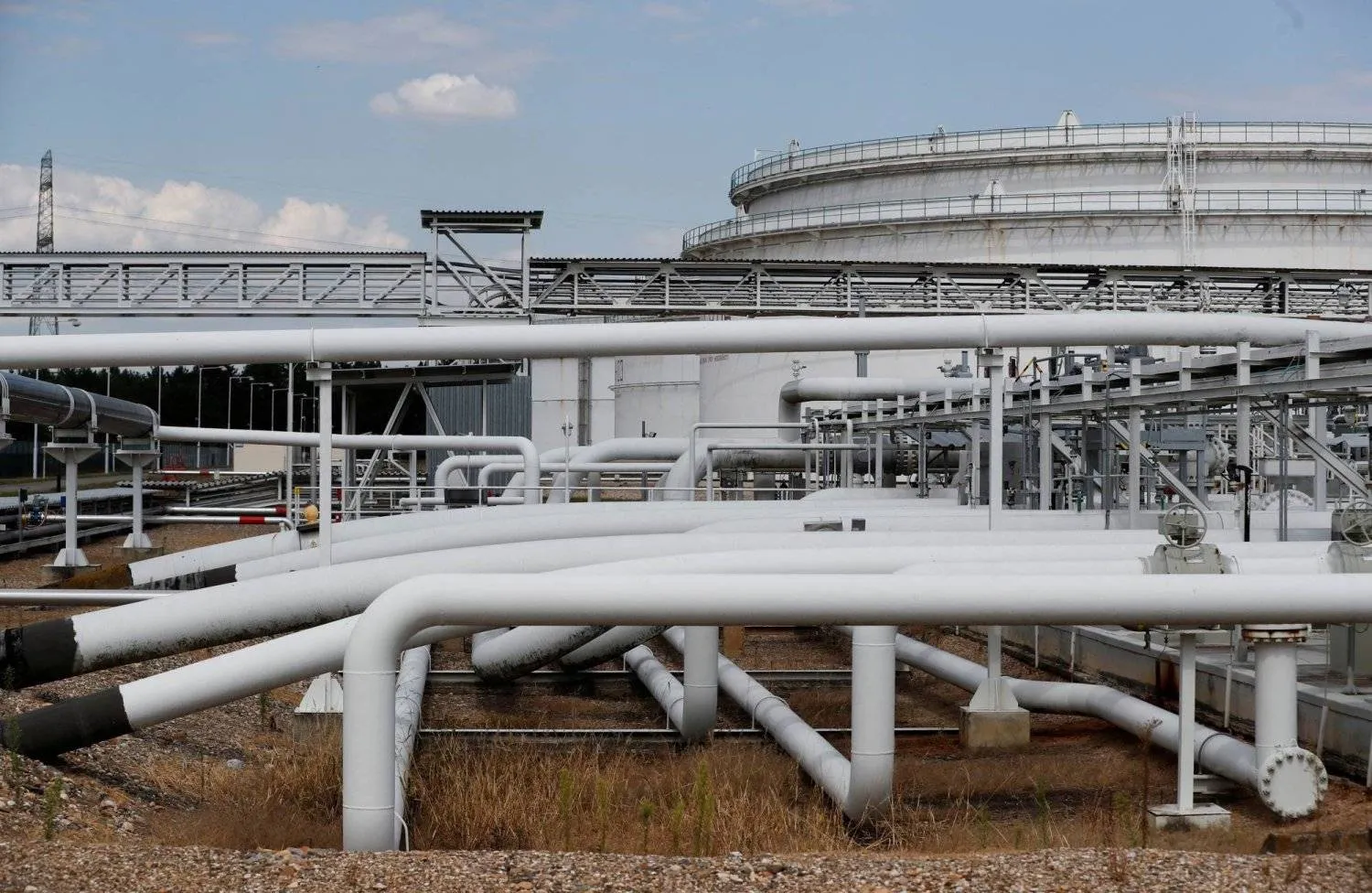
A view of storage tanks and pipelines at the Mero central oil tank farm, which moves crude through the Druzhba oil pipeline, near Nelahozeves, Czech Republic, August 10, 2022. REUTERS/David W Cerny/File Photo
TT

Ukraine Threatens to Halt Transit of Russian Oil to Europe

A view of storage tanks and pipelines at the Mero central oil tank farm, which moves crude through the Druzhba oil pipeline, near Nelahozeves, Czech Republic, August 10, 2022. REUTERS/David W Cerny/File Photo

A top aide to Ukrainian President Volodymyr Zelensky on Friday said Kyiv would halt the transit of Russian oil across its territory at the end of the year, when the current contract expires and is not renewed.

Mykhailo Podolyak said in an interview with the Novini.Live broadcaster that current transit contracts for Russian supplies that run through the end of the year will not be renewed.

“There is no doubt that it will all end on January 1, 2025,” he said.

Kiev says it is prepared to transport gas from the Central Asian countries or Azerbaijan to Europe, but not from Russia, as it is crucial for Ukraine to deprive Russia of its sources of income from the sale of raw materials after it attacked its neighbor well over two years ago.

The contract for the transit of Russian gas through Ukraine to Europe between the state-owned companies Gazprom and Naftogaz ends on December 31.

Despite the launch of Russia's full-scale invasion of Ukraine in February 2022, the Ukrainians have fulfilled the contract terms - in part at the insistence of its European neighbors, especially Hungary.

But the leadership in Kiev has repeatedly made it clear that it wants the shipments to end.

Meanwhile, the Czech Republic energy security envoy Vaclav Bartuska said on Friday that any potential halt in oil supplies via the Druzhba pipeline through Ukraine from Russia from next year would not be a problem for the country.

Responding to a Reuters question – on comments by Ukrainian presidential aide Mykhailo Podolyak that flows of Russian oil may stop from January – Bartuska said Ukraine had also in the past warned of a potential halt.

“This is not the first time, this time maybe they mean it seriously – we shall see,” Bartuska said in a text message. “For the Czech Republic, it is not a problem.”

To end partial dependency on the Druzhba pipeline, Czech state-owned pipeline operator MERO has been investing in raising the capacity of the TAL pipeline from Italy to Germany, which connects to the IKL pipeline supplying the Czech Republic.

From next year, the increased capacity would be sufficient for the total needs of the country’s two refineries, owned by Poland’s Orlen, of up to 8 million tons of crude per year.

MERO has said it planned to achieve the country’s independence from Russian oil from the start of 2025, although the TAL upgrade would be finished by June 2025.

On Friday, oil prices stabilized, heading for a weekly increase, as disruptions in Libyan production and Iraq’s plans to curb output raised concerns about supply.

Meanwhile, data showing that the US economy grew faster than initially estimated eased recession fears.

However, signs of weakening demand, particularly in China, capped gains.

Brent crude futures for October delivery, which expire on Friday, fell by 7 cents, or 0.09%, to $79.87 per barrel. The more actively traded November contract rose 5 cents, or 0.06%, to $78.87.

US West Texas Intermediate (WTI) crude futures added 6 cents, or 0.08%, to $75.97 per barrel.

The day before, both benchmarks had risen by more than $1, and so far this week, they have gained 1.1% and 1.6%, respectively.

Additionally, a drop in Libyan exports and the prospect of lower Iraqi crude production in September are expected to help keep the oil market undersupplied.

Over half of Libya’s oil production, around 700,000 barrels per day (bpd), was halted on Thursday, and exports were suspended at several ports due to a standoff between rival political factions.

Elsewhere, Iraq plans to reduce oil output in September as part of a plan to compensate for producing over the quota agreed with the Organization of the Petroleum Exporting Countries and its allies, a source with direct knowledge of the matter told Reuters on Thursday.

Iraq, which produced 4.25 million bpd in July, will cut output to between 3.85 million and 3.9 million bpd next month, the source said.



Third ‘Mirkaz AlBalad AlAmeen Platform’ to Open in Makkah on Sunday 

A street in the holy city of Makkah is decorated with Ramadan lights. (SPA)
TT

Third ‘Mirkaz AlBalad AlAmeen Platform’ to Open in Makkah on Sunday 

A street in the holy city of Makkah is decorated with Ramadan lights. (SPA)

The third edition of the “Mirkaz ABalad AlAmeen”, a leading platform for exchanging opportunities in Makkah, will kick off on Sunday, under the theme “Makkah Inspires the World.”

The platform, organized by the Holy Makkah Municipality, will feature 15 exceptional Ramadan evenings focused on dialogue, knowledge exchange, and cross-sector engagement.

Makkah Mayor Musad Aldaood said the platform redefines development from Makkah, where faith meets inspiration and values are transformed into a comprehensive civilizational experience.

He noted that the initiative reflects the ambitions of Saudi Vision 2030 and showcases Makkah to the world as a living model of creativity, leadership, and innovation.

The upcoming edition will host more than 65 speakers, including executive leaders and decision-makers from across all three sectors, alongside futurists, entrepreneurs, and leading voices in culture and inspiration from artists, writers, media professionals, and innovators.

The program targets 12 key sectors: technology and digital transformation, financial investment, communications and media, real estate development, transport and logistics, banking services, youth and sports, tourism and culture, hospitality and catering, Hajj and Umrah, the third sector, and healthcare.


Saudi Arabia’s Mawani Grants Unified License to Global Shipping Line 

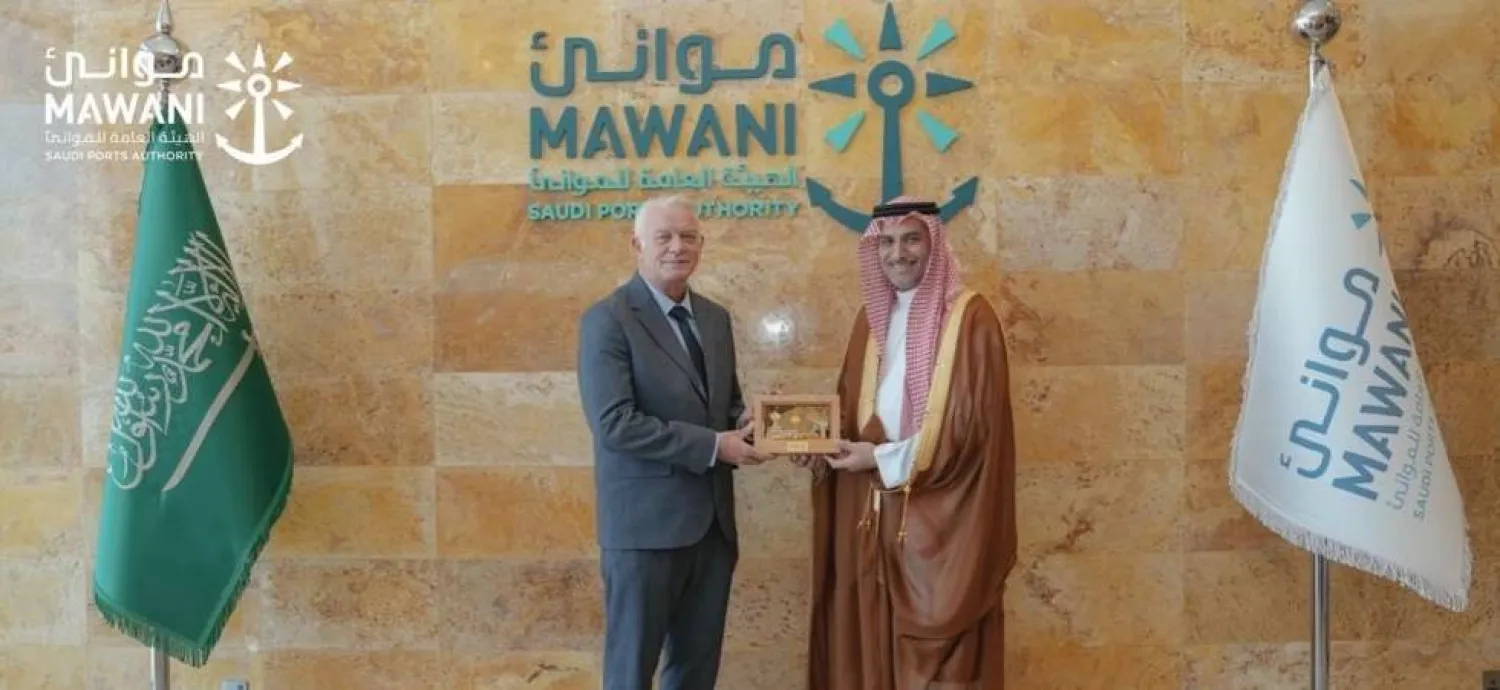
The initiative is part of Mawani's ongoing efforts to develop the maritime business environment, enable international companies to invest in the Saudi market, and increase competitiveness within the maritime sector. (Mawani)
TT

Saudi Arabia’s Mawani Grants Unified License to Global Shipping Line 

The initiative is part of Mawani's ongoing efforts to develop the maritime business environment, enable international companies to invest in the Saudi market, and increase competitiveness within the maritime sector. (Mawani)

The Saudi Ports Authority (Mawani) granted on Thursday a unified license to international shipping line Global Shipping Line (PIL), officially recognizing it as an authorized foreign investor to operate maritime agencies in the Kingdom's ports, reported the Saudi Press Agency.

The license is issued in accordance with the regulations outlined in the Maritime Agency Services, reflecting Mawani's commitment to boosting the efficiency of the maritime sector and improving the quality of operational services provided at ports.

It aims to attract global expertise and facilitate knowledge transfer within the Kingdom, aligning with international best practices in the maritime transport industry.

The initiative is part of Mawani's ongoing efforts to develop the maritime business environment, enable international companies to invest in the Saudi market, and increase competitiveness within the maritime sector.

PIL, which operates from its regional headquarters in Riyadh, manages operations in 29 countries.

The move strengthens the Kingdom's position as a crucial logistics hub, in line with the National Transport and Logistics Strategy, while attracting more international shipping lines. It reinforces Saudi Arabia's role as a key link among three continents.


IMF: Restoring Lebanon's Economic Growth Will Require Comprehensive Reforms

FILE PHOTO: A view of the International Monetary Fund (IMF) logo at its headquarters in Washington, D.C., US, November 24, 2024. REUTERS/Benoit Tessier//File Photo
TT

IMF: Restoring Lebanon's Economic Growth Will Require Comprehensive Reforms

FILE PHOTO: A view of the International Monetary Fund (IMF) logo at its headquarters in Washington, D.C., US, November 24, 2024. REUTERS/Benoit Tessier//File Photo

Lebanon's economy has shown resilience despite conflicts in the region, with tourism fueling a bit of a rebound, but restoring growth will require comprehensive reforms, the International Monetary Fund said on Thursday.

IMF spokeswoman Julie Kozack said the global lender remains engaged in complex discussions with Lebanese ‌authorities following their ‌request for an IMF-supported ‌program ⁠in March 2025. The ⁠IMF sent a staff mission to Beirut earlier this month, said Reuters.

The talks have been focused on two big issues, she said, citing the need for banking sector restructuring and a medium-term fiscal ⁠strategy. "The economy has shown resilience ‌despite the impact ‌of conflicts in the region. It has had ‌a bit of a rebound ‌on the back of tourism from the strong diaspora," Kozack said.

"But at the same time, really restoring strong and sustainable growth will ‌require a comprehensive set of reforms to tackle some of the ⁠structural ⁠weaknesses that have really hampered Lebanon's economic performance for many years," she said. Reforms also are needed to attract international support to help Lebanon address its substantial reconstruction needs.

Kozack said Lebanon needs an updated medium-term fiscal framework that includes concrete measures to mobilize additional revenues for much-needed capital spending, as well as a sovereign debt restructuring to restore debt sustainability.