


Turkish Firms Face Wave of Closures Amid Economic Reckoning 

Leftover textile materials are seen outside a shut-down textile factory at the organized industrial zone in Corum, Türkiye, August 23, 2024. (Reuters)
TT

Turkish Firms Face Wave of Closures Amid Economic Reckoning 

Leftover textile materials are seen outside a shut-down textile factory at the organized industrial zone in Corum, Türkiye, August 23, 2024. (Reuters)

It is hard for Dogan Duman to see how he can keep his garment factory in central Türkiye running much longer, even after firing a third of his staff to cut costs that have soared for companies nationwide, generating a wave of bankruptcies and closures.

Idle sewing machines are pushed to the side of his factory floor in Corum, where outside "For Sale" signs and padlocked gates dot the small city's once-buzzing industrial zone.

Such sober scenes are spreading across Türkiye as part of the fallout from a more than year-long policy-tightening effort, including a 50% benchmark interest rate, to rein in years of soaring inflation and overheated demand.

Thousands of companies like Duman's - which makes coats and jackets for global fashion brand Zara - are squeezed by inflation that topped 75% earlier this year, an overvalued lira, hikes to electricity and gas prices and dwindling export orders.

"The orders are shrinking daily because we are losing our competitiveness... and I think they will shrink even more," he said of his 27-year-old company that is now down to 60% capacity and 210 employees.

Türkiye is one of the world's top five garment manufacturers and a critical source for Europe's top brands. But despite its advantage of proximity to Europe, its main trade partner, Duman says swelling energy, labor and FX costs have left him trailing rivals in Vietnam and Bangladesh.

"Considering the current lira exchange rate and the expected further rise to minimum wage next year, I think we won't be able to compete," he said. "We will be at a point of shutdown."

These days, Turkish households and business are facing the economic consequences of a cumulative 41.5 percentage points of rate hikes that began in June last year and are now finally beginning to cool inflation, which dipped to 52% last month.

Last year's dramatic policy U-turn, including fiscal steps, aims to leave behind years of soaring prices and currency crashes under President Recep Tayyip Erdogan's formerly unorthodox approach of monetary easing to stoke growth.

But with credit now out of reach for many, and lira depreciation badly lagging monthly price rises, companies, especially apparel and textile exporters, are in a crunch.

Almost 15,000 companies closed down in the first seven months of the year, up 28% from 2023, according to the Union of Chambers and Commodity Exchanges of Türkiye.

Other data suggest bankruptcy stress is brewing.

Monitoring outlet konkordatotakip.com says 982 companies were granted initial court protection from debt in the first eight months of the year, almost double last year's total.

Construction and textile firms have made the largest number of such applications to suspend debt payments to banks and suppliers to continue operations, and also for bankruptcy proceedings.

Such company strains have knock-on effects, slowing or halting payments across the economy and lifting joblessness.

There may be "heavy costs," said Erdal Bahcivan, chairman of Istanbul Chamber of Industry. "While trying to save a company, dozens of (creditor) firms may end up in dire straits."

Some economists say that given the aggressive tools used to slay inflation, rising unemployment and bankruptcies are all but certain.

"This is a serious dilemma for the government," said Seyfettin Gursel, director at Bahcesehir University Center for Economic and Social Research. "It is trying to put the monster it created back into its lair, but doesn't know how to do it".

STREWN GARMENTS

In Corum, 500 kilometers east of Istanbul, some factories have broken windows and one had dozens of colorful rain-drenched garments strewn across its grassy yard.

Bulent Demirci, co-owner of a yarn factory in the city with 50 workers, said he shut it down a couple of months ago due to an "unpredictable economic outlook".

"We had production cuts from time to time in the past. But this time it is all doom and gloom," he said.

Ankara's latest hike to the minimum wage was to 17,002 liras ($500) in January, which is up 100% from a year earlier and 500% from the end of 2021, when a historic lira crash rocked Türkiye.

Gas and electricity prices have risen about sevenfold and threefold respectively since 2021 for small to mid-scale manufacturers.

Türkiye’s overall production costs are now almost 40% higher than in competing Asian countries in dollar terms, according to interviews with exporters, who also blame barriers to financing and dwindling working capital.

Exporters have lobbied for more currency depreciation given that, year-to-date, inflation is 32% while the lira has fallen only 13% to the dollar. Authorities however have urged lira holdings, helped along by high deposit rates.

Istanbul-traded Mega Polietilen and garment manufacturer 3F Tekstil are among those that applied for court protection from debt payments.

An executive at 3F who requested anonymity said the move helped as it struggled to survive with a total 600 workers, and to continue supplying fashion brands such as Mango and H&M.

"But our suppliers and those who have receivables will suffer more in this process," amounting to roughly 10,000 workers at outsourced manufacturers across the country, the executive said.

"When interest rates reached 60-70% the companies could not bear it. They cannot manage their debt," he said. "Businesses have paid for high inflation in Türkiye."
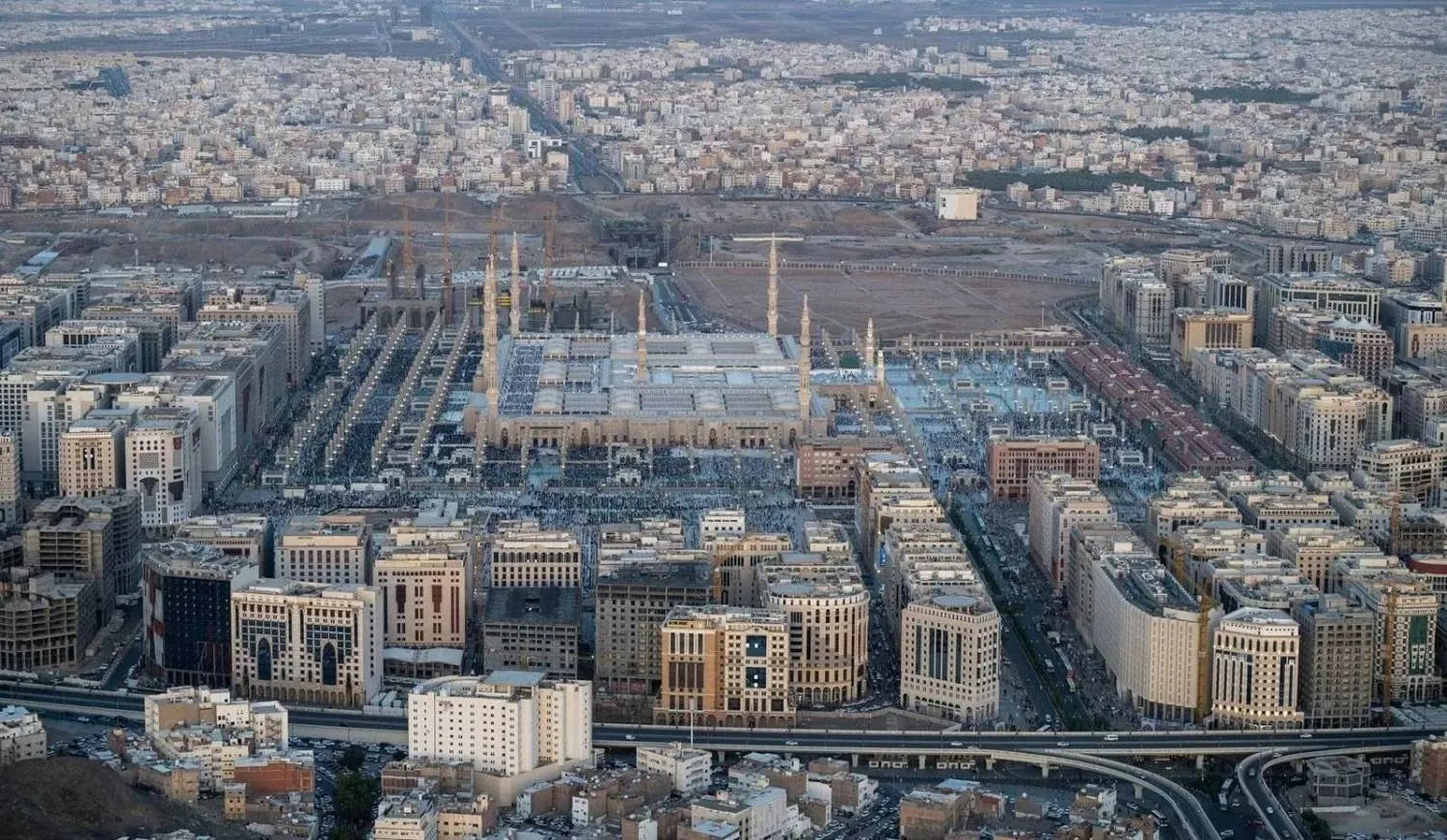



Madinah Sees Tourism Surge Ahead of Ramadan, Spending Tops $13.9 Billion

A cluster of buildings and hotels surrounding the Prophet’s Mosque (SPA). 
TT

Madinah Sees Tourism Surge Ahead of Ramadan, Spending Tops $13.9 Billion

A cluster of buildings and hotels surrounding the Prophet’s Mosque (SPA). 

Saudi Arabia’s Minister of Tourism, Ahmed Al-Khateeb, has toured hospitality facilities and visitor services in Madinah as part of the “Spirit of Ramadan” inspection tour, which also included Jeddah and Makkah.

New data show visitor numbers exceeded 21 million over the past year, a 12 percent increase from 2024, while total tourism spending reached SAR 52 billion (about $13.9 billion), up 22 percent.

The visit focused on assessing the sector’s readiness for the Ramadan season, evaluating service quality, and supporting ongoing and upcoming tourism projects.

Madinah posted strong tourism performance in 2025, driven by higher visitor inflows and expanded hospitality capacity, reinforcing its position as a leading religious destination within Saudi Arabia’s tourism landscape.

Demand growth has been matched by a sharp rise in supply. Licensed hospitality facilities increased to 610, up 35 percent, while the number of licensed rooms surpassed 76,000, a 24 percent gain, strengthening the city’s ability to accommodate during peak seasons such as Ramadan and Hajj.

Travel and tourism offices also grew to more than 240, reflecting a 29 percent expansion in supporting services.

Al-Khateeb said the entry of international hospitality brands and new projects over the past five years underscores both sectoral growth and rising investor confidence in the Kingdom’s tourism ecosystem.

“The landscape today is different. The sector is growing steadily, supported by a system that empowers investors and facilitates their journey, with a promising future ahead,” he said.

To expand hotel capacity, the minister inaugurated the Radisson Hotel Madinah, a project worth more than SAR 39 million (around $10 million) and financed by the Tourism Development Fund.

The 2025 performance signals a shift from traditional seasonal growth toward more sustainable expansion built on diversified offerings, improved service quality, and a stronger contribution to the local economy.


Airbus Planning Record Commercial Aircraft Deliveries in 2026

An Airbus A350-1000 at the Singapore Airshow on February 4. The company said Thursday it aims to deliver a record number of aircraft this year. Roslan RAHMAN / AFP/File
TT

Airbus Planning Record Commercial Aircraft Deliveries in 2026

An Airbus A350-1000 at the Singapore Airshow on February 4. The company said Thursday it aims to deliver a record number of aircraft this year. Roslan RAHMAN / AFP/File

Plane maker Airbus aims to deliver a record number of commercial aircraft this year, the company said Thursday, capitalizing on "strong demand" and a jump in profit in 2025.

"2025 was a landmark year, characterized by very strong demand for our products and services across all businesses," CEO Guillaume Faury said in a press release announcing annual results.

The European manufacturer said it received 1,000 orders for commercial planes in 2025, with net orders of 889 after taking cancellations into account, and 793 delivered.

Last year, its overall profit jumped 23 percent to 5.2 billion euros ($6.1 billion).

The company said it is targeting "around 870 commercial aircraft deliveries" this year.

"As the basis for its 2026 guidance, the Company assumes no additional disruptions to global trade or the world economy, air traffic, the supply chain, its internal operations, and its ability to deliver products and services," it said in its outlook.

Both Airbus and its rival Boeing have struggled to return to pre-pandemic production levels after their entire network of suppliers was disrupted, even as airlines are eager to modernize their fleets with more fuel-efficient aircraft and expand to meet an expected increase in passenger numbers over the coming decades.


Saudi Arabia's Humain Invests $3 Bn in Musk's xAI

The logo of the Saudi company Humain. Asharq Al-Awsat
TT

Saudi Arabia's Humain Invests $3 Bn in Musk's xAI

The logo of the Saudi company Humain. Asharq Al-Awsat

Saudi Arabia's artificial intelligence firm Humain said Wednesday it had invested $3 billion in US billionaire Elon Musk's xAI.

The investment made Humain a "significant minority shareholder,” the company said in a statement.

It added that its xAI holdings would be "converted into SpaceX shares" after the rocket company announced it was taking over the AI start-up earlier this month as Musk pushes to unify his many business interests.

CEO Tareq Amin said the latest investment “reflects Humain’s conviction in transformational AI and our ability to deploy meaningful capital behind exceptional opportunities where long-term vision, technical excellence, and execution converge, xAI’s trajectory, further strengthened by its acquisition by SpaceX, one of the largest technology mergers on record, represents the kind of high-impact platform we seek to support with significant capital.”

Musk's xAI had previously announced in November it was teaming up with Humain to build a 500-megawatt data center in Saudi Arabia.

The Saudi firm also inked a new deal with Nvidia.