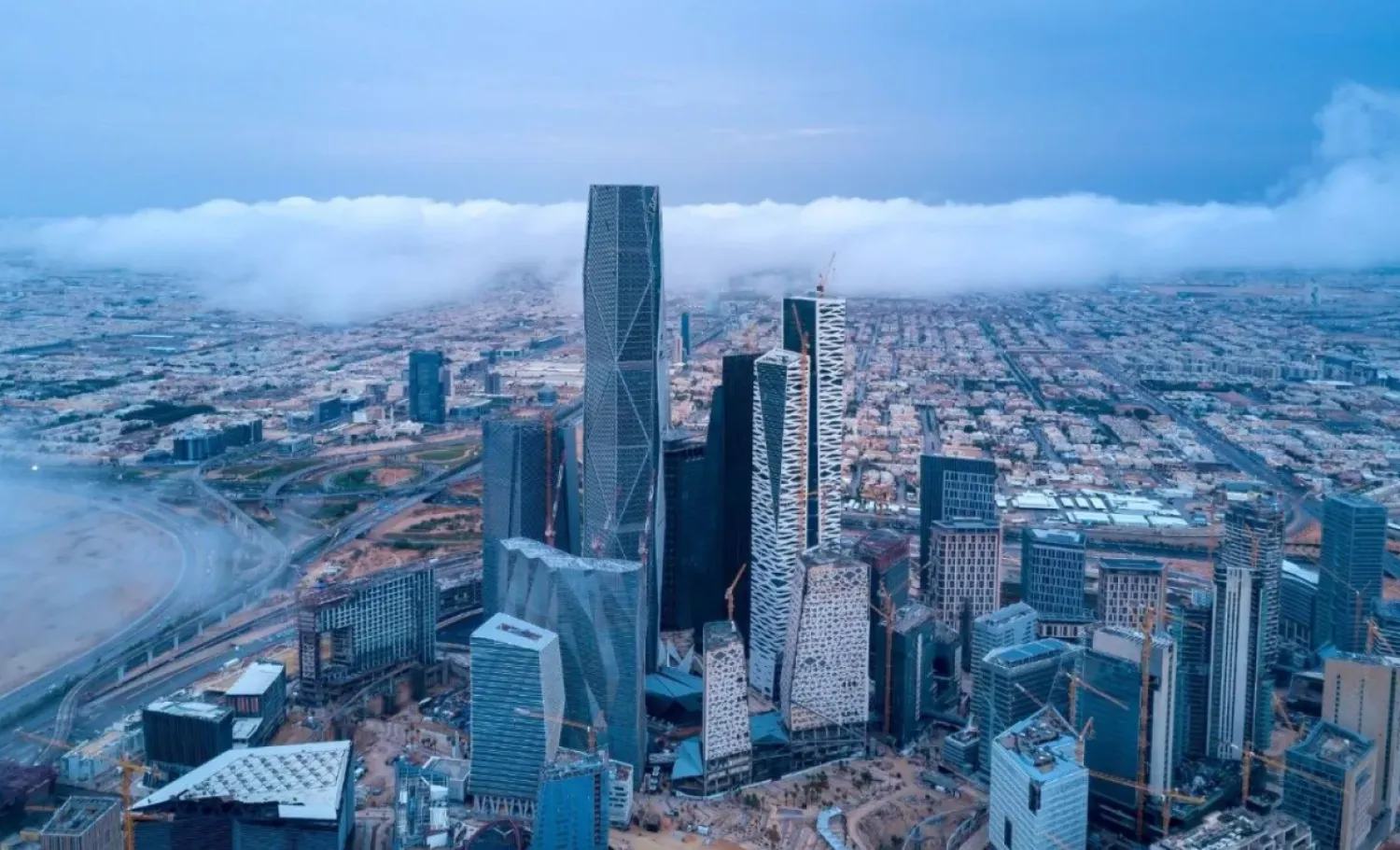
Saudi Industrial Investments Rise by 54% Following Exemption from Financial Fees

A factory in Saudi Arabia. (SPA)
TT

Saudi Industrial Investments Rise by 54% Following Exemption from Financial Fees

A factory in Saudi Arabia. (SPA)

The Federation of Saudi Chambers announced that industrial investments in the Kingdom have increased by 54%, reaching around SAR 1.5 trillion. This surge follows a 2019 government decision to exempt the industrial sector from financial fees.

A report by the Federation assessed the economic impact of the government's decision to bear the financial fees for the industrial sector from 2019 until the end of 2025. The study used a comprehensive approach, measuring the decision’s impact based on seven economic indicators: contribution to GDP, the number of industrial establishments, investment volume, employment, non-oil exports, the quality of national products, and foreign investments in the sector.

According to the report, economic data and indicators confirm the positive effects of the exemption on the national economy overall, and the industrial sector in particular.

The sector’s GDP contribution rose from SAR 392 billion in 2019 to SAR 592 billion in 2023, accounting for 14.7% of GDP. The number of industrial establishments grew from 7,625 in 2019 to 11,868 by 2024, a growth rate of 55.6%. Additionally, investments in the sector increased by 54%, reaching approximately SAR 1.5 trillion compared to SAR 992 billion previously.

The report highlighted that foreign investments in the industrial sector have grown, thanks to the decision to bear financial fees. The number of foreign factories increased from 622 to 1,067, reflecting a growth rate of 71.5%. The capital invested in the sector grew from SAR 43 billion to SAR 93 billion, a growth rate of 116.2%.

By the end of the first quarter of 2024, the number of workers in the industrial sector reached around 1.2 million, including 358,000 Saudis, with a localization rate of about 28%. Saudi workers in the industrial sector represent around 12.9% of the total Saudis employed in the private sector.

The industrial sector became the largest contributor to creating jobs for Saudis during the period from Jan. 1, 2023, to March 31, 2024, with the number of nationals increasing by 59%, adding more than 82,000 jobs.

The report also noted that the industrial sector helped boost non-oil exports, which reached an estimated SAR 208 billion, achieving a 12% growth.

Additionally, the report explained that the decision contributed to improving the quality of national products, through the adoption of new business models by industrial establishments, the localization of the latest technologies in manufacturing, the attraction of skilled talent, and the increase in product offerings to meet local market demands.

These efforts resulted in a rise in the percentage of industrial product exports, increased domestic demand for local products, and a higher number of products receiving the Saudi Quality Mark from the Saudi Standards, Metrology, and Quality Organization.

In September 2019, the government issued a decision to bear the financial fees imposed on expatriate workers in industrial establishments. The decision was recently extended until the end of 2025. Over 8,000 industrial establishments have benefited from the move, with the estimated cost of expatriate labor fees on the industrial sector amounting to around SAR 5 billion.


Two India-bound LPG Tankers Crossing Strait of Hormuz Out of Gulf

An oil tanker crossing the Strait of Hormuz (Reuters)
TT

Two India-bound LPG Tankers Crossing Strait of Hormuz Out of Gulf

An oil tanker crossing the Strait of Hormuz (Reuters)

Two liquefied petroleum gas tankers, BW Elm and BW Tyr, are crossing the Strait of Hormuz bound for India, according to ship tracking data from LSEG and Kpler.

The US-Israeli war against Iran has all but halted shipping through the strait, but Iran said this week that "non-hostile vessels" may transit the waterway if they coordinate with Iranian authorities.

The two India-flagged vessels have ⁠crossed the Gulf ⁠area and are in the eastern Strait of Hormuz, the data showed, according to Reuters.

India is gradually moving its stranded LPG cargoes out from the strait, with four LPG tankers moved so far - Shivalik, Nanda Devi, ⁠Pine Gas, and Jag Vasant.

As of Friday, 20 Indian-flagged ships including five LPG carriers were stranded in the Gulf, Rajesh Kumar Sinha, special secretary in the federal shipping ministry, said.

LPG carriers Jag Vikram, Green Asha and Green Sanvi are still in the western Strait of Hormuz, LSEG data show.

India, the world's second-largest LPG importer, is ⁠battling its ⁠worst gas crisis in decades, with the government cutting supplies for industries to shield households from any shortage of cooking gas.

The country consumed 33.15 million metric tons of LPG, or cooking gas, last year, with imports accounting for about 60% of demand. About 90% of those imports came from the Middle East.

India is also loading LPG onto its empty vessels stranded in the Gulf.


Saudi East-West Pipeline is Pumping Oil at its Full Capacity

King Fahd Industrial Port in Yanbu (SPA)
TT

Saudi East-West Pipeline is Pumping Oil at its Full Capacity

King Fahd Industrial Port in Yanbu (SPA)

Saudi Arabia’s crucial East-West pipeline that circumvents the Strait of Hormuz is pumping oil at its full capacity of 7 million barrels a day, a person familiar with the matter told Bloomberg.

The technical milestone is the culmination of the Kingdom’s longstanding contingency plan for keeping its oil flowing after the effective closure of their main export route. Flotillas of tankers have been redirected to the Red Sea port of Yanbu to collect the oil, providing an important lifeline for global supply.

Crude exports via Yanbu have now reached about 5 million barrels a day and the kingdom is also exporting 700,000 to 900,000 barrels a day of refined products, according to the person familiar with the Saudi oil industry. Of the 7 million barrels a day that go through the pipeline, 2 million are destined for Saudi refineries, Bloomberg said.

Running the breadth of the Arabian Peninsula from the massive oil fields in the east of the country to the industrial port city of Yanbu, the pipeline is more than 1,000 kilometers (620 miles) long.

Oil prices rose on ​Friday and notched weekly gains, reflecting scepticism about prospects for a ceasefire in the month-old Iran war.

Brent crude futures rose by $4.56, or 4.2%, to $112.57 a barrel. US West Texas Intermediate futures rose $5.16, or 5.5%, to settle at $99.64.

The Brent benchmark has jumped 53% since February 27, the day before the US and Israel launched strikes against Iran, while WTI has gained 45% since then. On a weekly basis, Brent gained about ‌0.3%, while WTI ‌gained over 1%.


A Year After Crown Prince’s Decisions, Riyadh Real Estate Exits Speculation, Transaction Values Down 64%

File photo of Saudi Arabia's capital Riyadh - SPA
TT

A Year After Crown Prince’s Decisions, Riyadh Real Estate Exits Speculation, Transaction Values Down 64%

File photo of Saudi Arabia's capital Riyadh - SPA

One year after a package of landmark decisions issued by Crown Prince Mohammed bin Salman on March 29, 2025 to rebalance Riyadh’s real estate market, a new trajectory is taking hold across the capital, particularly in its northern districts.

Data from the Real Estate Exchange showed a clear retreat in speculative activity that had strained the market for years, with transaction values recording a sharp 64% decline, marking the start of a “major correction” toward a more a sustainable real estate model that places the needs of citizens and genuine developers at the center of the market.

The Crown Prince’s directives outlined a new path for the market through a set of key executive measures, including lifting restrictions on millions of square meters in northern Riyadh, activating fees on vacant land to boost housing supply, freezing rent increases, and regulating contractual relations between landlords and tenants. These steps have contributed directly to stabilizing housing costs and curbing unjustified price surges seen in recent years.

The impact of these structural reforms was reflected in data from the Real Estate Exchange affiliated with the Ministry of Justice, which showed a 64% drop in transaction values. Transactions stood at around 53,000 deals worth more than $17.3 billion (65 billion riyals), compared with approximately $48.3 billion (181 billion riyals) in the year preceding the decisions. Total traded land area also declined to 153,000 square meters from 228,000 square meters, which experts attribute to a shift in liquidity from large-scale land speculation to organized residential development projects.

Reshaping the real estate market

Real estate specialists told Asharq Al-Awsat that these measures have reshaped Riyadh’s property market toward a more sustainable model driven by real development and genuine housing demand, guiding it toward greater balance, maturity, price stability, and closer alignment between real estate products and actual market needs. They added that this transformation represents a significant step toward building a more sustainable market capable of keeping pace with the Kingdom’s economic changes.

Real estate expert and marketer Saqr Al-Zahrani told Asharq Al-Awsat that the impact of these decisions has led to a clear structural shift in the market. He said the decline in transaction values does not reflect weak activity as much as it reflects a retreat in speculative practices that had pushed prices beyond levels linked to real housing demand.

He added that the balancing measures helped establish a new pricing benchmark for residential land, particularly with the offering of supported land at around 1,500 riyals per square meter, which has reset price expectations in several districts and curbed unjustified increases seen in recent years.

He noted that undeveloped land in northern Riyadh has experienced what he described as a “free fall” in prices, according to market reports, with some locations seeing significant declines after years of rapid increases fueled by speculation and growth expectations. He said this decline is viewed as part of a natural correction process that re-prices land based on more realistic criteria tied to development value and actual housing demand.

From speculation to development

Al-Zahrani said that over the past year, several key trends have emerged, most notably a shift in liquidity from speculation toward real estate development, with greater focus on structured development projects instead of trading undeveloped land. He added that the genuine homebuyer has re-emerged as the main driver of the market following a decline in short-term investors.

He also said early off-plan sales projects have begun to emerge, both in housing units and developed land, a model expected to expand in the coming period as it helps increase housing supply and reduce ownership costs. The market is also awaiting new regulations, particularly fees on vacant properties, which are expected to bring idle assets into use and improve the efficiency of real estate stock within cities.

Al-Zahrani said the Riyadh real estate market is likely to move toward a more mature and sustainable phase, with expected growth in off-plan projects and increased supply driven by continued regulatory reforms, which could lead to price stability and a better balance between supply and demand.

He added that current market conditions do not reflect a slowdown as much as a restructuring phase toward a more sustainable model based on real development and genuine housing demand, supporting urban development goals and enhancing quality of life in the capital.

Market behavior

For his part, real estate expert and marketer Abdullah Al-Mousa told Asharq Al-Awsat that Riyadh’s real estate market has entered a pivotal stage in its economic cycle. He said the changes seen over the past year cannot be explained solely by transaction volumes or values, but must be understood within a broader context of reshaping market behavior and recalibrating the relationship between supply and demand.

He added that in the years preceding these decisions, the market saw rapid price increases driven by several factors, including rising demand, accelerated urban growth, and the entry of various investment segments. Over time, rebalancing became necessary to ensure market sustainability and limit unjustified price increases.

Al-Mousa said the decline in transactions over the past year can be seen as a natural reflection of a recalibration phase, during which buyers tend to pause and reassess investment decisions, while developers and owners review pricing and marketing strategies in line with new conditions.

He noted that one of the most prominent features of this period has been increased awareness among market participants, with purchasing decisions becoming more closely tied to value and economic feasibility rather than short-term price expectations. Some real estate companies have also begun restructuring their sales and marketing models, including offering longer payment plans and redesigning products to better match market needs.

The expert said this phase has contributed to reducing speculative activity that previously influenced price movements in some areas, encouraging a stronger shift toward actual land development rather than holding land as idle assets awaiting price increases.

He added that what is happening in Riyadh’s real estate market today does not represent a downturn but a transitional phase reshaping market rules- from one driven by price speculation to a more mature and stable market based on real asset value and long-term development efficiency. This, he said, marks an important step toward building a more sustainable market aligned with the Kingdom’s economic transformation.

Al-Mousa concluded that the Riyadh real estate market is expected to continue on a more balanced and mature path in the coming period, with competition increasingly tied to product quality, development efficiency, and alignment with actual market needs, alongside ongoing major projects that will keep the sector a key driver of economic growth.