


Euro Zone Poised to Enter Trade Quagmire as Trump Wins

A container ship unloads its cargo in the German port of Hamburg (Reuters)
TT

Euro Zone Poised to Enter Trade Quagmire as Trump Wins

A container ship unloads its cargo in the German port of Hamburg (Reuters)

As Trump 2.0 becomes a reality, Europe is poised to enter a new geopolitical and trade quagmire with its biggest trading partner.

Donald Trump's victory may harm Europe's economy as proposed 10% US tariffs risk hitting European exports such as cars and chemicals, eroding Europe's GDP by up to 1.5% or about €260 billion.

Analysts warn of European Central Bank (ECB) rate cuts, euro weakness, and a recession risk.

According to several economic analyses, there is broad agreement that Trump's proposed 10% universal tariff on all US imports may significantly disrupt European growth, intensify monetary policy divergence, and strain key trade-dependent sectors such as autos and chemicals.

The long-term effects on Europe's economic resilience could prove even more significant if tariffs lead to protracted trade conflicts, prompting the European Central Bank (ECB) to respond with aggressive rate cuts to cushion the impact, according to Euronews.

Trump's proposed across-the-board tariff on imports, including those from Europe, could profoundly impact sectors such as cars and chemicals, which rely heavily on US exports.

Data from the European Commission shows that the European Union exported €502.3 billion in goods to the US in 2023, making up a fifth of all non-European Union exports.

European exports to the US are led by machinery and vehicles (€207.6 billion), chemicals (€137.4 billion), and other manufactured goods (€103.7 billion), which together comprise nearly 90% of the bloc's transatlantic exports.

ABN Amro analysts, including head of macro research Bill Diviney, warn that tariffs “would cause a collapse in exports to the US,” with trade-oriented economies such as Germany and the Netherlands likely to be hardest hit.

According to the Dutch bank, Trump's tariffs would shave approximately 1.5 percentage points off European growth, translating to a potential €260 bn economic loss based on Europe's estimated 2024 GDP of €17.4 tn.

Should Europe's growth falter under Trump's tariffs, the European Central Bank (ECB) may be compelled to respond aggressively, slashing rates to near zero by 2025.

In contrast, the US Federal Reserve may continue raising rates, leading to “one of the biggest and most sustained monetary policy divergences” between the ECB and the Fed since the euro's inception in 1999.

Dirk Schumacher, head of European macro research at Natixis Corporate & Investment Banking Germany, suggests that a 10% tariff increase could reduce GDP by approximately 0.5% in Germany, 0.3% in France, 0.4% in Italy, and 0.2% in Spain.

Schumacher warns that “the euro area could slide into recession in response to higher tariffs.”

According to Goldman Sachs' economists James Moberly and Sven Jari Stehn, the broad tariff would likely erode eurozone GDP by approximately 1%.

Goldman Sachs analysts project that a 1% GDP loss translates into a hit to earnings per share (EPS) for European firms by 6-7 percentage points, which would be sufficient to erase expected EPS growth for 2025.



Third ‘Mirkaz AlBalad AlAmeen Platform’ to Open in Makkah on Sunday 

A street in the holy city of Makkah is decorated with Ramadan lights. (SPA)
TT

Third ‘Mirkaz AlBalad AlAmeen Platform’ to Open in Makkah on Sunday 

A street in the holy city of Makkah is decorated with Ramadan lights. (SPA)

The third edition of the “Mirkaz ABalad AlAmeen”, a leading platform for exchanging opportunities in Makkah, will kick off on Sunday, under the theme “Makkah Inspires the World.”

The platform, organized by the Holy Makkah Municipality, will feature 15 exceptional Ramadan evenings focused on dialogue, knowledge exchange, and cross-sector engagement.

Makkah Mayor Musad Aldaood said the platform redefines development from Makkah, where faith meets inspiration and values are transformed into a comprehensive civilizational experience.

He noted that the initiative reflects the ambitions of Saudi Vision 2030 and showcases Makkah to the world as a living model of creativity, leadership, and innovation.

The upcoming edition will host more than 65 speakers, including executive leaders and decision-makers from across all three sectors, alongside futurists, entrepreneurs, and leading voices in culture and inspiration from artists, writers, media professionals, and innovators.

The program targets 12 key sectors: technology and digital transformation, financial investment, communications and media, real estate development, transport and logistics, banking services, youth and sports, tourism and culture, hospitality and catering, Hajj and Umrah, the third sector, and healthcare.


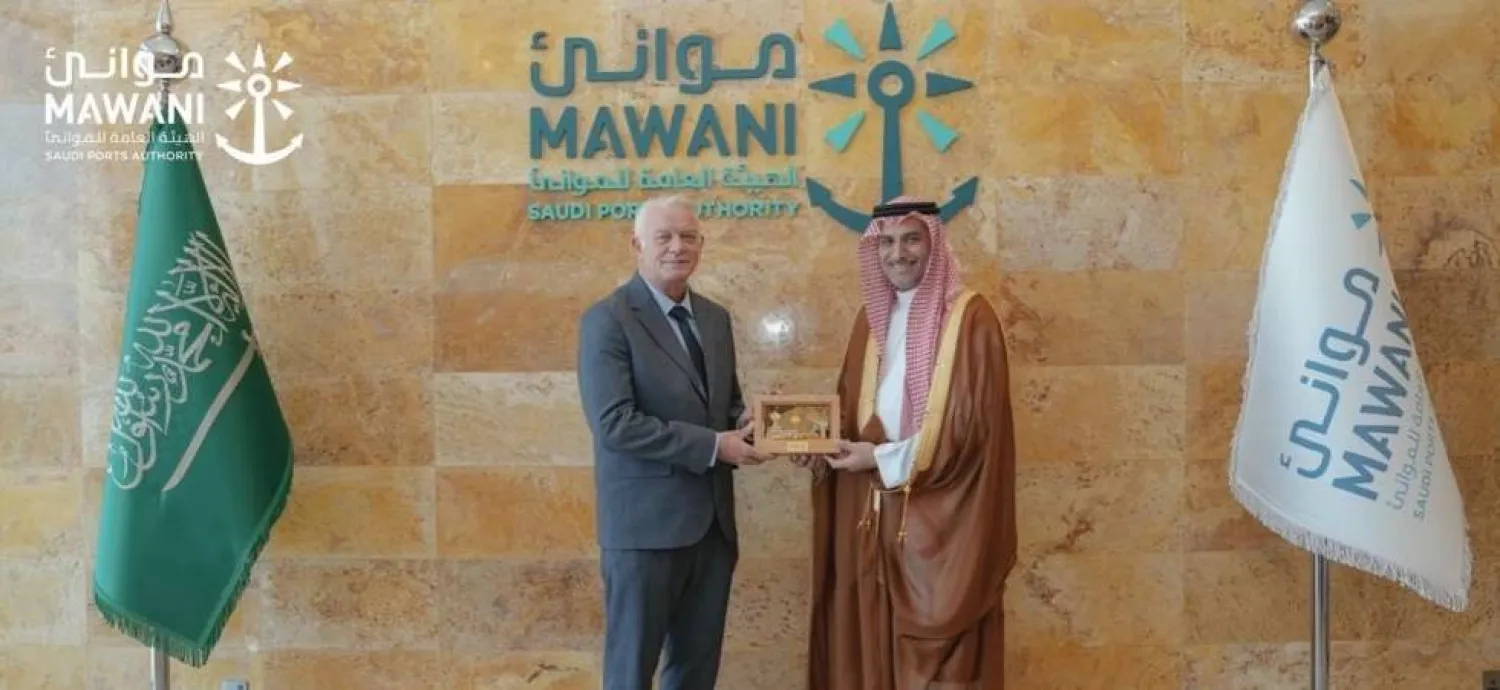
Saudi Arabia’s Mawani Grants Unified License to Global Shipping Line 

The initiative is part of Mawani's ongoing efforts to develop the maritime business environment, enable international companies to invest in the Saudi market, and increase competitiveness within the maritime sector. (Mawani)
TT

Saudi Arabia’s Mawani Grants Unified License to Global Shipping Line 

The initiative is part of Mawani's ongoing efforts to develop the maritime business environment, enable international companies to invest in the Saudi market, and increase competitiveness within the maritime sector. (Mawani)

The Saudi Ports Authority (Mawani) granted on Thursday a unified license to international shipping line Global Shipping Line (PIL), officially recognizing it as an authorized foreign investor to operate maritime agencies in the Kingdom's ports, reported the Saudi Press Agency.

The license is issued in accordance with the regulations outlined in the Maritime Agency Services, reflecting Mawani's commitment to boosting the efficiency of the maritime sector and improving the quality of operational services provided at ports.

It aims to attract global expertise and facilitate knowledge transfer within the Kingdom, aligning with international best practices in the maritime transport industry.

The initiative is part of Mawani's ongoing efforts to develop the maritime business environment, enable international companies to invest in the Saudi market, and increase competitiveness within the maritime sector.

PIL, which operates from its regional headquarters in Riyadh, manages operations in 29 countries.

The move strengthens the Kingdom's position as a crucial logistics hub, in line with the National Transport and Logistics Strategy, while attracting more international shipping lines. It reinforces Saudi Arabia's role as a key link among three continents.


IMF: Restoring Lebanon's Economic Growth Will Require Comprehensive Reforms

FILE PHOTO: A view of the International Monetary Fund (IMF) logo at its headquarters in Washington, D.C., US, November 24, 2024. REUTERS/Benoit Tessier//File Photo
TT

IMF: Restoring Lebanon's Economic Growth Will Require Comprehensive Reforms

FILE PHOTO: A view of the International Monetary Fund (IMF) logo at its headquarters in Washington, D.C., US, November 24, 2024. REUTERS/Benoit Tessier//File Photo

Lebanon's economy has shown resilience despite conflicts in the region, with tourism fueling a bit of a rebound, but restoring growth will require comprehensive reforms, the International Monetary Fund said on Thursday.

IMF spokeswoman Julie Kozack said the global lender remains engaged in complex discussions with Lebanese ‌authorities following their ‌request for an IMF-supported ‌program ⁠in March 2025. The ⁠IMF sent a staff mission to Beirut earlier this month, said Reuters.

The talks have been focused on two big issues, she said, citing the need for banking sector restructuring and a medium-term fiscal ⁠strategy. "The economy has shown resilience ‌despite the impact ‌of conflicts in the region. It has had ‌a bit of a rebound ‌on the back of tourism from the strong diaspora," Kozack said.

"But at the same time, really restoring strong and sustainable growth will ‌require a comprehensive set of reforms to tackle some of the ⁠structural ⁠weaknesses that have really hampered Lebanon's economic performance for many years," she said. Reforms also are needed to attract international support to help Lebanon address its substantial reconstruction needs.

Kozack said Lebanon needs an updated medium-term fiscal framework that includes concrete measures to mobilize additional revenues for much-needed capital spending, as well as a sovereign debt restructuring to restore debt sustainability.