Oil Nudges Up after Russia-Ukraine Tensions Escalate

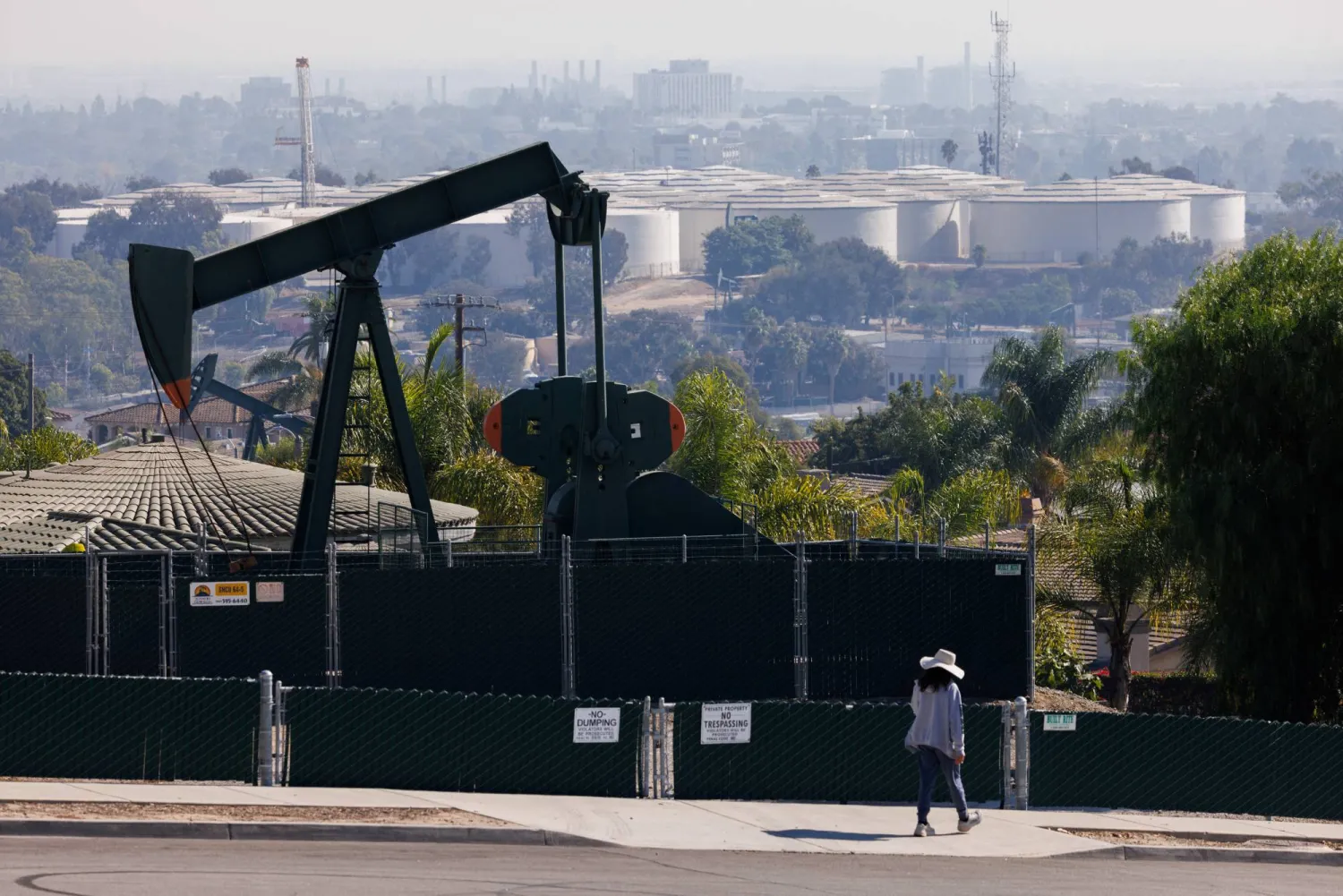
A person walks past a working oil well in a residential neighbourhood in Signal Hill, California, US, November, 14, 2024.  REUTERS/Mike Blake
A person walks past a working oil well in a residential neighbourhood in Signal Hill, California, US, November, 14, 2024. REUTERS/Mike Blake
TT

Oil Nudges Up after Russia-Ukraine Tensions Escalate

A person walks past a working oil well in a residential neighbourhood in Signal Hill, California, US, November, 14, 2024.  REUTERS/Mike Blake
A person walks past a working oil well in a residential neighbourhood in Signal Hill, California, US, November, 14, 2024. REUTERS/Mike Blake

Oil prices edged up on Monday after fighting between Russia and Ukraine intensified over the weekend, although concerns about fuel demand in China, the world's second-largest consumer, and forecasts of a global oil surplus weighed on markets.
Brent crude futures gained 29 cents, or 0.4%, to $71.33 a barrel by 0502 GMT, while US West Texas Intermediate crude futures were at $67.20 a barrel, up 18 cents, or 0.3%.
Russia unleashed its largest air strike on Ukraine in almost three months on Sunday, causing severe damage to Ukraine's power system, reported Reuters.
In a significant reversal of Washington's policy in the Ukraine-Russia conflict, President Joe Biden's administration has allowed Ukraine to use the US-made weapons to strike deep into Russia, two US officials and a source familiar with the decision said on Sunday.
There was no immediate response from the Kremlin, which has warned that it would see a move to loosen the limits on Ukraine's use of US weapons as a major escalation.
"Biden allowing Ukraine to strike Russian forces around Kursk with long-range missiles might see a geopolitical bid come back into oil as it is an escalation of tensions there, in response to North Korean troops entering the fray," IG markets analyst Tony Sycamore said.
Saul Kavonic, an energy analyst at MST Marquee, said: "So far there has been little impact on Russian oil exports, but if Ukraine were to target more oil infrastructure that could see oil markets elevate further."
In Russia, at least three refineries have had to halt processing or cut runs due to heavy losses amid export curbs, rising crude prices and high borrowing costs, according to five industry sources.
Brent and WTI slid more than 3% last week on weak data from China and after the International Energy Agency forecasted that global oil supply will exceed demand by more than 1 million barrels per day in 2025 even if cuts remain in place from OPEC+.
China's refinery throughput fell 4.6% in October from last year and as the country's factory output growth slowed last month, government data showed on Friday.
Investors also fretted over the pace and extent of interest rate cuts by the US Federal Reserve that has created uncertainty in global financial markets.
In the US, the number of operating oil rigs fell by one to 478 last week, the lowest since the week to July 19, Baker Hughes data showed.



Macron Announces 93 Bn Euros in ‘Choose France’ Investments

 France's President Emmanuel Macron attends a joint statement with Masayoshi Son, Chairman and CEO of SoftBank Group Corp., at the Elysee Presidential Palace in Paris, June 1, 2026. (Ludovic Marin/Pool Photo via AP)
France's President Emmanuel Macron attends a joint statement with Masayoshi Son, Chairman and CEO of SoftBank Group Corp., at the Elysee Presidential Palace in Paris, June 1, 2026. (Ludovic Marin/Pool Photo via AP)
TT

Macron Announces 93 Bn Euros in ‘Choose France’ Investments

 France's President Emmanuel Macron attends a joint statement with Masayoshi Son, Chairman and CEO of SoftBank Group Corp., at the Elysee Presidential Palace in Paris, June 1, 2026. (Ludovic Marin/Pool Photo via AP)
France's President Emmanuel Macron attends a joint statement with Masayoshi Son, Chairman and CEO of SoftBank Group Corp., at the Elysee Presidential Palace in Paris, June 1, 2026. (Ludovic Marin/Pool Photo via AP)

President Emmanuel Macron said Monday that he was expecting foreign investments amounting to 93 billion euros ($108 billion) at a conference dubbed "Choose France", including on artificial intelligence and data centers.

Money already pledged as part of his annual investment meeting would surpass the sum of 87 billion euros raised over the past eight years combined, he said.

"This edition of Choose France alone will make it possible to crystallize a record amount of 93 billion euros in confirmed investments, for more than 15,000 jobs. It is obviously by far a record edition, and it is historic," Macron said.

This year's pledges include 45 billion euros from Japanese tech investor SoftBank, Macron said. Its founder, Masayoshi Son, said over the weekend that the money would be spent by 2031 on data centers in northern France.

They would also be spent on "artificial intelligence, on data centers" as well as semiconductors, critical minerals, tractors and trucks, steel and healthcare, the president said.

Macron said these projects would make it possible "to make France by far the leading country hosting data centers" and "computing capacity in Europe", as well as a "forward base for the production of AI robots, and for industrialization through AI".

"We are clearly in the process of closing the gap we had in terms of computing capacity in Europe," compared with the United States and China, he added.


Saudi Fund for Development Moves to Globalize Private Sector, Expand Local Content Abroad

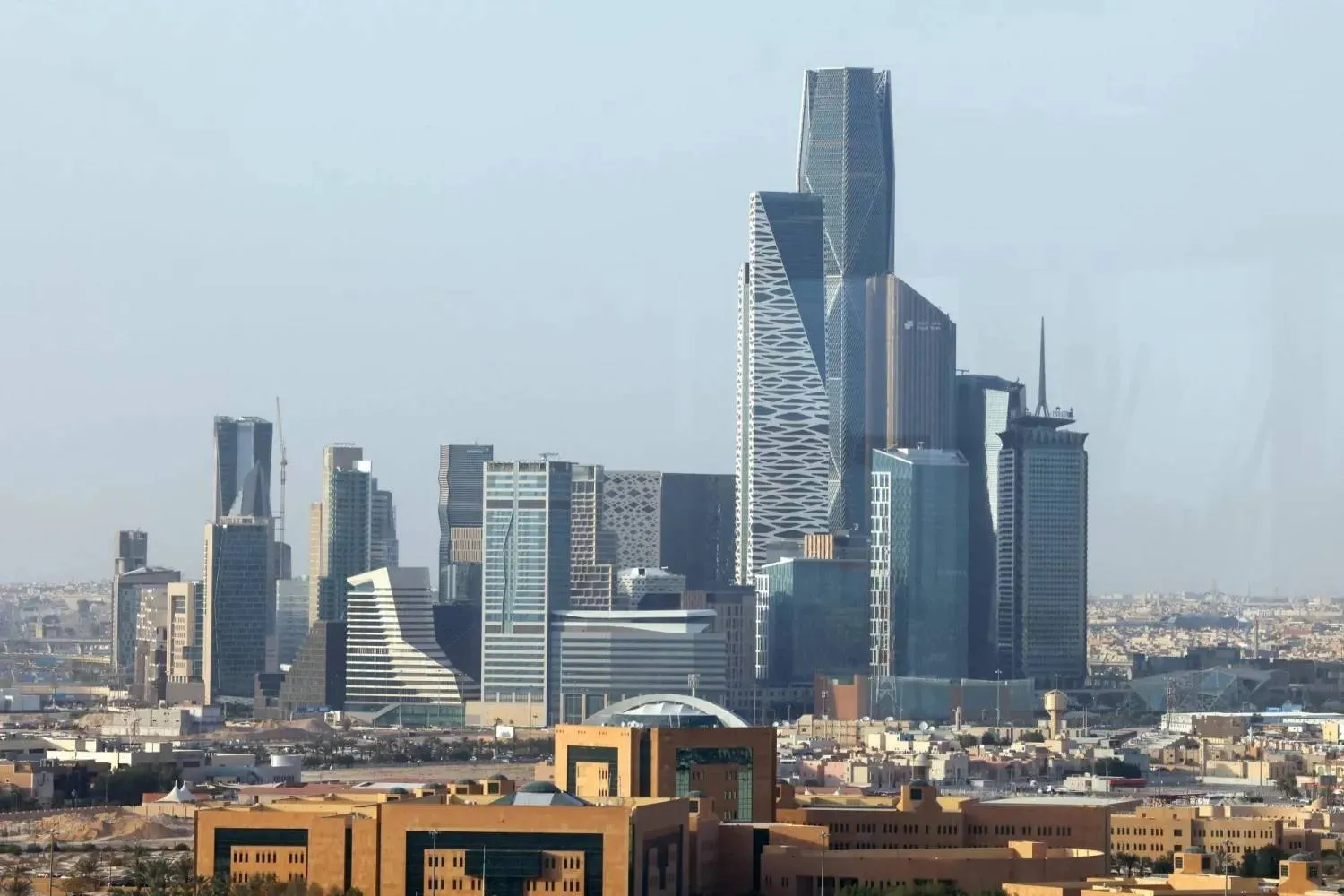
The Saudi capital (SPA) 
TT

Saudi Fund for Development Moves to Globalize Private Sector, Expand Local Content Abroad

The Saudi capital (SPA) 

The Saudi Fund for Development (SFD) is intensifying strategic efforts to integrate Saudi private-sector companies into major international development projects financed by the Kingdom, in a move designed to expand the global footprint of Saudi businesses and strengthen local content abroad.

The initiative targets Saudi contractors, engineering firms, suppliers, and consulting companies, enabling them to secure operational shares in international markets while prioritizing Saudi-made products and services beyond the kingdom’s borders. The effort aligns with Saudi Vision 2030 goals to diversify income sources and enhance non-oil economic growth.

The current portfolio of projects includes several international tenders across multiple continents. Among the most prominent are the construction and outfitting of the National Blood Transfusion Center in the Comoros, as well as the fifth phase of the Saudi Program for Well Drilling and Rural Development in Uganda.

Additional opportunities include major agricultural and environmental projects in Tunisia, notably the second phase of the Integrated Agricultural Development Project in Ghazala, Joumine, and Sejnane. Other tenders involve coastal protection works to combat marine erosion along the stretch from Gammarth to Carthage, in addition to a polyethylene pipeline distribution network project.

In the academic sector, the fund is also offering Saudi firms the opportunity to compete for civil works contracts related to the University of the West Indies Five Islands Campus project in Antigua and Barbuda.

The SFD has invited interested Saudi companies to access tender documents through its official website, emphasizing that it is coordinating directly with relevant authorities to provide technical and logistical support for local investors once procurement procedures are completed.

The move builds on the fund’s longstanding support for the private sector through the Saudi Export Program, which provides credit facilities and financing guarantees aimed at boosting Saudi exports and increasing the participation of national companies in overseas development projects.

The fund has also conducted assessments of the key challenges facing Saudi firms operating abroad, following requests for investors to identify obstacles hindering local content expansion and the prioritization of Saudi products in international projects.

Over the past five decades, the Saudi Fund for Development has financed nearly 800 development projects and programs worth more than SAR 81 billion ($21.6 billion) in over 100 developing countries. The scale of these investments reflects growing opportunities for Saudi contractors, engineering consultancies, and suppliers to expand their international presence and investment reach worldwide.


Turkish Economy Expands 2.5% in Q1, Pace of Growth Slows Further

Supporters wave Turkish national flags as the leader of Republican People's Party (CHP) delivers a speech during a protest against allegations of vote buying at the CHP congress in November 2023, at their party headquarters in Ankara on May 22, 2026. (AFP)
TT

Turkish Economy Expands 2.5% in Q1, Pace of Growth Slows Further

Supporters wave Turkish national flags as the leader of Republican People's Party (CHP) delivers a speech during a protest against allegations of vote buying at the CHP congress in November 2023, at their party headquarters in Ankara on May 22, 2026. (AFP)

Türkiye's economy grew 2.5% year-on-year in the first quarter, slightly below poll forecasts according to official data on Monday, with growth slowing for a third consecutive quarter.

The continued slowdown in growth in the January-March period partially coincided with the Iran war, which sent energy prices soaring and revived inflationary pressures. The conflict's impact on growth going forward remains unclear.

The strongest branch of economic activity during the first quarter was information and ‌technology, which ‌grew 9.5%, while agriculture, forestry and fishing ‌grew ⁠4.6%, Turkish Statistical Institute (TUIK) ⁠data showed. Industry shrank 0.8%.

The lira was little changed at 45.9160 against the dollar after the data.

TUIK said first-quarter gross domestic product (GDP) grew 0.1% from the previous quarter on a seasonally and calendar-adjusted basis,

In a Reuters poll, economic growth was estimated to have slowed to ⁠2.7% in the first quarter, while ‌in 2026 as a ‌whole the economy is expected to expand by 3.15%.

There was ‌no revision to the 2025 growth rate of ‌3.6%, the data showed. After growing 4.7% in the second quarter last year, growth slowed to 3.8% and then 3.4% in the following two quarters.

First-quarter estimates from nine economists ‌in the poll ranged from 2% to 3.7%.

Economists are closely monitoring the central bank's response ⁠to ⁠the inflation, which surged to 4.18% month-on-month in April for an annual rate of 32.87%. In its second inflation report of the year, the central bank raised its year-end inflation interim target from 16% to 24%, while signaling that all options remain on the table for its next interest rate decision.

The bank sold billions of dollars in foreign reserves in the latter part of May after a court ruling ousted the leader of Türkiye's main opposition Republican People's Party (CHP).