


Saudi Ministers Highlight Resilience, Adaptability of the Kingdom’s Economy at Budget Forum

Finance Minister Mohamed Al-Jadaan speaks in the first dialogue session of the 2025 Budget Forum. (Asharq Al-Awsat)
TT

Saudi Ministers Highlight Resilience, Adaptability of the Kingdom’s Economy at Budget Forum

Finance Minister Mohamed Al-Jadaan speaks in the first dialogue session of the 2025 Budget Forum. (Asharq Al-Awsat)

Saudi ministers reaffirmed the continued success of Vision 2030 and the economy’s ability to overcome challenges while achieving diversification.

Speaking at the 2025 Budget Forum, organized by the Ministry of Finance, they underscored the importance of fiscal policies in driving sustainable economic growth and emphasized the integration of various sectors to enhance Saudi Arabia’s global standing.

The forum followed the Cabinet’s approval of the 2025 budget, which projects revenues of SAR 1.184 trillion ($315.7 billion), expenditures of SAR 1.285 trillion ($342.6 billion), and a deficit of SAR 101 billion ($26.9 billion).

Sustainable Spending and Economic Diversification

Finance Minister Mohammed Al-Jadaan highlighted that sustainable spending has enabled Saudi Arabia to provide high-quality services. He emphasized that fiscal policies focus on sectors with a direct impact on economic development and diversification.

Al-Jadaan noted that ensuring fiscal sustainability is crucial to reducing reliance on oil revenues.

“Structural reforms under Vision 2030 have transformed the economy,” he said, adding that non-oil revenues have reached SAR 472 billion due to the significant progress in diversification efforts.

He further explained: “Previously, Saudi Arabia’s growth depended heavily on oil revenues. Today, through diversified economic resources and sustainable fiscal policies, our economy is more resilient.”

He also stressed the role of government borrowing in balancing revenues and expenditures, benefiting both public and private sectors.

Progress Toward Economic Diversification

Minister of Economy and Planning Faisal Al-Ibrahim highlighted that one of Vision 2030’s key objectives is to unlock the potential of citizens while reducing reliance on oil. He noted that in its eighth year, the vision continues to advance steadily and with strong momentum, addressing previous challenges such as dependence on government spending and oil revenues.

“Non-oil activities have grown by 6% over the last three years,” Al-Ibrahim said, “now contributing 52% of real GDP.” He added that non-oil sector growth is projected to reach 3.9% by year-end and 4.8% in 2024.

Al-Ibrahim stressed the importance of sustainable, high-quality growth driven by private sector dynamism and productivity. He also highlighted Saudi Arabia’s increasing global competitiveness in sectors like healthcare, citing breakthroughs such as robotic heart surgeries.

Additionally, he noted the Kingdom’s demographic advantage, stating: “We have a young population, and now is the time to invest in their capabilities, as envisioned under Vision 2030.”

Employment and Reducing Unemployment

Minister of Human Resources and Social Development Ahmed Al-Rajhi announced a new unemployment target of 5% for Saudis by 2030. This follows the Kingdom’s early achievement of its previous unemployment target of 7%, reached seven years ahead of schedule.

Industrial Growth and Export Expansion

For his part, Minister of Industry and Mineral Resources Bandar Al-Khorayef reported significant progress in the industrial sector, with 1,100 new industrial licenses expected in 2024 and 900 factories entering production.

Non-oil exports grew by 15% in 2024, rising from SAR 458 billion ($121.9 billion) to SAR 528 billion ($140.5 billion). Al-Khorayef highlighted that the Saudi Industrial Development Fund financed projects worth SAR 12 billion ($3.2 billion) this year, contributing to total investments exceeding SAR 60 billion ($16 billion).

“The industrial sector is now a central part of government agendas,” he said, adding that export growth was driven by new product development.

Digital Transformation and a Cashless Economy

Minister of Communications and Information Technology Abdullah Al-Swaha outlined Saudi Arabia’s strategy to become a technology exporter, which is a key part of its digital economy goals. He highlighted that over 70% of transactions in the Kingdom are now cashless, supported by the emergence of more than 200 fintech companies.

Al-Swaha emphasized that the next phase will focus on exporting technology and establishing Saudi Arabia as a global leader in the tech sector.

Transportation Growth

Minister of Transport and Logistics Services Saleh Al-Jasser reported that the sector created 122,000 jobs in Q3 2024, with women comprising 29% of the workforce.

He also noted that the transport sector aims to achieve 60% local content in its spending by 2030. The current figure stands at 50%, up from 39% in the baseline year.

Education, Tourism, and Sports

Minister of Education Yousef Al-Benyan highlighted the establishment of the National Center for Curriculum Development as a major achievement in 2023. He also noted that education spending in the 2025 budget exceeds SAR 200 billion.

Minister of Tourism Ahmed Al-Khatib reported that the tourism sector now contributes 5% to GDP, up from previous years, with a goal of reaching 10% by 2030. He added that Saudi Arabia surpassed its Vision 2030 target of 100 million visitors, reaching 109 million tourists in 2023.

In the sports sector, Prince Abdulaziz bin Turki Al-Faisal, Minister of Sports, revealed that 25 local and international companies have shown interest in investing in privatized sports clubs, with projected revenues of SAR 500 million ($133 million).



Third ‘Mirkaz AlBalad AlAmeen Platform’ to Open in Makkah on Sunday 

A street in the holy city of Makkah is decorated with Ramadan lights. (SPA)
TT

Third ‘Mirkaz AlBalad AlAmeen Platform’ to Open in Makkah on Sunday 

A street in the holy city of Makkah is decorated with Ramadan lights. (SPA)

The third edition of the “Mirkaz ABalad AlAmeen”, a leading platform for exchanging opportunities in Makkah, will kick off on Sunday, under the theme “Makkah Inspires the World.”

The platform, organized by the Holy Makkah Municipality, will feature 15 exceptional Ramadan evenings focused on dialogue, knowledge exchange, and cross-sector engagement.

Makkah Mayor Musad Aldaood said the platform redefines development from Makkah, where faith meets inspiration and values are transformed into a comprehensive civilizational experience.

He noted that the initiative reflects the ambitions of Saudi Vision 2030 and showcases Makkah to the world as a living model of creativity, leadership, and innovation.

The upcoming edition will host more than 65 speakers, including executive leaders and decision-makers from across all three sectors, alongside futurists, entrepreneurs, and leading voices in culture and inspiration from artists, writers, media professionals, and innovators.

The program targets 12 key sectors: technology and digital transformation, financial investment, communications and media, real estate development, transport and logistics, banking services, youth and sports, tourism and culture, hospitality and catering, Hajj and Umrah, the third sector, and healthcare.


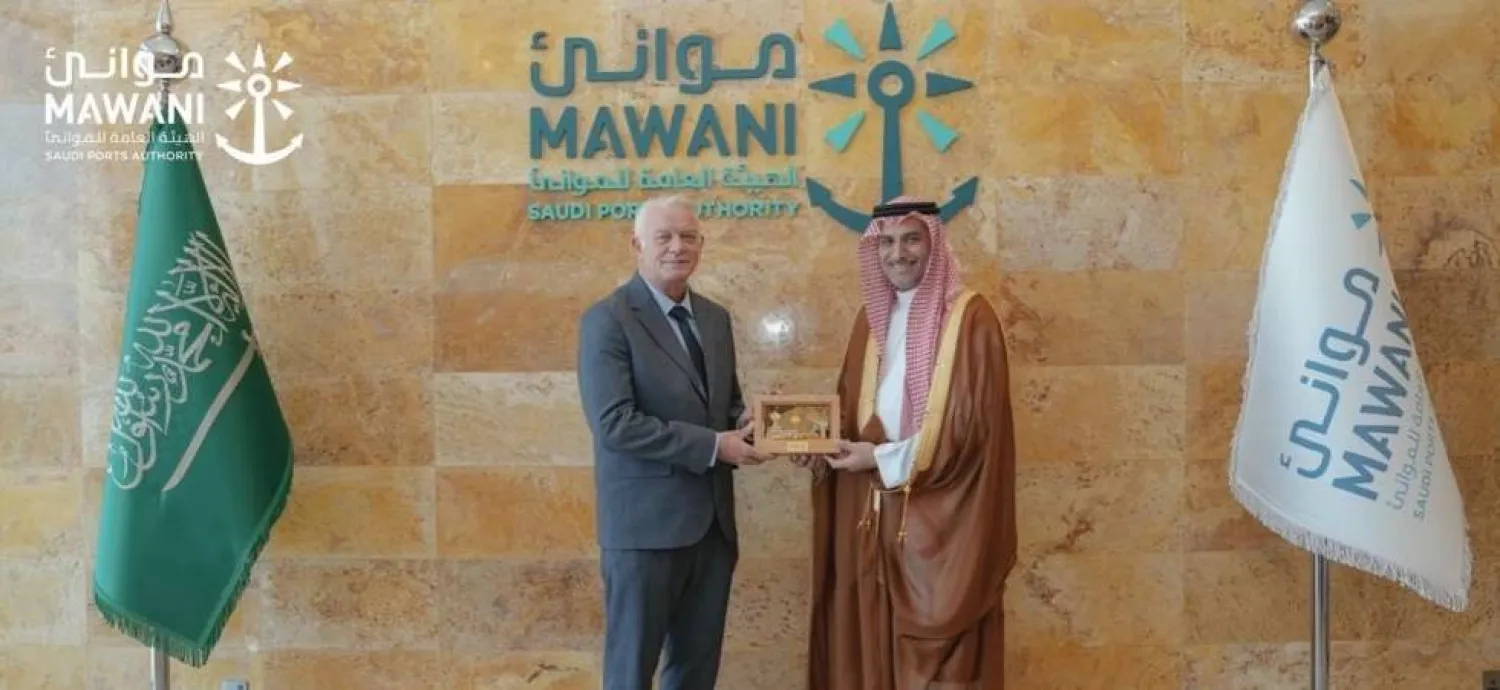
Saudi Arabia’s Mawani Grants Unified License to Global Shipping Line 

The initiative is part of Mawani's ongoing efforts to develop the maritime business environment, enable international companies to invest in the Saudi market, and increase competitiveness within the maritime sector. (Mawani)
TT

Saudi Arabia’s Mawani Grants Unified License to Global Shipping Line 

The initiative is part of Mawani's ongoing efforts to develop the maritime business environment, enable international companies to invest in the Saudi market, and increase competitiveness within the maritime sector. (Mawani)

The Saudi Ports Authority (Mawani) granted on Thursday a unified license to international shipping line Global Shipping Line (PIL), officially recognizing it as an authorized foreign investor to operate maritime agencies in the Kingdom's ports, reported the Saudi Press Agency.

The license is issued in accordance with the regulations outlined in the Maritime Agency Services, reflecting Mawani's commitment to boosting the efficiency of the maritime sector and improving the quality of operational services provided at ports.

It aims to attract global expertise and facilitate knowledge transfer within the Kingdom, aligning with international best practices in the maritime transport industry.

The initiative is part of Mawani's ongoing efforts to develop the maritime business environment, enable international companies to invest in the Saudi market, and increase competitiveness within the maritime sector.

PIL, which operates from its regional headquarters in Riyadh, manages operations in 29 countries.

The move strengthens the Kingdom's position as a crucial logistics hub, in line with the National Transport and Logistics Strategy, while attracting more international shipping lines. It reinforces Saudi Arabia's role as a key link among three continents.


IMF: Restoring Lebanon's Economic Growth Will Require Comprehensive Reforms

FILE PHOTO: A view of the International Monetary Fund (IMF) logo at its headquarters in Washington, D.C., US, November 24, 2024. REUTERS/Benoit Tessier//File Photo
TT

IMF: Restoring Lebanon's Economic Growth Will Require Comprehensive Reforms

FILE PHOTO: A view of the International Monetary Fund (IMF) logo at its headquarters in Washington, D.C., US, November 24, 2024. REUTERS/Benoit Tessier//File Photo

Lebanon's economy has shown resilience despite conflicts in the region, with tourism fueling a bit of a rebound, but restoring growth will require comprehensive reforms, the International Monetary Fund said on Thursday.

IMF spokeswoman Julie Kozack said the global lender remains engaged in complex discussions with Lebanese ‌authorities following their ‌request for an IMF-supported ‌program ⁠in March 2025. The ⁠IMF sent a staff mission to Beirut earlier this month, said Reuters.

The talks have been focused on two big issues, she said, citing the need for banking sector restructuring and a medium-term fiscal ⁠strategy. "The economy has shown resilience ‌despite the impact ‌of conflicts in the region. It has had ‌a bit of a rebound ‌on the back of tourism from the strong diaspora," Kozack said.

"But at the same time, really restoring strong and sustainable growth will ‌require a comprehensive set of reforms to tackle some of the ⁠structural ⁠weaknesses that have really hampered Lebanon's economic performance for many years," she said. Reforms also are needed to attract international support to help Lebanon address its substantial reconstruction needs.

Kozack said Lebanon needs an updated medium-term fiscal framework that includes concrete measures to mobilize additional revenues for much-needed capital spending, as well as a sovereign debt restructuring to restore debt sustainability.