


Urgent Financial Tasks Await Lebanon’s Emerging Government

Lebanese President Joseph Aoun stands between Speaker of Parliament Nabih Berri and caretaker Prime Minister Najib Mikati (dpa)
TT

Urgent Financial Tasks Await Lebanon’s Emerging Government

Lebanese President Joseph Aoun stands between Speaker of Parliament Nabih Berri and caretaker Prime Minister Najib Mikati (dpa)

A broad internal consensus, encompassing both political and economic dimensions, is taking shape to adopt the principles outlined in the presidential inauguration address as the foundation of the new government’s program and ministerial statement. This approach aims to sustain Lebanon’s immediate and strong positive momentum, which is reinforced by widespread support on both Arab and international levels.

Economic bodies and professional unions representing business sectors have openly expressed their relief and full support for the strategic directions set by President Joseph Aoun following his election. However, they have made it clear that maintaining this positive momentum depends on the formation of a reform-oriented rescue government, composed of competent, experienced, and honest ministers. This government must also collaborate constructively with the president.

According to a senior financial official, the rescue mission will be challenging due to years of governmental inaction and constitutional voids, which led to a deterioration in public sector operations and the accumulation of economic, financial, and monetary crises over the past five years. These challenges were further compounded by a devastating war, which inflicted severe human and financial losses estimated at approximately $10 billion, thereby worsening the country’s financial gap, now estimated at $72 billion.

Economic and banking circles are looking to the new government to swiftly capitalize on extensive international support by restoring trust and reestablishing financial channels between Lebanon and its regional and international partners. Key to this effort are explicit and transparent commitments to combating illegal economic activities, corruption, smuggling, money laundering, and drug trafficking. In parallel, the government must prioritize strengthening judicial independence and implementing strict controls over land, sea, and air borders.

The national consensus evident in the presidential election, according to Mohammad Choucair, head of Lebanon’s economic associations, paves the way for constructive collaboration among political factions. This collaboration is crucial for addressing challenges, rebuilding the state, and benefiting from renewed international and Arab—particularly Gulf and Saudi—interest in Lebanon. Choucair emphasized the importance of normalizing relations with Gulf nations, supporting Lebanon’s recovery, and providing resources for reconstruction efforts.

One of the urgent tasks for the new government, according to the financial official, is revisiting the draft 2024 state budget, which was previously submitted to parliament. Adjustments are necessary to address fundamental discrepancies in expenditure and revenue projections, taking into account significant changes brought about by the Israeli war.

Ibrahim Kanaan, chairman of the Parliamentary Finance Committee, described the budget as “unrealistic, if not entirely fictitious,” particularly in its revenue estimates. He pointed out that revenue increases were based on income and capital taxes, internal duties, and trade-related fees, all of which have been severely impacted by the war.

Reassuring depositors, both domestic and expatriate, who have suffered massive losses over recent years, is another pressing issue. These losses were exacerbated by the inability of successive governments to implement a comprehensive rescue plan addressing the $72 billion financial gap fairly. The situation was worsened by mismanagement in the electricity sector and the squandering of over $20 billion in central bank reserves following the onset of the financial crisis.

In response to Aoun’s commitment to a fair resolution for depositors, the Association of Banks in Lebanon welcomed his emphasis on safeguarding deposits. It also expressed its readiness to collaborate with the central bank and the government to protect depositors’ rights, citing a recent State Council ruling that prohibits any financial recovery plans from including measures that would erode depositors’ funds.

In its final session, the caretaker government addressed long-standing creditor issues by unanimously agreeing to suspend Lebanon’s right to invoke statutes of limitations on claims by foreign bondholders under New York law. This suspension, effective until March 9, 2028, aims to facilitate future negotiations.

With this decision, the caretaker government tacitly acknowledged Lebanon’s pending debt obligations, including over $10 billion in suspended interest payments on Eurobonds and approximately $30 billion in principal debt. The resolution now awaits direct negotiations under the new administration, which faces the challenge of resolving a nearly five-year-old crisis triggered by the previous government’s uncoordinated decision to halt payments on all Eurobond obligations through 2037.

Caretaker Finance Minister Youssef Khalil emphasized that despite the difficult circumstances, “Lebanon remains committed to reaching a fair and consensual resolution regarding the restructuring of Eurobond debt.”



Third ‘Mirkaz AlBalad AlAmeen Platform’ to Open in Makkah on Sunday 

A street in the holy city of Makkah is decorated with Ramadan lights. (SPA)
TT

Third ‘Mirkaz AlBalad AlAmeen Platform’ to Open in Makkah on Sunday 

A street in the holy city of Makkah is decorated with Ramadan lights. (SPA)

The third edition of the “Mirkaz ABalad AlAmeen”, a leading platform for exchanging opportunities in Makkah, will kick off on Sunday, under the theme “Makkah Inspires the World.”

The platform, organized by the Holy Makkah Municipality, will feature 15 exceptional Ramadan evenings focused on dialogue, knowledge exchange, and cross-sector engagement.

Makkah Mayor Musad Aldaood said the platform redefines development from Makkah, where faith meets inspiration and values are transformed into a comprehensive civilizational experience.

He noted that the initiative reflects the ambitions of Saudi Vision 2030 and showcases Makkah to the world as a living model of creativity, leadership, and innovation.

The upcoming edition will host more than 65 speakers, including executive leaders and decision-makers from across all three sectors, alongside futurists, entrepreneurs, and leading voices in culture and inspiration from artists, writers, media professionals, and innovators.

The program targets 12 key sectors: technology and digital transformation, financial investment, communications and media, real estate development, transport and logistics, banking services, youth and sports, tourism and culture, hospitality and catering, Hajj and Umrah, the third sector, and healthcare.


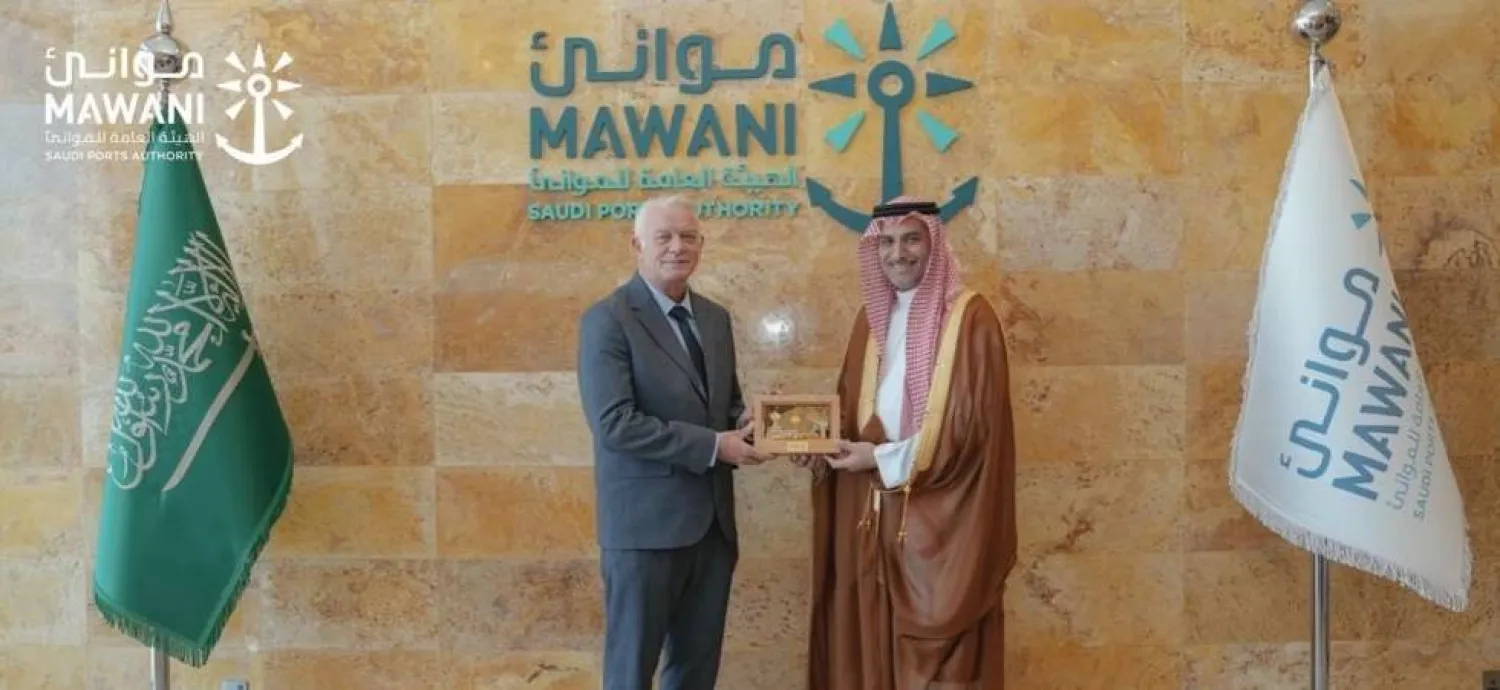
Saudi Arabia’s Mawani Grants Unified License to Global Shipping Line 

The initiative is part of Mawani's ongoing efforts to develop the maritime business environment, enable international companies to invest in the Saudi market, and increase competitiveness within the maritime sector. (Mawani)
TT

Saudi Arabia’s Mawani Grants Unified License to Global Shipping Line 

The initiative is part of Mawani's ongoing efforts to develop the maritime business environment, enable international companies to invest in the Saudi market, and increase competitiveness within the maritime sector. (Mawani)

The Saudi Ports Authority (Mawani) granted on Thursday a unified license to international shipping line Global Shipping Line (PIL), officially recognizing it as an authorized foreign investor to operate maritime agencies in the Kingdom's ports, reported the Saudi Press Agency.

The license is issued in accordance with the regulations outlined in the Maritime Agency Services, reflecting Mawani's commitment to boosting the efficiency of the maritime sector and improving the quality of operational services provided at ports.

It aims to attract global expertise and facilitate knowledge transfer within the Kingdom, aligning with international best practices in the maritime transport industry.

The initiative is part of Mawani's ongoing efforts to develop the maritime business environment, enable international companies to invest in the Saudi market, and increase competitiveness within the maritime sector.

PIL, which operates from its regional headquarters in Riyadh, manages operations in 29 countries.

The move strengthens the Kingdom's position as a crucial logistics hub, in line with the National Transport and Logistics Strategy, while attracting more international shipping lines. It reinforces Saudi Arabia's role as a key link among three continents.


IMF: Restoring Lebanon's Economic Growth Will Require Comprehensive Reforms

FILE PHOTO: A view of the International Monetary Fund (IMF) logo at its headquarters in Washington, D.C., US, November 24, 2024. REUTERS/Benoit Tessier//File Photo
TT

IMF: Restoring Lebanon's Economic Growth Will Require Comprehensive Reforms

FILE PHOTO: A view of the International Monetary Fund (IMF) logo at its headquarters in Washington, D.C., US, November 24, 2024. REUTERS/Benoit Tessier//File Photo

Lebanon's economy has shown resilience despite conflicts in the region, with tourism fueling a bit of a rebound, but restoring growth will require comprehensive reforms, the International Monetary Fund said on Thursday.

IMF spokeswoman Julie Kozack said the global lender remains engaged in complex discussions with Lebanese ‌authorities following their ‌request for an IMF-supported ‌program ⁠in March 2025. The ⁠IMF sent a staff mission to Beirut earlier this month, said Reuters.

The talks have been focused on two big issues, she said, citing the need for banking sector restructuring and a medium-term fiscal ⁠strategy. "The economy has shown resilience ‌despite the impact ‌of conflicts in the region. It has had ‌a bit of a rebound ‌on the back of tourism from the strong diaspora," Kozack said.

"But at the same time, really restoring strong and sustainable growth will ‌require a comprehensive set of reforms to tackle some of the ⁠structural ⁠weaknesses that have really hampered Lebanon's economic performance for many years," she said. Reforms also are needed to attract international support to help Lebanon address its substantial reconstruction needs.

Kozack said Lebanon needs an updated medium-term fiscal framework that includes concrete measures to mobilize additional revenues for much-needed capital spending, as well as a sovereign debt restructuring to restore debt sustainability.