Oil Climbs as Market Steadies after US Tariff Concerns

FILE PHOTO: File photograph of Tengizchevroil oil and gas refinery plant on Tengiz oil field in western Kazakhstan, August 24, 2004. REUTERS/Shamil Zhumatov/File Photo
TT

Oil Climbs as Market Steadies after US Tariff Concerns

FILE PHOTO: File photograph of Tengizchevroil oil and gas refinery plant on Tengiz oil field in western Kazakhstan, August 24, 2004. REUTERS/Shamil Zhumatov/File Photo

Oil prices ticked higher on Monday, rebounding after declines last week on concerns about a global trade war, as investors appeared to shrug off US President Donald Trump's latest threat, this time on steel and aluminium imports.
Brent crude futures was up 74 cents, or 1%, to $75.40 a barrel by 0938 GMT while US West Texas Intermediate crude also climbed 1%, or 72 cents, at $71.72 a barrel, Reuters reported. The market posted its third consecutive weekly decline last week on concerns about a global trade war.
"It's tariff uncertainty which is the name of the game. This affects risk appetite in general and has spillover effects into oil," said Harry Tchilinguiran, group head of research at Onyx Capital.
Trump said he will announce on Monday 25% tariffs on all steel and aluminium imports into the US, in another major escalation of his trade policy overhaul.
Just a week ago, the president announced tariffs on Canada, Mexico and China, but suspended those for the neighboring countries the next day.
There are concerns that tariffs could dampen global economic growth and energy demand. But in light of Trump's temporary backdown last week, investors appeared to be shrugging off the steel and aluminium tariff threat for now, Tony Sycamore, a Sydney-based analyst at IG said.
"The market has realized tariff headlines are likely to continue in the weeks and months ahead," he said, adding that there was an equal chance they could be walked back or even increased at some point in the near future.
"So perhaps investors are coming to the conclusion it's not the best course of action to react to every headline negatively."
China's retaliatory tariffs on some US exports are due to take effect on Monday, with no sign as yet of progress in talks between Beijing and Washington.
Oil and gas traders are seeking waivers from Beijing for US crude and liquefied natural gas imports.
Trump said on Sunday that the US is making progress with Russia to end the Ukraine war, but declined to provide details about any communications he had with Russian President Vladimir Putin.
Sanctions imposed on Russian oil trade on January 10 disrupted Moscow's supplies to its top clients China and India.
Washington also stepped up pressure on Iran last week, with the US Treasury imposing new sanctions on a few individuals and tankers that help to ship millions of barrels of Iranian crude oil per year to China.
Sanctions on Iran and failure to reach a nuclear deal are upside risks to oil prices even though Trump's policies are aimed at driving energy prices lower, Citi analysts said in a note.
"We see oil likely trading sideways to down over the next month or so, with the fundamental downward pressure building on crude in our base case throughout the year," they said.
Brent is forecast to average $60 to $65 a barrel in the second half of 2025 as Trump will be persistent in his desire to lower energy prices, and he will ultimately prove to be a bearish influence on the oil market, Citi said.



Madinah Sees Tourism Surge Ahead of Ramadan, Spending Tops $13.9 Billion

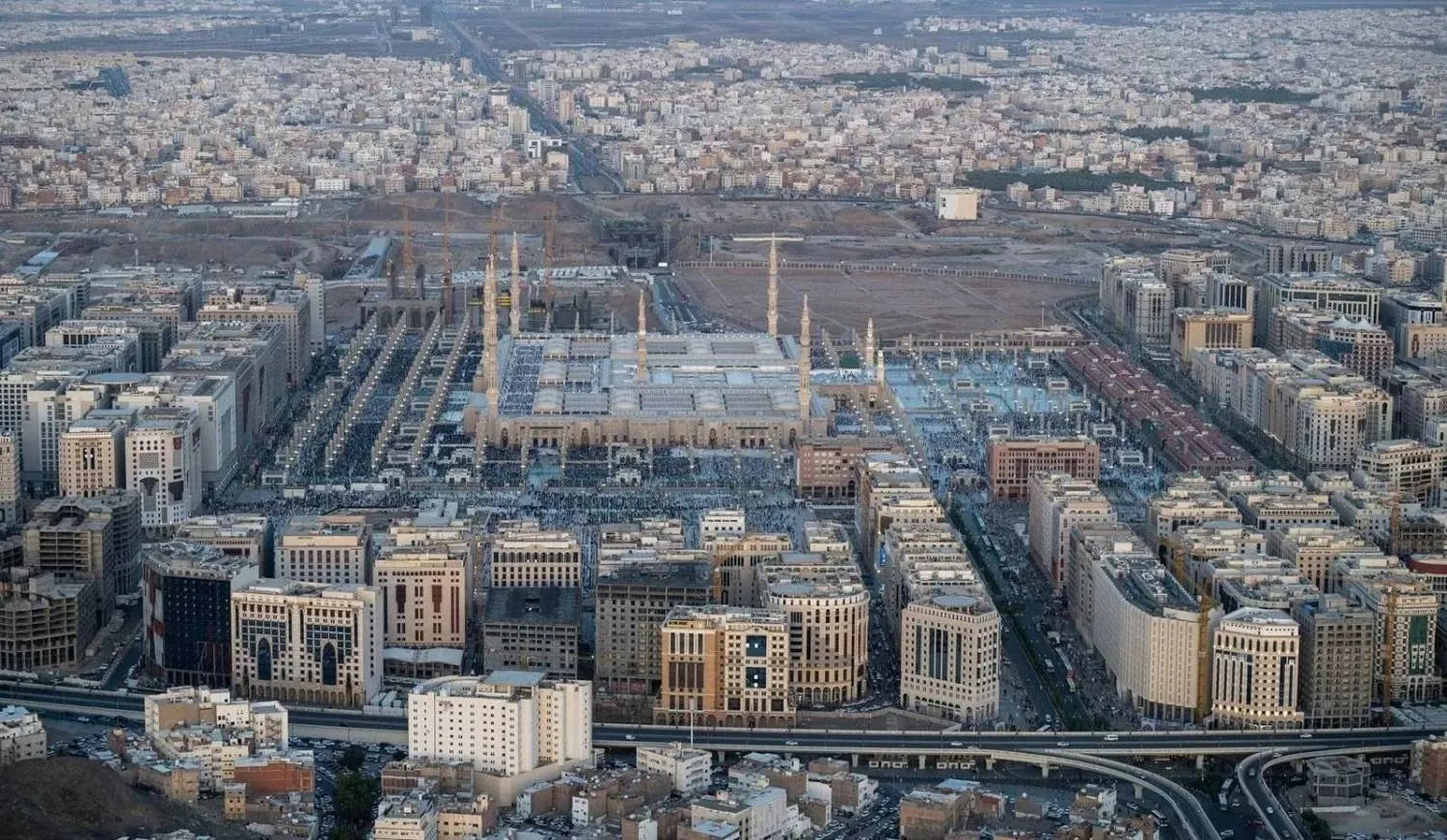
A cluster of buildings and hotels surrounding the Prophet’s Mosque (SPA). 
TT

Madinah Sees Tourism Surge Ahead of Ramadan, Spending Tops $13.9 Billion

A cluster of buildings and hotels surrounding the Prophet’s Mosque (SPA). 

Saudi Arabia’s Minister of Tourism, Ahmed Al-Khateeb, has toured hospitality facilities and visitor services in Madinah as part of the “Spirit of Ramadan” inspection tour, which also included Jeddah and Makkah.

New data show visitor numbers exceeded 21 million over the past year, a 12 percent increase from 2024, while total tourism spending reached SAR 52 billion (about $13.9 billion), up 22 percent.

The visit focused on assessing the sector’s readiness for the Ramadan season, evaluating service quality, and supporting ongoing and upcoming tourism projects.

Madinah posted strong tourism performance in 2025, driven by higher visitor inflows and expanded hospitality capacity, reinforcing its position as a leading religious destination within Saudi Arabia’s tourism landscape.

Demand growth has been matched by a sharp rise in supply. Licensed hospitality facilities increased to 610, up 35 percent, while the number of licensed rooms surpassed 76,000, a 24 percent gain, strengthening the city’s ability to accommodate during peak seasons such as Ramadan and Hajj.

Travel and tourism offices also grew to more than 240, reflecting a 29 percent expansion in supporting services.

Al-Khateeb said the entry of international hospitality brands and new projects over the past five years underscores both sectoral growth and rising investor confidence in the Kingdom’s tourism ecosystem.

“The landscape today is different. The sector is growing steadily, supported by a system that empowers investors and facilitates their journey, with a promising future ahead,” he said.

To expand hotel capacity, the minister inaugurated the Radisson Hotel Madinah, a project worth more than SAR 39 million (around $10 million) and financed by the Tourism Development Fund.

The 2025 performance signals a shift from traditional seasonal growth toward more sustainable expansion built on diversified offerings, improved service quality, and a stronger contribution to the local economy.


Airbus Planning Record Commercial Aircraft Deliveries in 2026

An Airbus A350-1000 at the Singapore Airshow on February 4. The company said Thursday it aims to deliver a record number of aircraft this year. Roslan RAHMAN / AFP/File
TT

Airbus Planning Record Commercial Aircraft Deliveries in 2026

An Airbus A350-1000 at the Singapore Airshow on February 4. The company said Thursday it aims to deliver a record number of aircraft this year. Roslan RAHMAN / AFP/File

Plane maker Airbus aims to deliver a record number of commercial aircraft this year, the company said Thursday, capitalizing on "strong demand" and a jump in profit in 2025.

"2025 was a landmark year, characterized by very strong demand for our products and services across all businesses," CEO Guillaume Faury said in a press release announcing annual results.

The European manufacturer said it received 1,000 orders for commercial planes in 2025, with net orders of 889 after taking cancellations into account, and 793 delivered.

Last year, its overall profit jumped 23 percent to 5.2 billion euros ($6.1 billion).

The company said it is targeting "around 870 commercial aircraft deliveries" this year.

"As the basis for its 2026 guidance, the Company assumes no additional disruptions to global trade or the world economy, air traffic, the supply chain, its internal operations, and its ability to deliver products and services," it said in its outlook.

Both Airbus and its rival Boeing have struggled to return to pre-pandemic production levels after their entire network of suppliers was disrupted, even as airlines are eager to modernize their fleets with more fuel-efficient aircraft and expand to meet an expected increase in passenger numbers over the coming decades.


Saudi Arabia's Humain Invests $3 Bn in Musk's xAI

The logo of the Saudi company Humain. Asharq Al-Awsat
TT

Saudi Arabia's Humain Invests $3 Bn in Musk's xAI

The logo of the Saudi company Humain. Asharq Al-Awsat

Saudi Arabia's artificial intelligence firm Humain said Wednesday it had invested $3 billion in US billionaire Elon Musk's xAI.

The investment made Humain a "significant minority shareholder,” the company said in a statement.

It added that its xAI holdings would be "converted into SpaceX shares" after the rocket company announced it was taking over the AI start-up earlier this month as Musk pushes to unify his many business interests.

CEO Tareq Amin said the latest investment “reflects Humain’s conviction in transformational AI and our ability to deploy meaningful capital behind exceptional opportunities where long-term vision, technical excellence, and execution converge, xAI’s trajectory, further strengthened by its acquisition by SpaceX, one of the largest technology mergers on record, represents the kind of high-impact platform we seek to support with significant capital.”

Musk's xAI had previously announced in November it was teaming up with Humain to build a 500-megawatt data center in Saudi Arabia.

The Saudi firm also inked a new deal with Nvidia.