World Bank: Red Sea Crisis Raises Global Shipping Costs by 141%https://english.aawsat.com/business/5112385-world-bank-red-sea-crisis-raises-global-shipping-costs-141
World Bank: Red Sea Crisis Raises Global Shipping Costs by 141%
FILE PHOTO: The oil tanker Cordelia Moon bursts into flames after being hit by a missile in the Red Sea, off Yemen's Red Sea Port of Hodeidah, in this screengrab from a video released on October 1, 2024. Houthi Military Media/Handout via REUTERS
World Bank: Red Sea Crisis Raises Global Shipping Costs by 141%
FILE PHOTO: The oil tanker Cordelia Moon bursts into flames after being hit by a missile in the Red Sea, off Yemen's Red Sea Port of Hodeidah, in this screengrab from a video released on October 1, 2024. Houthi Military Media/Handout via REUTERS
The Red Sea crisis has emerged as a critical flashpoint of the conflict in the Middle East, upending global trade and maritime transport, port activity in the MENA region, and ecological balance of the Red Sea.
In a report entitled “The Deepening Red Sea Shipping Crisis: Impacts and Outlook,” the World Bank said that trade diversions have reshaped port trade activity along the Asia-Europe corridor, altering the fortunes of key hubs.
It said Western Mediterranean hubs are thriving on redirected trade, while their Eastern Mediterranean counterparts face steep declines. Meanwhile, the report said, South Asian ports, like Colombo, have seized the opportunity, capturing more regional cargo.
“The disruption has sent shockwaves through global supply chains, resulting in longer supplier delivery times, especially in Europe,” the World Bank said.
However, the report said higher freight rates have had muted effects on inflation so far, partly owing to subdued global demand, lower global commodity prices, and the adequate stock of inventories.
The report said the Drewry World Container Index, a critical gauge of global shipping costs, remains 141% higher than pre-crisis levels as of November 2024.
It said the impact is more pronounced along routes passing through the Red Sea, where shipping rates from Shanghai to Rotterdam and Genoa are, on average, 230% higher than at the end of 2023.
In its detailed report, the World Bank said attacks on commercial vessels in the Red Sea—a vital corridor for nearly a third of global container traffic—have severely disrupted regional and global maritime operations.
Security threats in the Red Sea have compelled ships on the Asia-Europe and Asia-North Atlantic trade lanes to be rerouted around Africa’s Cape of Good Hope.
In the wake of these disruptions, the once-thriving maritime passage, prized for its role as the most expedient link between Asia and Europe, has witnessed a precipitous drop in vessel traffic.
By end-2024, about a year after the onset of the crisis, vessel traffic through the strategic Suez Canal and Bab El-Mandeb Strait—which used to carry 30% of world container traffic—had plummeted by three-fourths, forcing ships to detour around the Cape of Good Hope, where navigation volumes surged by over 50%.
Meanwhile, the Strait of Hormuz, the world’s most critical oil passageway and a chokepoint between the Arabian Gulf and the Gulf of Oman, has not been immune to the spillover effects, experiencing a 15% reduction in maritime traffic due to its proximity to the conflict zone.
Also, trade diversion around the Cape of Good Hope led a sharp increase in the travel distances and times of vessels that once frequented the Red Sea.
The report said that by October 2024, travel distances for cargo ships and tankers that previously passed through the Red Sea had risen by 48% and 38%, respectively, compared to the pre-conflict baseline of January to September 2023.
It said this has resulted in corresponding increases in travel times of up to 45% for cargo and 28% for tankers, signaling a significant shift in global maritime logistics.
The Red Sea shipping crisis has also profoundly disrupted the global supply chains.
The World Bank’s Global Supply Chain Stress Index, a measure of the delayed container shipping capacity that was held up due to port congestion or closures, rose to 2.3 million Twenty-foot Equivalent Unit (TEUs) in December 2024—more than double the levels recorded in December 2023.
Over the past year, Eastern Mediterranean and Arabian Gulf ports have accounted for 26% of delayed container shipping capacity, up from 8% a year ago.
Meanwhile, China’s share has dropped to 9% from 38%.
The report additionally showed that Purchasing Managers’ Indices for suppliers’ delivery times have increased in 25 out of 35 surveyed countries globally between November 2023 and October 2024, compared to the pre-crisis baseline of November 2022 to October 2023. The deterioration of supplier delivery times has been particularly pronounced in Europe and some of the Asian countries.
The World Bank said that since November 2023, the majority of Red Sea and Gulf ports and their associated economies have registered reduced sea trade volumes compared to the baseline period of November 2022 to October 2023.
Jordan and Oman saw the steepest declines in shipping exports, with reductions of 38% and 28%, respectively, while Jordan and Qatar experienced the largest declines in shipping imports, at 50 and 27%. Between November 2023 and October 2024, nearly all of the top 20 ports across Red Sea and Gulf countries recorded notable drops in both imports and exports, with an average trade volume decrease of 8% compared to their pre-crisis levels.
Egypt reported an estimated $7 billion loss in Suez Canal revenues for 2024, representing approximately 5% of its GDP.
Nevertheless, a few ports in the UAE, Egypt, and Saudi Arabia have bucked the trend, showing positive growth.
Their locations in the Mediterranean and the Gulf, away from Houthi-controlled Yemeni territory, likely enabled them to benefit from trade diversion from ports located near the conflict’s center and maintain uninterrupted trade routes to Europe and other markets.
From November 2023 to October 2024, global port visits and seaborne trade volumes dropped by 5% for imports and 4% for exports compared to the November 2022 to October 2023 baseline, partly due to the Red Sea shipping crisis.
With the ceasefire between Israel and Hamas taking effect on January 19, 2025, and the Houthis stating they will limit attacks on commercial vessels to Israel-linked ships, the potential for reduced disruptions to global maritime trade has increased, the report showed.
It said a ceasefire between Israel and Hamas took effect on January 19, 2025, unfolding in three phases over several weeks.
More specifically, three scenarios are constructed to assess its potential impact on shipping trade.
First, in the baseline scenario, the crisis is assumed to last until October 2025, with year-on-year shipping trade growth from December 2024 to October 2025 mirroring those observed during the same period from December 2023 to October 2024.
Second, gradual recovery scenario assumes the crisis lasts until May 2025, after which shipping trade growth returns to the pre-crisis levels.
Third, the World Bank said a rapid recovery scenario assumes the crisis ends quickly in February 2025.
Iraqi Central Bank Says Traders Will Not Bear the Difference Under New Dollar Exchange Ratehttps://english.aawsat.com/business/5328067-iraqi-central-bank-says-traders-will-not-bear-difference-under-new-dollar-exchange
Iraqi Central Bank Says Traders Will Not Bear the Difference Under New Dollar Exchange Rate
Employees walk outside the Central Bank of Iraq headquarters in Baghdad (Reuters)
The Central Bank of Iraq announced on Saturday that traders will not be charged the difference under the new dollar exchange rate for transfers whose purchases and funding were confirmed at the previous rate before the seventh of this month.
Iraqi markets have experienced disruption following the central bank’s unexpected decision to raise the dollar exchange rate in the draft federal budget for fiscal year 2027 from 1,320 dinars to 1,520 dinars per dollar.
In a statement issued on Saturday regarding traders’ transfers awaiting execution, the Central Bank of Iraq said it was monitoring banking transactions carried out before and after the exchange rate adjustment and verifying that banks comply with the applicable instructions and regulations, in order to protect the rights of traders and customers.
The central bank urged companies and traders whose transfers to finance imports were due for execution before the seventh of this month to contact their banks and confirm that the transfers had been processed. It noted that it had previously strengthened banks’ accounts to cover these transfers, monitor any delays, and ensure that traders were not charged exchange rate differences on transfers confirmed as purchased and funded at the previous rate.
The bank stressed that “if execution is delayed or additional amounts are demanded, a complaint can be submitted through the Central Bank of Iraq’s complaints platform for follow-up with the bank concerned.” It added that it was coordinating with banks and electronic payment companies to introduce special foreign trade cards for small-scale traders to facilitate import financing, in accordance with the mechanisms and regulations set by the central bank.
The exchange rate adjustment has pushed the dollar’s price in Iraq’s parallel market to 1,665 dinars and led to a sharp increase in the prices of essential goods and electrical appliances.
Thailand Prepares to Host IMF-World Bank Meetingshttps://english.aawsat.com/business/5327985-thailand-prepares-host-imf-world-bank-meetings
The conference logo of the IMF-World Bank Group Annual Meetings 2026 is displayed on a wall backdrop inside a meeting room at the Queen Sirikit National Convention Center in Bangkok on October 9, 2026. (Photo by Chanakarn LAOSARAKHAM / AFP)
The conference logo of the IMF-World Bank Group Annual Meetings 2026 is displayed on a wall backdrop inside a meeting room at the Queen Sirikit National Convention Center in Bangkok on October 9, 2026. (Photo by Chanakarn LAOSARAKHAM / AFP)
Thailand is preparing to host the IMF–World Bank Annual Meetings in Bangkok from October 12–18, bringing together more than 15,000 participants from 191 countries, including central bank governors, economic policymakers and business leaders, for discussions on the world economy.
To ease traffic, Bangkok government offices will work from home on October 12, 14 and 15, while October 13 is an existing public holiday and October 16 has been declared a special government and bank holiday, with private companies and state enterprises asked to consider suitable arrangements.
Security has been tightened at the meeting venue in central Bangkok and 21 official hotels, according to the authorities.
About 500 Tourist Police officers will also help secure the venue, delegate hotels and tourist attractions through undercover deployments, patrols, drones and motorcade escorts coordinated with around 39 embassies, Tourist Police Bureau Commissioner Phongsiam Meekhanthong said.
Visiting leaders include Swiss President Guy Parmelin, making the first official visit to Thailand by a Swiss president in 22 years, and Singapore President Tharman Shanmugaratnam, the Thai Foreign Ministry said.
Participants’ spending could generate 1.05–2.25 billion baht for the Thai economy, according to the Thai Finance Ministry.
More than 320 electric vehicles will serve participants to cut carbon emissions, Reuters quoted the Thai Finance Ministry as saying.
Heavy to very heavy rain is forecast for Bangkok and surrounding provinces on October 10-11, potentially causing localized flooding, the Bangkok Metropolitan Administration warned.
This comes after parts of the city flooded two weeks ago following 320 mm of rain over three days.
From Supply Security to Artificial Intelligence: Issues Bringing Global Energy Leaders Together in Riyadhhttps://english.aawsat.com/business/5327968-supply-security-artificial-intelligence-issues-bringing-global-energy-leaders
From Supply Security to Artificial Intelligence: Issues Bringing Global Energy Leaders Together in Riyadh
The Saudi capital Riyadh. Reuters
The global energy sector is turning its attention to Riyadh starting Sunday, as a week of ministerial meetings and international events gets underway, bringing together senior government officials, energy industry leaders, international organizations, and experts, with the participation of Saudi Arabia's Minister of Energy and Minister of Industry and Mineral Resources, Prince Abdulaziz bin Salman, according to the announced program.
These meetings come at a time of heightened geopolitical tensions and risks surrounding the Strait of Hormuz, which have raised questions about the security of oil and gas flows, infrastructure resilience, and export routes.
Saudi Arabia's East-West Pipeline, which transports crude oil from the Eastern Province to the Red Sea port of Yanbu, stands out as a route that allows oil exports to bypass the strait and strengthens the resilience of the Kingdom's export system against disruptions to maritime navigation.
The agenda for Riyadh Energy Week extends beyond supply security to include investment needs, growing electricity demand, and the accelerating deployment of artificial intelligence and digital technologies across the energy sector, reflecting both the challenges and opportunities facing the industry.
The week-long program, running from October 11 to 15, includes the 17th International Energy Forum (IEF17) Ministerial Meeting, ministerial meetings focused on clean energy and innovation, the main program of the 25th WPC Energy Congress, its accompanying exhibition, and a series of technical events organized by the Organization of Arab Petroleum Exporting Countries (OAPEC).
Saudi Arabia is hosting the 25th WPC Energy Congress for the first time in the event's more than nine-decade history. The gathering will attract ministers, government officials, energy company executives, representatives of international organizations, experts, and specialists from around the world. The event combines strategic sessions, ministerial dialogues, a technical program, and an international exhibition showcasing technologies and solutions related to the energy sector.
The significance of Energy Week lies not only in the diversity of its meetings and participants but also in the extent of issues confronting policymakers and companies at a time when ensuring supply security and market stability has become increasingly critical. These priorities must be pursued alongside meeting investment requirements, improving energy efficiency, and advancing technology.
The discussion is not only about the energy sources the global economy will require, but also about how that energy will be produced, transported, financed, and supplied at an affordable cost while keeping pace with changing consumption and demand patterns.
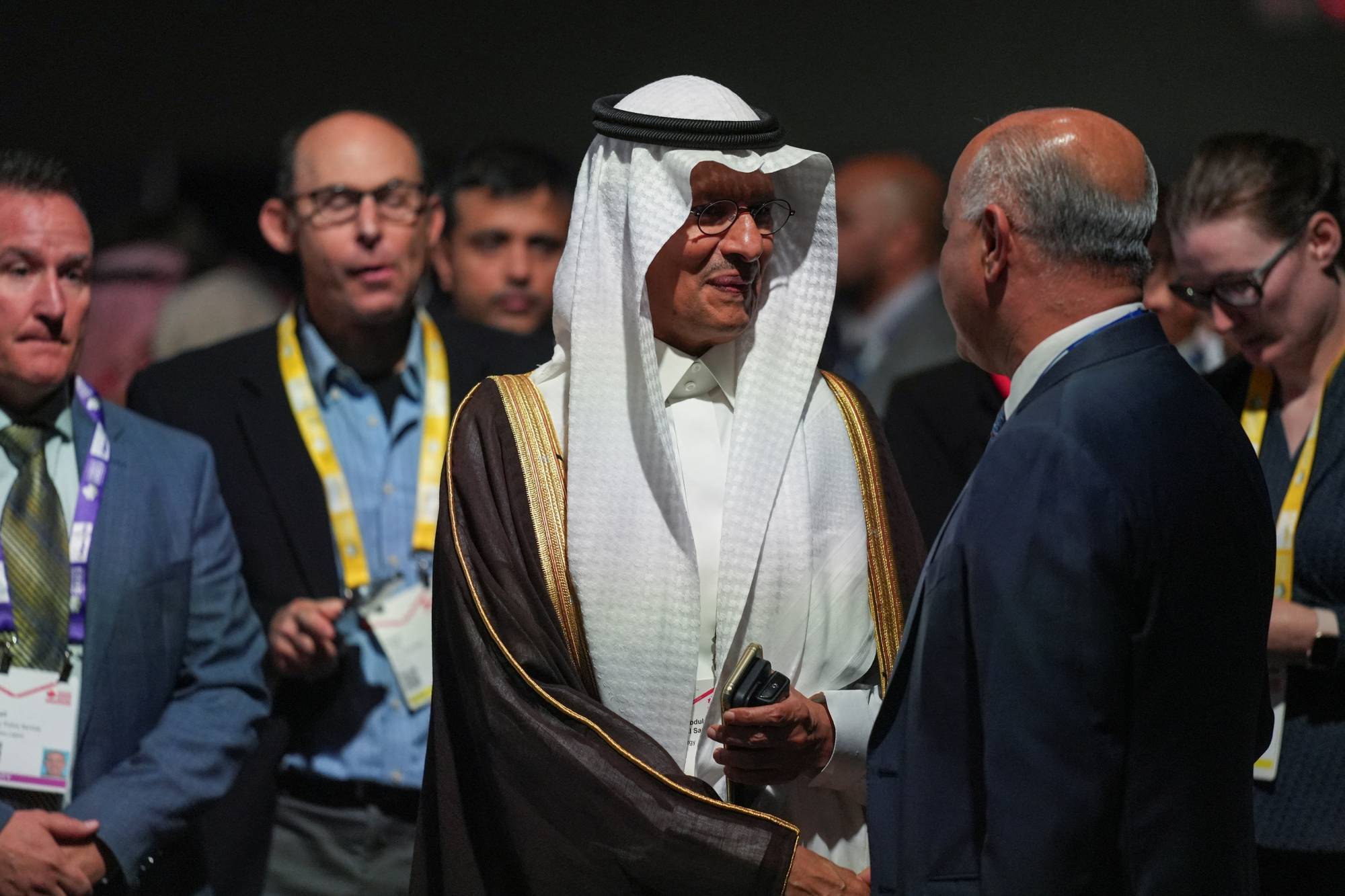
Saudi Minister of Energy and Minister of Industry and Mineral Resources Prince Abdulaziz bin Salman. Reuters file photo
Ministerial Meeting Opens Energy Security Week
The main events begin on Sunday with the IEF17 Ministerial Meeting under the theme "Energy Security and Shared Goals in a New Era," hosted by Saudi Arabia in partnership with Italy and Nigeria.
The meeting will bring together energy-producing and energy-consuming countries to discuss common challenges and strengthen dialogue on market stability, supply security, and long-term investment. These issues have gained increasing importance amid geopolitical risks that could affect supply chains, infrastructure, and the investment needed to accommodate growing demand in energy markets.
The agenda includes enhancing coordination between producing and consuming nations, developing trade and investment frameworks, and accelerating access to affordable clean-energy technologies in ways that support economic resilience, competitiveness, and development objectives.
The role of infrastructure, transportation networks, and trade routes in strengthening the resilience of energy markets will also feature prominently, alongside the importance of clear policies and stable regulatory frameworks in encouraging long-term investment across all stages of the energy supply chain.
WPC Energy Congress
The official program of the WPC Energy Congress kicks off on Monday and will run through Thursday, under the theme “Pathways to an Energy Future for All.”
The congress is one of the central pillars of Riyadh Energy Week, featuring ministerial and strategic sessions, dialogues with energy industry leaders, a specialized technical program, and an exhibition where companies can showcase technologies, solutions, and projects.
The agenda spans a wide range of topics, including energy security, oil and gas markets, investment, financing, digital transformation, artificial intelligence, critical minerals, carbon management, natural gas, and the future of the global energy mix.
The significance of the congress lies in its ability to bring together traditional energy market issues and the technological and environmental transitions that are reshaping investment decisions. Oil and gas will remain at the heart of discussions on demand, supply, and production capacity, alongside growing interest in electricity, digital technologies, resource efficiency, and emissions management.
The participation of executives from major companies, including Saudi Aramco, ExxonMobil, Chevron, Shell, and BP, will provide insights into the industry's outlook on investment, production, demand, and technology.
The discussions are particularly important given the close link between investment decisions and market expectations, prices, financing costs, geopolitical risks, regulatory changes, and technological developments that influence the viability of long-term projects.
The conference theme, “Pathways to an Energy Future for All,” reflects the diversity of options needed to meet global energy needs in light of varying national resources and economic priorities. As a result, affordability, supply reliability, and infrastructure development are placed at the center of the debate, alongside sustainability requirements and emissions reduction goals.
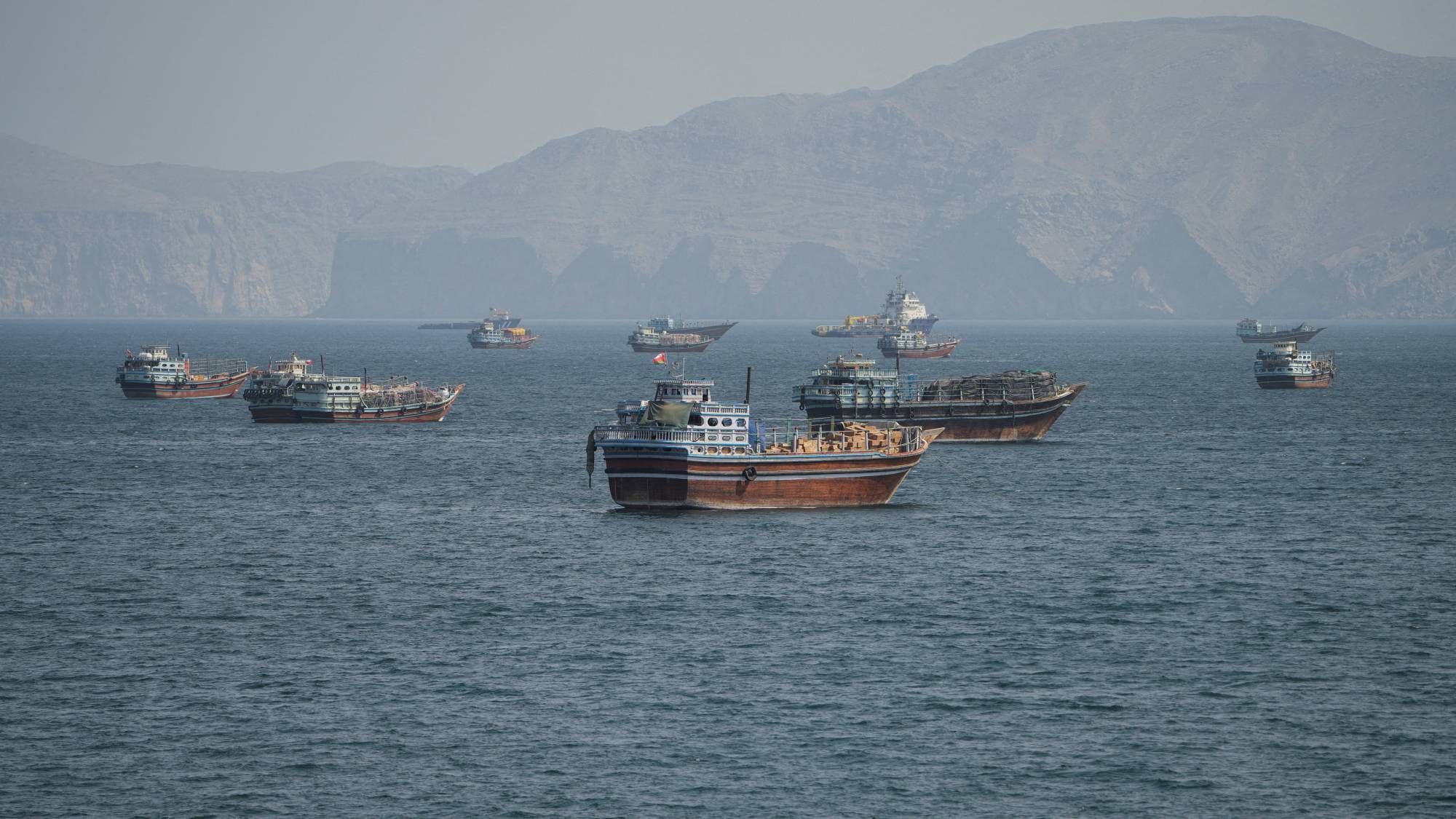
FILE PHOTO: Vessels at the Strait of Hormuz, as seen from Musandam, Oman, October 2, 2026. REUTERS/Stringer/File Photo
Clean Energy and Innovation on Ministers’ Agenda
Alongside the IEF17 Ministerial Meeting, Riyadh will host the 17th Clean Energy Ministerial (CEM17) from October 11 to 13, in parallel with the 11th Mission Innovation Ministerial (MI-11), which is focused on accelerating innovation in clean energy technologies.
The meetings will address innovation, international cooperation in developing clean energy technologies, and expanding their deployment. These issues are gaining economic importance as the need for new investments grows, electricity demand rises, and countries seek to reduce emissions without compromising supply security or economic competitiveness.
The key challenge remains how to translate initiatives and commitments into funded projects and large-scale applications that can demonstrate measurable impacts on the efficiency and cost-effectiveness of energy systems.
International Energy Exhibition
Running in parallel with the conference, the exhibition accompanying the congress opens on Monday and continues through Thursday, serving as the practical and commercial dimension of Riyadh Energy Week.
The exhibition provides companies with an opportunity to showcase energy-related technologies, solutions, and projects, while engaging with investors, policymakers, and service providers. It brings together organizations operating across production, engineering services, infrastructure, digital technologies, and environmental solutions.
The importance of the exhibition lies in its role as a platform for comparing market offerings and following developments in applications aimed at improving production efficiency, streamlining operations, upgrading infrastructure, managing emissions, and leveraging data and advanced technologies. It can also serve as a venue for strengthening business relationships and exploring opportunities for collaboration between companies and institutions.
From an economic perspective, the exhibition offers insight into how innovation moves from the demonstration and pilot stage to real-world implementation and investment. Technology derives its value not merely from its novelty, but from its ability to reduce costs, improve efficiency, enhance supply reliability, or mitigate operational risks.
This aspect is becoming increasingly important as artificial intelligence and digital systems are more widely deployed in industrial operations and power-grid management, and as demand grows for solutions that improve energy efficiency and support supply stability. The participation of companies also provides an opportunity to identify areas attracting investor interest and to assess the challenges associated with scaling up the adoption of new technologies.
Organization of Arab Petroleum Exporting Countries (OAPEC). Kuna
OAPEC and Energy Transitions
Issues related to energy transitions and their impact on Arab oil- and gas-producing economies will also feature prominently during Energy Week through events organized by OAPEC. These events will examine the economic, social, and environmental dimensions of these transitions, as well as pathways for reducing emissions in the petroleum industry.
The program begins with a high-level workshop on Tuesday, followed by a technical symposium on October 14 and 15. Announced topics include the drivers of global energy transitions, their effects on the economies of Arab oil-producing countries, and their broader social and environmental implications.
The events will also include the third symposium on pathways for reducing carbon emissions in downstream petroleum industries, organized by the Saudi Ministry of Energy in cooperation with OAPEC. The symposium will highlight innovations and technological solutions that can help reduce emissions and advance sustainability in these industries.
These issues carry significant economic importance for Arab producing countries, given the central role of oil and gas in government revenues, exports, investment, and employment. Transformations in energy markets and in the technologies used for production, refining, and manufacturing influence operating costs and competitiveness, while also shaping the need to modernize industrial assets and invest in advanced technologies.
They also raise questions about the ability of these economies to adapt to changing export markets and diversify sources of income, particularly given the disparities in resources, financial capabilities, and infrastructure across Arab countries.
Artificial Intelligence and Electricity Demand
One of the topics warranting particular attention during Energy Week is the relationship between the expansion of artificial intelligence and rising electricity demand, along with the resulting need to develop generation capacity, transmission and distribution networks, and supporting infrastructure.
The growth of data centers and digital applications not only increases electricity consumption but also heightens the importance of reliable power supplies and the ability to meet rising loads. This raises questions about how investment should be allocated among expanding generation capacity, modernizing grids, developing energy-storage solutions, and managing demand.
It also highlights the roles of natural gas, renewable energy, and other energy sources in meeting emerging needs. At the same time, digital systems provide opportunities to improve demand forecasting, asset management, and operational efficiency.
The participation of companies operating in the energy and digital technology sectors offers a chance to examine applications that have already reached commercial deployment, as well as projects still under development, together with corporate assessments of investment costs and expected returns. This issue is particularly important given the need to balance digital expansion with the cost of providing electricity and the infrastructure required to sustain it.
For Saudi Arabia, this topic underscores the integration between the development of the energy sector, the rapid growth of the digital economy, and the emergence of new industries.
It creates opportunities to expand investment, develop infrastructure, and improve resource efficiency. This interconnection further reinforces the importance of the energy sector in supporting new economic activities, keeping pace with technological advancement, and laying the foundations for growth in the years ahead.
Riyadh's hosting of these meetings reflects the expanding international dialogue on the future of energy at a time of accelerating technological transformation, growing investment opportunities, and increasingly diverse market needs.
The expected discussions will provide valuable insight into how governments and companies are seeking to develop the global energy system, strengthen international cooperation, and leverage new technologies in ways that enhance supply reliability, improve resource efficiency, and support economic growth.
لم تشترك بعد
انشئ حساباً خاصاً بك لتحصل على أخبار مخصصة لك ولتتمتع بخاصية حفظ المقالات وتتلقى نشراتنا البريدية المتنوعة