


World Bank: Red Sea Crisis Raises Global Shipping Costs by 141%

FILE PHOTO: The oil tanker Cordelia Moon bursts into flames after being hit by a missile in the Red Sea, off Yemen's Red Sea Port of Hodeidah, in this screengrab from a video released on October 1, 2024. Houthi Military Media/Handout via REUTERS
TT

World Bank: Red Sea Crisis Raises Global Shipping Costs by 141%

FILE PHOTO: The oil tanker Cordelia Moon bursts into flames after being hit by a missile in the Red Sea, off Yemen's Red Sea Port of Hodeidah, in this screengrab from a video released on October 1, 2024. Houthi Military Media/Handout via REUTERS

The Red Sea crisis has emerged as a critical flashpoint of the conflict in the Middle East, upending global trade and maritime transport, port activity in the MENA region, and ecological balance of the Red Sea.

In a report entitled “The Deepening Red Sea Shipping Crisis: Impacts and Outlook,” the World Bank said that trade diversions have reshaped port trade activity along the Asia-Europe corridor, altering the fortunes of key hubs.

It said Western Mediterranean hubs are thriving on redirected trade, while their Eastern Mediterranean counterparts face steep declines. Meanwhile, the report said, South Asian ports, like Colombo, have seized the opportunity, capturing more regional cargo.

“The disruption has sent shockwaves through global supply chains, resulting in longer supplier delivery times, especially in Europe,” the World Bank said.

However, the report said higher freight rates have had muted effects on inflation so far, partly owing to subdued global demand, lower global commodity prices, and the adequate stock of inventories.

The report said the Drewry World Container Index, a critical gauge of global shipping costs, remains 141% higher than pre-crisis levels as of November 2024.

It said the impact is more pronounced along routes passing through the Red Sea, where shipping rates from Shanghai to Rotterdam and Genoa are, on average, 230% higher than at the end of 2023.

In its detailed report, the World Bank said attacks on commercial vessels in the Red Sea—a vital corridor for nearly a third of global container traffic—have severely disrupted regional and global maritime operations.

Security threats in the Red Sea have compelled ships on the Asia-Europe and Asia-North Atlantic trade lanes to be rerouted around Africa’s Cape of Good Hope.

In the wake of these disruptions, the once-thriving maritime passage, prized for its role as the most expedient link between Asia and Europe, has witnessed a precipitous drop in vessel traffic.

By end-2024, about a year after the onset of the crisis, vessel traffic through the strategic Suez Canal and Bab El-Mandeb Strait—which used to carry 30% of world container traffic—had plummeted by three-fourths, forcing ships to detour around the Cape of Good Hope, where navigation volumes surged by over 50%.

Meanwhile, the Strait of Hormuz, the world’s most critical oil passageway and a chokepoint between the Arabian Gulf and the Gulf of Oman, has not been immune to the spillover effects, experiencing a 15% reduction in maritime traffic due to its proximity to the conflict zone.

Also, trade diversion around the Cape of Good Hope led a sharp increase in the travel distances and times of vessels that once frequented the Red Sea.

The report said that by October 2024, travel distances for cargo ships and tankers that previously passed through the Red Sea had risen by 48% and 38%, respectively, compared to the pre-conflict baseline of January to September 2023.

It said this has resulted in corresponding increases in travel times of up to 45% for cargo and 28% for tankers, signaling a significant shift in global maritime logistics.

The Red Sea shipping crisis has also profoundly disrupted the global supply chains.

The World Bank’s Global Supply Chain Stress Index, a measure of the delayed container shipping capacity that was held up due to port congestion or closures, rose to 2.3 million Twenty-foot Equivalent Unit (TEUs) in December 2024—more than double the levels recorded in December 2023.

Over the past year, Eastern Mediterranean and Arabian Gulf ports have accounted for 26% of delayed container shipping capacity, up from 8% a year ago.

Meanwhile, China’s share has dropped to 9% from 38%.

The report additionally showed that Purchasing Managers’ Indices for suppliers’ delivery times have increased in 25 out of 35 surveyed countries globally between November 2023 and October 2024, compared to the pre-crisis baseline of November 2022 to October 2023. The deterioration of supplier delivery times has been particularly pronounced in Europe and some of the Asian countries.

The World Bank said that since November 2023, the majority of Red Sea and Gulf ports and their associated economies have registered reduced sea trade volumes compared to the baseline period of November 2022 to October 2023.

Jordan and Oman saw the steepest declines in shipping exports, with reductions of 38% and 28%, respectively, while Jordan and Qatar experienced the largest declines in shipping imports, at 50 and 27%. Between November 2023 and October 2024, nearly all of the top 20 ports across Red Sea and Gulf countries recorded notable drops in both imports and exports, with an average trade volume decrease of 8% compared to their pre-crisis levels.

Egypt reported an estimated $7 billion loss in Suez Canal revenues for 2024, representing approximately 5% of its GDP.

Nevertheless, a few ports in the UAE, Egypt, and Saudi Arabia have bucked the trend, showing positive growth.

Their locations in the Mediterranean and the Gulf, away from Houthi-controlled Yemeni territory, likely enabled them to benefit from trade diversion from ports located near the conflict’s center and maintain uninterrupted trade routes to Europe and other markets.

From November 2023 to October 2024, global port visits and seaborne trade volumes dropped by 5% for imports and 4% for exports compared to the November 2022 to October 2023 baseline, partly due to the Red Sea shipping crisis.

With the ceasefire between Israel and Hamas taking effect on January 19, 2025, and the Houthis stating they will limit attacks on commercial vessels to Israel-linked ships, the potential for reduced disruptions to global maritime trade has increased, the report showed.

It said a ceasefire between Israel and Hamas took effect on January 19, 2025, unfolding in three phases over several weeks.

More specifically, three scenarios are constructed to assess its potential impact on shipping trade.

First, in the baseline scenario, the crisis is assumed to last until October 2025, with year-on-year shipping trade growth from December 2024 to October 2025 mirroring those observed during the same period from December 2023 to October 2024.

Second, gradual recovery scenario assumes the crisis lasts until May 2025, after which shipping trade growth returns to the pre-crisis levels.

Third, the World Bank said a rapid recovery scenario assumes the crisis ends quickly in February 2025.



European Oil and Gas Stocks Hit Record High, Surpassing 2007 Level

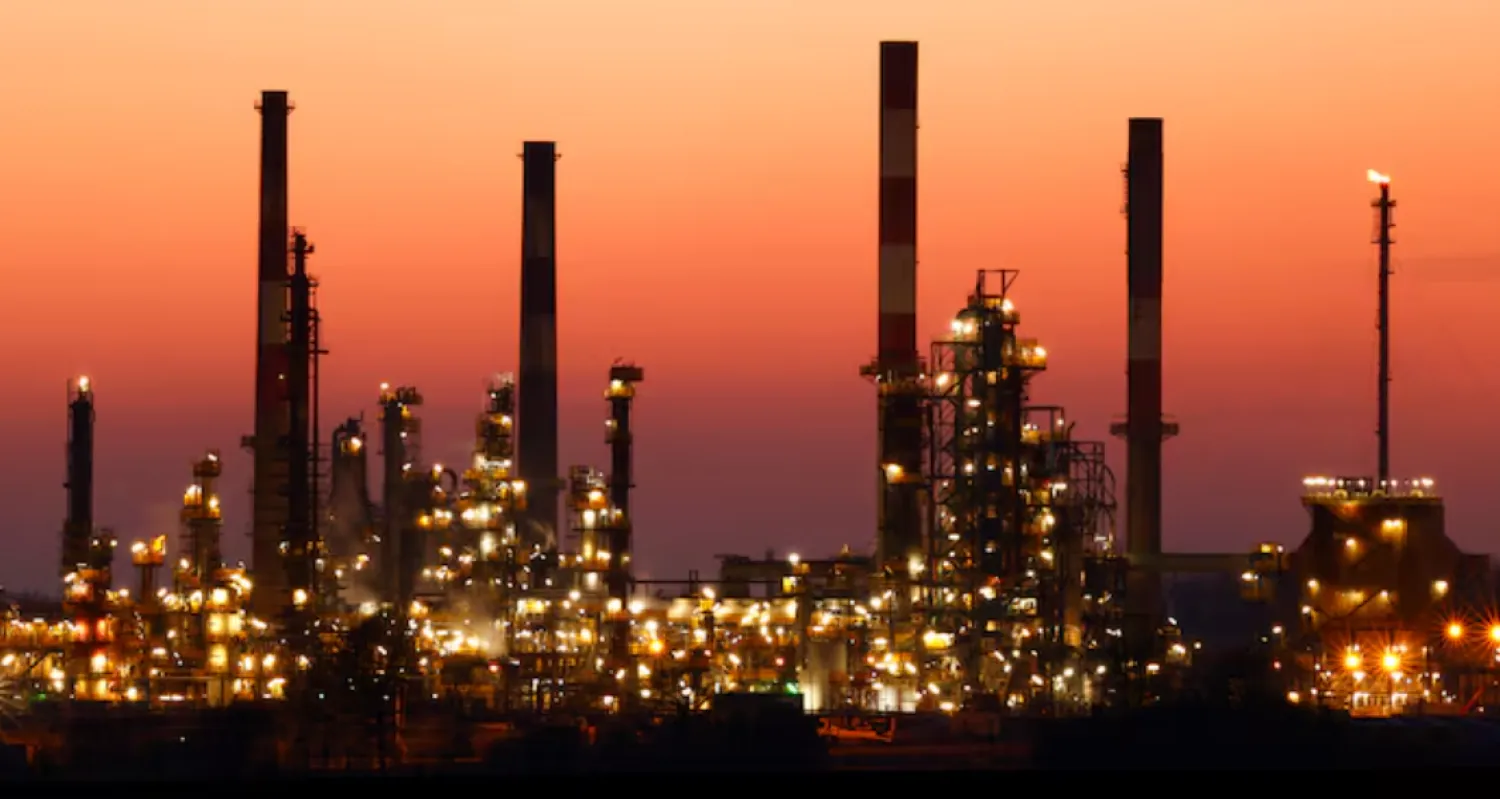
The chimneys of the Total Grandpuits oil refinery are seen just after sunset, southeast of Paris, France, March 1, 2021. REUTERS/Christian Hartmann
TT

European Oil and Gas Stocks Hit Record High, Surpassing 2007 Level

The chimneys of the Total Grandpuits oil refinery are seen just after sunset, southeast of Paris, France, March 1, 2021. REUTERS/Christian Hartmann

The European oil and gas stocks index hit a record high on Monday, surpassing a previous record hit in 2007, helped in recent weeks by a rise in the price of oil, Reuters reported.

At 1450 in London the basket was up 1.5%. Oil and gas names have added 17% year-to-date versus a 6.5% rise for the pan-European STOXX 600 index.

Brent rose as high as $72.44 a barrel on Monday a six month high. It has risen nearly 19% so far in 2026 as investors worry about US military action in Iran.


Oil Hovers Near Six-month High with Nuclear Talks and US Tariffs in Focus

Oil platforms and pumpjacks at Lake Maracaibo, in Cabimas, Venezuela, January 26, 2026. REUTERS/Leonardo Fernandez Viloria/File Photo
TT

Oil Hovers Near Six-month High with Nuclear Talks and US Tariffs in Focus

Oil platforms and pumpjacks at Lake Maracaibo, in Cabimas, Venezuela, January 26, 2026. REUTERS/Leonardo Fernandez Viloria/File Photo

Oil prices steadied near a six-month high on Monday as the US and Iran prepared for a third round of nuclear talks while increased economic uncertainty was also in focus after the latest US tariff upheaval.

Brent crude futures were up 9 cents at $71.85 a barrel by 1308 GMT while US West Texas Intermediate crude gained 15 cents to $66.63, Reuters reported.

Growing concern over potential military conflict between the US and Iran pushed Brent prices up more than 5% last week to their highest since July 2025 at $72.34.

"With the next, and possibly last, round of the Iranian nuclear talks not until Thursday, focus is on the US Supreme Court’s decision to strike down import tariffs and the subsequent reaction from the government," said PVM Oil Associates analyst Tamas Varga.

The US Customs and Border Protection agency said it would halt collections of tariffs imposed under the International Emergency Economic Powers Act at 12:01 a.m. EST (0501 GMT) on Tuesday.

However, Trump said on Saturday that he would raise a temporary tariff from 10% to 15% on US imports from all countries, the maximum allowed under the law, after the US Supreme Court struck down his previous tariff program.

"This morning’s weakness is a defensive move, and needless to say, with the uncertainty surrounding a US military intervention in Iran, the ongoing Russian-Ukrainian war and now the US Supreme Court’s decision, oil price direction is not (clear), but volatility is guaranteed," PVM's Varga said.

Iran has indicated it is prepared to make concessions on its nuclear program in return for the lifting of sanctions and recognition of its right to enrich uranium, a senior Iranian official told Reuters ahead of Thursday's third round of nuclear talks between the two nations.

While prices on paper had moved higher, softer prompt spreads and weaker physical differentials pointed to pricing being based on geopolitical concerns rather than an actual lack of oil in the market, Morgan Stanley analysts said in a note.


Chevron, Iraq Agree to Exclusive Talks Over West Qurna 2 Oilfield 

A view of West Qurna oilfield is seen in Basra, southeast of Baghdad, March 29, 2014. (Reuters)
TT

Chevron, Iraq Agree to Exclusive Talks Over West Qurna 2 Oilfield 

A view of West Qurna oilfield is seen in Basra, southeast of Baghdad, March 29, 2014. (Reuters)

Chevron has entered into exclusive talks with Iraq over the giant West Qurna 2 oilfield, moving closer to acquiring the field from sanctioned Russian oil firm Lukoil.

The talks, which Chevron said will include the exchange of confidential data, could expand the US oil major's footprint in ‌Iraq after ‌the country decided to nationalize the West ‌Qurna 2 ⁠field and unwind ⁠Lukoil's interest in the project.

Iraq nationalized the field last month after the US imposed sanctions on Lukoil to put pressure on Russia to end its war in Ukraine.

EXCLUSIVE NEGOTIATION RIGHTS FOR ONE YEAR

Iraqi Prime Minister Mohammed Shia al-Sudani's office confirmed the signing of the deal between Chevron and the Basra Oil Company.

The agreement between ⁠BOC, Lukoil and Chevron allows for the temporary ‌transfer of the West Qurna ‌2 contract to BOC, which will subsequently assign it to Chevron after ‌terms of the new contract are agreed, al-Sudani's office said in ‌a statement.

Chevron will have exclusive negotiation rights for one year, al-Sudani's office said.

Iraq's government must approve the agreements, and certain steps are contingent upon other approvals including from the US Office of Foreign ‌Assets Control, Chevron said.

Competitive economic terms will be essential to upcoming negotiations, Chevron added.

'AMICABLE SETTLEMENT' WITH ⁠LUKOIL

The Iraqi ⁠cabinet approved last week an "amicable settlement" with Lukoil over the transfer of operations of the oilfield to BOC. Lukoil has until February 28 to sell its assets under the sanctions.

West Qurna, one of the world's largest oilfields, accounts for about 0.5% of global oil supply and nearly 10% of Iraq's output.

A deal for Chevron in West Qurna 2 would mark a further push into Iraq for the US oil major.

It has agreed to develop several fields in the country as part of an international expansion since completing a deal to acquire US oil producer Hess for $53 billion in 2025.