


Saudi Aramco CEO: Jafurah Gas Project to Contribute $23 Billion Annually to GDP

Honoring the strategic partners (Aramco)
TT

Saudi Aramco CEO: Jafurah Gas Project to Contribute $23 Billion Annually to GDP

Honoring the strategic partners (Aramco)

Saudi Aramco CEO Amin Nasser said he expects the Jafurah unconventional gas project in eastern Saudi Arabia to contribute approximately $23 billion annually to the country’s GDP.

Speaking at the Al-Ahsa Investment Forum 2025, he highlighted the project’s role in increasing Aramco’s gas production capacity by more than 60% by 2030.

The forum, organized by the Al-Ahsa Chamber and attended by government officials, business leaders, and industry experts, focuses on investment opportunities in Al-Ahsa and Saudi Arabia’s broader economic development. Aramco, as the event’s strategic partner, aims to showcase investment prospects in the energy sector and beyond.

Nasser emphasized Al-Ahsa’s historical significance to Aramco, stating that the company has expanded its projects in the region to create jobs and stimulate economic growth.

He described Jafurah as “the crown jewel of shale gas fields in the Middle East,” with total investments exceeding $100 billion over the next 15 years. The project is projected to reach a production capacity of 2 billion standard cubic feet per day of sales gas by 2030, reinforcing Saudi Arabia’s position as a leading gas producer.

Nasser also highlighted the development of King Salman Energy Park (SPARK), a major industrial hub. The first phase of SPARK has attracted over 60 local and international investors, with investments exceeding SAR 12 billion ($3.2 billion), and is expected to generate more than 40,000 direct and indirect jobs. SPARK now serves as Aramco’s central hub for drilling services and logistics support for Saudi oil and gas fields.

Additionally, a dry port is under development within SPARK, set to become the largest in the Eastern Province, with an annual capacity of 10 million metric tons of cargo. Operations will begin in phases starting in the second quarter of this year.

According to Nasser, Aramco is also focusing on environmental sustainability, partnering with King Faisal University to establish a center for nature-based solutions and conducting research on Saudi Arabia’s mangrove forests. These efforts align with the Saudi Green Initiative and the Middle East Green Initiative.

On the social front, Aramco is enhancing educational environments and supporting community programs. One key initiative is the construction of the region’s largest center for individuals with disabilities, set for completion in February 2026.



Third ‘Mirkaz AlBalad AlAmeen Platform’ to Open in Makkah on Sunday 

A street in the holy city of Makkah is decorated with Ramadan lights. (SPA)
TT

Third ‘Mirkaz AlBalad AlAmeen Platform’ to Open in Makkah on Sunday 

A street in the holy city of Makkah is decorated with Ramadan lights. (SPA)

The third edition of the “Mirkaz ABalad AlAmeen”, a leading platform for exchanging opportunities in Makkah, will kick off on Sunday, under the theme “Makkah Inspires the World.”

The platform, organized by the Holy Makkah Municipality, will feature 15 exceptional Ramadan evenings focused on dialogue, knowledge exchange, and cross-sector engagement.

Makkah Mayor Musad Aldaood said the platform redefines development from Makkah, where faith meets inspiration and values are transformed into a comprehensive civilizational experience.

He noted that the initiative reflects the ambitions of Saudi Vision 2030 and showcases Makkah to the world as a living model of creativity, leadership, and innovation.

The upcoming edition will host more than 65 speakers, including executive leaders and decision-makers from across all three sectors, alongside futurists, entrepreneurs, and leading voices in culture and inspiration from artists, writers, media professionals, and innovators.

The program targets 12 key sectors: technology and digital transformation, financial investment, communications and media, real estate development, transport and logistics, banking services, youth and sports, tourism and culture, hospitality and catering, Hajj and Umrah, the third sector, and healthcare.


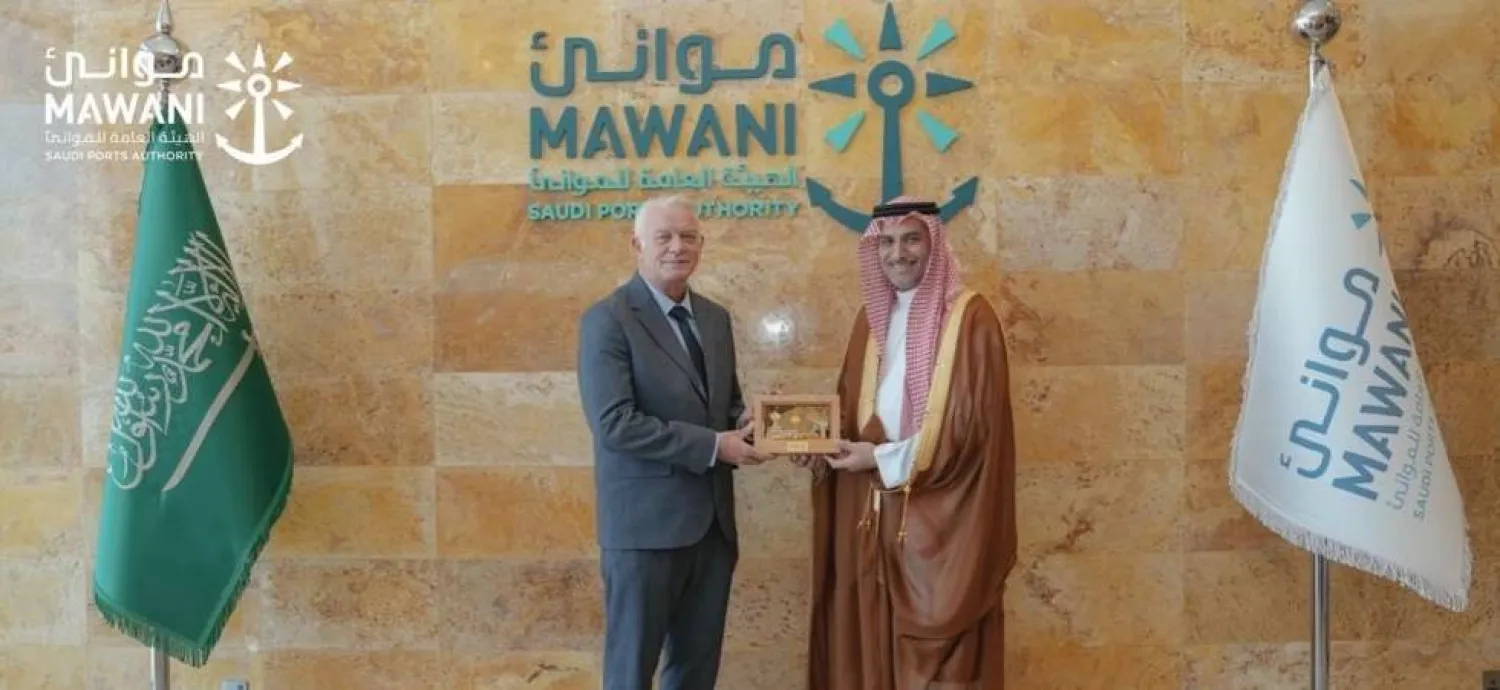
Saudi Arabia’s Mawani Grants Unified License to Global Shipping Line 

The initiative is part of Mawani's ongoing efforts to develop the maritime business environment, enable international companies to invest in the Saudi market, and increase competitiveness within the maritime sector. (Mawani)
TT

Saudi Arabia’s Mawani Grants Unified License to Global Shipping Line 

The initiative is part of Mawani's ongoing efforts to develop the maritime business environment, enable international companies to invest in the Saudi market, and increase competitiveness within the maritime sector. (Mawani)

The Saudi Ports Authority (Mawani) granted on Thursday a unified license to international shipping line Global Shipping Line (PIL), officially recognizing it as an authorized foreign investor to operate maritime agencies in the Kingdom's ports, reported the Saudi Press Agency.

The license is issued in accordance with the regulations outlined in the Maritime Agency Services, reflecting Mawani's commitment to boosting the efficiency of the maritime sector and improving the quality of operational services provided at ports.

It aims to attract global expertise and facilitate knowledge transfer within the Kingdom, aligning with international best practices in the maritime transport industry.

The initiative is part of Mawani's ongoing efforts to develop the maritime business environment, enable international companies to invest in the Saudi market, and increase competitiveness within the maritime sector.

PIL, which operates from its regional headquarters in Riyadh, manages operations in 29 countries.

The move strengthens the Kingdom's position as a crucial logistics hub, in line with the National Transport and Logistics Strategy, while attracting more international shipping lines. It reinforces Saudi Arabia's role as a key link among three continents.


IMF: Restoring Lebanon's Economic Growth Will Require Comprehensive Reforms

FILE PHOTO: A view of the International Monetary Fund (IMF) logo at its headquarters in Washington, D.C., US, November 24, 2024. REUTERS/Benoit Tessier//File Photo
TT

IMF: Restoring Lebanon's Economic Growth Will Require Comprehensive Reforms

FILE PHOTO: A view of the International Monetary Fund (IMF) logo at its headquarters in Washington, D.C., US, November 24, 2024. REUTERS/Benoit Tessier//File Photo

Lebanon's economy has shown resilience despite conflicts in the region, with tourism fueling a bit of a rebound, but restoring growth will require comprehensive reforms, the International Monetary Fund said on Thursday.

IMF spokeswoman Julie Kozack said the global lender remains engaged in complex discussions with Lebanese ‌authorities following their ‌request for an IMF-supported ‌program ⁠in March 2025. The ⁠IMF sent a staff mission to Beirut earlier this month, said Reuters.

The talks have been focused on two big issues, she said, citing the need for banking sector restructuring and a medium-term fiscal ⁠strategy. "The economy has shown resilience ‌despite the impact ‌of conflicts in the region. It has had ‌a bit of a rebound ‌on the back of tourism from the strong diaspora," Kozack said.

"But at the same time, really restoring strong and sustainable growth will ‌require a comprehensive set of reforms to tackle some of the ⁠structural ⁠weaknesses that have really hampered Lebanon's economic performance for many years," she said. Reforms also are needed to attract international support to help Lebanon address its substantial reconstruction needs.

Kozack said Lebanon needs an updated medium-term fiscal framework that includes concrete measures to mobilize additional revenues for much-needed capital spending, as well as a sovereign debt restructuring to restore debt sustainability.