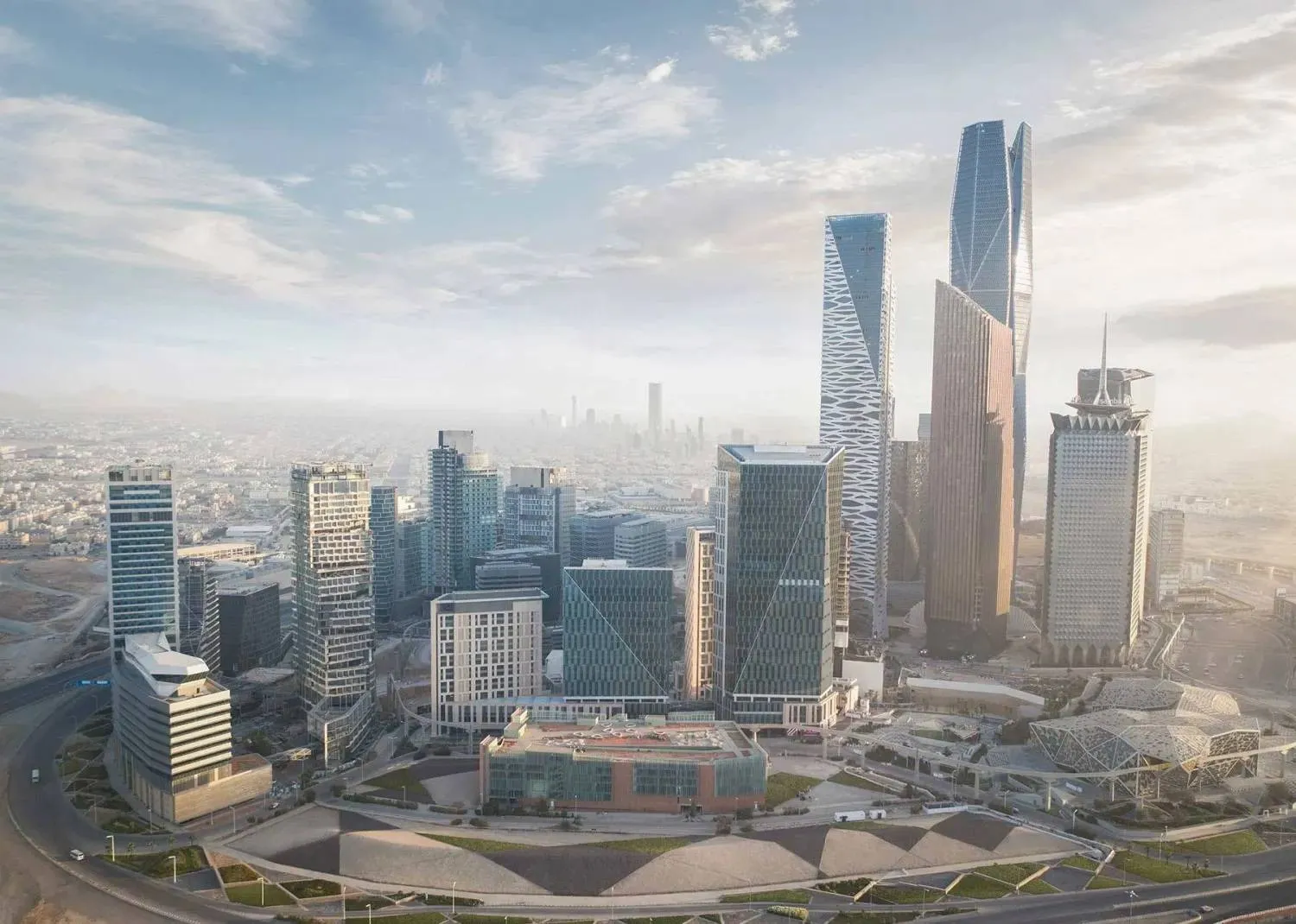
Saudi Arabia's Arab League Trade Exceeds SAR87 Billion in Q4 2024

 The Kingdom's trade surplus with Arab League countries, including the GCC, significantly increased to SAR30,461 billion in Q4 2024 -File Photo
The Kingdom's trade surplus with Arab League countries, including the GCC, significantly increased to SAR30,461 billion in Q4 2024 -File Photo
TT

Saudi Arabia's Arab League Trade Exceeds SAR87 Billion in Q4 2024

 The Kingdom's trade surplus with Arab League countries, including the GCC, significantly increased to SAR30,461 billion in Q4 2024 -File Photo
The Kingdom's trade surplus with Arab League countries, including the GCC, significantly increased to SAR30,461 billion in Q4 2024 -File Photo

Saudi Arabia's trade with Arab League nations, including the Gulf Cooperation Council (GCC), reached SAR87,768 billion in the fourth quarter of 2024, representing 17.2% of the Kingdom's total global trade of SAR510,974 billion. This trade volume demonstrates a 6.2% annual growth rate, exceeding the Q4 2023 figure of SAR82,679 billion by over SAR5 billion, SPA reported.
According to the General Authority for Statistics' quarterly International Trade Bulletin, the Kingdom's trade surplus with Arab League countries, including the GCC, significantly increased to SAR30,461 billion in Q4 2024, up from SAR22,185 billion in the same period of 2023, marking a 37.3% annual growth.
Saudi Arabia's total exports to Arab League countries amounted to SAR59,114 billion. Of this, SAR39,507 billion were destined for GCC nations, accounting for 14.2% of the Kingdom's total global exports of SAR277,932 billion. Exports to non-GCC Arab League countries reached SAR19,607 billion, representing 7.1% of total exports.
Saudi Arabia's imports from Arab League countries totaled SAR28,653 billion, or 12.3% of total imports. Within this, SAR18,354 billion came from GCC countries, and SAR10,298 billion from other Arab League nations. The Kingdom's total global imports were SAR233,042 billion.
The United Arab Emirates emerged as Saudi Arabia's top Arab export destination in Q4 2024, with exports exceeding SAR23,512 billion. Bahrain followed with SAR8,423 billion, Egypt with SAR8,353 billion, Oman with SAR4,434 billion, and Jordan with SAR2,999 billion.



Saudi Arabia Activates Major Investment Engines With Approval of Special Economic Zone Rules

 King Abdullah Economic City, located in western Saudi Arabia (Asharq Al-Awsat). 
 King Abdullah Economic City, located in western Saudi Arabia (Asharq Al-Awsat). 
TT

Saudi Arabia Activates Major Investment Engines With Approval of Special Economic Zone Rules

 King Abdullah Economic City, located in western Saudi Arabia (Asharq Al-Awsat). 
 King Abdullah Economic City, located in western Saudi Arabia (Asharq Al-Awsat). 

Saudi Arabia has taken a pivotal step toward strengthening its standing as a global investment destination after the Cabinet approved the regulatory frameworks for four Special Economic Zones (SEZs): Jazan, Ras Al-Khair, King Abdullah Economic City, and the Cloud Computing Special Economic Zone.

The move marks the effective start of the operational and legal phase for the zones, offering investors a clear roadmap on how to benefit from the incentives and competitive advantages the Kingdom is rolling out.

Saudi Minister of Investment Khalid al-Falih said the regulations will come into force in early April 2026, calling the decision a major leap in developing the regulatory ecosystem for SEZs.

He said it underscores Saudi Arabia’s commitment to boosting investment competitiveness regionally and globally, while building an enabling environment that attracts high-quality investments and supports sustainable growth in line with Vision 2030.

The four zones are designed to serve strategic sectors that place the Kingdom at the heart of global supply chains. The Jazan zone is set to become a hub for food processing, mining, and manufacturing, leveraging its port and proximity to African markets.

Ras al-Khair is being developed into a global center for maritime and mining industries, providing an integrated platform for shipbuilding, offshore drilling rigs, and marine support services.

King Abdullah Economic City is positioned as an advanced hub for logistics, high-value manufacturing, and the automotive sector, while the Cloud Computing and Informatics Zone in Riyadh represents a major leap in the data economy, hosting global technology firms offering local data storage and processing services.

The new regulations introduce flexible licensing regimes, attractive tax and customs standards, and streamlined operating procedures, including flexible ownership structures.

Investors will be allowed to use multiple languages for trade names, and investments within the zones will be exempt from certain provisions of the traditional Companies Law, giving global firms greater operational freedom.

On workforce policy, Al-Falih said the regulations include tailored Saudization frameworks aligned with each zone’s economic activities, balancing national talent development with the rapid growth needs of major investors.

The frameworks are part of an integrated governance model that clarifies mandates and aligns government entities, accelerating licensing processes and creating a fast, flexible business environment aligned with Saudi Arabia’s economic ambitions.


Turkish Manufacturing Nears Stabilization as PMI Rises in December

An employee works at an assembly line in the Toyota manufacturing plant in Sakarya October 10, 2013. REUTERS/Osman Orsal
TT

Turkish Manufacturing Nears Stabilization as PMI Rises in December

An employee works at an assembly line in the Toyota manufacturing plant in Sakarya October 10, 2013. REUTERS/Osman Orsal

Turkish manufacturing activity shrank at a slower pace in December, marking two consecutive months of improvement, signaling a slight moderation in operating conditions at the end of 2025, a business survey showed on Friday.

The Istanbul Chamber of Industry Turkiye Manufacturing Purchasing Managers' Index (PMI), compiled by S&P Global, rose to a 12-month high of 48.9 from 48.0 in November thanks ‌to softer slowdowns ‌in output, new ‌orders, ⁠employment and purchasing activity.

Readings ‌below 50.0 indicate contractions in overall activity, while figures above that suggest growth, Reuters said.

"With PMI reaching its highest level for a year in December, the manufacturing sector takes some momentum into 2026, giving hope that we will ⁠see growth in the months ahead," said Andrew Harker, ‌Economics Director at S&P ‍Global Market Intelligence.

New ‍orders eased at the slowest pace ‍since March 2024, with some firms noting improvements in customer demand. However, both total new business and new export orders continued to moderate.

Production was scaled back, though at a slower rate than in November. Employment saw ⁠a marginal reduction, while purchasing activity also experienced a softer decline, according to the survey.

Input costs rose sharply, driven by higher raw material prices, leading manufacturers to increase selling prices, the survey said.

"While inflationary pressures rebounded following the recent lows seen in November, rates of increase in input costs and output prices were still comfortably below the highs ‌we have seen at times in recent years," Harker said.


Asia Stocks Make Bright Start to 2026

Stock markets welcomed the New Year with healthy gains. Punit PARANJPE / AFP
TT

Asia Stocks Make Bright Start to 2026

Stock markets welcomed the New Year with healthy gains. Punit PARANJPE / AFP

Asian markets made a bright start to 2026 on Friday but volumes were thin with Tokyo and Shanghai still closed as investors awaited fresh direction from Wall Street.

Stocks had a bumper 2025, with the S&P adding 16.4 percent, the tech-rich Nasdaq 20.4 percent and London's FTSE enjoying its merriest Christmas in 16 years, said AFP.

In Asia, Seoul stocks whooshed 75 percent, while Hong Kong's Hang Seng index bounced 28 percent and Tokyo's Nikkei 225 rocketed more than 26 percent.

"Naturally, the start of the new year comes with the question everyone asks moving from one year to the next: will this continue? The consensus is that, yes, it will," said Kyle Rodda at Australian brokerage Capital.com.

"When it comes to the all important US economy, Wall Street is pricing in growth will accelerate this year while inflation still moderates and interest rates get cut. Meanwhile, analysts predict that corporate fundamentals will improve," Rodda said.

Hong Kong was up 2.2 percent Friday with chip designer Biren Technologies roaring 80 percent higher after its initial public offering.

The Shanghai-based firm's listing raised more than $700 million, suggesting that investor appetite for anything related to artificial intelligence remains insatiable.

Biren "enjoys scarcity value and high market attention", said Kenny Ng, a strategist at China Everbright Securities.

"The industry is in a flourishing stage, with many firms striving for breakthroughs and significant growth potential," Ng said.

Search-engine giant Baidu jumped almost seven percent after saying its AI chip unit Kunlunxin had filed a listing application in Hong Kong.

Taipei, Sydney, Jakarta, Manila and Singapore also advanced while while Seoul's Kospi, which soared 76 percent in 2025 in large part due to AI boom, was up 1.7 percent.

Samsung Electronics added three percent after co-CEO Jun Young Hyun said customers had praised its high-bandwidth memory (HBM) chips, some saying that "Samsung is back", Bloomberg News reported. 

After volatile recent days, following record highs for silver, precious metals started the new year on a bright note with gold up 0.64 percent per ounce and silver 1.5 percent shinier.