GASTAT: Saudi Industrial Production Index Up 2.0% in March 2025

GASTAT released on Sunday its Industrial Production Index (IPI) for March 2025
TT

GASTAT: Saudi Industrial Production Index Up 2.0% in March 2025

GASTAT released on Sunday its Industrial Production Index (IPI) for March 2025

Saudi Arabia’s General Authority for Statistics (GASTAT) released on Sunday its Industrial Production Index (IPI) for March 2025, revealing a 2.0% increase in the overall index compared to March 2024.
According to the data, manufacturing activities recorded a significant growth of 5.1% on an annual basis, and the index of water supply, sewerage, waste management, and remediation activities also increased by 15.0%.
The mining and quarrying activity saw a slight decrease of 0.2%, and the electricity, gas, steam, and air conditioning supply index also declined by 0.9%.
The IPI for main economic activities showed a modest 0.5% rise in the oil activities index, while non-oil activities recorded a substantial increase of 5.6% compared to March 2024.
GASTAT issues the IPI monthly to measure relative changes in the volume of industrial output. The index is calculated based on the industrial production survey, which samples establishments in key industrial sectors including mining and quarrying, manufacturing, electricity, gas, steam and air conditioning supply, water supply, sewerage, waste management, and remediation.


SAIS, Acwa Sign MoU to Develop Industrial Security Requirements for Green Hydrogen, Green Ammonia Facilities

The teams will draw on Acwa’s technical and operational expertise to enhance the facilities’ readiness and support the adoption of best practices in this field - SPA
TT

SAIS, Acwa Sign MoU to Develop Industrial Security Requirements for Green Hydrogen, Green Ammonia Facilities

The teams will draw on Acwa’s technical and operational expertise to enhance the facilities’ readiness and support the adoption of best practices in this field - SPA

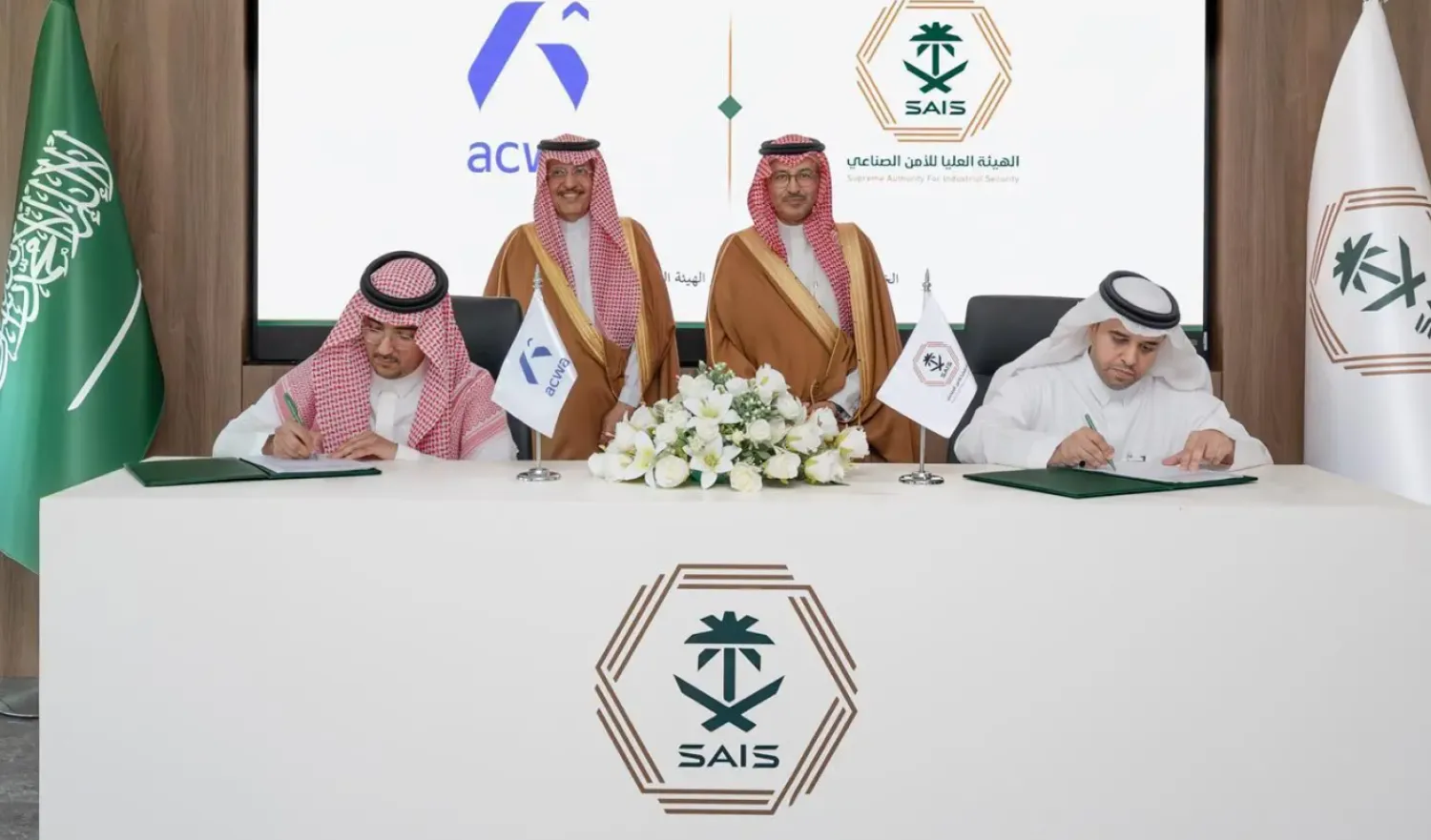
The Supreme Authority for Industrial Security (SAIS) and Awca have signed a memorandum of understanding (MoU) to cooperate in industrial security, training, development, research, and innovation, supporting the development of requirements and standards for green hydrogen and green ammonia facilities in the Kingdom, SPA reported.

The MoU aims to strengthen cooperation between the two sides in developing security, safety, and fire protection requirements for facilities producing green hydrogen and green ammonia, while also supporting training, development, research, technology, and innovation.

Under the MoU, the two sides will establish joint technical working teams led by the SAIS to develop security, safety, and fire protection requirements and standards in accordance with its approved regulations.

The teams will draw on Acwa’s technical and operational expertise to enhance the facilities’ readiness and support the adoption of best practices in this field.


Barclays Reaffirms Confidence in Saudi Economy, Eyes Role in Economic Transformation

Barclays aims to connect Saudi companies with its global network and facilitate the flow of international capital into the Kingdom through its Riyadh office (Asharq Al-Awsat)
TT

Barclays Reaffirms Confidence in Saudi Economy, Eyes Role in Economic Transformation

Barclays aims to connect Saudi companies with its global network and facilitate the flow of international capital into the Kingdom through its Riyadh office (Asharq Al-Awsat)


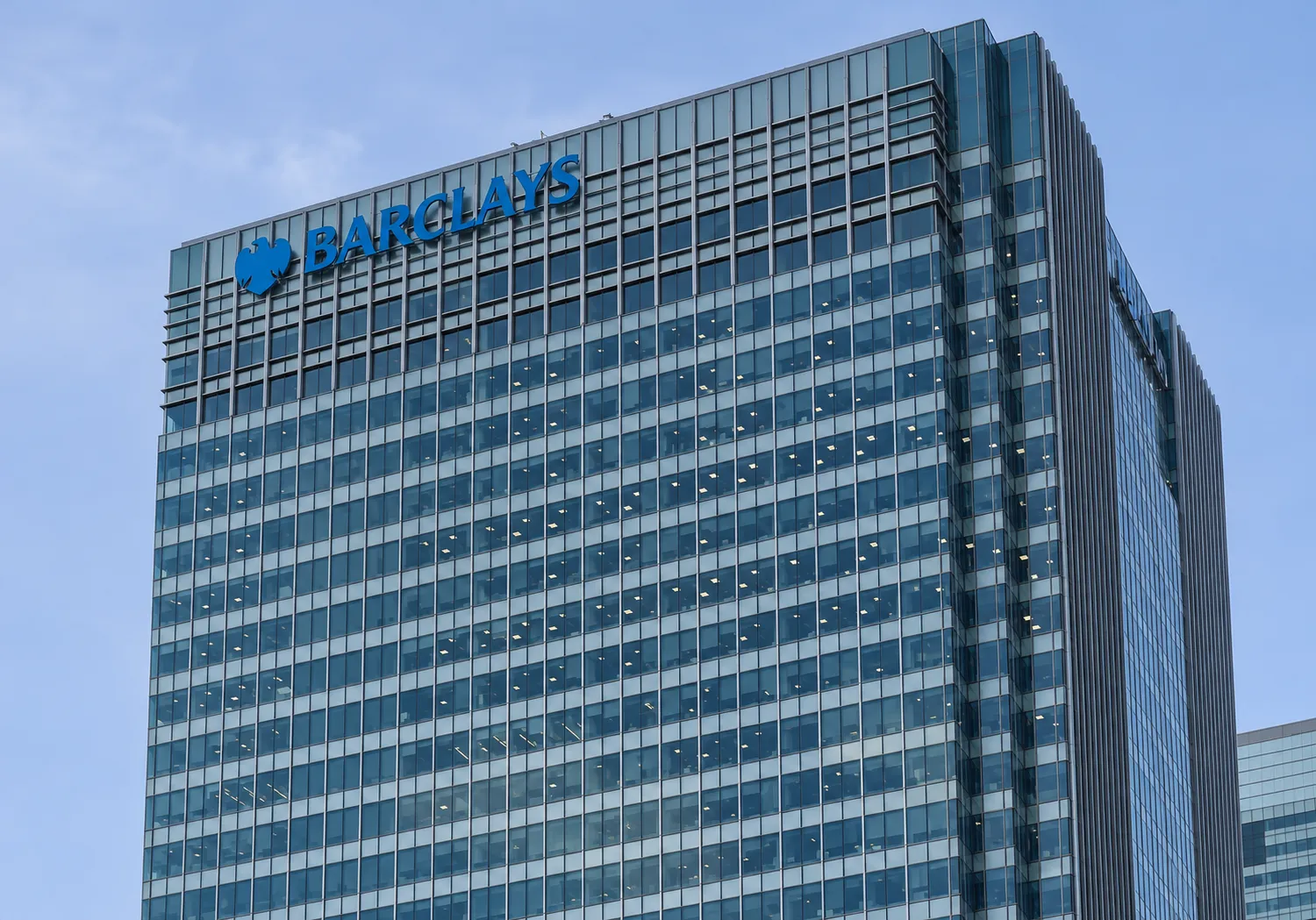
As Saudi companies pursue financing, acquisitions and expansion into new markets, and international investors show growing interest in opportunities across the Kingdom, Barclays is looking to its Riyadh office to expand its business on both fronts.

The British banking group aims to connect Saudi companies with its global network while facilitating the flow of international capital into investment opportunities created by the Kingdom's economic transformation.

Mohammed Al Sarhan, Chairman of Barclays Capital Saudi, said the opening of the office reflects the group's long-term commitment to Saudi Arabia and its confidence in the opportunities arising from the country's economic transformation.

Speaking to Asharq Al-Awsat, Al Sarhan said a direct presence in Riyadh allows the group to work more closely with clients and better understand their priorities, as capital markets are expected to play an increasingly important role in financing Saudi corporate growth and supporting expansion beyond the Kingdom.

Barclays announced its return to the Saudi market more than a decade after withdrawing from it. In early November, the British bank opened an office in Riyadh's King Abdullah Financial District (KAFD), following regulatory approval to conduct investment banking and global markets activities and the completion of licensing procedures for its regional headquarters in Riyadh in 2025.

Direct Presence in Riyadh

Al Sarhan explained that, from the board's perspective, the office opening represents a pivotal step in Barclays' strategy to strengthen its presence in Saudi Arabia and establish a sustainable business in the Kingdom over the long term.

As Saudi Arabia continues implementing its development plans, he said having a team based in Riyadh enables the group to deepen client relationships, gain a closer understanding of their needs and connect them with Barclays' expertise and capabilities in global markets.

The chairman attributed the group's confidence in Saudi Arabia's economic outlook to the ambitions of Vision 2030 and what he described as tangible progress across several sectors.

He pointed to the private sector's growing role, the development of new industries and sectors, and the increasing depth of the Kingdom's financial markets.

These developments, he said, are creating more opportunities for Saudi companies to grow domestically and expand internationally, alongside rising interest from global investors in the Saudi market.

Against this backdrop, Barclays aims to support local companies seeking access to global markets while making it easier for international investors to capitalize on opportunities within the Kingdom.

Financing, Acquisitions and New Market Entry

Al Sarhan expects capital markets to play a greater role in Saudi Arabia's next phase of economic development as the economy continues to expand, domestic companies grow and businesses seek to strengthen their international presence.

He explained that as companies scale up their operations, they will require more diversified financing options and access to a broader base of international investors.

They will also increasingly need specialized financial advice when considering acquisitions or evaluating opportunities to enter new markets.

These are strategic decisions that Barclays' local presence will allow it to support more closely, he said.

Conversely, growing interest among international investors in Saudi Arabia is strengthening the role of global financial institutions in connecting capital with investment opportunities across markets.

Al Sarhan identified this as one of Barclays' priorities in the Kingdom, with the group seeking to leverage its international network to serve Saudi clients pursuing expansion and global investors looking for opportunities in the domestic market.

Building a Local Team

Al Sarhan said the group, under the leadership of Majed Al Hassoun, is building a local team that combines knowledge of the Saudi market and an understanding of client priorities with Barclays' global expertise.

He noted that the group draws on a presence in the Middle East spanning more than 150 years.

Being close to clients, he said, helps the team better understand their requirements and support their strategic decisions while providing direct access to the group's capabilities and international network.

He believes combining local expertise with global resources is becoming increasingly important as more Saudi companies look abroad for financing, partnerships and opportunities for expansion and growth.

Confidence in Saudi Economic Resilience

Assessing Saudi Arabia's prospects amid regional and global volatility, Al Sarhan said the geopolitical and economic landscape is becoming increasingly complex.

He pointed to the humanitarian consequences of regional conflicts and the uncertainty they create for businesses and investors.

He explained that Barclays' long-term assessment of the Saudi economy rests on continued economic diversification, the expanding role of the private sector and the economy's ability to withstand challenges.

He described these factors as pillars supporting the Kingdom's continued development.

Al Sarhan said the group takes a long-term approach to client partnerships, helping businesses navigate economic changes and market volatility so they can make informed decisions under varying conditions.

He cited Saudi Arabia's record of overcoming challenges over several decades, from previous regional conflicts to sharp declines in oil prices and the repercussions of the COVID-19 pandemic.

At every stage, he said, the Kingdom has demonstrated an ability to recover and strengthen its resilience, attributing that capacity to the role of its leadership, the strength of its economy and the determination of Saudi society.

Al Sarhan added that these experiences reinforce Barclays' confidence in Saudi Arabia's ability to overcome current challenges and sustain its economic transformation.



Nvidia Stops Shipping AI Servers to Four SE Asian Nations

FILE PHOTO: Nvidia logo, computer chips and a 3D-printed representation of a robot hand are seen in this illustration taken August 27, 2025. REUTERS/Dado Ruvic/Illustration/File Photo
TT

Nvidia Stops Shipping AI Servers to Four SE Asian Nations

FILE PHOTO: Nvidia logo, computer chips and a 3D-printed representation of a robot hand are seen in this illustration taken August 27, 2025. REUTERS/Dado Ruvic/Illustration/File Photo

US tech titan Nvidia is not allowing orders of computer servers containing its artificial intelligence chips to be shipped to four Southeast Asian countries, the Financial Times reported Thursday.

AFP said that the article comes after Washington tightened export controls for the sensitive components in the wake of an espionage scandal that has engulfed Nvidia -- forcing out longtime CEO Jensen Huang before his reinstatement on Sunday.

Citing national security concerns, the United States has since 2022 restricted export to tech rival China of Nvidia's industry-leading advanced chips that are used to train and run AI tools.

Washington last week moved to close a loophole in those controls, to crack down on chip smuggling, but also the large grey market of Chinese companies renting computing power from data centers in third countries, often in Southeast Asia.

The Financial Times report said Nvidia had instructed manufacturing partners to stop shipping computer servers to buyers in Malaysia, Singapore, Thailand and Indonesia.

The British newspaper, citing three people with knowledge of the matter, said it was unclear whether the halt was temporary.

It named US giants Dell and Supermicro, who package Nvidia AI chips into servers for data centers, as two affected partners.

Buyers affected include Singapore-based cloud computing company Aolani, which had planned to provide access to the Nvidia hardware to Chinese TikTok owner ByteDance through leasing agreements, the Financial Times said.

An executive at a cloud provider told the newspaper that Washington's new rules had caused "sheer chaos" in the region during a 90-day period in which to apply for a newly required license.

AFP has contacted Nvidia, Dell, Supermicro, Aolani and ByteDance for comment.

The Nvidia scandal erupted following reports of Huang's affair with Alice Huang -- a former executive at Megaspeed, a Singapore-based company under investigation for the alleged transfer of Nvidia chips to China in circumvention of US rules.

Alice Huang, no relation to Jensen, is also reportedly suspected by some US officials of spying for Beijing.

Massive investments from US and Chinese tech giants have driven a data center construction boom in Southeast Asia, especially in the countries surrounding hyper-connected Singapore.

Data center capacity in Southeast Asia is projected to triple from 2025 levels by 2030, driven by a tenfold surge in AI use, according to KPMG.