China Says Aims to Boost Gold Resources by 5-10% by 2027

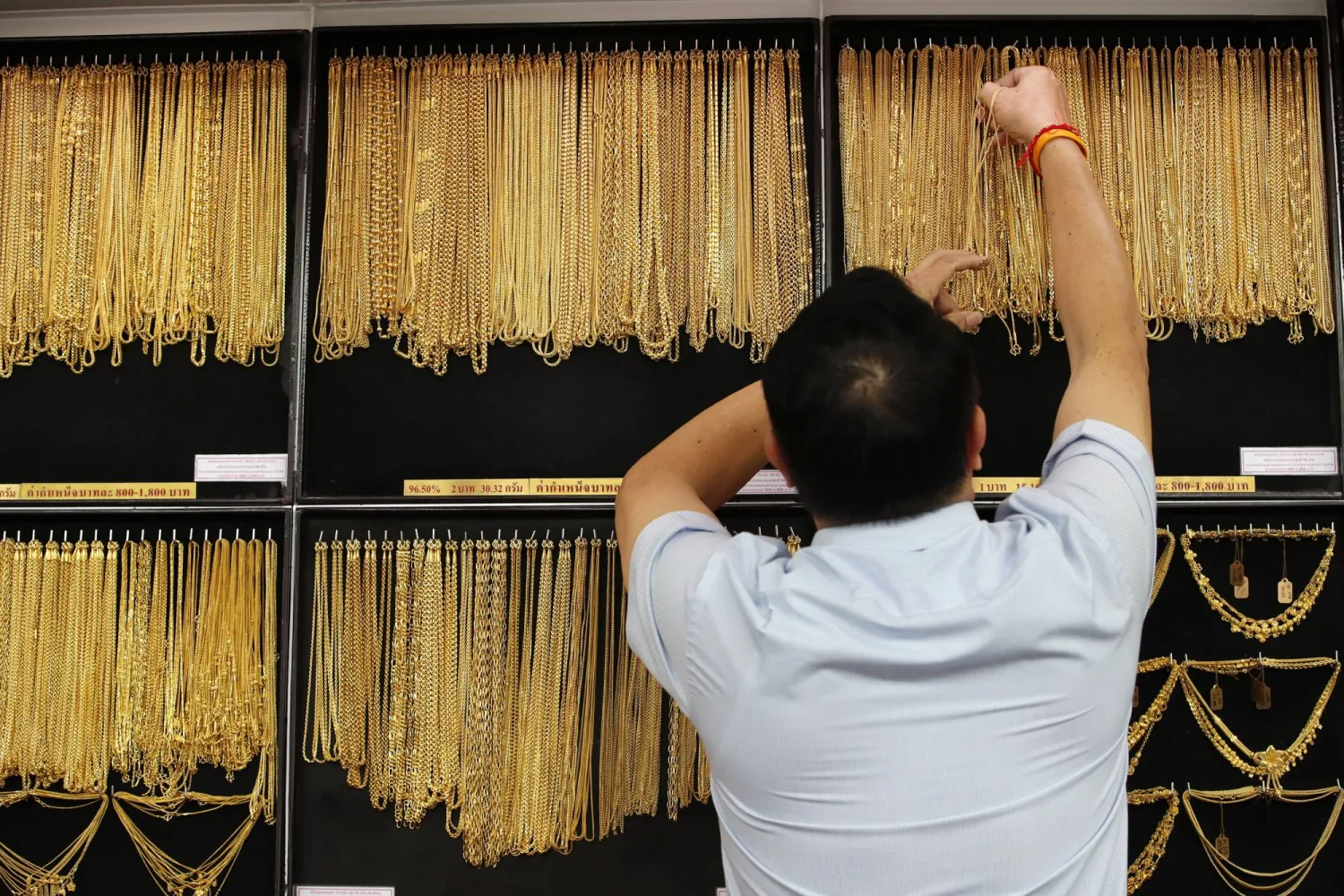
A goldsmith displays gold ornaments during a gold trade at Hua Seng Heng gold shop in Bangkok, Thailand, 23 June 2025. EPA/RUNGROJ YONGRIT
TT

China Says Aims to Boost Gold Resources by 5-10% by 2027

A goldsmith displays gold ornaments during a gold trade at Hua Seng Heng gold shop in Bangkok, Thailand, 23 June 2025. EPA/RUNGROJ YONGRIT

China aims to increase its gold resources by 5 to 10% and its gold and silver output by more than 5% by 2027, the industry ministry said on Monday in an implementation plan for 2025 to 2027.

Gold is a strategic mineral resource and is "of great importance for maintaining national industrial security and financial security," the ministry said.

According to the plan, China will step up efforts in geological exploration and locating new gold resources, and tackle key technological and equipment issues associated with gold mining in the country, Reuters reported.

China will promote gold and silver recycling from a range of waste products including electrical and electronic components, the plan said.

The plan also called for deepening overseas investment cooperation, encouraging Chinese firms to sign long-term supply agreements with foreign mining companies to expand sources of primary mineral products including gold ore.


Sudair Pharma: World’s Largest Insulin Plant Opens in Saudi Arabia in 2027

A panel discussion at the Saudi Industry Forum in Jeddah (Asharq Al-Awsat)
TT

Sudair Pharma: World’s Largest Insulin Plant Opens in Saudi Arabia in 2027

A panel discussion at the Saudi Industry Forum in Jeddah (Asharq Al-Awsat)

Saudi Arabia is moving to strengthen its pharmaceutical security on two parallel fronts: expanding domestic production of biologic medicines and building a system better able to anticipate supply-chain disruptions.

Sudair Pharma said it would begin producing insulin locally in 2027 through an investment exceeding 280 million riyals ($74.6 million) in what the company described as the world’s largest insulin plant.

Meanwhile, NUPCO has reached the final stage of deploying artificial intelligence to predict drug shortages and supply disruptions before they occur.

The initiatives bring manufacturing and inventory management under a single system, aimed at reducing reliance on foreign supply chains and strengthening the kingdom’s ability to respond to potential global shortages.

Reliable supplies in the sector depend directly on the availability of active pharmaceutical ingredients, production capacity and the speed at which products reach healthcare facilities.

The plans were unveiled during a session titled “Saudi Pharmaceutical Security: Localization Strategies and Building Health Sovereignty” at the Saudi Industry Forum 2026 in Jeddah.

The session focused on achieving self-sufficiency in essential and life-saving medicines, attracting investment in biotechnology and vaccines, transferring technology to domestic factories and improving the sector’s ability to withstand global crises.

Production inputs

Dr. Yasser Alobaidaa, chief executive of Sudair Pharma, said the company would begin producing insulin locally next year, adding that the project would cover every stage of manufacturing in Saudi Arabia rather than merely filling and finishing.

The project, which will cost more than 280 million riyals, will produce advanced types of long- and short-acting insulin, he said, describing the facility as “the world’s largest insulin plant.”

The project also extends to securing production inputs. Alobaidaa said the factory would maintain a three-year stock of active pharmaceutical ingredients, or APIs, allowing local insulin production to continue even if foreign supplies were disrupted.

Work to localize insulin production has been underway for more than four years, he said, adding that NUPCO’s involvement helped accelerate the project. He also highlighted the company’s role in supporting domestic manufacturers and expanding access to healthcare facilities for their products.

Supply chains

On the other front of pharmaceutical security, Fahd Al-Bat’hi, chief executive of NUPCO’s supply-chain division, said the company had reached the final stage of deploying artificial intelligence at its Command and Control Center.

The technology will be used to predict potential shortages or supply-chain disruptions, allowing contingency plans and alternatives to be prepared before problems arise.

Al-Bat’hi said the company produces internal monthly reports that track forecasts and warnings about disruptions that could affect supplies in the coming months, drawing on indicators and information related to global markets and companies.

NUPCO also works with the Saudi Food and Drug Authority through an Availability and Indicators Committee that meets almost weekly, he said. The committee monitors global shortage indicators and potential supply risks, and identifies coverage mechanisms and available alternatives.

Vital products

Al-Bat’hi said the company aimed to maintain a three-month inventory of non-life-saving items, alongside measures to ensure vital products remain available.

NUPCO’s Mawsool project and direct-delivery operations have improved visibility over inventory movements from warehouses to healthcare facilities, he said.

A further measure, due to begin in 2027, will allow manufacturers to view inventory and consumption levels, giving them the flexibility to increase or reduce production in response to actual demand.

Al-Bat’hi said localization was among the most important solutions to supply-chain risks because domestic manufacturers could respond more quickly to demand and adjust production as needs changed.

With a new insulin plant, a three-year stock of active pharmaceutical ingredients, and AI systems designed to anticipate shortages, Saudi pharmaceutical security is shifting beyond managing inventory after products reach the market.

The emerging system begins with active ingredients and domestic manufacturing, and extends to demand and risk forecasting, reducing exposure to external shocks and increasing the local industry’s share of the pharmaceutical value chain.


Saudi Arabia Bets on Small Businesses to Drive Its Next Growth Phase

Crown Prince and Prime Minister Mohammed bin Salman during the Cabinet meeting in Jeddah (SPA)
TT

Saudi Arabia Bets on Small Businesses to Drive Its Next Growth Phase

Crown Prince and Prime Minister Mohammed bin Salman during the Cabinet meeting in Jeddah (SPA)

Saudi Arabia is entering a new phase in its economic diversification drive, placing small and medium-sized enterprises and entrepreneurship at the heart of growth.

The shift follows the Cabinet’s Tuesday approval of a new national strategy for the sector at a meeting chaired by Crown Prince Mohammed bin Salman.

The kingdom aims to turn SMEs from a broad base of business activity into a stronger force in production, investment, and job creation. The strategy seeks to widen access to financing and markets while helping businesses scale up and compete.

It reflects a Saudi bet on a new generation of growing companies that can help build a more diversified and resilient economy—one less reliant on large corporations alone to drive economic activity.

GDP Contribution

Commerce Minister Majid bin Abdullah Al-Qasabi, chairman of the Small and Medium Enterprises General Authority, known as Monsha’at, said the strategy would develop the entrepreneurship ecosystem, help businesses grow and expand, and increase their contribution to the national economy.

The goal is to raise SMEs’ share of gross domestic product to 35%, in line with Saudi Vision 2030, he said.

The strategy comprises 13 initiatives within an integrated framework. They aim to improve access to financing and markets, strengthen businesses’ operational readiness and capabilities, develop the regulatory and innovation environment, and make it easier to do business.

Together, the measures are designed to create a more efficient environment for business growth and expansion.

The strategy also aims to help create more than 500,000 direct and indirect jobs and propel Saudi Arabia to first place in the Entrepreneurial Skills and Knowledge Index by 2030, Al-Qasabi said.

Access to Megaprojects

“The strategy reflects the attention and support the government gives to entrepreneurship and small and medium-sized enterprises,” Al-Qasabi said.

It translates that support into “a more integrated and efficient ecosystem that opens wider avenues for businesses to grow and increases their contribution to economic development,” he added.

Implementation will depend on coordination among the relevant entities, enabling SMEs to capture opportunities across sectors, expand their roles in value chains and megaprojects, and reach new markets in Saudi Arabia and abroad.

Beyond Growth in Numbers

The number of SMEs in Saudi Arabia exceeded 1.83 million by the end of the second quarter of 2026, Monsha’at Deputy Governor for Entrepreneurship Saud Al-Subhan told Asharq Al-Awsat.

“The ecosystem has achieved significant growth in recent years, with considerable opportunities for further growth and expansion,” he said.

The strategy marks a shift away from focusing primarily on the number of businesses toward sustainable growth, higher productivity, and greater capacity to scale up and enter new markets.

It also seeks to strengthen competitiveness, increase SMEs’ contribution to the national economy, and support promising, established, and new businesses in key and emerging sectors.

The broader aim is to build an enabling ecosystem that firmly establishes a culture of entrepreneurship, Al-Subhan said.

Twelve Priority Challenges

A comprehensive assessment of the sector identified 12 priority challenges, ranked according to their impact and how readily they could be addressed.

They include limited support for commercializing innovations, a heightened fear of failure linked to a weak entrepreneurship culture, and a shortage of specialized talent needed by businesses and entrepreneurs across sectors and regions.

Other challenges include weak infrastructure and purchasing power in outlying regions, high and difficult-to-predict business costs, limited access to financing, and a shortage of market data needed for decision-making.

SMEs also struggle to retain talent amid competition from large companies and the public sector, while manufacturing and supply chains face weaknesses in infrastructure and support services.

“The strategy does not stop at identifying the challenges,” Al-Subhan said. “It links them to initiatives designed to address them directly.”

Monsha’at prepared the national strategy and will oversee its implementation in coordination with relevant public, private, and nonprofit sector entities, in accordance with their respective regulatory responsibilities.

Execution will not rest with a single body, but on complementary roles across an integrated ecosystem, Al-Subhan said.

The strategy’s 13 core initiatives directly address the obstacles SMEs face and cover several areas critical to their growth.

They include developing open commercial innovation, increasing participation in government procurement, supporting exports and international expansion, improving access to financing, and reducing business costs.

The initiatives also call for a comprehensive sector database and a framework to monitor implementation and assess its impact.

The intended effect on Vision 2030 indicators is clear: SMEs contributing 35% of GDP, more than 500,000 direct and indirect jobs, and placing Saudi Arabia first in the Entrepreneurial Skills and Knowledge Index.

Empowering the Private Sector

The new strategy is part of a wider set of national strategies supporting Vision 2030.

Together, they form a long-term road map for empowering the private sector and directing efforts toward ambitious economic and development priorities. The aim is to strengthen Saudi Arabia’s position and competitiveness as a more diversified, innovative, and sustainable economy.

The initiatives include supporting open commercial innovation and enabling SMEs and startups to operate and grow in industrial cities and special economic zones.

They also seek to support exports and international expansion, increase SME participation in government procurement and purchases by large corporations, and create a comprehensive sector database linked to other relevant databases across the ecosystem.

Further measures include attracting global innovative startups and encouraging them to establish operations in Saudi Arabia, reviewing minimum Saudization requirements by sector, and reducing the cost of doing business.

The strategy also aims to strengthen financial awareness and literacy, develop financing enablers, and provide incentives for SME financing institutions, creating a business environment better equipped to support the sector’s expansion and sustain its economic impact.


Carney Hopes Trade War with US Will Make Canada Stronger and More Resilient

Canadian Prime Minister Mark Carney speaks during a news conference at the 2026 Canada Investment Summit in Toronto, on Tuesday, Sept. 15, 2026. (Nathan Denette/The Canadian Press via AP)
TT

Carney Hopes Trade War with US Will Make Canada Stronger and More Resilient

Canadian Prime Minister Mark Carney speaks during a news conference at the 2026 Canada Investment Summit in Toronto, on Tuesday, Sept. 15, 2026. (Nathan Denette/The Canadian Press via AP)

Canadian Prime Minister Mark Carney said Tuesday that Canada intends to emerge from its trade war with the United States as a more resilient and independent economy, signaling that Ottawa is prepared to wait for the right conditions rather than rush into a deal with Washington.

“And to our American friends, let me say this. We will always be neighbors,” Carney told hundreds of global investors gathered in Toronto for his Canada Investment Summit. But he said the relationship works when the two countries engage as “true partners that respect each other’s traditions and sovereignty.”

“When those opportunities return, Canada will be an even better partner — stronger, more resilient, more independent,” he said.

Carney also announced that Ottawa will seek private investment through long-term concessions to operate Canada’s four largest airports, while retaining public ownership of the land and assets. He said the plan could raise tens of billions of dollars to reinvest in transportation and other infrastructure.

Without naming US President Donald Trump, Carney then took aim at the increasingly transactional and zero-sum approach to international economic relationships that has characterized Trump’s trade policies.

“Our reputation — as a reliable, predictable partner — has rarely been more valuable in a world where transactions are replacing relationships, and zero-sum is favored over win-win,” Carney said.

Carney said economic integration and national sovereignty are increasingly in tension, arguing that countries seeking to preserve their independence need to work more closely with like-minded partners. He heads to Europe later Tuesday, where he is scheduled to address the European Parliament.

Trump has repeatedly used tariffs to pressure trading partners and pressed manufacturers to shift production and investment south of the Canadian border. He has also repeatedly talked about making Canada the 51st US state, comments that have further strained relations between the longtime allies.

But Carney noted that about 80% of the trade with the US remains tariff-free.

“There is a mutually beneficial arrangement that can be had,” Carney said in a fireside chat after his speech. “When it is the right time to strike that deal, we’ll be ready to do that.”

Trade talks between Canada and the United States collapsed last month before Washington imposed 50% tariffs on about $20 billion in Canadian goods, prompting retaliation from Ottawa. The United States has since announced additional restrictions on Canadian products.

Carney also joked about the uneasy state of the US-Canada relationship, contrasting a ceremonial key he once received from his hometown of Fort Smith, Northwest Territories, with a box of gold keys to the White House that Trump later gave him.

Carney said Trump told him that if he brought the key, “They’ll let you in,” before adding: “Maybe they’ll shoot you.”

“And that sort of sums up the relationship,” Carney said. “In Canada, you get the key. In the US, they might shoot you.”