


Air France-KLM to Take Majority Stake in Scandinavian Airline SAS

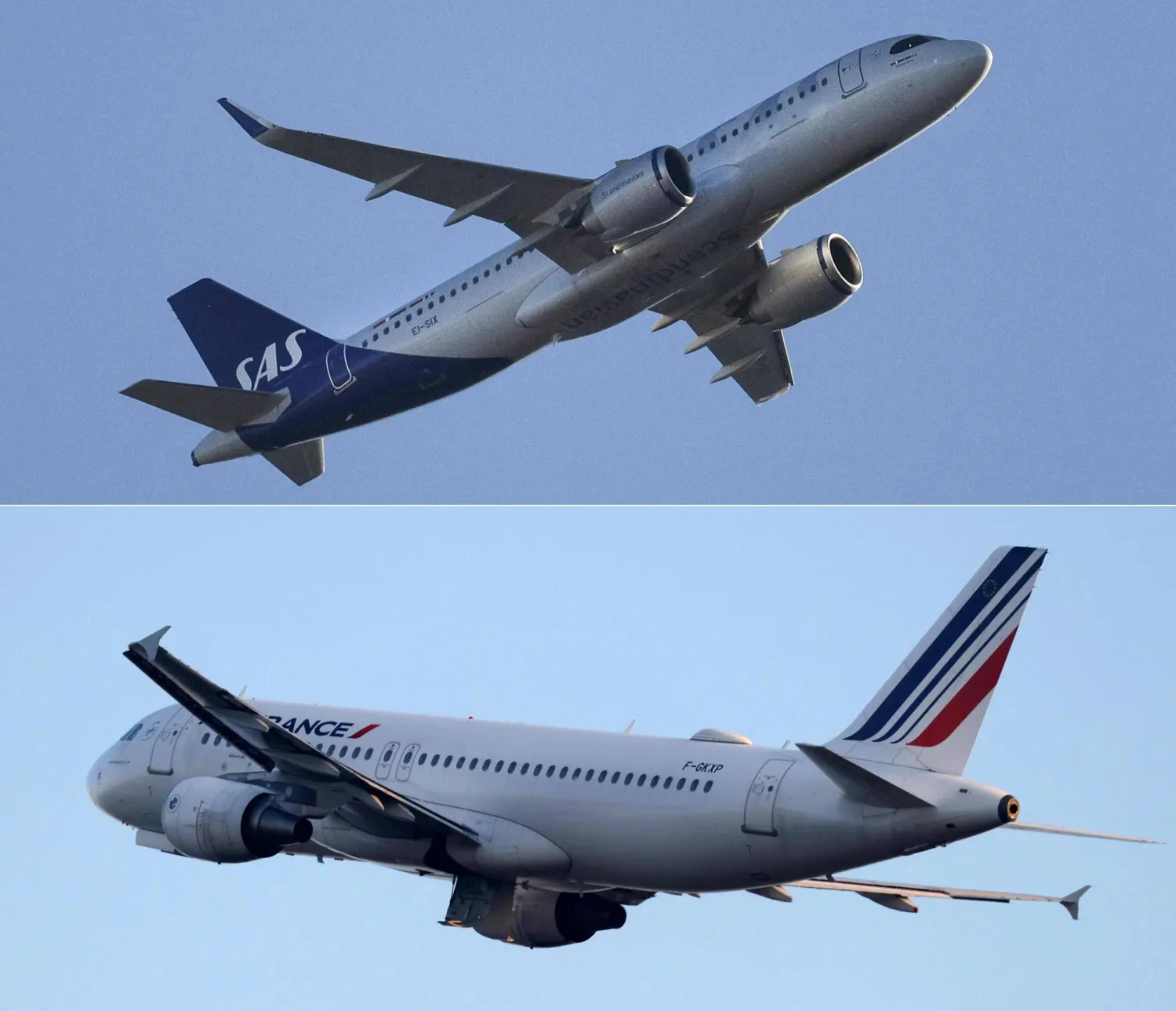
(COMBO) This combination of pictures created on July 04, 2025 shows a Scandinavian airline SAS plane flying over Heathrow airport on the outskirts of London on January 15, 2024 (top) and an Air France-KLM plane taking off from Tegel 'Otto Lilienthal' Airport in Berlin on November 8, 2020. (Photo by Adrian DENNIS and Odd ANDERSEN / AFP)
TT

Air France-KLM to Take Majority Stake in Scandinavian Airline SAS

(COMBO) This combination of pictures created on July 04, 2025 shows a Scandinavian airline SAS plane flying over Heathrow airport on the outskirts of London on January 15, 2024 (top) and an Air France-KLM plane taking off from Tegel 'Otto Lilienthal' Airport in Berlin on November 8, 2020. (Photo by Adrian DENNIS and Odd ANDERSEN / AFP)

Air France-KLM plans to increase its stake in Scandinavian airline SAS to 60.5%, the latest step towards consolidating Europe's fragmented airline sector as carriers seek to strengthen their position against rivals.

The Franco-Dutch airline group said on Friday it intended to increase its stake from 19.9% currently by acquiring the stakes held by top shareholders Castlelake and Lind Invest.

The purchase, subject to regulatory clearances, is expected to close in the second half of 2026, Reuters quoted Air France-KLM as saying.

The value of the investment would be determined at closing, based on SAS's latest financial performance, including core earnings (EBITDA) and net debt, the company said. It declined to give details on those metrics.

Air France-KLM expects to generate "three-digit million" euros in synergies from raising its SAS stake, Air France-KLM finance chief Steven Zaat told analysts on a call.

Zaat said the deal would be funded from cash or a "plain vanilla bond" and would not impact the drive to reduce the group's hybrid debt. "We have ample room for it," he said.

Air France-KLM shares were flat in early trading.

JPMorgan analysts said there were reasons to be positive about the deal.

"SAS offers deeper access to a GDP-rich region in Scandinavia, there will now be an opportunity to unlock cost synergies as SAS becomes a subsidiary of the group," they said in a note, adding that "industry consolidation should also be viewed positively for the whole sector, even if not game-changing in terms of size."

INDUSTRY CONSOLIDATION

SAS welcomed Air France-KLM's announcement.

"European consolidation had to happen further, and we're very happy to be part of that," SAS CEO Anko van der Werff told Danish broadcaster TV2.

"In the current setup where Air France-KLM is a 19.9% shareholder, they're still a competitor," he said. "With the new stake, going above 50%, we can really tap into all of those synergies and offer those benefits to customers."

SAS said it would continue to invest in its fleet and network.

In 2023, Air France-KLM said it would invest about $144.5 million for its initial SAS stake, boosting its presence in Sweden, Denmark and Norway with the option to become a controlling shareholder after a minimum of two years, subject to conditions.

SAS exited from Chapter 11 bankruptcy protection in August last year.

The two carriers have already had a commercial cooperation since summer 2024. Control of SAS would allow Air France-KLM to expand in the Scandinavian market and create additional value for shareholders, Air France-KLM said in a statement.

"Following their successful restructuring, SAS has delivered impressive performance, and we are confident that the airline's potential will continue to grow through deeper integration within the Air France-KLM Group," said Air France-KLM CEO Ben Smith.

The deal comes as executives seek more consolidation in Europe's fragmented airline industry, which they say is needed to compete with US and Middle Eastern rivals.

Earlier this year, Germany's Lufthansa bought a 41% stake in Italy's ITA Airways and a stake in Air Baltic. The Portuguese government is looking to privatize its national carrier TAP.

Lufthansa and Air France are also in talks about buying a stake in Spain's Air Europa.
SAS has 138 aircraft in service and carried more than 25 million passengers last year, generating revenues of 4.1 billion euros ($4.8 billion).

Air France-KLM group would have a majority of seats on the board of directors, while the Danish state will keep its 26.4% stake in SAS and its seats on the board.



Gold Gains 1% on Safe-haven Demand, Softer Dollar ahead of US Jobs Data

UK gold bars and gold Sovereign coins are displayed at Baird & Co in Hatton Garden in London, Britain, October 8, 2025. REUTERS/Hiba Kola
TT

Gold Gains 1% on Safe-haven Demand, Softer Dollar ahead of US Jobs Data

UK gold bars and gold Sovereign coins are displayed at Baird & Co in Hatton Garden in London, Britain, October 8, 2025. REUTERS/Hiba Kola

Gold climbed 1% on Monday to hover near a seven-week high, supported by a weaker dollar. Expectations of interest rate cuts and safe-haven buying due to geopolitical tensions, while silver gained but held below Friday’s record high.

Spot gold rose 1% to $4,343.96 an ounce by 0949 GMT. Bullion hit its highest since October 21 on Friday.

US gold futures gained 1.2% to $4,377.80 an ounce.

The dollar hovered near a two-month low reached last week, making greenback-priced gold more affordable for overseas buyers, while benchmark 10-year US Treasury yields edged lower.

"Stronger demand from investors and three months of solid central bank demand, (as well as) investors starting to anticipate even lower rates in 2026," are all supporting gold, said UBS analyst Giovanni Staunovo.

The US Federal Reserve last week delivered a 25-basis-point rate cut in a divided vote, with further easing dependent on the labor market and inflation levels.

Markets are currently pricing in two US rate cuts next year, with investors eyeing this week's US non-farm payrolls report for further clues on monetary policy.

Non-yielding assets, such as gold, typically benefit in a lower interest rate environment.

On the geopolitical front, Russia's central bank said on Friday that plans by the European Union to use Russian assets to extend a loan to Ukraine were illegal and that it reserved the right to employ all available means to protect its interests.

Spot silver rose 2.8% to $63.76 per ounce. It hit a record high of $64.65 on Friday before closing sharply lower.

The metal has gained 120% this year, buoyed by tightening supplies and its inclusion in the US critical minerals list.

"Silver benefits from the same factors supporting investment demand for gold (i.e. lower rates), but also should benefit from stronger industrial demand, due to the monetary and fiscal stimulus measures," Staunovo said.

Spot platinum rose 1.1% to $1,763.67, while palladium gained 2.4% to $1,523.11 per ounce.


Egypt Proposes Five Initiatives to Boost Arab Energy Security

Energy ministers of the OAPEC member states during their meeting in Kuwait. (Egyptian Ministry of Petroleum)
TT

Egypt Proposes Five Initiatives to Boost Arab Energy Security

Energy ministers of the OAPEC member states during their meeting in Kuwait. (Egyptian Ministry of Petroleum)

Egypt’s Minister of Petroleum and Mineral Resources Karim Badawi unveiled on Sunday five Egyptian initiatives aimed at strengthening Arab energy security during the annual ministerial meeting of the Organization of Arab Petroleum Exporting Countries (OAPEC) in Kuwait.

The proposals include drafting an Arab Energy Interconnection Map for 2030 to identify priority projects in pipelines, reception terminals, crude oil transport and liquefied natural gas (LNG), he said.

He also called for establishing an Arab mechanism to coordinate emergency purchases of crude oil and LNG, including the exchange of cargoes when needed.

The minister stressed the importance of expanding cross-border energy storage to capitalize on the Arab world’s strategic depth amid geopolitical disruptions, supply-chain challenges, and rising shipping and insurance costs.

He further proposed launching a digital platform for member states to showcase investment opportunities across exploration and production, refining, petrochemicals, storage, trading, transportation, and new and renewable energy.

In addition, he suggested developing a unified Arab program for technical exchange and capacity building in operations, maintenance and environmental governance.

Badawi noted that Egypt has succeeded this year in stabilizing its domestic energy market by resuming exploration, development and production activities, following a package of investment incentives.

These measures have boosted investment inflows, particularly Arab capital. Egypt, he said, is targeting an ambitious program to increase discoveries and output, including drilling around 480 new wells over the next five years.

“The future of Arab energy can only be built through integrated efforts, unified visions and turning challenges into opportunities,” Badawi said, reaffirming Egypt’s commitment to joint Arab action.

Badawi headed Egypt’s delegation to the meeting, chaired by Dr. Tariq Sulaiman Al-Rumi, Kuwait’s Minister of Oil, and attended by Jamal Issa Al-Loughani, OAPEC Secretary General, along with ministers from member states.

The council’s final communique praised steps to restructure the organization and approve amendments paving the way for its new identity as the Arab Energy Organization, and commended members’ efforts on the Middle East Green Initiative and the circular carbon economy.

On the sidelines, Badawi held talks with Saad bin Sherida Al Kaabi, Qatar’s Minister of State for Energy Affairs and President and CEO of QatarEnergy, focusing on expanding cooperation, increasing opportunities for Egyptian firms in Qatari energy and petrochemical projects, reviewing QatarEnergy’s investments in Egypt, and exploring partnerships in gas, LNG, energy transition and environmental sustainability.


Saudi Tourism Development Fund Partnerships Exceed $1.1 Billion  

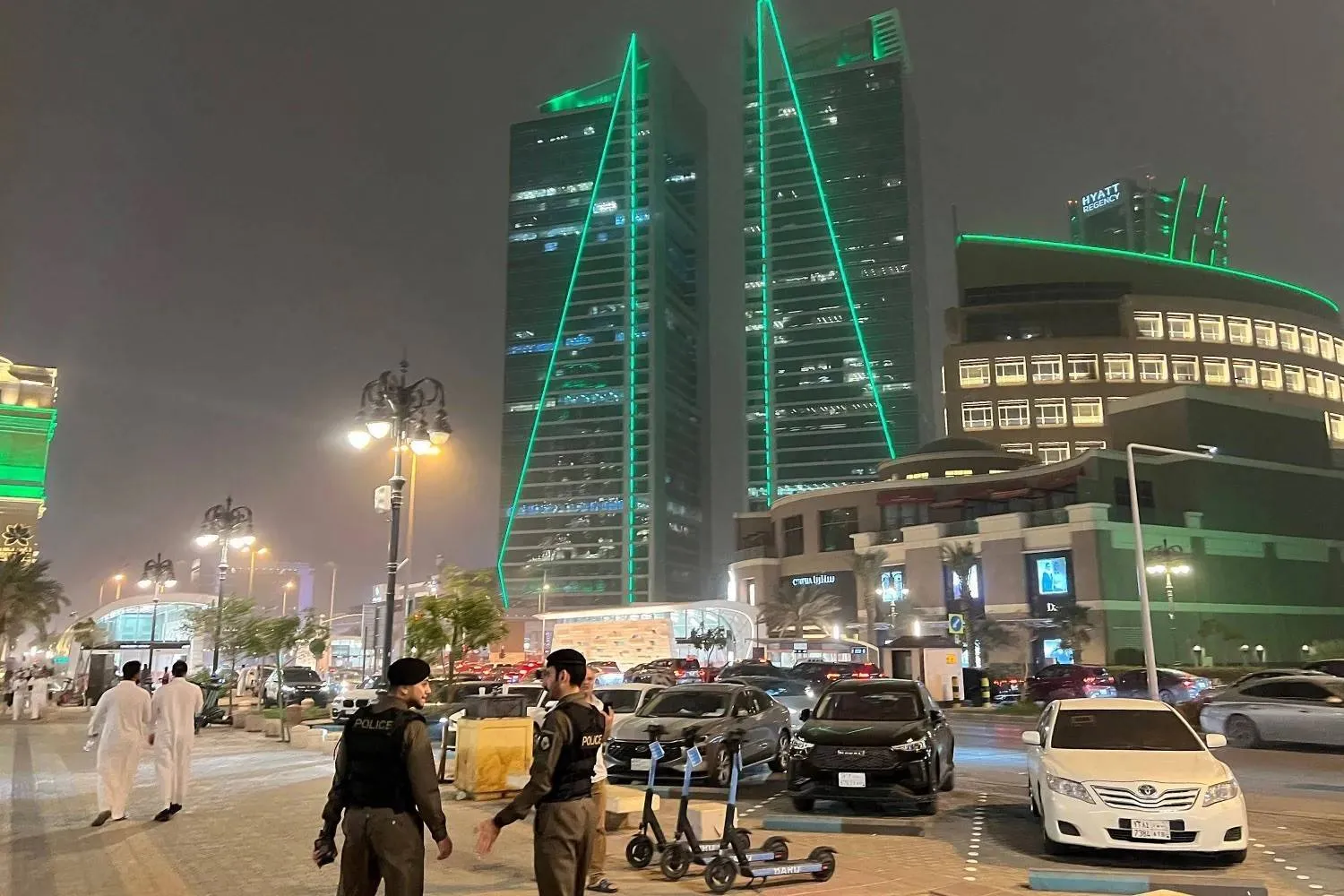
The view of the Saudi capital, Riyadh. (Asharq Al-Awsat)
TT

Saudi Tourism Development Fund Partnerships Exceed $1.1 Billion  

The view of the Saudi capital, Riyadh. (Asharq Al-Awsat)

The Saudi Tourism Development Fund (TDF) has signed new partnerships with government and private entities with a financial impact exceeding SAR 4 billion ($1.1 billion), as part of its role in expanding financing for small and medium-sized tourism enterprises across the Kingdom.

Speaking to Asharq Al-Awsat, Fahad Al-Ashgar, General Manager of Business Development at TDF, said the fund offers tailored empowerment programs for micro, small, and medium enterprises (MSMEs).

“We have a clear success story,” he said, noting that the fund has financed 2,500 enterprises with the support of its partners in recent years. This financing has helped create and sustain 74,000 jobs in Saudi Arabia’s tourism sector.

Al-Ashgar made these remarks during the Development Finance Conference held last week under the patronage of Crown Prince Mohammed bin Salman, Prime Minister and Chairman of the National Development Fund, as part of the Momentum 2025 platform themed “Leading Development Transformation,” in the Saudi capital.

Empowering tourism

Al-Ashgar added that TDF acts as an enabler of the tourism sector and has signed six agreements under its Tourism Enablement Programs, targeting MSMEs across all regions of the Kingdom.

These initiatives complement the fund’s direct financing, which supports both foreign and domestic investment, in addition to a memorandum of understanding signed with the Small and Medium Enterprises Bank.

Established in 2020, the Tourism Development Fund aims to enable and attract tourism investment and stimulate sectoral development by creating more profitable projects that contribute to developing tourism destinations.

The fund is one of six newly established funds created to support Saudi Vision 2030 goals, according to National Development Fund Governor Stephen Paul Groff in earlier remarks.

TDF CEO Qusai Al-Fakhri said the average annual number of beneficiaries has increased tenfold, while the volume of financing has more than doubled compared to previous years.

The fund goes beyond financing to build an integrated enablement ecosystem that creates new investment opportunities, strengthens development finance, empowers the private sector, and ensures inclusive growth across all regions, enabling MSMEs to contribute to national development, he added.

Partnership details

Recent partnerships include the launch of a new financing program with the Kafalah Program, with a market value estimated at SAR 700 million ($190 million), in cooperation with more than 45 financing entities. Previous collaboration enabled over 2,000 enterprises to obtain financing guarantees exceeding SAR 2 billion ($530 million).

The fund also signed a new SAR 300 million ($80 million) financing agreement with the Arab National Bank, adding to a similar agreement signed last year that benefited 249 enterprises within one year.

TDF confirmed that more than 10,000 enterprises have benefited to date from the Tourism Enablement Programs, as part of broader efforts to increase MSME participation in tourism and diversify projects across the Kingdom, in line with Vision 2030 growth objectives.