
Gulf States Accelerate Adoption of Unified Digital Government Platforms

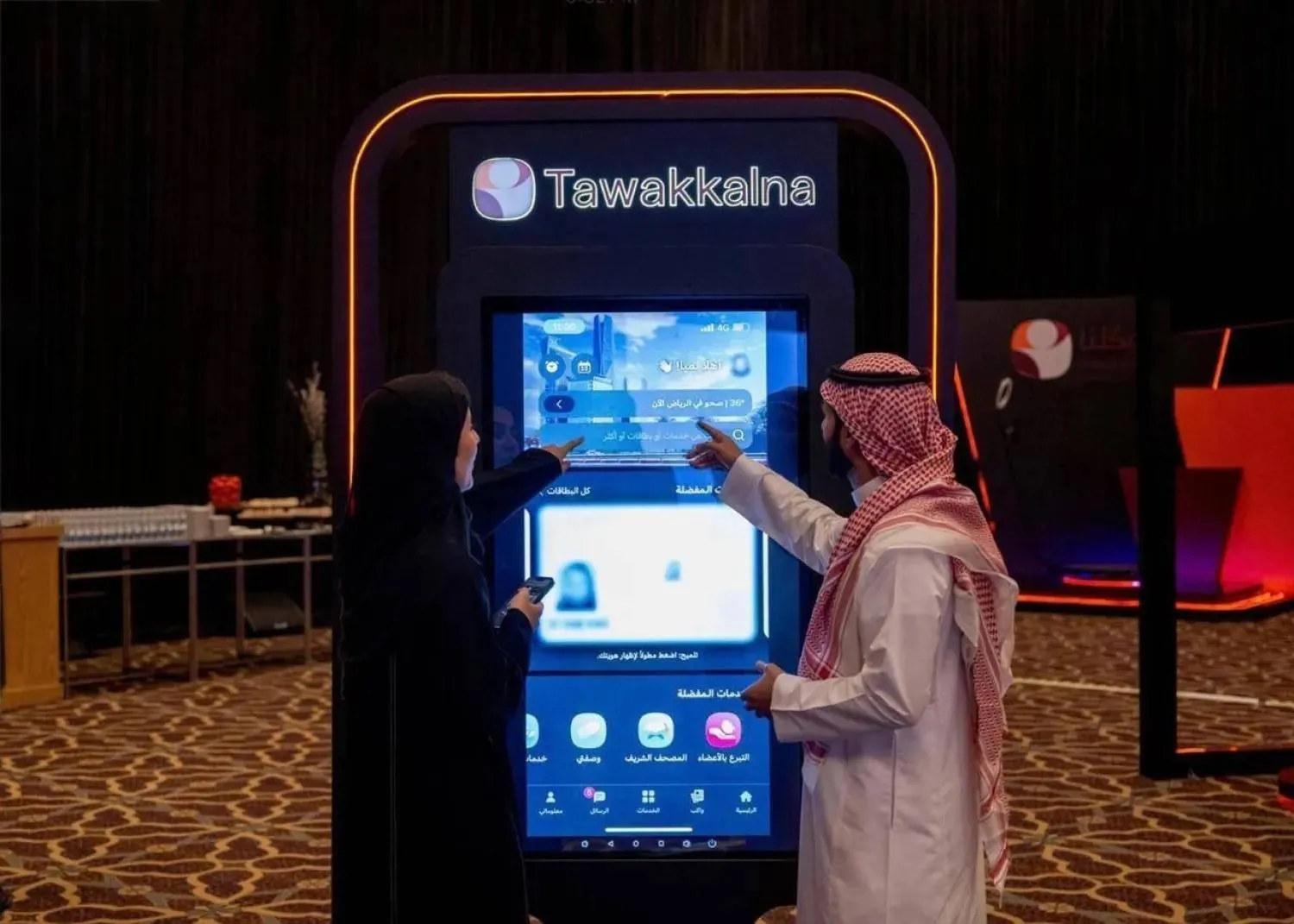
A Tawakkalna app events in Saudi Arabia (Asharq Al-Awsat)
TT

Gulf States Accelerate Adoption of Unified Digital Government Platforms

A Tawakkalna app events in Saudi Arabia (Asharq Al-Awsat)

Gulf governments are moving swiftly to leverage modern technology in reshaping citizen-government relations, with a strong push toward digital transformation and more efficient, user-centric public services.

At the forefront of this shift are unified government applications that constitute comprehensive digital platforms that combine smart technology with seamless usability.

According to a recent study by Strategy& Middle East, a member of the PwC network, these platforms are no longer optional but have become strategic necessities.

The study, titled “Unified Government Apps: Smart Choices for Services and Cost Control,” highlights that citizens and residents can now complete services such as issuing birth certificates, renewing business licenses, or applying for social support within minutes, without physically visiting a government office.

Tawakkalna: A Saudi Model

Saudi Arabia’s Tawakkalna app, originally launched as a health tool during the COVID-19 pandemic, has since evolved into a comprehensive digital gateway offering over 1,100 government services.

Dr. Esam Al-Wagait, Director of the National Information Center at the Saudi Data and Artificial Intelligence Authority (SDAIA), noted the Kingdom’s aim to build a proactive digital government powered by AI.

“We are creating an integrated system that uses advanced technology to predict citizen needs and deliver personalized experiences aligned with smart and sustainable city goals,” he said.

Engineer Saleh Mosaibah, Deputy Director of the National Information Center, added that unified platforms enhance inter-agency collaboration, reduce operational costs, strengthen cybersecurity, and boost Saudi Arabia’s regional and global competitiveness.

Challenges and Solutions

Despite progress, the study noted operational and technical challenges remain, particularly around user expectations for faster, smoother service. Repeated logins and redundant data entry were identified as key obstacles.

Engineer Hani Zein, Partner at Strategy& Middle East, stressed the need for seamless, single-entry platforms powered by artificial intelligence.

“Unified interfaces are the future. They improve service delivery, enhance quality of life, and align with Gulf digital transformation goals,” he said.

Investment and Private Sector Integration

Experts stress that building such applications requires significant investment in IT infrastructure, data integration, and cybersecurity. “These are not just tech expenses, they are investments in smarter, more cost-efficient governance,” said Mosaibah.

The private sector also presents growth opportunities. Licensed companies could offer services through government platforms for a fee, or strategic partnerships could bring in private funding and innovation without straining public budgets.

Building a Sustainable Model

To ensure sustainability, Zein recommends a three-pillar approach: an agile operational model inspired by startups, strong legal and financial frameworks, and robust risk management systems. These foundations, he said, enable governments to move quickly, innovate freely, and maintain public trust.

With the right strategy, Zein and Mosaibah believe Saudi Arabia is well-positioned to set global standards for integrated digital government, offering a world-class experience for citizens and residents alike.


Saudi Industry Ministry Signs MoUs to Advance Manufacturing Empowerment

The agreements were signed during the "Industrial Transformation Saudi Arabia 2025” Exhibition. SPA
TT

Saudi Industry Ministry Signs MoUs to Advance Manufacturing Empowerment

The agreements were signed during the "Industrial Transformation Saudi Arabia 2025” Exhibition. SPA

The Ministry of Industry and Mineral Resources has signed a number of memoranda of understanding (MoUs) with leading local and international companies to advance advanced manufacturing, support local content, and strengthen national supply chains, enhancing the regional and global competitiveness of Saudi industry.

The agreements were signed during the "Industrial Transformation Saudi Arabia 2025” Exhibition, organized by the ministry in partnership with Deutsche Messe and Riyadh Exhibitions Company Ltd.

The ministry signed two memoranda to provide innovative financing solutions for industrial establishments, strengthen national supply chains, and support local content.

Additionally, the ministry's National Center for Advanced Manufacturing and Production signed several memoranda of understanding with local and international industrial and advisory companies to support the path of advanced manufacturing, develop supply chains, enhance technological innovation, and boost the competitiveness of national factories, in line with the National Industrial Strategy and Saudi Vision 2030.

These strategic partnerships are part of the ministry's ongoing efforts to develop the Kingdom's industrial ecosystem, enable manufacturers to access the latest industrial solutions, support supply chain development, and stimulate innovation, contributing to the building of a sustainable industrial sector that competes regionally and globally.


China Says Working on Streamlining Rare Earth Export Licenses

FILE PHOTO: Workers transport soil containing rare earth elements for export at a port in Lianyungang, Jiangsu province, China October 31, 2010. REUTERS/Stringer/File Photo
TT

China Says Working on Streamlining Rare Earth Export Licenses

FILE PHOTO: Workers transport soil containing rare earth elements for export at a port in Lianyungang, Jiangsu province, China October 31, 2010. REUTERS/Stringer/File Photo

China said on Thursday it is working on streamlining rare earth export licenses - a key promised outcome after a meeting between US President Donald Trump and his counterpart Xi Jinping.

"The government is actively adapting," Commerce Ministry spokesman He Yadong told reporters at a weekly briefing, adding that authorities "were aligning themselves with general license mechanisms".

Reuters reported on Tuesday that at least three Chinese rare earth magnet makers had secured licenses enabling them to accelerate exports to some customers.

He did not say if new licenses had been issued.

China began designing the new rare earth licensing regime following a late October meeting between Trump and Xi that eased trade tensions between the two countries.


Saudi Aramco's Jafurah Gas Plant Begins Output with 450 Million Cubic Feet Per Day

The resources at Jafurah are now estimated at 229 trillion standard cu ft of gas and 75 billion barrels of condensates. (Saudi Aramco)
TT

Saudi Aramco's Jafurah Gas Plant Begins Output with 450 Million Cubic Feet Per Day

The resources at Jafurah are now estimated at 229 trillion standard cu ft of gas and 75 billion barrels of condensates. (Saudi Aramco)

The first phase of oil giant Aramco's Jafurah gas plant is complete and production has begun with a capacity of 450 million cubic feet per day, the Saudi finance ministry said on Tuesday.

The finance ministry, in its 2026 budget statement, listed the milestone as an achievement reached in 2025.

Jafurah's gas output will be used for domestic power generation, freeing up crude for export that is currently used for power in the kingdom.

Aramco has said its unconventional gas program at peak production is expected to generate electricity equivalent to displacing 500,000 barrels per day of oil.

The $100 billion Jafurah project, estimated to contain 229 trillion standard cubic feet of raw gas, is central to Aramco's ambitions to become a major global player in natural gas and boost its gas production capacity.

Aramco's gas production was 12.6 billion cubic feet per day at the end of September, up from 12 bcfd a year earlier.

Aramco last month said it was boosting its gas growth target to 80% above 2021 levels from a previous targeted growth of 60%.

In its 2021 annual report, Aramco said it reached a single-day record gas output at the time of 10.8 bcfd.

Aramco CEO Amin Nasser, who has called Jafurah a crown jewel in the company's portfolio, said during an earnings call last month the first phase was on track for completion by the end of this year.