


Berlin Eyes Partnership with Riyadh in Expo 2030, Climate Cooperation, Hydrogen Initiatives

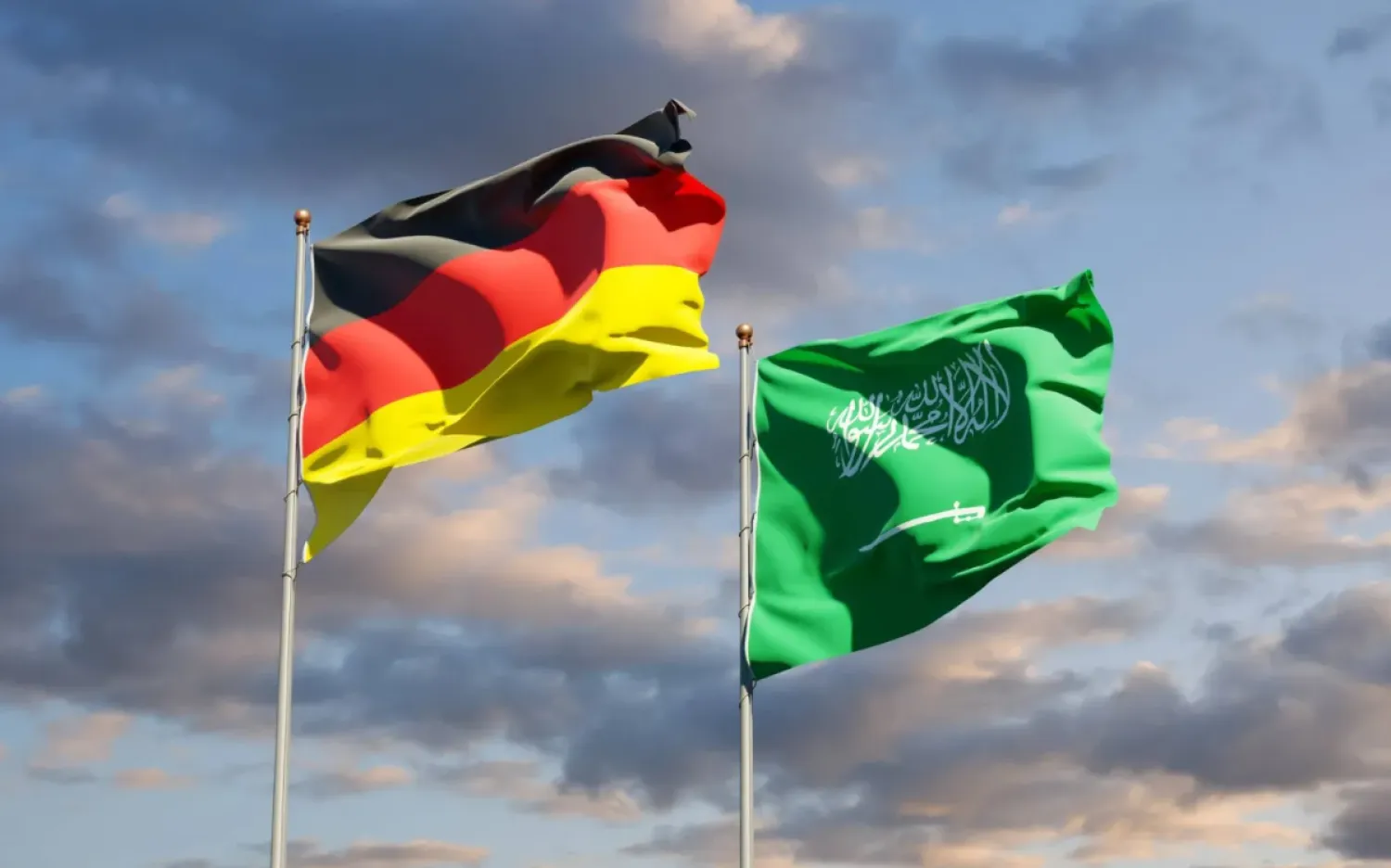
Saudi and German flags fluttering - File Photo/Asharq Al-Awsat
TT

Berlin Eyes Partnership with Riyadh in Expo 2030, Climate Cooperation, Hydrogen Initiatives

Saudi and German flags fluttering - File Photo/Asharq Al-Awsat

The German Ambassador to Saudi Arabia affirmed his country’s commitment to strengthening cooperation with Saudi Arabia across various fields, noting that bilateral trade relations continue to grow steadily, with trade volume reaching around 7 billion Euros.

Speaking to Asharq Al-Awsat, Ambassador Michael Kindsgrab said: “The sectors driving this growth—chemicals, machinery, and transport—reflect the strong industrial connections we share. These are areas where German expertise is making a real difference in Saudi Arabia’s development.”

He added: “Looking ahead, there is much to be excited about. Expo 2030 is an incredible opportunity for us to further deepen our collaboration, showcase the best of what both Saudi Arabia and Germany have to offer, and inspire future generations to continue building on this remarkable partnership.”
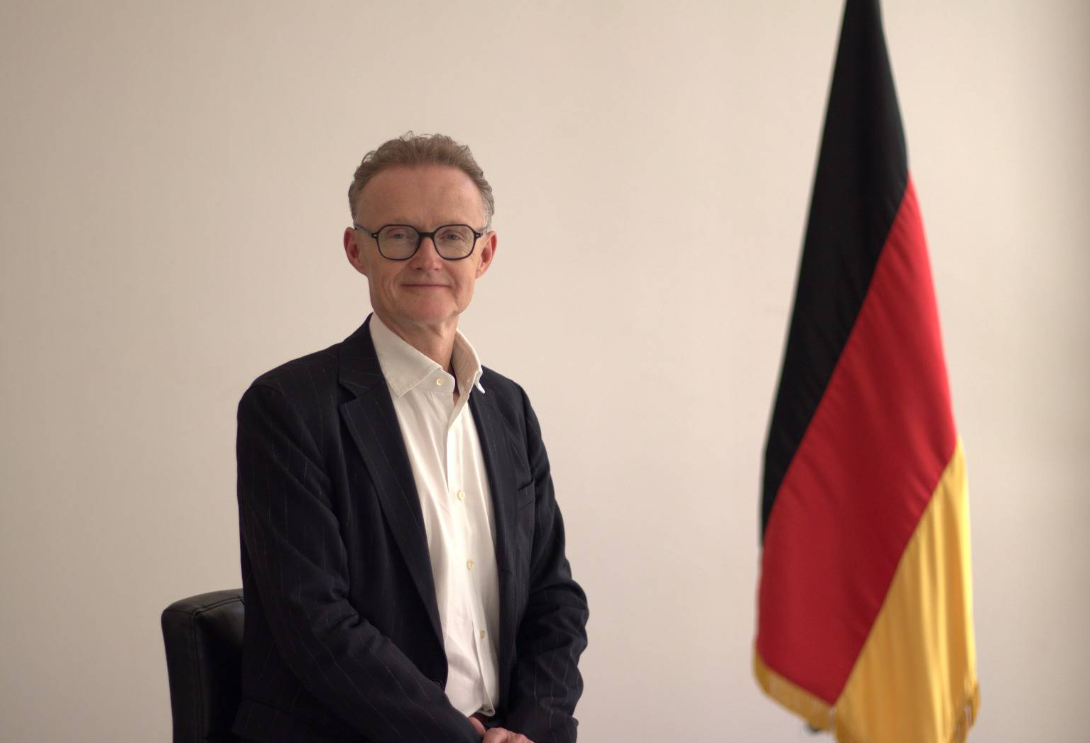
 

German Ambassador to Saudi Arabia Michael Kindsgrab - Asharq Al-Awsat


Renewable Energy

On climate cooperation, the official said: “As for climate cooperation, we have just launched a relevant study on the Saudi labor market in the renewable energy sector, which was reviewed by the National Labor Observatory and discussed with experts of KAPSARC, KaCare and PSU. This is a great example of our close and meaningful partnership, tackling the challenges of today with an eye on the future.”

Blossoming Relations

Kindsgrab noted that Saudi-German relations are truly blossoming, saying: "I am proud to see our partnership becoming deeper and stronger across so many areas. From a personal perspective, it is inspiring to witness the growing bonds between our two countries. These ties span a wide range of sectors, including energy, transport, architecture, health, education and culture—creating a solid foundation for the future.”

“One of the most exciting aspects of our cooperation is in the area of energy transition. German innovation is at the heart of NEOM’s green hydrogen projects, with Thyssenkrupp Nucera playing a key technological role in making the vision of decarbonization of industry a reality,” he affirmed.

“Beyond energy, we’re also seeing significant progress in transport, where Siemens’ delivery of metro wagons helped to shape the modern infrastructure of Saudi cities. And let’s not forget the impact of German architecture in megaprojects such as King Salman Park or the design of Expo 2030, which I believe will be a landmark event for both our countries, ” added Kindsgrab.

“In the health sector, the collaboration with Charité in Berlin is another example of how our nations are working together to improve lives.”

Accelerated Cultural Cooperation

“And now, I am particularly excited to see the acceleration of cultural cooperation, such as the recently launched museum initiative between the Saudi Museums Commission and the Prussian Cultural Heritage Foundation of Germany,” the German ambassador stressed.

“This cooperation emerged as part of our shared efforts to strengthen people-to-people ties and will play an enriching role for the cultural relations, as it includes a loan program for artworks, joint curatorship and training programs to support talent development,” he concluded.



FII Institute Names Princess Maha bint Mishari Al Saud as CEO

Princess Maha bint Mishari bin Abdulaziz Al Saud (Asharq Al-Awsat file photo)
TT

FII Institute Names Princess Maha bint Mishari Al Saud as CEO

Princess Maha bint Mishari bin Abdulaziz Al Saud (Asharq Al-Awsat file photo)

The FII institute, run by a global nonprofit foundation of ⁠Saudi sovereign wealth ⁠fund PIF, has named ⁠Princess Maha bint Mishari bin Abdulaziz Al Saud as its CEO, according to ⁠the ⁠institute's website.

“With more than 25 years of leadership experience spanning healthcare, academia, strategic partnerships, and international engagement, Dr. Al Saud has built a distinguished career centered on creating impact through collaboration and institution-building. She has worked across the public, private, and nonprofit sectors to advance initiatives that strengthen organizations, expand opportunity, and improve lives,” the website said.

Before joining FII Institute, she served as Vice President of External Relations and Advancement at Alfaisal University.

She has helped expand strategic partnerships, deepen international engagement, and elevate the university’s global standing in education, research, and innovation.

“A recognized advocate for leadership, healthcare transformation, education, and human development, Dr. Al Saud has represented Saudi Arabia at major international forums, including the G20, and the fourth Eurasian Women’s Forum,” FII Institute said.

“Dr. Al Saud holds an MBBS degree and is certified by the American Board of Internal Medicine, having completed her residency training at George Washington University. Her executive credentials include the Senior Executive Leadership Program at Harvard Business School, IMD Business School and she holds the prestigious, peer-reviewed distinction of Master of the American College of Physicians (MACP),” it added.


Egypt Clears Arrears to Oil and Gas Companies

People walk past a shop selling football jerseys in Khan el-Khalily Bazar in Cairo on June 9, 2026. (AFP)
TT

Egypt Clears Arrears to Oil and Gas Companies

People walk past a shop selling football jerseys in Khan el-Khalily Bazar in Cairo on June 9, 2026. (AFP)

Egypt's Minister of Petroleum Karim Badawi said on Wednesday that the full settlement of arrears owed to oil and gas partners marked a turning point for the sector.

Badawi ‌said payment ‌of the arrears, "restores ‌investor confidence ⁠and paves the ⁠way for increased upstream activity and accelerated project development".

Egypt had accumulated about $6.1 billion in arrears to foreign oil companies by June ⁠30, 2024 due to ‌a ‌prolonged foreign currency shortage that delayed payments ‌and weighed on investment and ‌gas output. The shortage has since eased, though some companies have said that arrears kept ‌accumulating.

The minister said clearing the debt removed ⁠a ⁠key obstacle to new investment inflows and would support increased exploration, drilling and field development activity, including projects in the Mediterranean where development typically requires significant capital spending and years of work before production begins.


Saudi Economy Demonstrates Competitive Strength, Expands 3% in First Quarter

A view of the Saudi capital, Riyadh. (SPA)
TT

Saudi Economy Demonstrates Competitive Strength, Expands 3% in First Quarter

A view of the Saudi capital, Riyadh. (SPA)

Saudi Arabia’s economy has once again demonstrated the strength of its fundamentals and its ability to withstand regional shocks, posting real GDP growth of 3 percent year-on-year in the first quarter of 2026, despite escalating tensions across the Middle East that have disrupted supply chains and global trade flows.

The final official figures surpassed the earlier flash estimate of 2.8 percent. The upward revision reflected higher estimates from the General Authority for Statistics (GASTAT), which raised growth projections for both oil and non-oil activities to 2.9 percent. The Kingdom had recorded growth of 5.2 percent in the fourth quarter of 2025.

Saudi Arabia’s performance amid logistical challenges, including shipping disruptions through the Strait of Hormuz, recently received backing from an International Monetary Fund mission.

Following consultations in Riyadh, IMF experts said the Kingdom had successfully mitigated the effects of regional conflict and eased logistical bottlenecks through resilient infrastructure, the rapid deployment of the East-West pipeline and Red Sea ports, and strong financial buffers provided by the Public Investment Fund and a stable banking sector.

The IMF nevertheless revised its 2026 growth forecast for Saudi Arabia to 2 percent from a previous estimate of 3.1 percent, citing regional instability.

Broad-based expansion

According to GASTAT, first-quarter growth was driven by gains across all major sectors of the economy. Oil and non-oil activities each expanded 2.9 percent year-on-year, while government activities rose 1.5 percent.

On a seasonally adjusted basis, real GDP declined 1.2 percent from the fourth quarter of 2025, reflecting a 6.8 percent contraction in oil activities. Government and non-oil sectors, however, continued to post quarterly growth of 1.4 percent and 0.3 percent, respectively.

Financial services, insurance and business services recorded the strongest performance among detailed sectors, growing 5.4 percent year-on-year and 1.1 percent quarter-on-quarter.

Manufacturing activities, excluding oil refining, expanded 4 percent annually. Crude oil and natural gas activities grew 3.6 percent from a year earlier, despite a 7 percent quarterly decline linked to shipping disruptions.

Consumption and investment remain strong

Government final consumption expenditure rose 11.3 percent year-on-year and 8.5 percent quarter-on-quarter, while private consumption increased 5.3 percent annually.

Gross fixed capital formation climbed 3.9 percent year-on-year and 7.5 percent quarter-on-quarter, underscoring continued investment momentum. Exports increased 1.4 percent from a year earlier, while imports fell 5.5 percent.

Non-oil activities remained the primary driver of economic growth, contributing 1.7 percentage points to overall GDP expansion. Oil activities added 0.8 percentage points, while government activities and net taxes contributed 0.3 and 0.2 percentage points, respectively.

The IMF also praised the Saudi Central Bank (SAMA) for maintaining a countercyclical capital buffer of 100 basis points, noting that the Saudi riyal’s peg to the US dollar continues to bolster monetary-policy credibility and financial stability.

On structural reforms, the fund welcomed the recalibration of the Public Investment Fund’s 2026-2030 strategy, aimed at allocating capital more selectively and encouraging greater private sector participation.

It said continued progress toward the objectives of Vision 2030, including deeper capital markets, stronger alignment between education and labor market needs, and broader adoption of artificial intelligence and logistics technologies, remains essential to achieving sustainable economic diversification and safeguarding prosperity for future generations.