


Apple Expands its Presence in Saudi Arabia with Launch of Arabic Online Store  

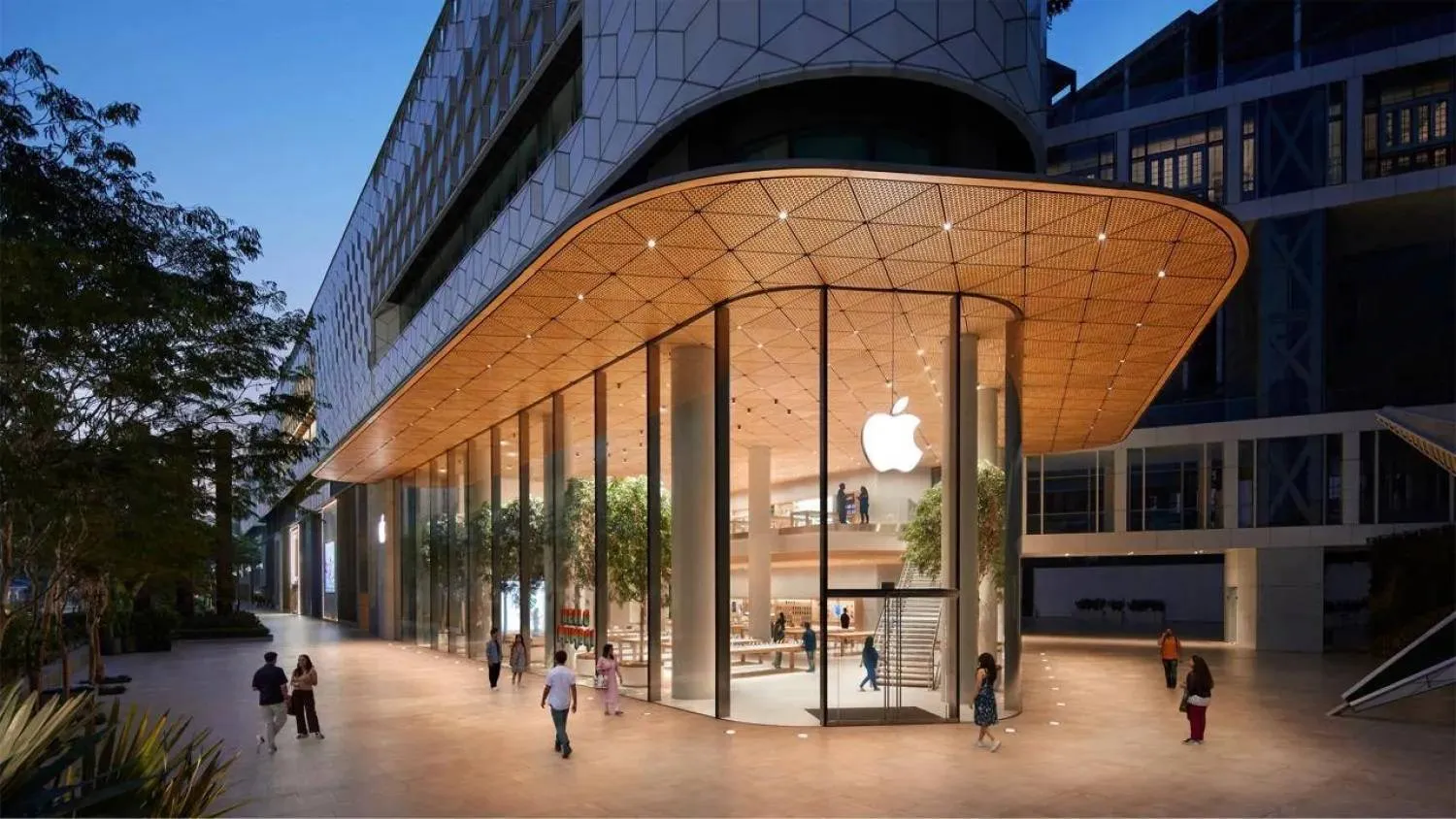
A concept image of the Apple Store. (Asharq Al-Awsat)
TT

Apple Expands its Presence in Saudi Arabia with Launch of Arabic Online Store  

A concept image of the Apple Store. (Asharq Al-Awsat)

Apple has officially launched its online store in Arabic for customers in Saudi Arabia, marking a significant step in the company’s expansion strategy for the region. The move also aligns with its plans to open a physical retail store in the Kingdom as part of a broader effort to deepen its regional presence.

According to Deirdre O’Brien, Senior Vice President of Retail and People at Apple, this step reflects the company’s growing commitment to Saudi Arabia and its rapidly expanding customer base.

The Arabic-language store is now accessible through Apple’s website and via the Apple Store app on smart devices.

In an interview with Asharq Al-Awsat, O’Brien expressed strong enthusiasm about bringing the Apple retail experience to Saudi Arabia. She emphasized the company’s longstanding presence in the Kingdom and noted that Saudi customers are deeply passionate about Apple products. This launch, she said, will help strengthen Apple’s direct relationship with communities across the country.

She also explained that both the online store and the upcoming physical location are part of Apple’s broader strategy in the Middle East. The company already operates several retail locations in the United Arab Emirates and continues to see strong demand for its products across the Gulf.

Investing in local economy

When asked about Apple’s investment in the Saudi economy, O’Brien pointed to initiatives such as the Apple Developer Academy, which is focused on nurturing and empowering local talent.

She described the company’s investment as one that aims to inspire individuals and support creativity. By combining Apple’s technology with passionate communities, she said, remarkable things can be achieved.

Apple has tailored the online store to meet the specific needs of Saudi customers. Features include live chat with Apple specialists in Arabic, customizable product options for devices like Mac and Apple Watch, and the ability to engrave AirPods and other accessories in Arabic or with emojis.

O’Brien highlighted the importance of making the full Apple experience accessible to customers in Saudi Arabia both online and in-store. She also noted that Apple offers device trade-in programs to accommodate users from different segments.

With e-commerce on the rise in Saudi Arabia, Apple is aiming to deliver a seamless shopping journey that blends both digital and physical experiences. O’Brien stated that Apple’s retail model has been designed to reflect modern shopping behavior, where customers move easily between online and in-store interactions. Whether a purchase begins online and ends in a store, or vice versa, Apple aims to provide consistent, high-quality support throughout.

Landmark store in Riyadh

Apple’s first physical store in Saudi Arabia is set to open in Diriyah, a UNESCO World Heritage site and a prominent cultural destination in Riyadh.

O’Brien described Diriyah as a unique and special location. She said Apple is committed to ensuring each of its stores reflects the local identity and culture, and that the new store in Saudi Arabia will be no exception.

She encouraged local customers to visit once the store opens, expressing confidence that the experience will be both unique and memorable.

Retail services

Apple is continuing to strengthen its presence in Saudi Arabia by focusing on innovation, engaging more closely with the local community, and delivering a retail experience designed to support and serve users throughout the Kingdom.

The new Arabic online store allows Saudi customers to browse and purchase Apple’s full product lineup. The experience is personalized, offering product recommendations based on the customer’s current devices. Customers can also compare models, access saved items, and track orders directly through the app.

For the first time, Apple is offering free consultations in Arabic and English through the Saudi store website. These sessions allow users to personalize products like AirPods, Apple Pencil, and AirTag with Arabic or English text and numbers, enhancing the individuality of each device.

Apple’s retail offering also includes pre-purchase support through chat and phone to help users find the best product for their needs. Post-purchase, the company provides services like personalized setup, secure data transfer for those switching to iOS, and eSIM activation.

As part of its long-term strategy, Apple has announced plans to open its first flagship retail store in Saudi Arabia by 2026. This store will be the first in a broader rollout of retail locations across the Kingdom.



Saudi Arabia Consolidates Its Position Among the World’s Top 20 Economies in 2026

Riyadh, Saudi Arabia (Reuters) 
TT

Saudi Arabia Consolidates Its Position Among the World’s Top 20 Economies in 2026

Riyadh, Saudi Arabia (Reuters) 

As the global financial landscape is reshaped by accelerating geopolitical shifts, economic data show that Saudi Arabia has firmly consolidated its place among the world’s 20 largest economies in 2026.

This standing reflects the success of Vision 2030 in diversifying income sources and expanding gross domestic product. The Kingdom ranks 19th globally, outperforming several long-established economies, with GDP projected at $1.316 trillion.

According to data based on International Monetary Fund reports released in October 2025, the global economy is expected to reach $123.6 trillion in 2026. Economic power remains highly concentrated, with the world’s five largest economies accounting for more than 55 percent of total global output:

United States: Continues to lead with GDP of $31.8 trillion, supported by a resilient labor market and sustained consumer spending, with real growth projected at 2.1 percent.

China: Ranks second with an estimated GDP of $20.7 trillion, despite demographic challenges and its transition toward advanced manufacturing.

Germany: Retains Europe’s top position in third place with GDP of $5.3 trillion, despite pressure from high energy costs.

India: The “rising star,” securing fourth place globally with GDP of $4.5 trillion and posting the fastest growth among major economies at 6.2 percent.

Japan: Slips to fifth place with GDP of $4.4 trillion, facing demographic headwinds despite strengths in robotics and automotive industries.

Linked to recent IMF assessments, Saudi Arabia stands out as a key pillar in what experts describe as a new “economic geography.” While many emerging markets have struggled with interest-rate volatility and inflation distortions in advanced economies - particularly the United States - the Kingdom has demonstrated a strong ability to absorb external shocks.

The IMF views Saudi Arabia’s large-scale investments in high-potential sectors not merely as a driver of domestic growth, but as part of a broader global shift in capital flows toward destinations offering stability and long-term attractiveness.

The data also underscore the strong performance of other economies on the list. Brazil ranks 11th with GDP exceeding $2.2 trillion, while Türkiye and Indonesia continue to compete closely in 16th and 17th place, respectively.


Saudi Industrial Production Index Records Highest Growth Since Early 2023

A facility operated by the Saudi International Petrochemical Company (Sipchem). (Sipchem)
TT

Saudi Industrial Production Index Records Highest Growth Since Early 2023

A facility operated by the Saudi International Petrochemical Company (Sipchem). (Sipchem)

Saudi Arabia’s Industrial Production Index posted a year-on-year increase of 10.4 percent in November 2025, compared with the same month a year earlier, marking its highest growth rate since the beginning of 2023, according to preliminary data. On a monthly basis, however, the index declined by 0.7 percent.

Data released by the General Authority for Statistics on Sunday showed that the index for oil-related activities rose by 12.9 percent year on year in November, while the index for non-oil activities increased by 4.4 percent compared with the same month of the previous year.

Month on month, the index for oil activities recorded a rise of 0.5 percent, while the non-oil activities index fell by 3.4 percent compared with October 2025.

In November, the sub-index for mining and quarrying activities climbed 12.6 percent year on year, driven by higher oil production during the month. Saudi oil output rose to 10.1 million barrels per day, compared with 8.9 million barrels per day in November last year.

On a monthly basis, the mining and quarrying sub-index also increased by 0.5 percent.

The manufacturing sub-index recorded an annual rise of 8.1 percent, supported by a 14.5 percent increase in the manufacture of coke and refined petroleum products, as well as a 10.9 percent rise in the manufacture of chemicals and chemical products.

In monthly terms, preliminary results showed the manufacturing sub-index edged up by 0.3 percent, buoyed by a 0.3 percent increase in the manufacture of coke and refined petroleum products and a 1.0 percent rise in the manufacture of chemicals and chemical products.

As for other activities, the sub-index for electricity, gas, steam and air-conditioning supply fell by 4.3 percent year on year. In contrast, the sub-index for water supply, sewerage, waste management and remediation activities rose by 10.2 percent compared with November last year.

Compared with October 2025, the electricity, gas, steam and air-conditioning supply sub-index dropped sharply by 28.6 percent, while the water supply, sewerage, waste management and remediation activities sub-index declined by 3.1 percent.


India and Germany Sign Deals to Deepen Economic and Security Ties

German Chancellor Friedrich Merz, left, shakes hands with Indian Prime Minister Narendra Modi following a joint statement to the media in Gandhinagar, India, Monday, Jan. 12, 2026. (AP)
TT

India and Germany Sign Deals to Deepen Economic and Security Ties

German Chancellor Friedrich Merz, left, shakes hands with Indian Prime Minister Narendra Modi following a joint statement to the media in Gandhinagar, India, Monday, Jan. 12, 2026. (AP)

Indian Prime Minister Narendra Modi and German Chancellor Friedrich Merz met on Monday in western Gujarat state to push for deeper economic and security ties between the South Asian nation and Europe’s largest economy.

Modi and Merz held talks in the city of Gandhinagar, where the two countries signed various agreements to enhance cooperation in the defense sector, skill development, health and education, as both nations seek to reduce dependence on China and bolster economic ties.

After the bilateral talks, Modi noted that Germany is India’s most important trading partner in the European Union and said both leaders were seeking to expand those ties.

He said the two countries are pursuing new projects in areas such as climate action, energy and mining of rare earth elements, and have also agreed on a road map to boost cooperation between their defense industries for joint development and production.

“We want to elevate the relations between India and Germany to an even higher level,” Modi said.

Germany has not traditionally had close defense ties with India, but the two sides have been trying to boost cooperation in the sector. Germany’s Thyssenkrupp is expected to partner with Indian firms to build six advanced conventional submarines in India, part of New Delhi’s ongoing efforts to modernize its naval capabilities.

Merz said India and Germany share “tremendous economic potential,” and the two countries are working together to strengthen ties in the field of security policy and defense cooperation.

“India is a desired partner, a partner of choice for Germany,” Merz said, according to a live official translation. He added that negotiations on a free trade agreement between India and the EU need to be concluded to fully realize the potential of economic ties between the two countries.

The two sides also signed an agreement that makes it easier for Indians to work in Germany's health care sector.

Merz’s visit to India — also his first to an Asian country since he took office last year — comes ahead of a planned India-EU summit later this month, where leaders hope to make progress on a long-pending free trade agreement. India hopes to deepen economic engagement with Europe in the face of US tariff rates of 50%.

During his visit, Merz toured the Sabarmati Ashram, once home to independence leader Mahatma Gandhi, and attended the International Kite Festival at the Sabarmati riverfront. Modi and Merz flew kites during the event.