

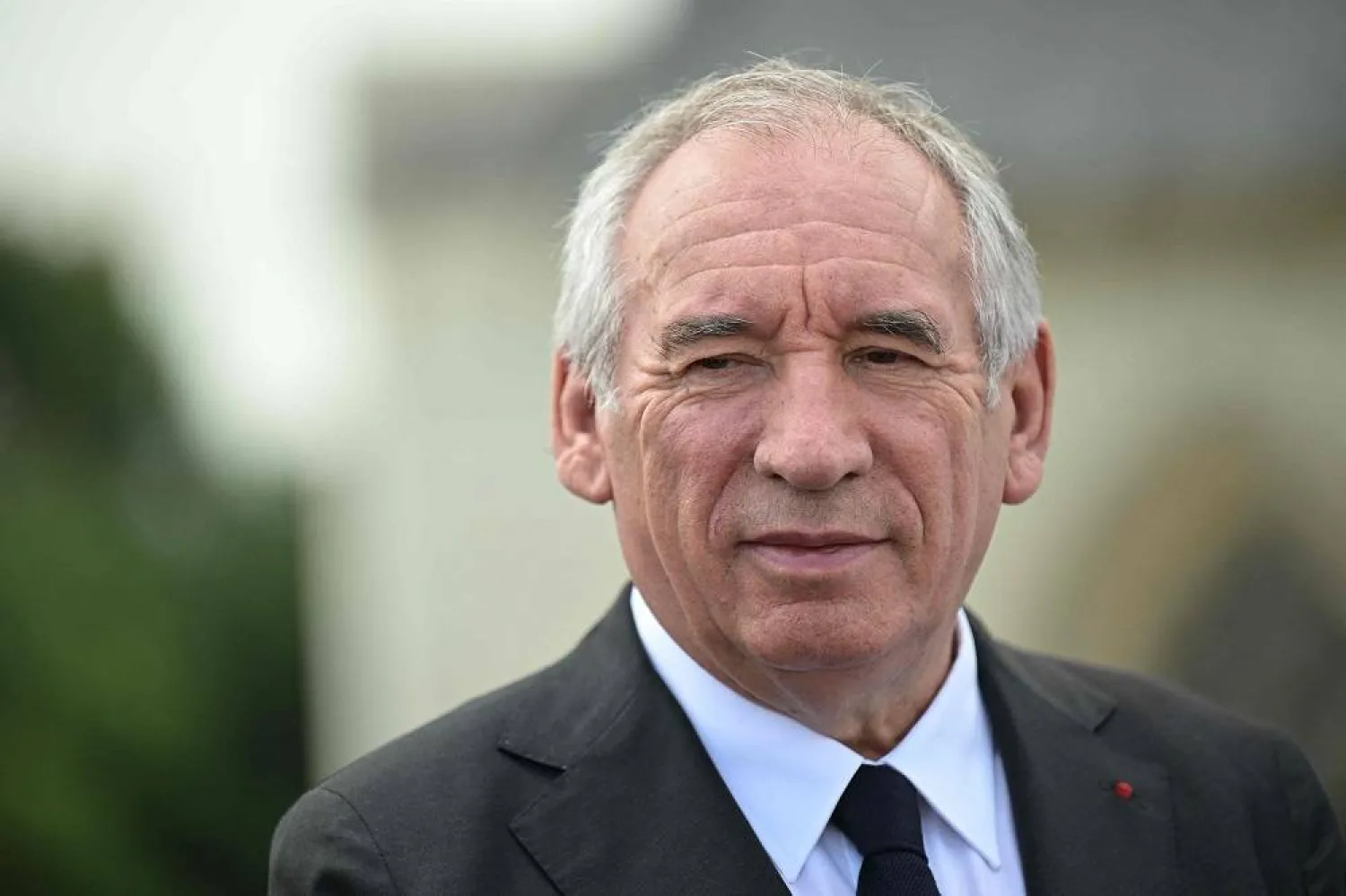

French PM Says EU-US Trade Deal an Act of ‘Submission’ and a Dark Day for Europe 

France's Prime Minister Francois Bayrou looks on at the Angers' castle during a visit in Angers, western France, on July 24, 2025. (AFP)
TT

French PM Says EU-US Trade Deal an Act of ‘Submission’ and a Dark Day for Europe 

France's Prime Minister Francois Bayrou looks on at the Angers' castle during a visit in Angers, western France, on July 24, 2025. (AFP)

France called a framework trade deal between the United States and European Union a "dark day" for Europe, saying the bloc had caved in to US President Donald Trump with an unbalanced deal that slaps a headline 15% tariff on EU goods while sparing US imports from any immediate European retaliation.

The criticism from Prime Minister Francois Bayrou followed months of French calls for EU negotiators to take a tougher stance against Trump by threatening reciprocal measures — a position that contrasted with the more conciliatory approaches of Germany and Italy.

"It is a dark day when an alliance of free peoples, brought together to affirm their common values and to defend their common interests, resigns itself to submission," Bayrou wrote on X of what he called the "von der Leyen-Trump deal".

The high-level French criticism, and President Emmanuel Macron's silence since the deal was signed between Trump and European Commission President Ursula von der Leyen, stood in contrast with the more benign reaction from Berlin and Rome.

French government ministers acknowledged the agreement had some benefits, including exemptions for sectors such as spirits and aerospace, but said it remained fundamentally unbalanced.

"This state of affairs is not satisfactory and cannot be sustained," French European Affairs Minister Benjamin Haddad said on X, urging the EU to activate its so-called anti-coercion instrument, which would allow for non-tariff retaliation.

Trade Minister Laurent Saint-Martin criticized the EU's handling of the negotiations, saying the bloc should not have refrained from hitting back in what he described as a power struggle initiated by Trump.

"Donald Trump only understands force," he told France Inter radio. "It would have been better to respond by showing our capacity to retaliate earlier. And the deal could have probably looked different," he added.

Macron had said that the EU should respond in kind if the United States slapped tariffs on EU goods, and apply equivalent measures on US imports into the bloc, in particular on services, in which the US enjoys a surplus with the EU.

But the softer line advocated by German Chancellor Friedrich Merz and Italian Prime Minister Giorgia Meloni, whose countries are more dependent than France on exports to the US, prevailed.



China to Boost Exports, Imports in 2026, Seeking ‘Sustainable’ Trade, Official Says

A woman walks in Ritan park one day after a heavy snowfall in Beijing on December 13, 2025. (AFP)
TT

China to Boost Exports, Imports in 2026, Seeking ‘Sustainable’ Trade, Official Says

A woman walks in Ritan park one day after a heavy snowfall in Beijing on December 13, 2025. (AFP)

China plans to expand exports and imports next year as part of efforts to promote "sustainable" trade, a senior economic official said on Saturday, state broadcaster CCTV reported.

The trillion-dollar trade surplus posted by the world's second-largest economy is stirring tensions with Beijing's trade partners and drawing criticism from the International Monetary Fund and other observers who say its production-focused economic growth model is unsustainable.

"We must adhere to opening up, promote win-win cooperation across multiple sectors, expand exports while also increasing imports to drive sustainable development of foreign trade," Han Wenxiu, deputy director of the Central Financial and Economic Affairs Commission, told an economic conference.

China will encourage service exports in 2026, Han said, pledging measures to boost household incomes, raise basic pensions and remove "unreasonable" restrictions in the consumption sector.

He restated the government's call to rein in deflationary price wars, dubbed "involution", where firms engage in excessive, low-return rivalry that erodes profits.

The IMF this week urged Beijing to make the "brave choice" to curb exports and boost consumer demand.

"China is simply too big to generate much (more) growth from exports, and continuing to depend on export-led growth risks furthering global trade tensions," IMF Managing Director Kristalina Georgieva told a press conference on Wednesday.

Economists warn that the entrenched imbalance between production and consumption in the Chinese economy threatens its long-term growth for the sake of maintaining a high short-term pace.

Chinese leaders promised on Thursday to keep a "proactive" fiscal policy next year to spur both consumption and investment, with analysts expecting Beijing to target growth of around 5%.


UK Economy Unexpectedly Shrinks in October

People exit the London Underground station at Bank, outside the Bank of England (L) and the Royal Exchange building (back R) in central London on December 12, 2025. (Photo by HENRY NICHOLLS / AFP)
TT

UK Economy Unexpectedly Shrinks in October

People exit the London Underground station at Bank, outside the Bank of England (L) and the Royal Exchange building (back R) in central London on December 12, 2025. (Photo by HENRY NICHOLLS / AFP)

Britain's economy unexpectedly contracted again in October, official data showed Friday, dealing a blow to the Labour government's hopes of reviving economic growth.

Gross domestic product fell 0.1 percent in October following a contraction of 0.1 percent in September, the Office for National Statistics said in a statement.

Analysts had forecast growth of 0.1 percent.

Manufacturing rebounded in the month as carmaker Jaguar Land Rover resumed operations after a cyberattack that had weighed on the UK economy in September, AFP reported.

But analysts noted that businesses and consumers reined in spending ahead of Britain's highly-expected annual budget.

"Business and consumers were braced for tax hikes and the endless speculation and leaks have once again put a brake on the UK economy," said Lindsay James, investment manager at Quilter.

Prime Minister Keir Starmer's Labour party raised taxes in last month's budget to slash state debt and fund public services.

At the same time, Britain's economic growth was downgraded from next year until the end of 2029, according to data released alongside the budget.

Finance Minister Rachel Reeves raised taxes on businesses in her inaugural budget last year -- a decision widely blamed for causing weak UK economic growth and rising unemployment.

She returned in November with fresh hikes, this time hitting workers.
Analysts said that Friday's data strengthened expectations that the Bank of England would cut interest rates next week.


Gold Hits Seven-week High on Safe-haven Demand; Silver Notches Peak

FILE PHOTO: A goldsmith works on a gold necklace at a workshop in Ahmedabad, India, October 8, 2025. REUTERS/Amit Dave/File Photo
TT

Gold Hits Seven-week High on Safe-haven Demand; Silver Notches Peak

FILE PHOTO: A goldsmith works on a gold necklace at a workshop in Ahmedabad, India, October 8, 2025. REUTERS/Amit Dave/File Photo

Gold prices rose to a seven-week high on Friday, bolstered by a soft dollar, expectations of interest rate cuts and safe-haven demand prompted by geopolitical turbulence, while silver hit a record high.

Spot gold rose 0.7% to $4,311.73 per ounce by 0945 GMT, its highest level since October 21, and set for a 2.7% weekly gain, Reuters reported.

US gold futures gained 0.7% to $4,343.50.

The dollar hovered near a two-month low, and was on track for a third straight weekly drop, making bullion more affordable for overseas buyers.

Additionally, "the sharp rise in US weekly jobless claims as well as US-Venezuela tensions are underpinning gold and keeping haven demand strong," said Zain Vawda, analyst at MarketPulse by OANDA.

US jobless claims rose by the most in nearly 4-1/2 years last week, reversing the sharp drop seen in the previous week.

The US Federal Reserve trimmed rates by 25 basis points for the third time this year on Wednesday, but indicated caution on additional cuts.

Investors are currently pricing in two rate cuts next year, and next week's US non-farm payrolls report could provide further clues on the Fed's future policy path.

Non-yielding assets such as gold tend to benefit in low-interest-rate environment.

On the geopolitical front, the US is preparing to intercept more ships transporting Venezuelan oil following the seizure of a tanker this week.

Meanwhile, India saw widening gold discounts this week as demand remained subdued despite the wedding season, while high spot prices also dented demand in China.

Spot silver rose 0.5% to $63.87 per ounce, after hitting a new record high of $64.32/oz, and is headed for a 9.5% weekly gain.

Prices have more than doubled this year, supported by strong industrial demand, dwindling inventories and its inclusion on the US critical minerals list.

"Silver is supported by industrial demand amid fears of shortages, a continued tight market, and the speculative frenzy, mostly from retail investors which has helped drive inflows to Silver ETFs," said Ole Hansen, head of commodity strategy at Saxo Bank.

Elsewhere, platinum was up 0.8% at $1,708.11, while palladium climbed 2.2% to $1,516.95. Both were headed for a weekly rise.