


Saudi Aramco Maintains Generous Payouts Despite Global Headwinds

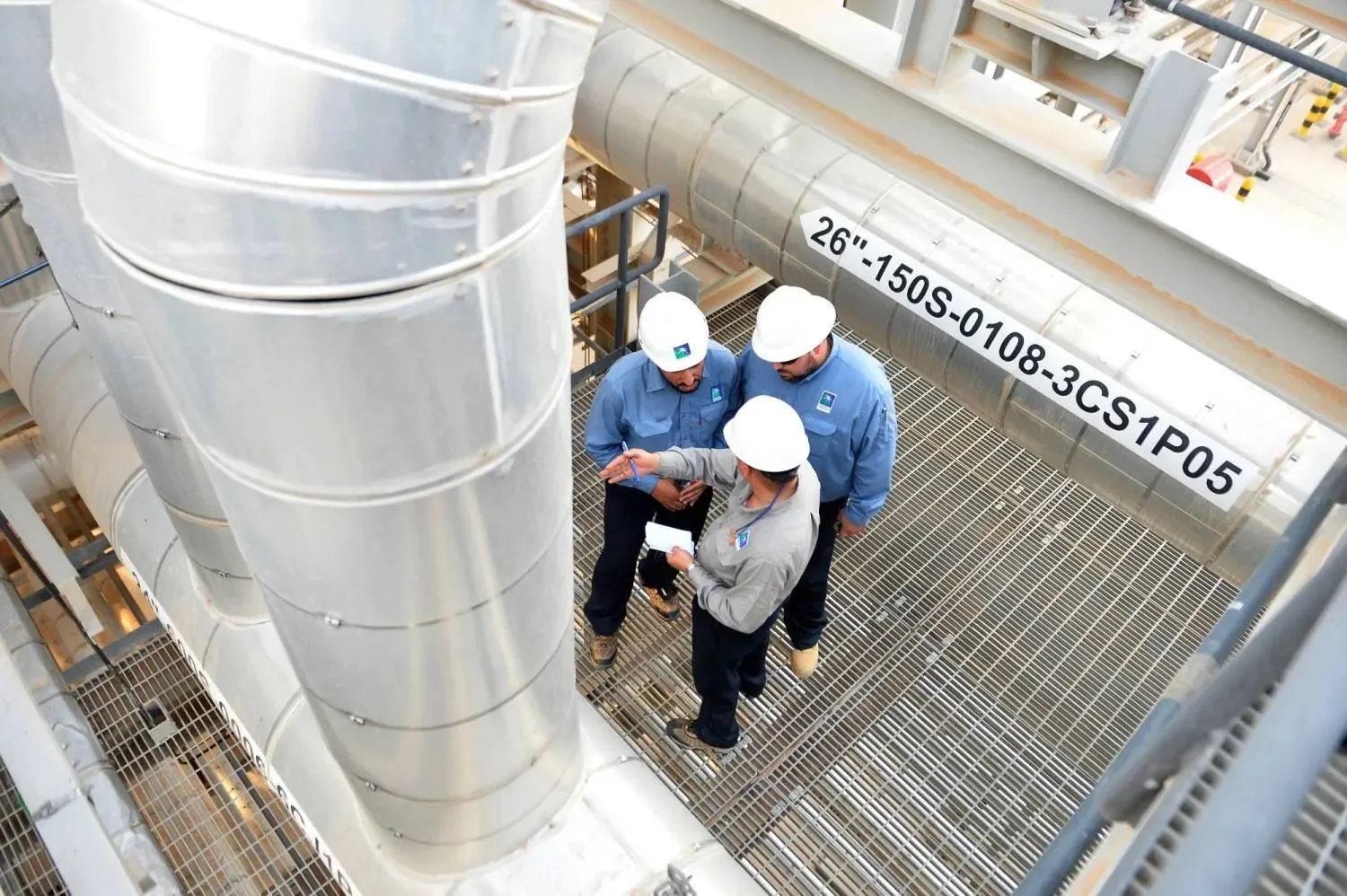
 Engineers at work at Saudi Aramco. (Saudi Aramco)
Engineers at work at Saudi Aramco. (Saudi Aramco)
TT

Saudi Aramco Maintains Generous Payouts Despite Global Headwinds

 Engineers at work at Saudi Aramco. (Saudi Aramco)
Engineers at work at Saudi Aramco. (Saudi Aramco)

Saudi Aramco has maintained substantial dividend payouts to shareholders, affirming its commitment to rewarding investors even during turbulent times and despite a decline in global oil prices.

The state-owned oil giant announced a net income of SAR 85.02 billion (USD 22.67 billion) for the second quarter of 2025, marking a 22% drop compared to the same period last year.

However, the company will still distribute a total of SAR 80.11 billion (USD 21.36 billion) in dividends, comprising base dividends of USD 21.14 billion and performance-linked payouts of USD 220 million.

Aramco attributed the earnings dip to lower average oil prices and ongoing global economic uncertainty. According to its disclosure to the Saudi stock exchange (Tadawul), the company’s revenue for Q2 stood at SAR 378.8 billion (USD 101.02 billion), down from SAR 426.4 billion (USD 113.52 billion) in the same quarter of 2024.

The average price of Brent crude was USD 20 lower per barrel compared to the previous year, underscoring the impact of market volatility.

These results reinforce Aramco’s operational resilience and strategic discipline. CEO Amin Nasser emphasized the company’s strong performance and consistent shareholder returns, noting Aramco’s ability to allocate capital efficiently and stay the course on long-term investment plans.

He predicted global oil demand to increase by more than 2 million barrels per day in the second half of 2025.

“Our long-term strategy reflects our confidence in the continued central role of hydrocarbons in global energy and chemicals markets,” Nasser underlined.

Aramco’s strong cash flow continues to benefit the Saudi government, which is expected to receive around USD 17.41 billion in dividend payments for the quarter.

The International Monetary Fund (IMF), in a recent statement, suggested that despite ongoing oil price pressure, Saudi Arabia does not require additional fiscal adjustments in 2025. IMF mission chief Amine Mati said the projected 4% budget deficit is “entirely appropriate,” given the country’s robust foreign reserves.

Aramco’s debt levels remain among the lowest in the industry. The company reported a leverage ratio of 5.5% in the first half of 2025, significantly below the 19.4% average among global oil majors.

Aramco Executive Vice President and CFO Ziad Al-Murshed told Asharq TV that pre-dividend free cash flow reached USD 15.2 billion in Q2, reinforcing the company’s solid financial position.

He noted Aramco’s return on equity over the past 12 months stood at 18.7%, nearly double the industry average.

Still, Aramco’s shares dipped 0.3% following the earnings announcement, closing at SAR 23.84. Saudi Arabia’s broader market, however, posted a modest gain.

Financial advisor Mohammed Al-Maimouni told Asharq Al-Awsat that Aramco’s earnings per share (EPS), excluding exceptional items, came in at SAR 0.7482, down from SAR 0.8663 in Q2 2024.

He also pointed to a slight decline in shareholders’ equity, which stood at SAR 1.483 trillion at mid-2025, down from SAR 1.508 trillion a year earlier.



Middle East War Reshaping National Energy Strategies, Says IEA

 An empty fuel station, as India faces rising oil prices following the closure of the Strait of Hormuz amid the US-Israeli conflict with Iran, in Halvad, Gujarat, India, May 22, 2026. (Reuters)
An empty fuel station, as India faces rising oil prices following the closure of the Strait of Hormuz amid the US-Israeli conflict with Iran, in Halvad, Gujarat, India, May 22, 2026. (Reuters)
TT

Middle East War Reshaping National Energy Strategies, Says IEA

 An empty fuel station, as India faces rising oil prices following the closure of the Strait of Hormuz amid the US-Israeli conflict with Iran, in Halvad, Gujarat, India, May 22, 2026. (Reuters)
An empty fuel station, as India faces rising oil prices following the closure of the Strait of Hormuz amid the US-Israeli conflict with Iran, in Halvad, Gujarat, India, May 22, 2026. (Reuters)

The Middle East war is pushing countries to open new supply routes and turn to domestic resources to tide over the world's biggest energy crisis, the International Energy Agency said Thursday.

"We are in the midst of the largest energy security crisis the world has ever faced -- and I believe this will reshape investment strategies globally, with parallels to the major changes the energy world witnessed after the oil shocks of the 1970s," said IEA executive director Fatih Birol

"We are already seeing intensified efforts by both producer and consumer countries to diversify trade routes and energy sources -- such as advancing new pipelines and other supply infrastructure, on the one hand, and turning more to domestically available resources, on the other," he added in the World Energy Investment report by the energy agency of the Organization for Economic Co-operation and Development (OECD).

The IEA estimates that global energy investment will reach $3.4 trillion in 2026, slightly higher than the previous year, with around $2.2 trillion devoted to power grids, storage, low-emission fuels, nuclear, renewables, energy efficiency and electrification.

Alongside this, around $1.2 trillion is expected to be invested in oil, natural gas and coal.

It nevertheless expects oil investment to decline for the third straight year in 2026, falling below $500 billion despite rising crude prices.

This is due to uncertainty over how long higher prices will last, project lead times, supply constraints and the tightening offshore rigs market, which are limiting short-term investment outside the Middle East.

By contrast, investment in natural gas is "projected to rise to $330 billion, the highest level in a decade, supported by a wave of new LNG export projects, particularly in the United States and Qatar," IEA said.

At the same time, oil-importing countries are turning to energy sources available domestically, notably renewables, nuclear and coal, the report said.

The IEA estimates that investment in renewables should reach around $665 billion in 2026, including $365 billion for solar alone.

Investment in nuclear energy and is set to exceed $80 billion annually while investment in coal should reach $180 billion -- the highest in 10 years, it said.

China alone will account for nearly 70 percent of global coal supply spending, and some Asian countries may seek to extend the operation of their existing coal-fired power plants in order to strengthen their energy security.

The IEA said investment in electricity supply and infrastructure is expected to reach nearly $1.6 trillion in 2026, including around $550 billion for power grids, while investment in battery storage should exceed $100 billion.


ECB Chief Economist Sees Persistent Impact on Inflation from Iran War

The Euro currency symbol is seen prior to a press conference after an ECB's governing council meeting in Frankfurt, Germany, Dec. 18, 2025. (AP)
TT

ECB Chief Economist Sees Persistent Impact on Inflation from Iran War

The Euro currency symbol is seen prior to a press conference after an ECB's governing council meeting in Frankfurt, Germany, Dec. 18, 2025. (AP)

The energy shock caused by the Middle East conflict will likely have a persistent impact on inflation even if there is a quick solution to the war, the European Central Bank's chief economist, Philip Lane, said on Thursday.

While oil prices historically tended to revert to original levels after a burst of increases, the current episode may be different as energy costs may stay elevated with countries restocking inventory or diversifying their energy mix, he said.

"We had ‌an overnight, fairly ‌quick and big decline in global oil ‌supply, ⁠which has been ⁠masked until now by inventories," Lane said at a conference hosted by the BOJ and its think tank in Tokyo.

"Even if the initial energy shock starts to reverse, the second round (effects) will be with us for a while," he said.

With the energy shock pushing up prices, financial markets have fully priced in ⁠two hikes in the ECB's 2% deposit ‌rate and see a roughly 50% ‌chance of a third move over the next year. Economists are more ‌cautious and see just two hikes, followed by a cut ‌in mid-2027, a Reuters poll showed.

Lane said there could be some policy lessons from past energy shocks, such as that rising energy costs could push up inflation abruptly and cause "all sorts of non-linear" mechanisms ‌that broaden price hikes.

"But it's not the same non-linearity we had four years ago," when ⁠supply disruptions ⁠from the Ukraine war and strong demand from the COVID re-opening pushed up inflation, he said.

Central banks must acknowledge any substantial shocks and their potential impact on inflation, but avoid overreacting in setting monetary policy, Lane said.

"You have to be skillful in terms of looking at monetary transmission, consumer confidence and all these different mechanisms," he said.

While some inflationary pressures from a supply shock do calm down over time, it was important for central banks to make sure "there's no persistent belief in the population or among price-setting sectors that inflation is going to be too high for too long," he said.


Dollar Firms to One-Week High as Gulf Tensions Flare, Yen Nears Intervention Zone

US dollar banknotes are seen in this illustration taken March 24, 2026. (Reuters)
TT

Dollar Firms to One-Week High as Gulf Tensions Flare, Yen Nears Intervention Zone

US dollar banknotes are seen in this illustration taken March 24, 2026. (Reuters)

The dollar firmed to a one-week high on Thursday after Middle East tensions ratcheted up following fresh US strikes on Iran, while the yen softened toward a level that triggered central bank intervention last month.

Iran's Revolutionary Guards said they targeted a US airbase after what they described as an early morning US attack near Bandar Abbas airport, Tasnim news agency reported, while Kuwait's army said its air defenses were intercepting hostile ‌missile and ‌drone threats.

That followed news that the US military ‌carried ⁠out new strikes targeting ⁠an Iranian drone operation that it said posed a threat to US forces and commercial shipping in the Strait of Hormuz.

Oil prices rebounded and the safe-haven dollar steadied as hopes of a swift resolution to the war faded, with investors now increasingly expecting the greenback to break higher as the Federal Reserve shifts its focus to battling inflation amid elevated energy prices.

"Geopolitics and ⁠the subsequent inflation risks remain a key concern," Alex ‌Saunders, Citi's head of global quant ‌macro strategy, wrote. "We continue to see a trim in the USD underweight."

The euro was 0.2% ‌lower at $1.1600, while the pound was down nearly 0.3% at $1.3392.

The risk-sensitive ‌Australian dollar weakened 0.4% to $0.7111to a one-week low, and the New Zealand dollar was down 0.3% at $0.58831.

The dollar index, which measures the greenback's strength against a basket of six major peers, strengthened 0.17% to 99.464, near its highest level since ‌May 21.

Markets will now look ahead to today's release of the Fed's preferred inflation gauge, the core PCE ⁠deflator, which ⁠will help shape the broader interest rate outlook.

The yen weakened to as far as 159.610 per dollar on Thursday, the lowest since April 30 and within sight of the 160 level that triggered intervention by Japanese authorities last month.

That intervention bought policymakers some breathing room, but questions linger over its lasting impact, said Tony Sycamore, market analyst at IG.

"The broader question is whether it was worth it for what essentially amounts to just a single month's relief. And furthermore, will authorities have the stomach to write a similar-sized cheque if the 160 level is breached again in the coming sessions?" he said.

Markets are pricing a roughly 70% chance of a quarter-point interest rate rise at the BOJ's June 15–16 policy meeting, LSEG data showed.