


Dar Global Unveils $12.5 Billion Expansion Drive with Major Saudi Projects 

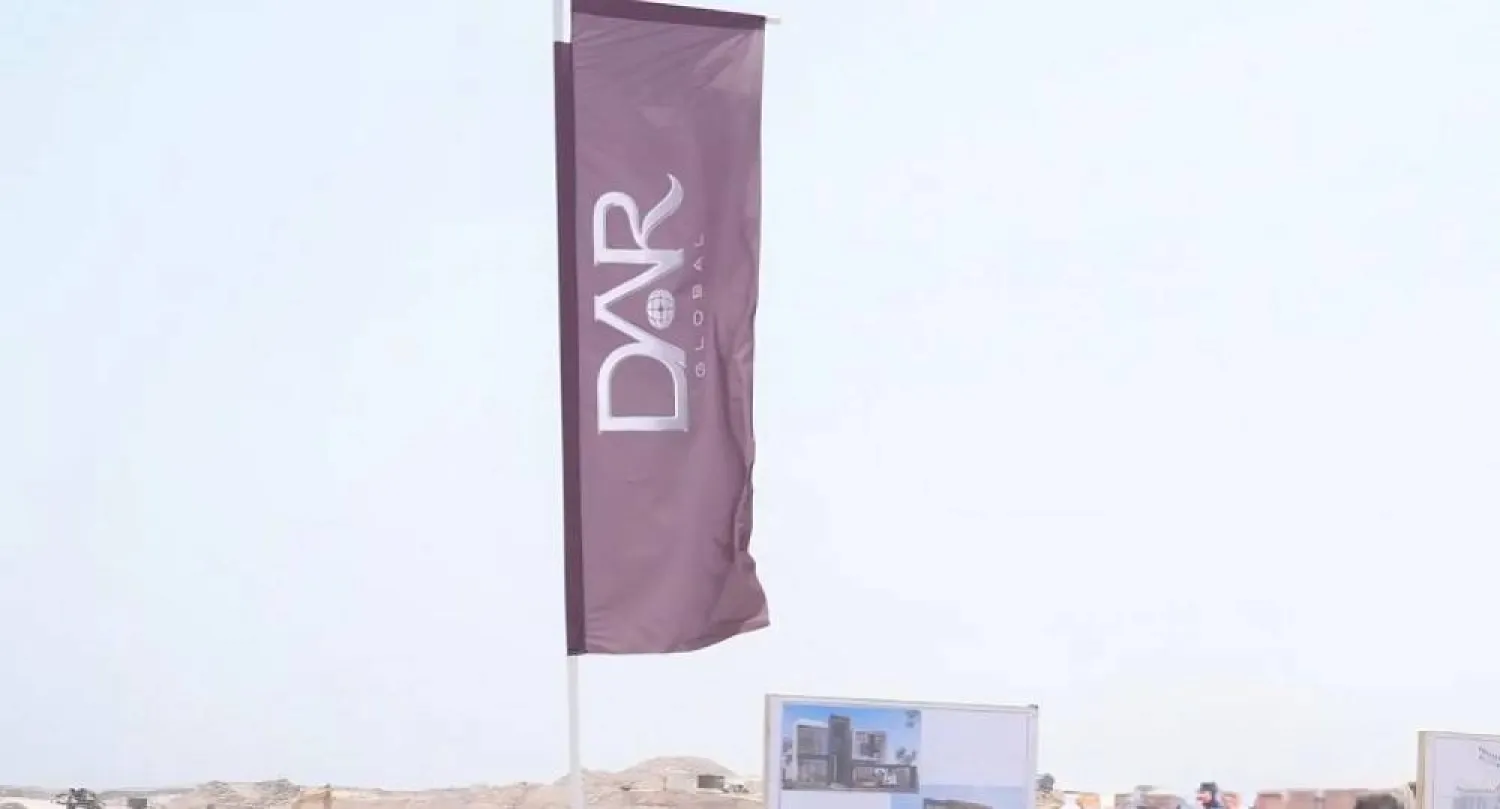
The Dar Global logo is seen at one of its projects. (Asharq Al-Awsat)
TT

Dar Global Unveils $12.5 Billion Expansion Drive with Major Saudi Projects 

The Dar Global logo is seen at one of its projects. (Asharq Al-Awsat)

Dar Global, the London-listed real estate developer, announced on Monday strategic expansions into the broader capital markets, raising the Group’s Gross Development Value to approximately $12.5 billion, up by 67%.

The company said it secured a new significant joint development agreement with Dar Al Arkan and completed strategic land acquisitions for large-scale projects in Riyadh and Jeddah with a combined GDV of around $4.8 billion.

In Riyadh, the company said it secured development rights through partial land acquisition and joint development agreement over a major integrated scheme valued at $2.8 billion, anchored by a $300 million land acquisition.

In Jeddah, a further joint development agreement covers a landmark mixed-use project on one of the city’s most prominent land parcels, with an estimated GDV of $1.95 billion.

The expansion capitalizes on Saudi Arabia’s rapid economic transformation, as it opens up to foreign ownership and the sustained demand for world-class real estate in the Kingdom, Dar Global said.

These are significant parcels of land with the opportunity to develop luxury villas, a world-class golf course and a luxury hotel, it added.

To fuel this growth, Dar Global said it increased its Litmus financing facility from $275 million to $440 million, adding $165 million in fresh liquidity.

The expansion was underwritten by a consortium of prominent regional banks, including Emirates NBD and supported by ADCB, FAB and Zand Bank.

“This enhanced liquidity will accelerate the Company’s existing projects and enable greater flexibility in pursuing new opportunities across the Middle East, Europe and North America, reinforcing long‑term resilience and execution capacity,” the company said.

Also, Dar Global said it is acquiring a licensed financial services company in the Dubai International Financial Center (DIFC).

The entity is authorized to provide a wide suite of services, including asset management, investment banking, and advisory activities.

Operated as an independent subsidiary with its own governance structure, the platform will allow the company to broaden its revenue streams and reduce reliance on development cycles.

“These milestones mark an important inflection point for Dar Global. In Saudi Arabia, we are delivering landmark projects in prime locations and looking to bring in more overseas investment as the Kingdom opens up,” said Ziad El Chaar, CEO of Dar Global.

“The enhanced financing facility reinforces our balance sheet to fuel growth at scale and the establishment of a financial services arm in DIFC enhances our ability to structure capital and unlock global opportunities that previously would not have been available to the Group,” he added.

El Chaar also noted that these initiatives reflect not just confidence in the company’s strategy, “but also the unique position we occupy as a bridge between high-growth markets and international investors.”



High-Ranking Saudi Delegation to Attend World Economic Forum Meeting in Davos

FILED - 23 January 2020, Switzerland, Davos: The World Economic Forum logo is displayed on a board during a plenary session. Photo: Ciaran McCrickard/World Economic Forum/dpa
TT

High-Ranking Saudi Delegation to Attend World Economic Forum Meeting in Davos

FILED - 23 January 2020, Switzerland, Davos: The World Economic Forum logo is displayed on a board during a plenary session. Photo: Ciaran McCrickard/World Economic Forum/dpa

A high-ranking Saudi delegation led by Minister of Foreign Affairs Prince Faisal bin Farhan bin Abdullah will participate in the World Economic Forum (WEF) Annual Meeting 2026 in Davos, Switzerland, from January 19 to 23.

Alongside Prince Saisal, the delegation includes Saudi Ambassador to the US Princess Reema bint Bandar bin Sultan bin Abdulaziz, Minister of Commerce Majid Al-Kassabi, Minister of Tourism Ahmed Al-Khateeb, Minister of Investment Khalid Al-Falih, Minister of Finance Mohammed Aljadaan, Minister of Communications and Information Technology Abdullah Alswaha, Minister of Industry and Mineral Resources Bandar Alkhorayef, and Minister of Economy and Planning Faisal Alibrahim.

Prince Faisal affirmed that the Kingdom’s participation in the World Economic Forum 2026, themed "A Spirit of Dialogue," demonstrates its commitment to international cooperation in addressing economic challenges.

He stressed the importance of maintaining regional peace, supporting sustainable development, and enhancing global economic partnerships.

In a statement to the Saudi Press Agency (SPA), Prince Faisal also highlighted the importance of public-private collaboration to achieve prosperity and security.

He noted that the Kingdom is broadening cooperation with international partners to better confront economic and environmental challenges while focusing on building institutional and human capacities to adapt to rapid transformations.

Prince Faisal stated that the Kingdom views the Davos 2026 forum as a vital opportunity to strengthen cooperation in building institutional and human capacities, essential pillars for adapting to rapid global economic shifts.

Saudi Arabia is focused on developing innovative solutions in technology and scientific research, he said.

As for Aljadaan, he affirmed that Saudi Arabia's participation in the 56th World Economic Forum stems from its commitment to strengthening international cooperation and addressing global economic challenges.

In a statement to SPA, Aljadaan pointed to the Kingdom's growing influence in shaping global economic trends, driven by its robust economy and regional and international standing.

He emphasized that the Kingdom will use this platform, which brings together government, business, and academic leaders, to explore ways to promote global stability and growth.

The minister stated that this year's forum focuses on five key global challenges: building trust and cooperation, identifying new drivers for sustainable growth, investing in human capital, ensuring the responsible use of technology and innovation, and integrating environmental sustainability into economic models. Discussions will also cover the impacts of artificial intelligence, digital transformation, and cybersecurity on global industries.

Al-Khateeb affirmed that Saudi Arabia's participation in the 2026 World Economic Forum aligns with its leadership in strengthening international cooperation and building partnerships that translate dialogue into tangible results.

Al-Khateeb told SPA that this participation extends the Kingdom's approach to opening joint investment opportunities in vital sectors, particularly tourism. He noted that Saudi Arabia has become a new global tourism powerhouse and a rapidly developing model for creating competitive destinations, reflecting its growing prominence on the international map.

Participation in Davos will highlight the importance of developing tourism experiences and service quality to ensure sustainable growth that balances high demand with added value, while preserving cultural identity and natural resources, the minister added.

As for Alswaha, he said the Kingdom’s participation is supported and enabled by Custodian of the Two Holy Mosques King Salman bin Abdulaziz Al Saud and Prince Mohammed bin Salman bin Abdulaziz Al Saud, Saudi Crown Prince and Prime Minister, and embodies the Kingdom's leadership in fostering shared solutions and strengthening global dialogue on technological innovation and sustainable growth, in alignment with the objectives of Saudi Vision 2030.

In a statement to SPA, the minister explained that the Kingdom's participation aims to convey its national experience in transitioning to the smart era and showcase its notable achievements in building a competitive, technology- and AI-driven economy. It also seeks to broaden international cooperation and open new pathways for partnerships and investments with leading global technology companies and private-sector leaders.


Fitch Affirms Saudi Arabia’s Credit Rating at ‘A+’ with Stable Outlook

FILE PHOTO: The Fitch Ratings logo is seen at their offices at Canary Wharf financial district in London,Britain, March 3, 2016. REUTERS/Reinhard Krause/File Photo
TT

Fitch Affirms Saudi Arabia’s Credit Rating at ‘A+’ with Stable Outlook

FILE PHOTO: The Fitch Ratings logo is seen at their offices at Canary Wharf financial district in London,Britain, March 3, 2016. REUTERS/Reinhard Krause/File Photo

Fitch Ratings has affirmed Saudi Arabia’s sovereign credit rating at A+ with a stable outlook, according to a report issued by the agency on Friday.

The agency said the Kingdom’s credit profile reflects the strength of its fiscal position, noting that its government debt-to-GDP ratio and net sovereign foreign assets are significantly stronger than the medians for both the “A” and “AA” rating categories.

Fitch also highlighted Saudi Arabia’s substantial financial buffers, including deposits and other public sector assets.

The ratings agency projected real GDP growth of 4.8% in 2026 and expects the fiscal deficit to narrow to 3.6% of GDP by the end of 2027.

Fitch also said non-oil revenues are expected to continue benefiting from strong economic activity and improved revenue efficiency.

The agency praised the momentum of economic reforms, including the updated investment system and the continued opening of the real estate and equity markets to foreign investors.


Oil Prices Rise 1% as Supply Risks Remain in Focus

The Nave Photon, carrying crude oil from Venezuela, is docked at Port Freeport in Freeport, Texas, US, January 15, 2026. REUTERS/Antranik Tavitian
TT

Oil Prices Rise 1% as Supply Risks Remain in Focus

The Nave Photon, carrying crude oil from Venezuela, is docked at Port Freeport in Freeport, Texas, US, January 15, 2026. REUTERS/Antranik Tavitian

Oil prices rose over 1% on Friday as supply risks remained in focus despite the receding likelihood of a US military strike against Iran.

Brent crude was up 84 cents, or 1.3%, to $64.60 a barrel at 1413 GMT, on course for a fourth consecutive weekly gain. US West Texas Intermediate was up 80 cents, or 1.4%, to $59.99.

At those levels, Brent was on course for a 2% weekly gain and WTI for a 1.4% gain. Brent ⁠was up a little more than $1 at its intraday peak as investors continue to weigh the potential for supply outages should tensions in the Middle East escalate, Reuters reported.

"While geopolitical tensions in the Middle East have eased, they have not disappeared, and market participants remain concerned about potential supply disruptions," said UBS analyst Giovanni Staunovo.

Both benchmarks hit multi-month highs this week ⁠after protests flared up in Iran and US President Donald Trump signaled the potential for military strikes, but lost over 4% on Thursday as Trump said that Tehran's crackdown on the protesters was easing, allaying concerns of possible military action that could disrupt oil supplies.

"Above all, there are worries about a possible blockade of the Strait of Hormuz by Iran in the event of an escalation, through which around a quarter of seaborne oil supplies flow," Commerzbank analysts said in a note.

"Should there be signs of a sustained easing on ⁠this front, developments in Venezuela are likely to return to the spotlight, with oil that was recently sanctioned or blocked gradually flowing onto the world market."

Meanwhile, analysts expect higher supply this year, potentially creating a ceiling for the geopolitical risk premium on prices.

"Despite the steady drumbeat of geopolitical risks and macro speculation, the underlying balance still points to ample supply," said Phillip Nova analyst Priyanka Sachdeva.

"Unless we see a genuine revival in Chinese demand or a meaningful bottleneck in physical barrel flows, oil looks range-bound, with Brent broadly hovering between $57 and $67."